-
CALL US:
- (866) 952-3456

You can forget the idea that you need a dedicated room for a great workout. The best home gym equipment for small spaces is all about being multi-functional, foldable, and versatile. It's what allows you to build a powerful fitness routine right in a corner of your living room or bedroom.
This is about shifting your mindset from "I have no space" to "How can I best use the space I have?"
The very first step is realizing you don't need a spare room—just a dedicated corner. Success really begins with that mental shift, seeing your limited square footage not as a barrier but as a design challenge just waiting for a clever solution.
It’s all about making smart, intentional choices to build a motivating workout zone within the home you already love.
Before you even think about buying a single piece of gear, grab a tape measure. Get a real sense of the footprint you can dedicate to fitness, whether it's a 6×8 foot area beside your sofa or a narrow strip of floor along a wall.
Try to visualize how you’ll actually move in that space. Can you fully extend your arms for a push-up? Can you lunge forward without bumping into the coffee table? Understanding your true available area is the most critical part of planning. This isn't about compromising on your goals; it's about being realistic and strategic to create a space that feels functional, not cramped.
The core of a great small-space gym revolves around just a few key principles. By focusing on these, you can build a setup that rivals larger, more traditional home gyms in pure effectiveness.
To really make the most of your square footage, think about how you can create truly adaptable spaces that can switch from living area to workout zone in minutes. This trend reflects a much broader movement in the fitness industry.
In fact, the global home gym equipment market is booming. It's projected to grow from USD 12.4 billion in 2025 to USD 19.6 billion by 2035, a surge driven by innovations in multifunctional gear for compact living. This just proves that manufacturers are heavily invested in creating solutions that deliver powerful workouts without taking over your home.
This is where your vision for a small-space gym starts to take shape. Picking the right gear isn't about a frantic online shopping spree; it's about being thoughtful and strategic with every purchase. You want to make smart investments that directly support your fitness goals, fit your budget, and, most importantly, work within the real dimensions of your designated corner.
The secret is focusing on versatility over sheer volume. The goal is to build a curated toolkit of home gym equipment for small spaces that makes your workouts better without making your home feel cluttered. Every single piece has to earn its keep.
This isn't just a niche idea, either. It reflects a massive shift in how people approach fitness. The global home fitness equipment market is projected to be worth nearly USD 20 billion in 2025, with expectations to climb over USD 31 billion by 2029. That growth is powered by clever products like compact treadmills, foldable bikes, and resistance bands that solve the space problem for people in apartments and smaller homes. If you want to dive deeper into the market data, ResearchAndMarkets.com has some fascinating insights.
The first things you buy should be the most adaptable. These are the workhorses of your setup, the tools that give you the most bang for your buck by supporting a huge range of exercises.
Start with these essentials:
Choosing the right foundational pieces is about more than just saving space. It's about creating a system where a few items can deliver a full-body workout, ensuring you can consistently challenge your muscles without needing a room full of gear.
You don't need a massive, commercial-grade machine to get your heart rate up. Modern engineering has come up with some brilliant solutions built specifically for tight spaces.
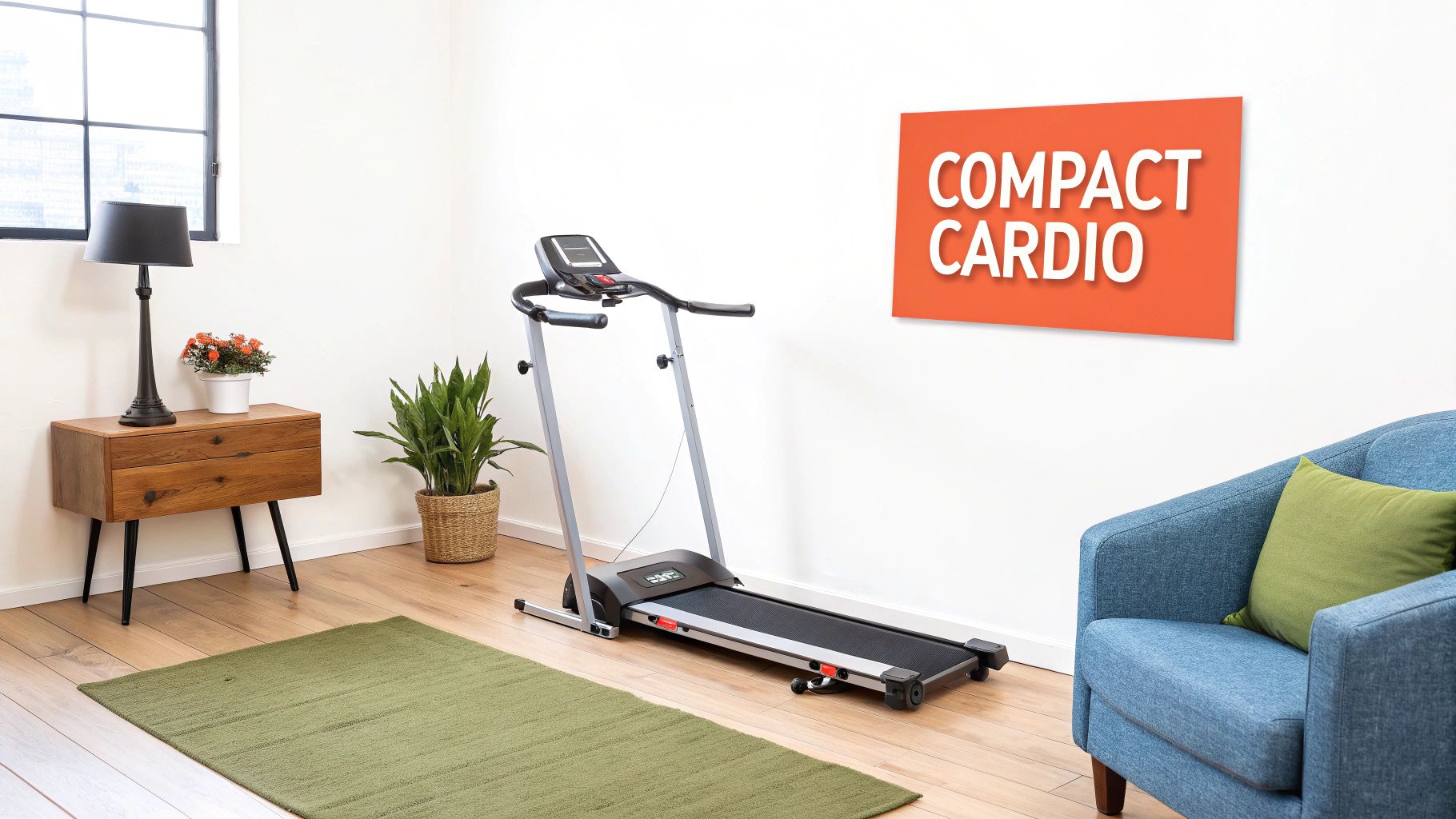
Look into a foldable treadmill you can slide under the sofa or even an under-desk elliptical that lets you get some movement in while you're on the clock. When comparing models, look at the folded dimensions, not just the footprint when it’s set up. Also, always double-check the user weight capacity to make sure it's sturdy enough for you. For a more detailed breakdown, check out our guide on home gym equipment essentials.
Once you have your basics covered, you might consider one larger piece of multi-use strength equipment. These are designed to pack multiple functions into a single, slim profile.
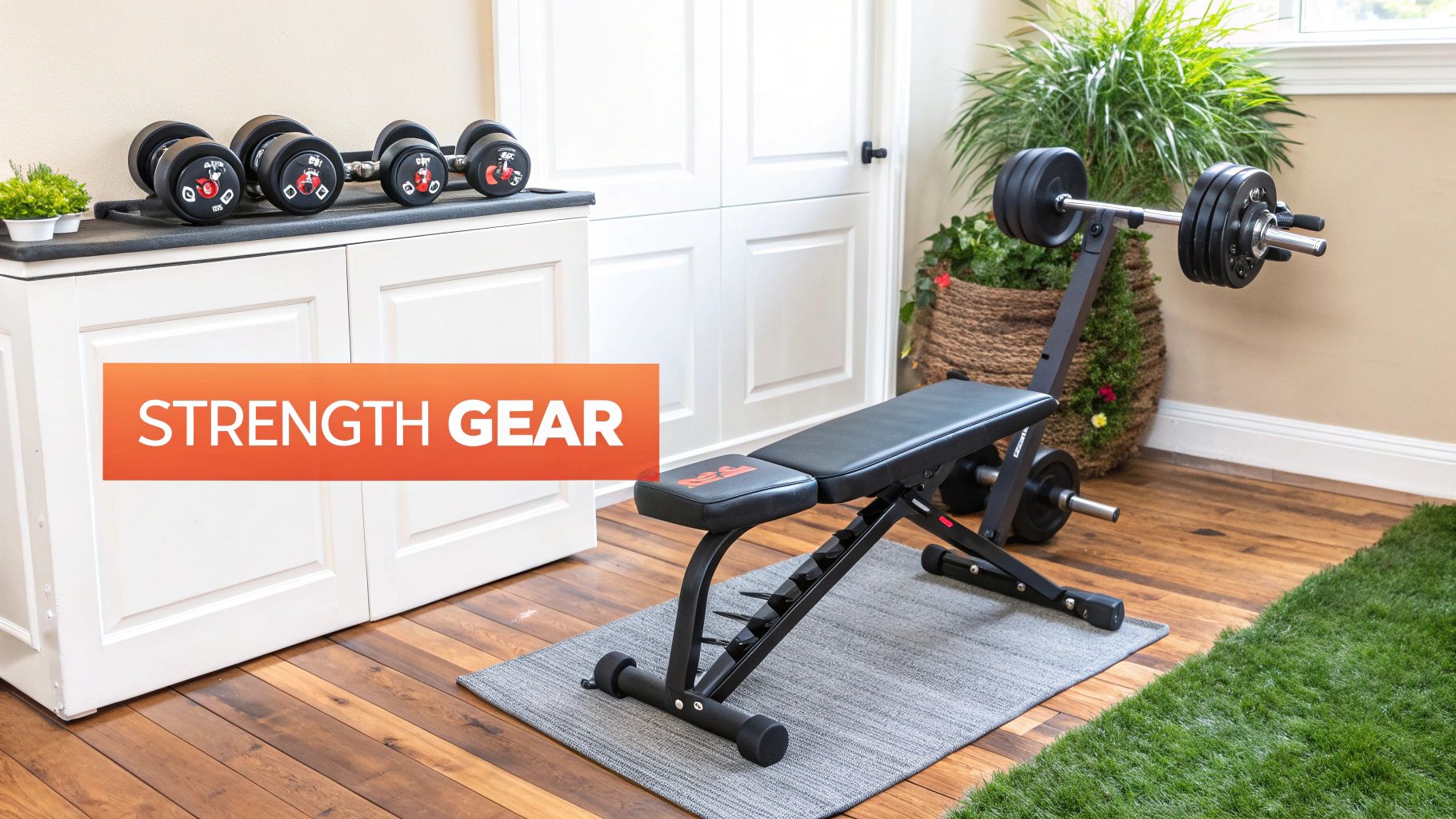
Think about a slim cable machine that mounts directly to the wall or a foldable weight bench you can tuck away in a closet. These pieces unlock a whole new level of exercise variety, letting you do movements that are tough to replicate with just free weights. The key is picking one that aligns with your specific training style, whether that’s bodybuilding, functional fitness, or just general toning.
You've picked out your home gym equipment for small spaces, but now comes the real challenge: where do you put it all? A good layout is what separates a workout zone you’re excited to use from a cluttered mess you end up avoiding. The whole point is to create a space that feels intentional, safe, and actually invites you to get your workout in.
It all comes down to using your space effectively. When you're planning things out, remember that the right arrangement is everything. It's a bit like understanding the importance of size and placement for commercial systems—different field, same idea. Smart placement makes everything work better.
First things first, you need to stake out your clearance zone. This is the non-negotiable open floor space you need for exercises like lunges, kettlebell swings, or just rolling out a yoga mat without punching a wall. For most workouts, a 6×8 foot area is a solid starting point.
Before you start dragging equipment around, take a second to think through your actual workout routine.
Do you usually start with a warm-up on your mat, move to dumbbells for strength, and then finish with some jump rope? If so, you should arrange your gear to follow that natural order. Put the mat in the middle, have the dumbbells within easy reach, and make sure there's enough clear vertical space for that jump rope.
This kind of planning keeps you from stopping to shuffle things around mid-set, which is a real momentum killer. You want to be able to flow from one exercise to the next without a second thought.
A well-designed layout doesn't just make your equipment fit—it actually improves your workout by removing friction. Your space should be working for you, not against you.
When floor space is tight, the best thing you can do is look up. The walls are your secret weapon for storage, helping you keep that precious clearance zone completely open.
This is where smart storage comes into play, turning a potential trip hazard into an organized, accessible system.
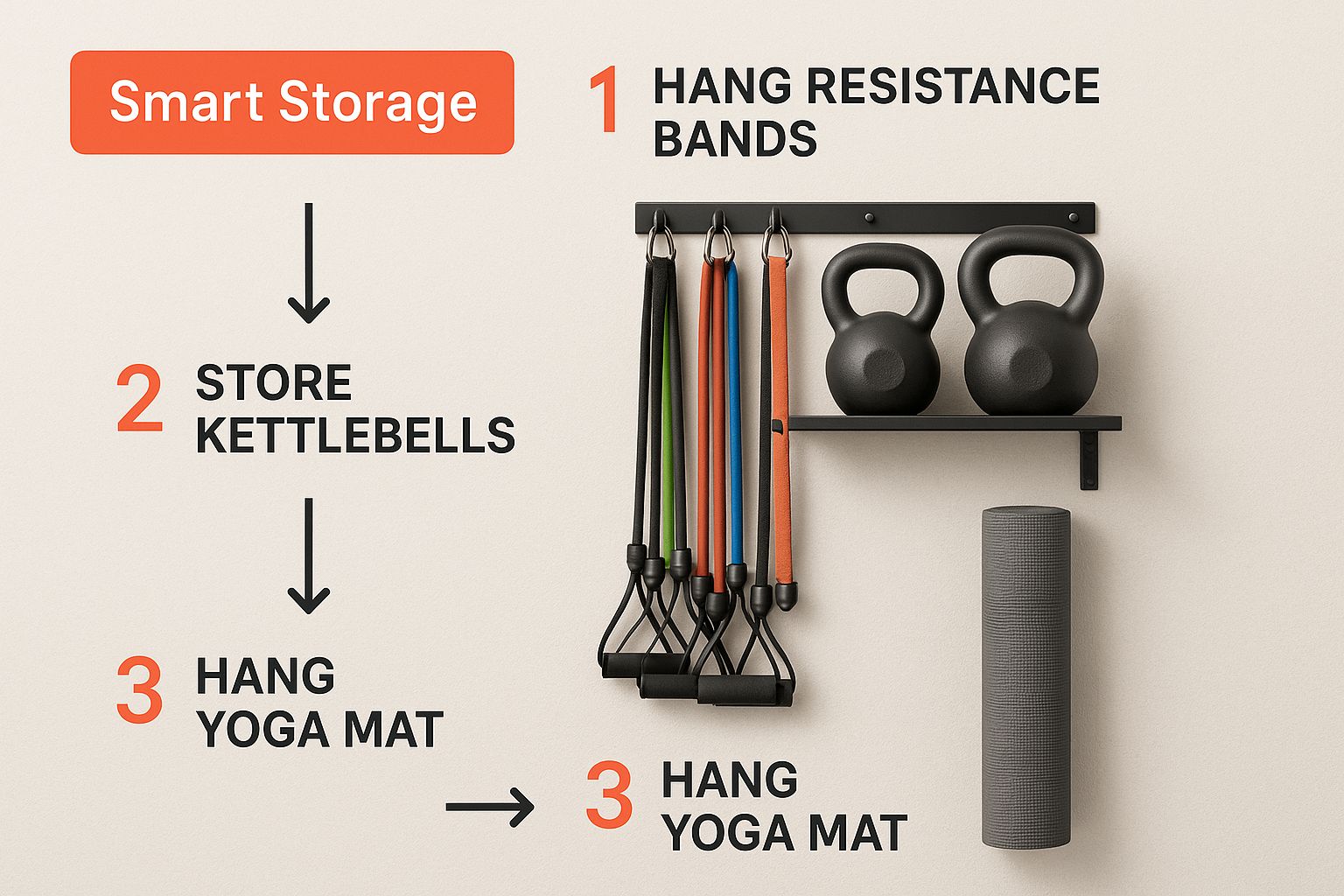
As you can see, getting things up on vertical racks and hooks instantly frees up your floor. It's a simple change that makes a huge difference.
Here are a few practical ideas I've seen work wonders:
By putting these strategies to use, you can turn even a tiny corner into a workout area that feels spacious, functional, and ready for action.
That moment of excitement when your new home gym equipment for small spaces arrives can fade pretty fast once you're staring at a sea of parts and an instruction manual that looks like it's written in another language. Trust me, getting this part right is all about being methodical, not just gunning for the finish line. A little prep work now will save you a massive headache later and make sure your gear is safe from day one.
Before you even think about tearing open that little bag of screws, take a minute to prep your space. Throw down a blanket or an old yoga mat to keep your floors from getting scratched up. Then, unbox everything and lay it all out. I like to group the parts by the numbers listed in the manual—it’s a simple step that stops you from grabbing the wrong bolt halfway through the build.
It's so tempting to just dive in, I know. But one of the biggest mistakes I see people make is not reading the instructions all the way through before they start. A quick five-minute scan can show you critical steps you might have missed otherwise, like a specific order for tightening screws or a part that needs to face a certain way.
Think of it as building a mental map of the whole process. This little bit of foresight helps you see what's coming next and avoids the frustration of having to undo your work. It’s also the perfect time to make sure you have all the tools you'll need sitting right there. Nothing kills your momentum faster than having to dig through a junk drawer for a wrench.
Pro Tip: When you're tightening bolts on a frame or base, use a star or cross pattern, kind of like you would when changing a tire. This distributes pressure evenly and stops the frame from warping, giving you a much more stable and secure piece of equipment in the end.
The home fitness boom is real, which means more people than ever are putting together their own gear. The at-home fitness equipment market was valued at around USD 9.34 billion in 2024 and is projected to climb over USD 20.5 billion by 2034. Companies are packing more smart features into their equipment, which is perfect for getting the most out of a workout in a small apartment. You can see more on this market trend over at Precedence Research.
Even if you prep carefully, a few common slip-ups can still happen. Just knowing what they are ahead of time can be the difference between a solid, successful build and a wobbly, unsafe machine.
If you get halfway through and feel overwhelmed, or just don't have the time, don't sweat it. There are pros who do this for a living. You can get more information on expert assembly for fitness equipment to make sure the job is done right, the first time.
The whole point of having great home gym equipment for small spaces is that it should practically disappear when your workout is over. A killer fitness routine shouldn't mean your living space has to be a cluttered mess. The secret? Clever storage that transforms your workout corner back into a tidy room the second you're done.
This is about more than just chucking everything into a big plastic bin. You have to be a little more intentional, a little more creative with how you stash your gear. The goal is to make it easy to grab for your next session but completely invisible when you're not using it.
In any small room, the most valuable real estate is almost always vertical. Getting your equipment up and off the floor is a total game-changer. Something as simple as wall-mounted racks or even a few sturdy hooks can easily hold resistance bands, jump ropes, and yoga mats. Just like that, an empty wall becomes an organizational powerhouse.
And don't forget about the unused space you already have. Low-profile rolling carts are perfect for sliding right under a bed or couch, giving you a hidden spot for adjustable dumbbells or kettlebells. This not only keeps the heavier stuff out of the way but also stops them from becoming a tripping hazard in the middle of the night.
These aren't just minor tweaks; they're essential for keeping your main workout area clear and ready for action. You can get even more ideas from dedicated guides on storage solutions for small spaces that cover all sorts of clever tricks beyond just the gym.
Honestly, one of the smartest things you can do in a small home is to make your furniture pull double duty. Why have a plain old bench when you can have one that also stores your gear?
Here are a few ideas to get you started:
The real trick is to make your storage solutions feel like a natural part of your home decor. When your equipment is stored thoughtfully, your fitness routine supports your lifestyle instead of clashing with it.
By mixing vertical, hidden, and integrated storage, you can create a system that keeps your home gym equipment for small spaces organized and completely out of sight. This way, your home stays the peaceful, uncluttered sanctuary it should be—ready for both a tough workout and some quiet relaxation.
Even with the best plan laid out, a few practical questions always pop up when you're trying to cram a workout zone into a tight space. Getting these things sorted out is often the difference between a home gym you actually use and one that just gathers dust.
Let's dive into some of the real-world hurdles I see people run into all the time. Getting clear answers now will help you nail the final details with confidence.
If you can only choose one thing, adjustable dumbbells are the undisputed champion of versatility. A good pair can replace an entire rack of traditional weights, which is a massive win for floor space.
They're the foundation for a complete full-body routine—think bicep curls, overhead presses, weighted lunges, you name it. When you're shopping, pay close attention to the adjustment mechanism. You want something quick and smooth. A clunky system will just interrupt your flow and become a source of frustration.
This is a huge one for anyone in an apartment or condo. The whole game is about dampening sound and minimizing any kind of impact.
The goal here is just to be a good neighbor. With the right gear and a few smart exercise choices, you can get a killer workout in without anyone else even noticing.
Thankfully, modern foldable home gym equipment for small spaces has improved dramatically. The reputable brands are engineering these machines to be surprisingly stable and more than capable of handling consistent home use. No, they won't feel like the commercial-grade behemoths at a public gym, but they can absolutely provide a challenging workout.
Before you buy anything, check two things: the maximum user weight capacity and recent customer reviews. Hearing from people who have been using the machine for a few months gives you the real story on its durability. Also, don't forget to double-check the folded dimensions to make sure it actually fits where you plan to store it.
If putting together one of these larger items feels like too much, remember you can get professional help with Home Depot furniture assembly and other services to make sure it’s built correctly and safely from the start.
This is all about creating a mental and physical separation from your "relax" zone. First, turn your little workout corner into an inviting space. Keep it clean, organized, and ready to go at a moment's notice.
Next, actually schedule your workouts. When you treat them like a real appointment, you're more likely to stick to them. Finally, make it as easy as possible to start. Have your workout clothes, water bottle, and playlist ready. The less friction there is, the more likely you are to just get it done.
Ready to get your new equipment set up without the stress? Assembly Smart offers professional, reliable assembly services to get your home gym built right. Book your appointment today at https://assemblysmart.com and start your fitness journey the easy way.