-
CALL US:
- (866) 952-3456

When you're looking for the best playsets for small yards, the trick is to think vertically. Tower designs and models with a compact footprint are your best friend. Some of the smartest options pack in features like a spiral slide instead of a straight one or tuck a sandbox right under the main fort—all designed to maximize fun without eating up your entire lawn.
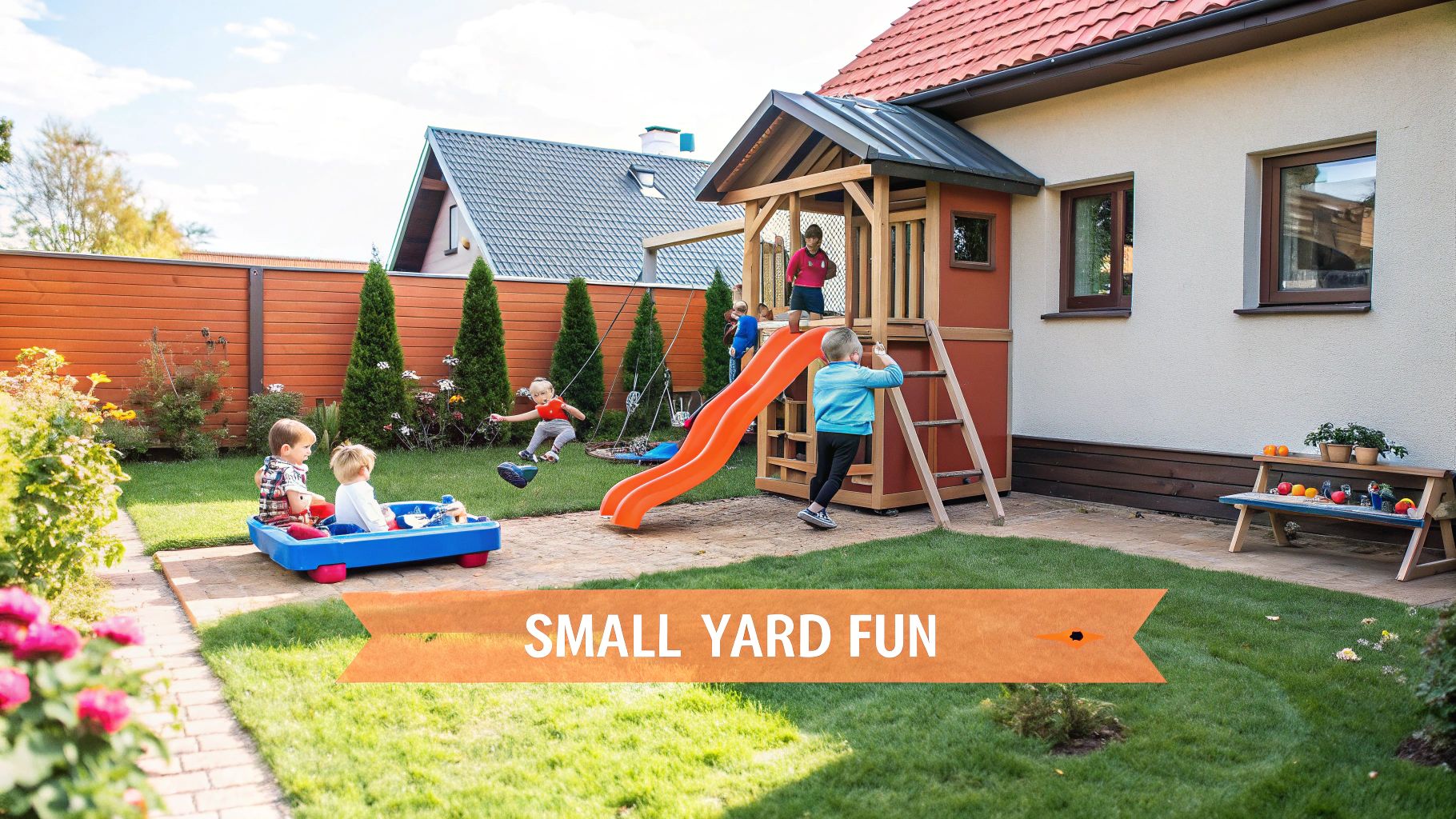
A lot of homeowners figure a small backyard means giving up on the dream of a playset, but that’s just not true anymore. The key is to stop thinking wide and start thinking tall. Modern playsets are specifically designed to make the most of every square foot, turning even the most compact yards into incredible play zones.
Going vertical is hands-down the most effective strategy. Instead of a sprawling layout that kills your grass, look for designs that build upward. A multi-level clubhouse, for instance, can double the play area without growing the footprint one bit.
The real goal here is to pick features that offer the most fun without demanding a ton of real estate. Smart design choices make a massive difference in how a playset actually fits and feels in a tight space.
Keep these points in mind:
A great playset is also a fantastic tool for development, something that lines up with the ideas in a guide to developmental toys for toddlers. By encouraging kids to climb, swing, and dream up their own games, a well-chosen playset supports crucial physical and cognitive growth.
To give you a clearer picture, I've put together a quick comparison of playset styles that are perfect for maximizing fun when you don't have a lot of room to work with.
| Playset Type | Typical Footprint | Key Features | Best For |
|---|---|---|---|
| Vertical Tower | 10' x 12' | Multi-level forts, climbing walls, compact slides | Maximizing play options with a minimal ground footprint. |
| Corner Units | 12' x 12' | L-shaped design, often with a diagonal slide or swings | Fitting snugly into unused corners of the yard. |
| Compact Swing Sets | 8' x 10' | Two-swing beam, maybe a small slide or trapeze bar | Prioritizing swinging action in very narrow spaces. |
| All-in-One Climbers | 8' x 8' | Integrated climbing features, rock walls, rope ladders | Toddlers and younger kids who love to climb. |
As you can see, you've got options. It's all about finding the design that best fits your yard's unique shape and your kids' favorite activities.
A common mistake I see is people trying to cram too many features into one structure. Honestly, you're better off prioritizing one or two high-interest activities—like a really great slide and a fun climbing wall—than settling for a cluttered set with a dozen mediocre options.
In the end, you can absolutely create a fantastic play area by being selective and strategic. For more inspiration, check out these DIY backyard playground ideas that are perfect for smaller settings. This guide will help you measure your space, pinpoint the best features, and choose a playset your family will love for years to come.
Before you even think about adding a playset to your cart, go grab a tape measure. I can't stress this enough: accurately measuring your yard is the single most important thing you'll do to find the right playset for a small space. And it's about more than just the length and width. You have to account for the crucial safety zone.
This is the clear, open space that needs to surround the entire structure. The Consumer Product Safety Commission has guidelines on this, generally recommending a clear space of at least 6 feet on all sides. When you're talking about swings, that zone needs to be even bigger to give them their full range of motion without anyone getting hurt.
Think like a landscaper for a minute. Once you have your basic measurements, you need to scout for potential deal-breakers that could complicate the installation.
Take a good look around for:
This simple chart walks you through the key steps, from that initial measurement all the way to planning the installation.
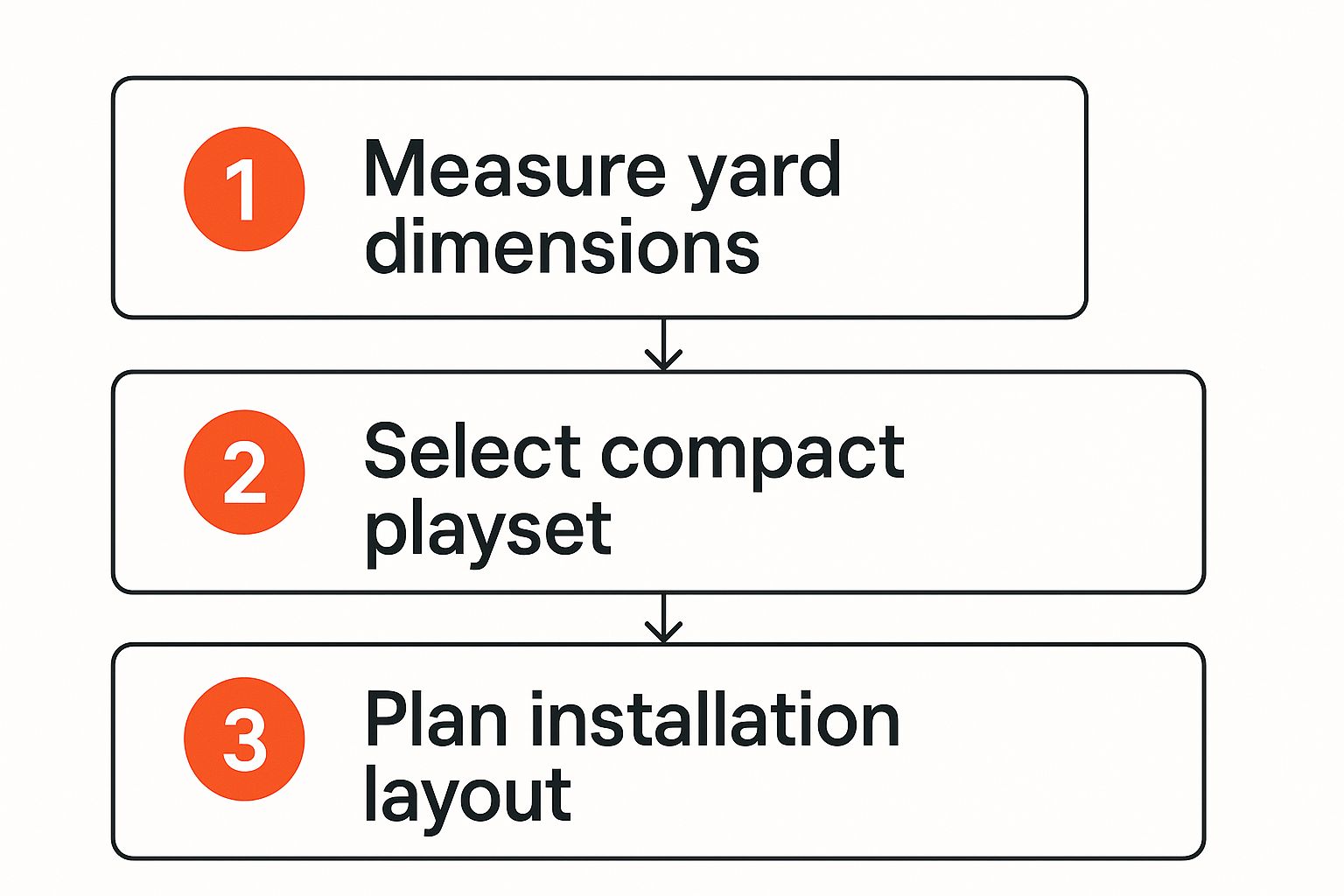
As you can see, a proper yard assessment is what leads you to the right compact model and, ultimately, a safe installation layout.
Pro Tip: I always tell people to draw a quick, simple diagram of their yard. Mark down the total dimensions, sketch out the safety zone perimeter, and pinpoint any of those obstructions you found. This visual map makes it so much easier to see the real, usable space you're working with.
Getting these details right from the very beginning makes the whole process go so much smoother. When you're ready for the final steps, our guide on professional outdoor playset installation breaks down exactly what to expect on assembly day.
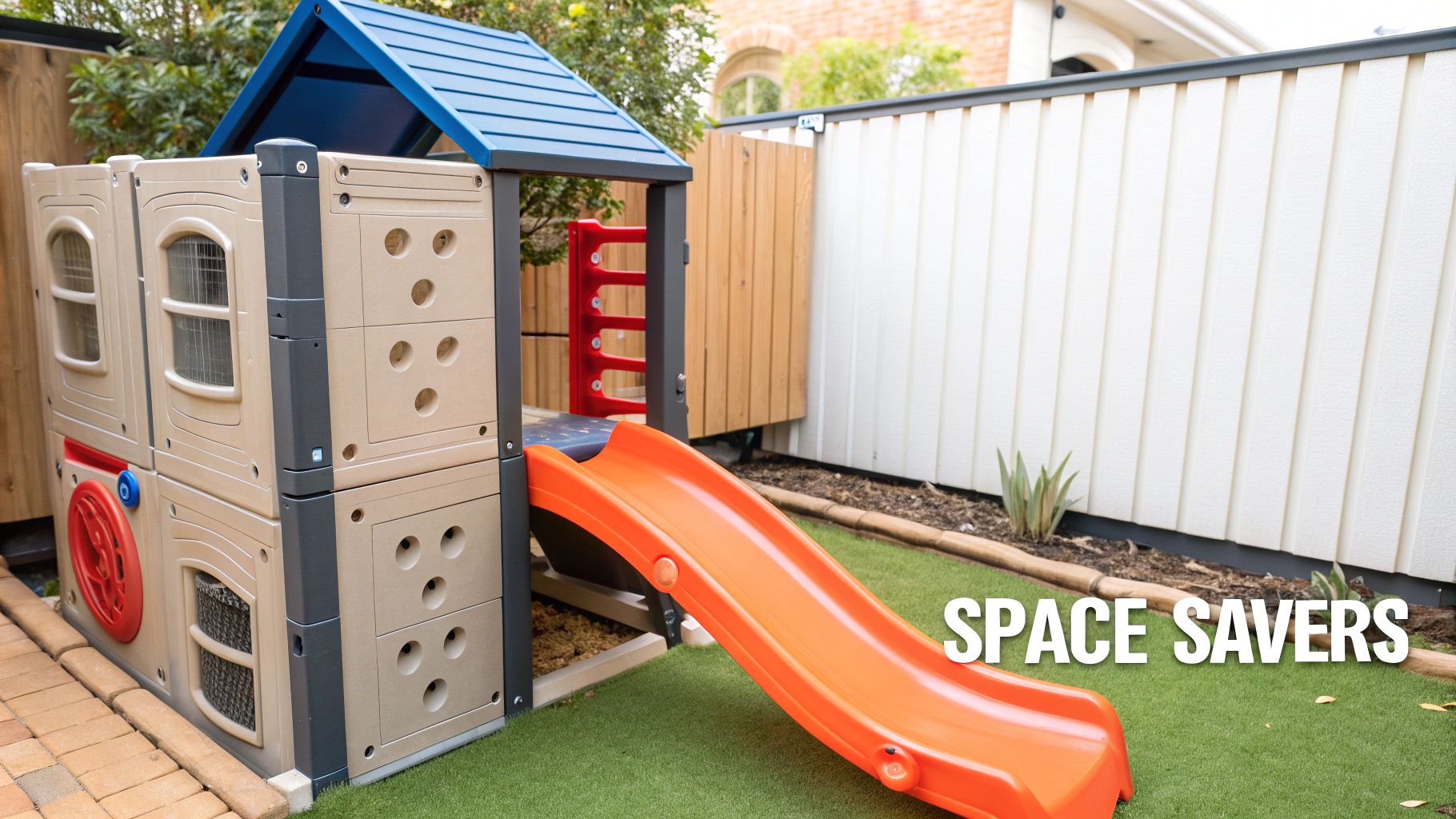
When you're working with a small yard, every feature on your playset has to earn its keep. The smartest designs for tight spaces are all about going vertical and getting creative with multi-functional pieces. It's how you pack the most play value into every single square foot.
Instead of a sprawling design that eats up your whole lawn, think taller. Tower models are the undisputed champions of space-saving. A raised clubhouse, for example, instantly creates a sheltered spot underneath. That new space can become a sandbox, a little picnic area, or just a shady place to hang out, effectively doubling your play zone without taking up any more grass.
Making a few key component choices can dramatically shrink a playset’s footprint without taking away the fun. It’s a common myth that you need a massive structure to keep kids engaged.
Here are some of the most effective space-saving features I've seen:
The real goal here is to pick one or two high-interest activities your kids absolutely love, rather than a dozen they'll barely touch. A fantastic slide and an exciting climbing wall will get way more use than a cluttered set with features they’ll just ignore.
The playground industry is definitely paying attention to the trend of smaller living spaces. With over 56% of people now living in urban areas, the demand for playsets that can fit into a constrained yard is skyrocketing. In fact, the market is expected to jump from USD 6.55 billion in 2024 to USD 11.12 billion by 2032, all driven by smart designs that pack a developmental punch into a smaller package.
This shift has led to some really clever solutions. We're seeing more multi-functional units and even portable options, like these compact pop-up jungle gyms and play tents. These kinds of adaptable systems are perfect when a permanent structure just isn't in the cards.
By focusing on smart, multi-use features, you can build an amazing backyard adventure zone, no matter how much space you're working with.
Figuring out what a new playset will really cost you is about more than just the price tag you see online. It’s easy to get excited about a model that seems to fit your budget, only to get hit with extra expenses you didn’t see coming.
To get the full picture, you have to think about the total investment. This means delivery fees, any work your yard might need, and the cost of professional assembly. For instance, is your yard perfectly level? If not, you'll need to sort that out. You also can't just plop a playset on bare grass; you'll need a proper safety surface like rubber mulch or wood chips. These aren't just suggestions—they're essential for keeping kids safe and making sure your playset lasts.
The playset's material is a huge factor, not just for the upfront price but for long-term maintenance, too. A simple metal A-frame swing set might look like a bargain at first, but a well-built cedar or vinyl structure is going to hold up much better against the weather. That durability can save you a lot of hassle and money on repairs down the road.
Here’s a rough breakdown of what you can expect to spend:
The true cost isn't just the price of the playset. It's the all-in price to create a fun, safe, and durable play area. Trying to cut corners on the foundation or the assembly usually just leads to bigger headaches and safety risks later.
Honestly, hiring a pro is often the smartest move you can make, particularly in a tight space where every inch and angle matters. The national average to install a playset is around $515, though this can shift based on your location and the complexity of the set. To get a better handle on what you might pay, it helps to understand the full scope of furniture assembly service costs, as many of the same principles apply.
Investing a little more upfront for a solid, professionally installed playset gives you peace of mind, ensuring it’s a source of joy for years, not a constant worry.
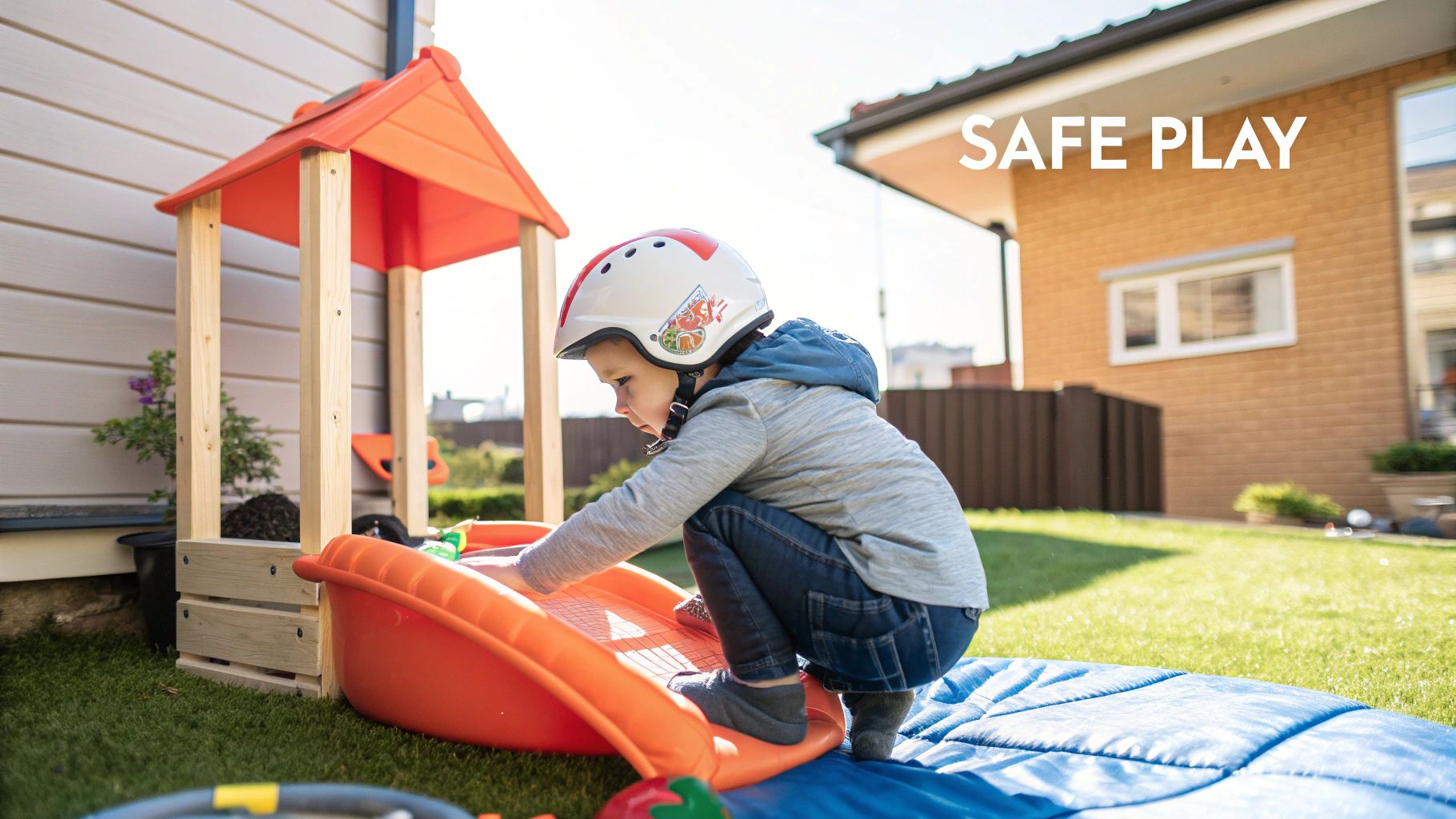
Once that giant box of playset parts lands on your driveway, you’ve got a big decision to make. Are you going to build this thing yourself, or is it time to call in a pro?
Going the DIY route is tempting, but it pays to be realistic about what you're getting into. This isn't just a casual weekend project. You're often looking at a full 8-12 hours of work for two people, and that's if you have all the right tools and can make perfect sense of those complex instructions.
Let's be clear: safety is everything here. A single bolt that isn't fully tightened or a support beam that’s just slightly off can turn a dream playset into a serious hazard. When you're working with a compact yard, that precision is even more important to keep the right safety zones around the equipment.
Hiring a professional installer really is about buying peace of mind. These folks build playsets day in and day out. They know exactly how to make sure every component is secure and that the final structure is perfectly level and stable. This is especially crucial for playsets designed for small yards, where an improper build could easily compromise safety.
Before you hire anyone, make sure you ask a few key questions:
A true pro won't just put the pieces together. They'll anchor it correctly and double-check that it meets all current safety guidelines. This is the single most important step for protecting your investment and, more importantly, your kids.
Finding a reliable crew is simpler than you might think. A great place to start is with experienced local swing set assemblers who can give you a straightforward quote and a clear timeline. On installation day, you can expect them to confirm the layout with you, build the structure efficiently, and walk you through a final safety check before they pack up.
Even after you’ve measured the yard and picked out a few favorites, some questions always seem to come up. I get it. It’s a big decision, and you want to get it right. Here are some of the most common things I hear from parents trying to squeeze a whole lot of fun into a not-so-big space.
This is the big one, and it’s non-negotiable. You absolutely have to plan for a clear, flat, and unobstructed "use zone" around the entire playset. Think of it as an invisible safety bubble. For most structures, manufacturers call for a minimum of 6 feet in every single direction.
When it comes to swings, that safety bubble gets even bigger. The golden rule is to have a clear runway that’s twice the height of the swing beam, both in front of and behind the swings. If the beam is 8 feet high, you need 16 feet of clear space in front and 16 feet behind. Cutting corners here is a serious safety risk.
Look, grass is definitely better than concrete, but it just doesn't have the shock absorption needed to prevent injuries from a fall. A dedicated safety surface is a much smarter investment, especially in a compact yard where a tumble is more likely to happen close to the structure's posts or edges.
Some of the best options for creating a proper play zone include:
For any loose-fill material like rubber mulch or wood chips, don't skimp. You'll want a depth of about 9 to 12 inches to create a landing spot that’s genuinely safe.
Never, ever underestimate the importance of the ground under the playset. A proper safety surface is just as vital as the structural integrity of the set itself for preventing serious injuries from falls.
Both materials have their own perks when you’re working with a tight space.
Metal A-frame swing sets are often the champions of a minimal footprint. They are incredibly durable and are the perfect solution if a good old-fashioned swing is the main attraction for your kids.
On the other hand, compact wooden sets, usually made from cedar, tend to offer more variety in a small package. They often cram in features like built-in forts, rock walls, and other climbers that encourage vertical play—packing more activities into a smaller base.
So, what's the final verdict? If space is extremely limited, a simple metal swing set or a feature-packed vertical wooden tower are your best bets. The right choice really comes down to your budget and what kind of activities will keep your kids busy for hours.
Ready to skip the frustration of a DIY build? The experts at Assembly Smart can ensure your new playset is installed safely and correctly, giving you complete peace of mind. Book your professional assembly service today and get ready for a summer of fun.