-
CALL US:
- (866) 952-3456

Every artist knows that creativity can be messy. While a flurry of paint, paper, and pencils is often a sign of inspiration, disorganized supplies can quickly stifle your flow and turn your creative haven into a source of stress. Finding the right brush, that specific shade of blue, or your favorite charcoal stick shouldn't feel like a treasure hunt every time inspiration strikes. An organized space not only saves time but also clears mental clutter, allowing you to focus purely on your art.
This guide is designed to solve that problem by presenting practical and innovative art supply storage ideas that cater to different spaces, budgets, and artistic needs. We're diving into nine distinct solutions, from wall-mounted systems that maximize vertical space to mobile carts that bring your tools directly to you. Each idea is crafted to help you build a more efficient, inspiring, and accessible studio. For a comprehensive approach to transforming your creative chaos into organized calm, explore this excellent guide on how to organize craft supplies like a pro. Get ready to reclaim your workspace and let your creativity flourish without the frustrating search for misplaced tools.
A pegboard wall storage system is one of the most versatile and space-efficient art supply storage ideas, transforming an empty wall into a fully customized organization hub. This system uses a perforated hardboard panel where you can insert an array of hooks, shelves, clips, and containers. Its primary benefit is adaptability; you can rearrange your entire setup in minutes to accommodate new supplies or a changing workflow.
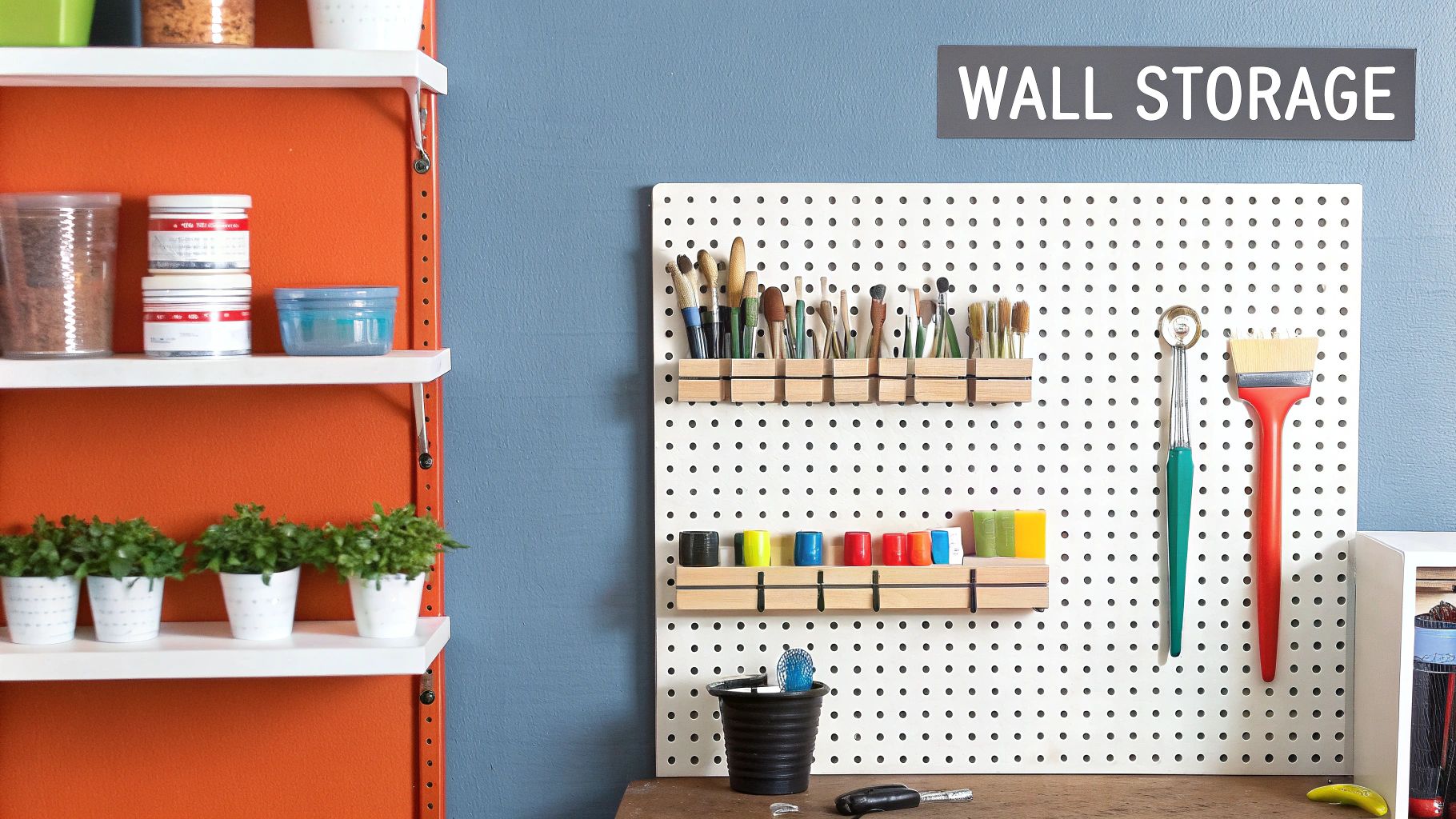
This method is ideal for artists who need frequently used tools like paintbrushes, scissors, and markers within arm's reach but off their workspace. By utilizing vertical space, a pegboard keeps your desk clear while ensuring every essential item remains visible and accessible. It’s a solution that grows with you, allowing for infinite reconfiguration as your collection of materials expands.
Popularized by brands like IKEA with their SKÅDIS series, pegboards have moved from the garage into the modern art studio, proving their value as a dynamic and stylish organizational tool.
A rolling art cart is a highly practical and mobile solution, offering tiered storage that can be moved wherever creativity strikes. This type of storage, often featuring multiple shelves, bins, or drawers on wheels, allows artists to keep their supplies organized and transport them effortlessly between different areas of a studio, home, or classroom. Its key advantage is combining accessibility with compact organization, serving as both a storage unit and a portable workstation.
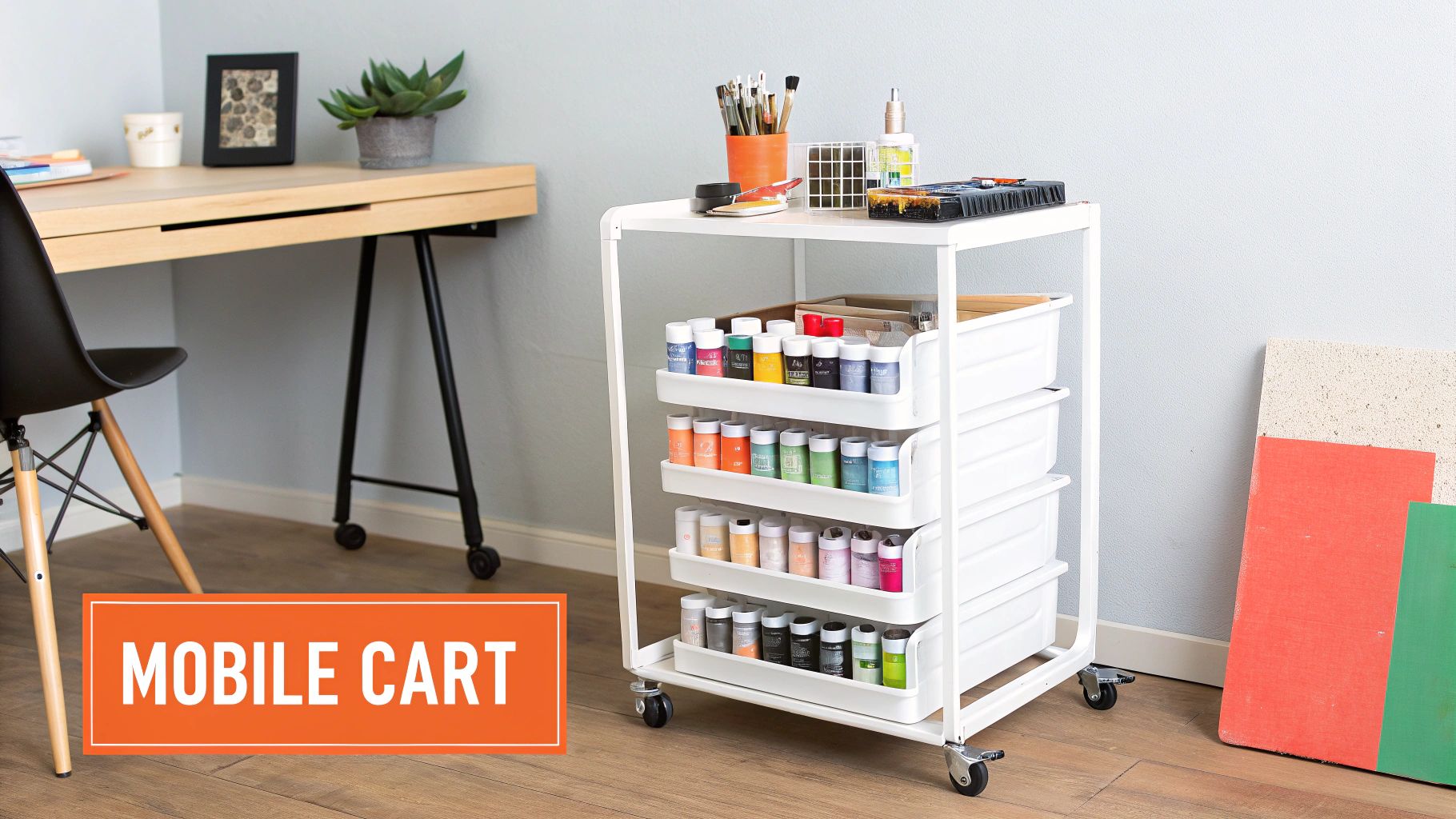
This method is perfect for artists working in multi-use spaces or those who like to switch between different projects, like painting in one corner and sketching in another. The cart keeps essential tools like paints, brushes, and paper close at hand without cluttering the main workspace. For those looking to set up their mobile unit, you can find a helpful guide on utility cart assembly on assemblysmart.com.
Popularized by versatile models like IKEA's RÅSKOG cart and widely adopted by art educators and professional artists, the rolling art cart has become a staple in creative spaces for its blend of function and flexibility.
Drawer divider systems are a game-changer for taming cluttered drawers, transforming a jumbled mess into a perfectly organized grid. These inserts compartmentalize drawer space, creating dedicated homes for small art supplies like pastels, charcoal sticks, pens, and erasers. Their core benefit is preventing items from shifting and mixing, which protects delicate tools and saves you time searching for the right pigment or nib.
This method is ideal for artists who prefer to keep their supplies out of sight but neatly arranged for quick access. By assigning a specific spot for everything, drawer dividers help maintain inventory and ensure every tool is easy to find. Whether you use adjustable plastic dividers or custom-built wooden inserts, this approach brings a sense of calm and order, allowing you to focus on creating rather than searching.
Popularized by Marie Kondo's organization methodology and professional makeup artists, drawer divider systems are a cornerstone of efficient art supply storage ideas, proving that a clean workspace begins with well-organized drawers.
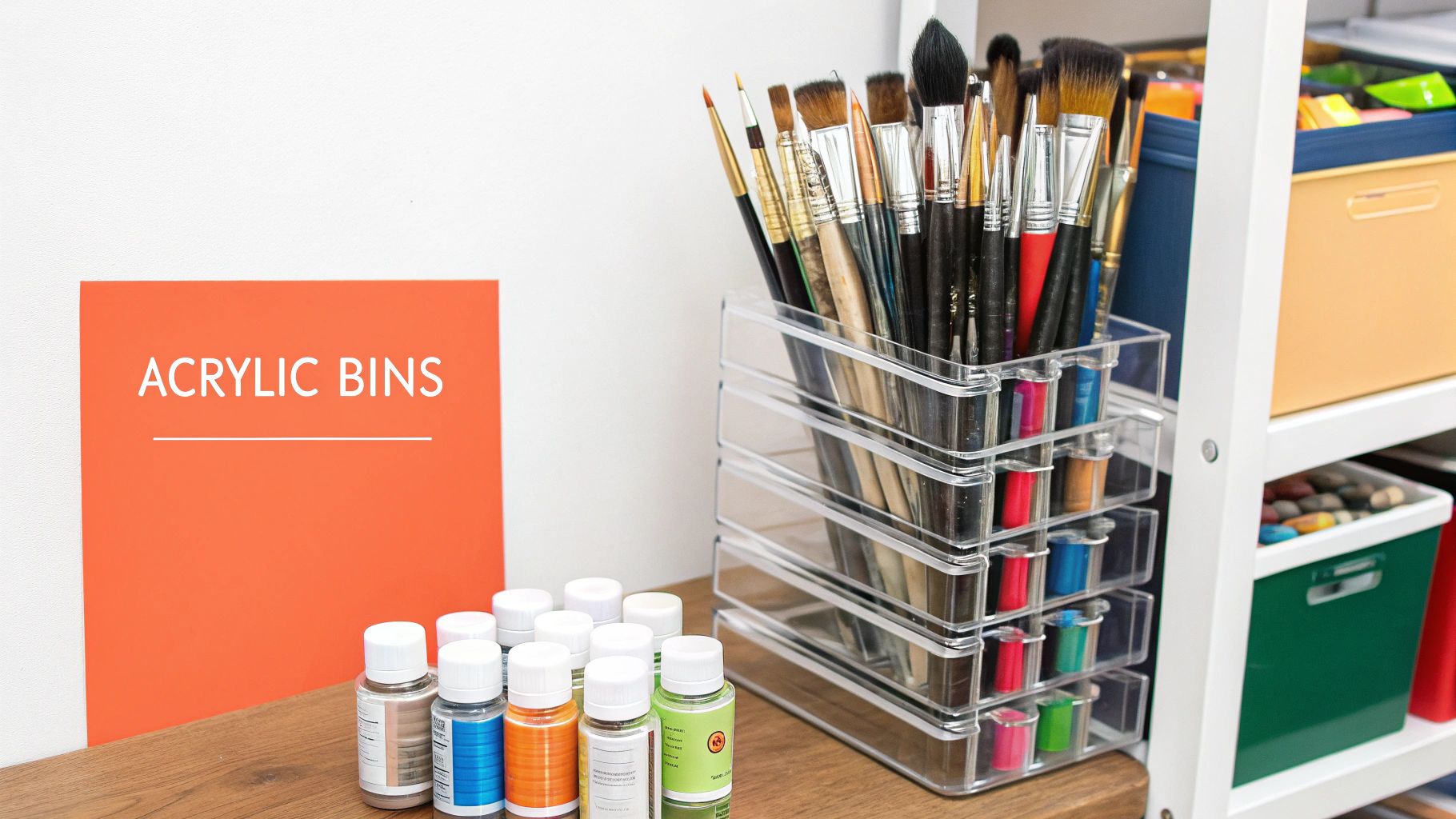
Clear acrylic organizers offer a sleek, modern solution for art supply storage, combining complete visibility with dust-free protection. These transparent containers come in countless configurations, from multi-level drawers and lipstick holders repurposed for paint tubes to specialized racks for brushes and pens. Their primary benefit is efficiency; you can instantly locate any tool or color without opening a single drawer, saving valuable time during the creative process.
This method is perfect for artists who value a clean, minimalist aesthetic and need to quickly access a wide range of small to medium-sized supplies like markers, ink bottles, and pastels. By keeping items contained yet visible, these organizers maintain an uncluttered workspace while protecting delicate supplies from damage. They are also highly versatile and can be used on a desktop, inside drawers, or arranged neatly on a bookcase with drawer for a cohesive studio look.
Popularized by makeup organization trends and championed by home organization influencers, clear acrylic organizers have become a staple in art studios for their functional and visually appealing design.
Repurposing household items is one of the most creative and budget-friendly art supply storage ideas, turning everyday objects into functional and unique organizers. This sustainable approach involves reimagining items like mason jars, coffee cans, and spice racks to store your art materials. Its primary advantage is cost-effectiveness and the ability to add a personal, eclectic touch to your studio space.
This method is perfect for artists who enjoy a DIY aesthetic and want to reduce waste. Using an over-the-door shoe organizer for tubes of paint or a vintage toolbox for a portable art kit keeps supplies tidy without a significant financial investment. It encourages you to see organizational potential in unexpected places, creating a storage system that is both resourceful and reflective of your creative personality.
Popularized by DIY communities and craft influencers on platforms like Pinterest, upcycling has become a go-to strategy for resourceful artists, proving that effective organization doesn't have to be expensive.
Modular cube storage is a highly flexible and scalable solution, perfect for artists whose supply collections are constantly evolving. This system uses standardized cube-shaped units that can be stacked and arranged in countless configurations to fit any space. You can customize them further with inserts like fabric bins, drawers, or dividers, allowing for a mix of concealed and open-display storage.
This approach is excellent for organizing bulkier items like yarn skeins, fabric bolts, and large sketchbooks, while also keeping smaller tools sorted in bins. Its clean, geometric lines offer a modern aesthetic that can easily be integrated into a multi-purpose room, serving as both art supply storage and a functional piece of furniture. As one of the most popular art supply storage ideas, its strength lies in its ability to adapt from a small two-cube stack to an entire wall unit.
Popularized by brands like IKEA with their iconic KALLAX series, modular cubes are a go-to for home organizers and artists alike. They are a prime example of effective storage solutions for small spaces, offering maximum utility within a compact footprint. For more ideas on maximizing your area, you can learn more about storage solutions on assemblysmart.com.
Vertical wall pockets and organizers offer a brilliant solution for artists needing to store numerous small items without sacrificing floor or desk space. These systems, often made from fabric, canvas, or clear vinyl, feature multiple pouches arranged vertically and can be hung on a wall or over a door. Their main advantage is high-density, visible storage; you can see everything at a glance, making it easy to find that specific marker, tube of paint, or roll of washi tape.
This art supply storage idea is particularly effective for those with extensive collections of lightweight supplies like pens, pencils, brushes, and yarn. Repurposing an over-the-door shoe organizer is a classic, budget-friendly approach, instantly providing dozens of compartments. It's an accessible and scalable system that keeps clutter contained while ensuring your most-used tools are ready to grab and go, making it ideal for classrooms, kids' art corners, and compact studios.
Popularized by classroom organization specialists and craft room bloggers, vertical pocket systems demonstrate that effective storage can be both simple and incredibly efficient, turning any unused vertical surface into a powerhouse of organization.
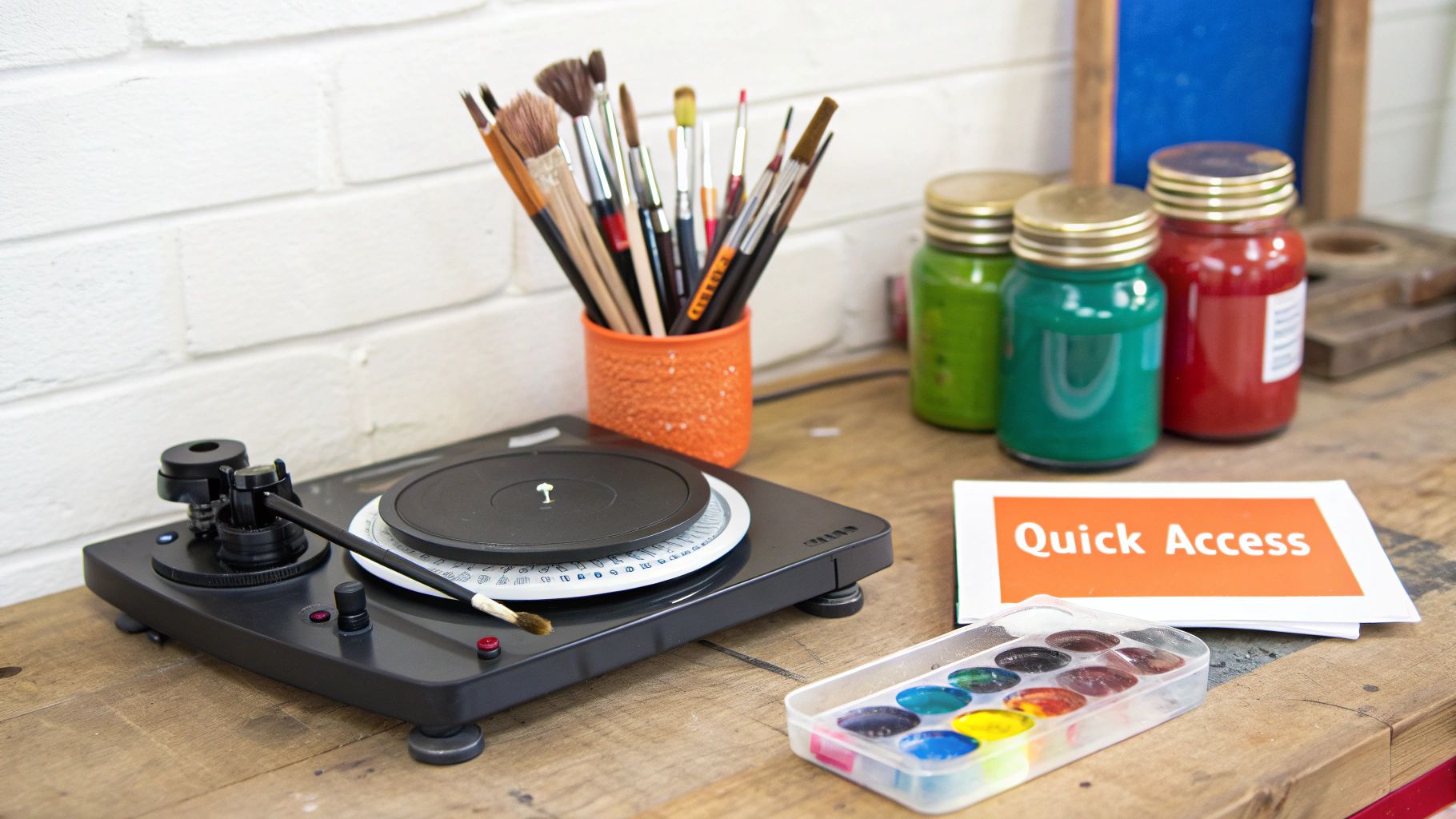
A Lazy Susan turntable is a surprisingly effective and dynamic solution for organizing supplies that you need to access frequently. This simple rotating tray transforms cluttered desktops and cramped cabinets into efficient, accessible storage. Instead of rummaging through jars or reaching over other items, a quick spin of the turntable brings exactly what you need to the forefront. Its primary benefit is providing 360-degree access to your tools, saving time and preventing frustration.
This method is perfect for organizing jars of paint, ink bottles, glitter, brushes, pens, and other small containers that often get lost in the back of a shelf. By keeping these items contained on a single rotating platform, a Lazy Susan maximizes corner cabinet space and keeps your main workspace tidy. It’s an art supply storage idea that adds a layer of kinetic convenience to your creative environment.
Originally a kitchen staple, Lazy Susans were adopted by professional artists and crafters who recognized their potential for improving studio workflow and accessibility, proving that great organizational tools can be found anywhere.
Under-bed storage solutions capitalize on the often-neglected space beneath a bed, making it a highly efficient area for organizing supplies. This approach involves using specialized containers like rolling drawers, shallow bins, or even vacuum-sealed bags to store materials out of sight but still within easy reach. The main advantage is its discretion; it keeps your living or studio space uncluttered while providing significant storage capacity.
This method is perfect for artists in small apartments or dorm rooms where every square inch counts. It’s an excellent way to store bulk materials like yarn skeins, large paper pads, or backup supplies that aren't needed daily. By using this hidden real estate, you can reserve more accessible areas like closets and shelves for your most frequently used tools, creating one of the most practical art supply storage ideas for compact living.
Popularized by small-space living advocates and home organization experts, under-bed storage has become a go-to strategy for maximizing room functionality. For more ideas on how to utilize low-profile storage furniture, you can explore various options like a bench with shoe storage, which applies similar space-saving principles.
| Storage System | Implementation Complexity 🔄 | Resource Requirements ⚡ | Expected Outcomes 📊 | Ideal Use Cases 💡 | Key Advantages ⭐ |
|---|---|---|---|---|---|
| Pegboard Wall Storage System | Medium – requires tools and mounting | Low to Moderate – pegboard and accessories | High visibility and accessibility | Art studios, craft rooms, workshops | Highly customizable, maximizes vertical space |
| Rolling Art Cart | Medium – mainly assembly and configuration | Moderate – quality wheels and materials | Portable and flexible workspace | Mobile workspaces, small spaces, art therapy | Mobility, consolidates supplies, doubles as work surface |
| Drawer Divider Systems | Medium – measuring and planning required | Low to Moderate – dividers only | Efficient use of drawer space, prevents damage | Studios, art classrooms, professional toolkits | Maximizes drawer space, protects delicate items |
| Clear Acrylic Organizers | Low – minimal assembly, mostly placement | Moderate to High – durable acrylic pieces | Easy visual identification, clean look | Professional artists, display setups | Visibility, dust protection, professional appearance |
| Repurposed Household Items | Low to High – depends on creativity and modification | Very Low – often free or low cost | Budget-friendly customized storage | Budget-conscious users, DIY enthusiasts | Cost-effective, sustainable, creatively personalized |
| Modular Cube Storage | Medium – assembly and planning required | Moderate to High – cubes and bins | Flexible, expandable storage system | Home offices, art studios, therapy rooms | Adaptable, combines furniture and storage |
| Vertical Wall Pockets & Organizers | Low – simple installation and mounting | Low – fabric/plastic pockets | Visible and accessible storage in small spaces | Classrooms, craft rooms, small spaces | Excellent space efficiency, easy to install |
| Lazy Susan Turntables | Low – minimal setup | Low to Moderate – depends on size/material | Easy 360° access to supplies | Desks, cabinets, frequently used materials | Easy access, maximizes circular space |
| Under-Bed Storage Solutions | Low – basic placement and occasional maintenance | Low to Moderate – containers and wheels | Hidden, dust-protected, large item storage | Small spaces, dorm rooms, seasonal storage | Maximizes unused space, affordable |
Creating a functional and inspiring art space is not a one-time project; it is an ongoing artistic practice. The journey to a perfectly organized studio is less about finding a single, magical solution and more about thoughtfully curating a system that supports your unique creative process. As we have explored, the most effective strategies often involve combining multiple art supply storage ideas to build a personalized and adaptable environment. Your ideal setup might be a dynamic hybrid, blending the high visibility of a pegboard system for daily tools with the bulk capacity of modular cube storage for canvases and paper stock.
The true power of these solutions is realized when they are tailored to your workflow. Imagine a rolling cart that serves as a mobile command center for your current watercolor project, loaded with specific palettes, brushes, and jars. At the same time, under-bed containers can discreetly house seasonal or rarely used materials, keeping your primary workspace uncluttered and focused. This intentional approach transforms your studio from a simple room with supplies into an intuitive extension of your creative mind, where finding what you need is effortless and friction-free.
The path to an organized studio is paved with small, strategic choices. Here are the most important principles to guide you:
Feeling inspired is one thing; taking action is another. Start small to avoid feeling overwhelmed. Choose one area of your workspace that causes the most frustration and apply a single solution from this guide. Perhaps you can begin by installing a simple pegboard above your desk or introducing a set of drawer dividers to tame a chaotic "junk drawer."
As you implement these art supply storage ideas, you will notice a profound shift. An organized space does more than just look good; it minimizes distractions, reduces the time spent searching for tools, and creates the mental clarity needed for deep creative focus. When your environment works for you, not against you, you are free to channel all your energy into what truly matters: making art. A well-designed studio is an investment in your creativity, empowering you to bring your visions to life more efficiently and joyfully than ever before.
Ready to build your dream studio but don't have the time or patience for complicated furniture assembly? Let the professionals at Assembly Smart handle the setup of your new shelving units, carts, and storage cubes. Visit Assembly Smart to get a fast quote and have your creative space put together correctly, so you can start organizing and creating sooner.