-
CALL US:
- (866) 952-3456

So, you're thinking about rearranging your living space. It should be a fun refresh, not a nightmare that ends with gouged floors, dented walls, and a trip to the chiropractor. The secret to a smooth, painless furniture shuffle is all about what you do before you even think about lifting anything heavy.
A little bit of planning goes a long, long way. By mapping out your moves, measuring everything (twice!), and clearing your path, you can turn a potentially stressful job into a manageable, even satisfying, project.
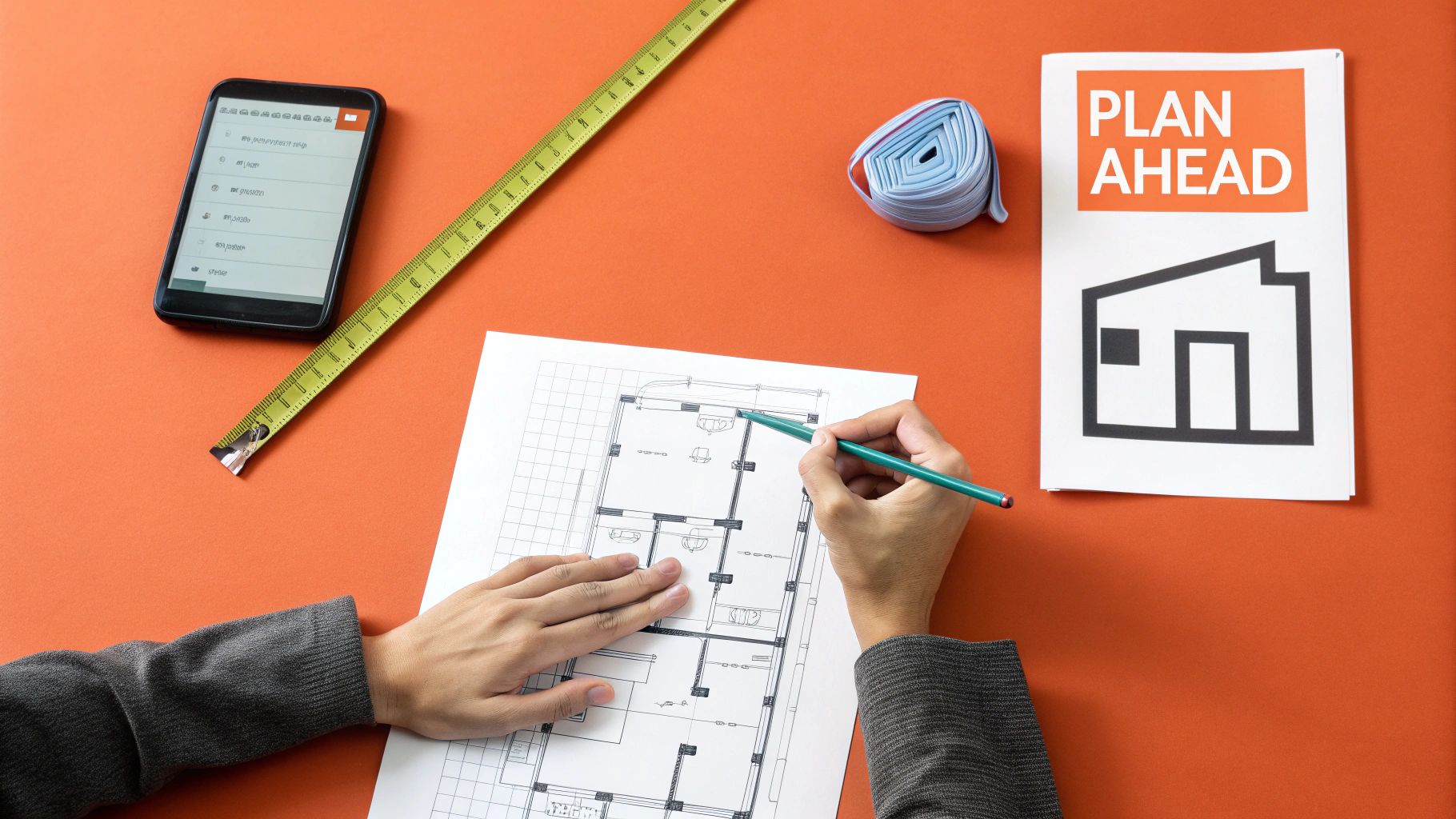
Before you even touch that sofa, grab a tape measure and a piece of paper. This is, without a doubt, the most critical part of the entire process. A solid plan is what stops you from having that sinking feeling when you realize the new armoire is half an inch too wide to get through the bedroom door. Trust me, it happens. This isn't just about avoiding damage; it’s about saving your time, your energy, and your sanity.
It's a universal challenge. The global moving services market, which was valued at a staggering USD 111.23 billion in 2025, is a testament to how many people need help with this exact task. And a huge slice of that—43.6%—is just residential moving, which includes the in-house shuffles we're talking about. People want a hassle-free way to reposition their stuff.
First things first, sketch out a simple floor plan. You don't need to be an architect or have fancy software. Good old-fashioned graph paper and a pencil work great, or you can find plenty of free apps for your phone or tablet.
Draw the room's outline, and be sure to mark where the doors, windows, and any other permanent fixtures are. Then, you can make little paper cutouts to represent your furniture and play around with different layouts without breaking a sweat.
Pro Tip: When you're measuring your furniture, don't just get the basic width and length. Always measure the diagonal height and depth, too. You’ll often have to tilt and pivot big items to wiggle them through tight doorways, and that diagonal measurement is the one that’ll get you.
Once you’ve settled on a layout, you can check out our more detailed guide on how to plan your room layout to think about things like traffic flow and making the space functional. This little blueprint becomes your roadmap, ensuring every piece has a designated home before the real work begins.
Your next job is to prep the space. A clear path is a safe path. It seems obvious, but taking a few minutes to do this now will prevent a world of hurt later.
Here's a quick rundown of what to do:
Before you start, run through this quick checklist. It’s a simple way to make sure you haven’t missed any of the small-but-critical details.
| Task | Why It Matters | Pro Tip |
|---|---|---|
| Measure Everything | Prevents furniture from getting stuck in doorways or not fitting in the new space. | Measure furniture, doorways, hallways, and stairwells. Don't forget diagonals! |
| Create a Floor Plan | Lets you visualize the final layout and plan the move order without any heavy lifting. | Use paper cutouts or a digital app to test different furniture arrangements easily. |
| Clear All Pathways | Reduces the risk of tripping, falling, or damaging your furniture and home. | Move small items, decor, and rugs to a separate, out-of-the-way room. |
| Protect Floors & Walls | Prevents scratches, scuffs, and dents during the move. | Use moving blankets, cardboard, or floor runners. Pad sharp corners on furniture. |
| Gather Your Tools | Having the right equipment on hand makes the job faster, safer, and much easier. | Make sure you have furniture sliders, a dolly, moving straps, and basic hand tools. |
| Brief Your Helpers | Ensures everyone is on the same page, moving efficiently and safely as a team. | Do a quick walk-through of the plan before you start lifting anything. |
Getting these steps right sets the stage for a successful move. A little bit of prep makes all the difference between a frustrating ordeal and a smooth home refresh.
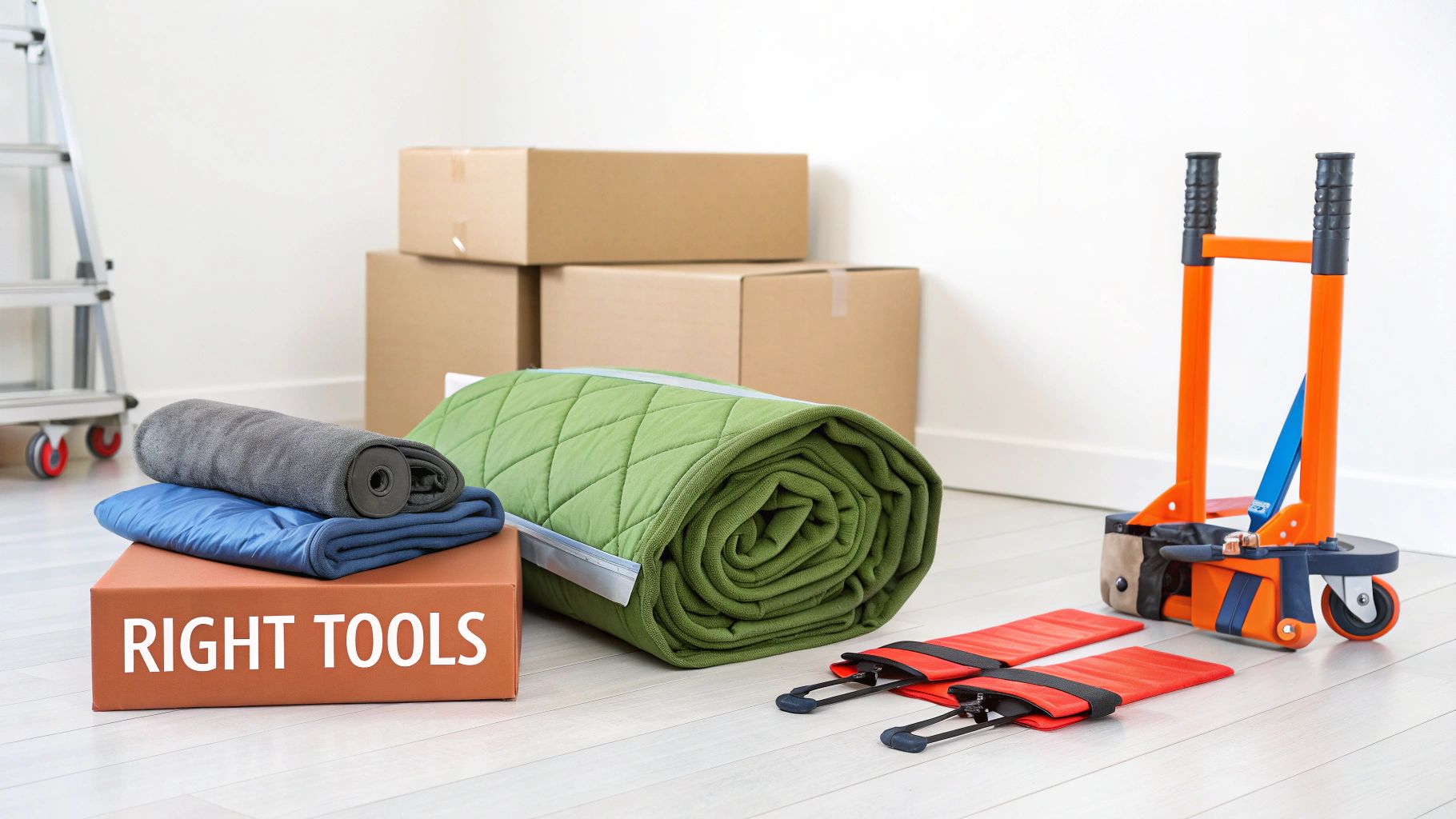
Trying to move a heavy dresser or a sectional sofa with just muscle is a recipe for disaster. You’re looking at scratched floors, damaged furniture, and a seriously sore back. The right equipment isn't a luxury; it’s an absolute necessity for moving furniture inside your house safely and efficiently.
Think of these tools as your own dedicated moving crew. They do the heavy lifting, the gliding, and all the protecting, letting you focus on careful maneuvering instead of just brute force. A small investment in the right gear more than pays for itself by preventing costly repairs to your home or your favorite furniture.
Putting together a small arsenal of moving tools is pretty straightforward. You can rent most of this stuff from a local hardware or moving supply store, or just buy it if you see more projects in your future.
Knowing what to use and when is the key. A hand truck (or appliance dolly) is a much better choice for tall, narrow items like a refrigerator, whereas a flat furniture dolly is perfect for shorter, wider pieces. Sliders are your go-to for just shifting furniture around within a room, especially on carpet.
For the really big, unwieldy stuff, a combination of tools is often the best way to go. You might use lifting straps to get a sleeper sofa off the ground and then set it on a couple of dollies to roll it down a long hallway.
The goal is always to work smarter, not harder. To get into some more specific methods, check out our guide covering some easy ways to move heavy furniture with the right equipment.
Once you’ve gathered the right tools, the real work begins. Moving furniture isn’t just about brute force; it’s about smart technique. Proper form is what separates a smooth move from a trip to the chiropractor.
The old saying, "lift with your legs, not your back," is more than just good advice—it's the golden rule. Get low by bending your knees and hips, always keeping your back straight and your grip secure. When you stand, the power should come from your legs, not your spine. Keep your core tight the whole time to stabilize your body and prevent any dangerous twisting.
Moving furniture is almost never a one-person show. When you're working with a partner, communication isn't just helpful—it's everything. Forget just saying, "Ready? Go." You need constant coordination to navigate tight spots and avoid accidents.
Before you even touch the furniture, walk the entire route and agree on a plan. One person needs to take the lead, calling out every corner, step, and doorway ahead. Keep the commands simple and direct:
Communication is the most underrated tool you have. A well-coordinated team can handle even the heaviest, most awkward pieces with way less strain and a much lower risk of dropping something or getting hurt.
The person walking backward should always have the clearest path, while the person facing forward acts as the spotter, calling out instructions. This simple setup makes every move more controlled and a whole lot safer.
Not all furniture is created equal. You can't muscle a couch through a doorway the same way you’d carry an end table. You have to adapt your strategy to the item you're moving.
For tall, skinny pieces like bookcases or armoires, the "walking" technique is a game-changer. With a helper on the other side, just tilt the item back and "walk" it forward one leg at a time. It feels much more stable and controlled than trying to lift the entire dead weight at once.
Trying to get a long sofa through a tight doorway? The "high-low" technique is your best friend. One person carries their end high while the other carries their end low. This lets you angle the sofa to fit it through the doorway’s vertical space with surprising ease. To explore these methods and more, our complete guide offers a deep dive into safe lifting techniques to protect yourself and your belongings.
Rearranging a room is a great way to refresh your space, but it’s easy to leave a trail of destruction behind. A single slip can lead to scratched floors, dented drywall, or a chipped corner on your favorite dresser. Suddenly, your simple weekend project becomes a costly repair job.
Trust me, a little prep work is the best insurance policy you can get against these common moving mishaps.
Before a single piece of furniture moves, your first job is to protect your floors. Different surfaces need different kinds of love. If you’ve got delicate hardwood, don't skimp—go for heavy-duty cardboard or a specialty product like Ram Board. It's tough enough to handle heavy foot traffic and the occasional accidental drop. For tile or laminate, you can get by with old blankets, flattened moving boxes, or even a few thick towels to create a safe buffer.
Once the floors are covered, look at your walls and doorways. These spots are absolute magnets for scuffs and dings, especially when you're wrestling a bulky item around a tight corner. You don't need to spend a lot to protect them.
A simple but surprisingly effective trick is to tape pieces of cardboard to vulnerable door frames and sharp wall corners. I've even seen people slit pool noodles down the middle and use them as temporary corner guards. It looks a little silly, but it works. For more in-depth advice on keeping your hardwood safe, check out this resource for detailed guidance on protecting hardwood floors from scratches.
Protecting your home is non-negotiable. From what I've seen, the most common DIY moving injuries and damages don’t happen from heavy lifting. They happen when people try to navigate tight spaces without taking a few minutes to prepare first. That prep time will save you hours of repairs later.
Finally, the furniture itself needs a layer of defense. Your two best friends here are moving blankets and plastic stretch wrap. They do different, but equally important, jobs.
Taking the time to wrap each piece properly is what separates a successful move from a DIY disaster. For a deeper dive into the best techniques, take a look at our guide on how to protect furniture when moving.
While these tips make a huge difference, it's worth noting that professional movers can reduce damage by up to 40% compared to DIY attempts, simply because they've learned how to avoid accidents in tricky spaces. By taking these preventative measures, you’ll ensure your home and your furniture look just as good after the move as they did before.
Every home has its quirks. That tight 90-degree turn at the bottom of the stairs, a frustratingly narrow hallway, or that beautiful antique armoire that suddenly feels like a battleship—these are the moments that turn a simple furniture shuffle into a major headache.
Let’s be clear: conquering these obstacles isn’t about brute force. It’s all about working smarter, not harder.
The staircase is often the biggest battleground. Moving heavy furniture up or down stairs is a high-risk activity where one wrong move can damage the furniture, the house, or worse, one of you. This is always a two-person job, period.
The key here is communication. Before you even lift the piece, agree on simple, loud commands: "Lift," "Lower," "Stop," "Left," "Right." The person at the top has the bird's-eye view and acts as the navigator, calling out instructions and watching for scuffs and scrapes.
This quick infographic shows the right sequence for protecting your home before you even think about tackling the stairs.
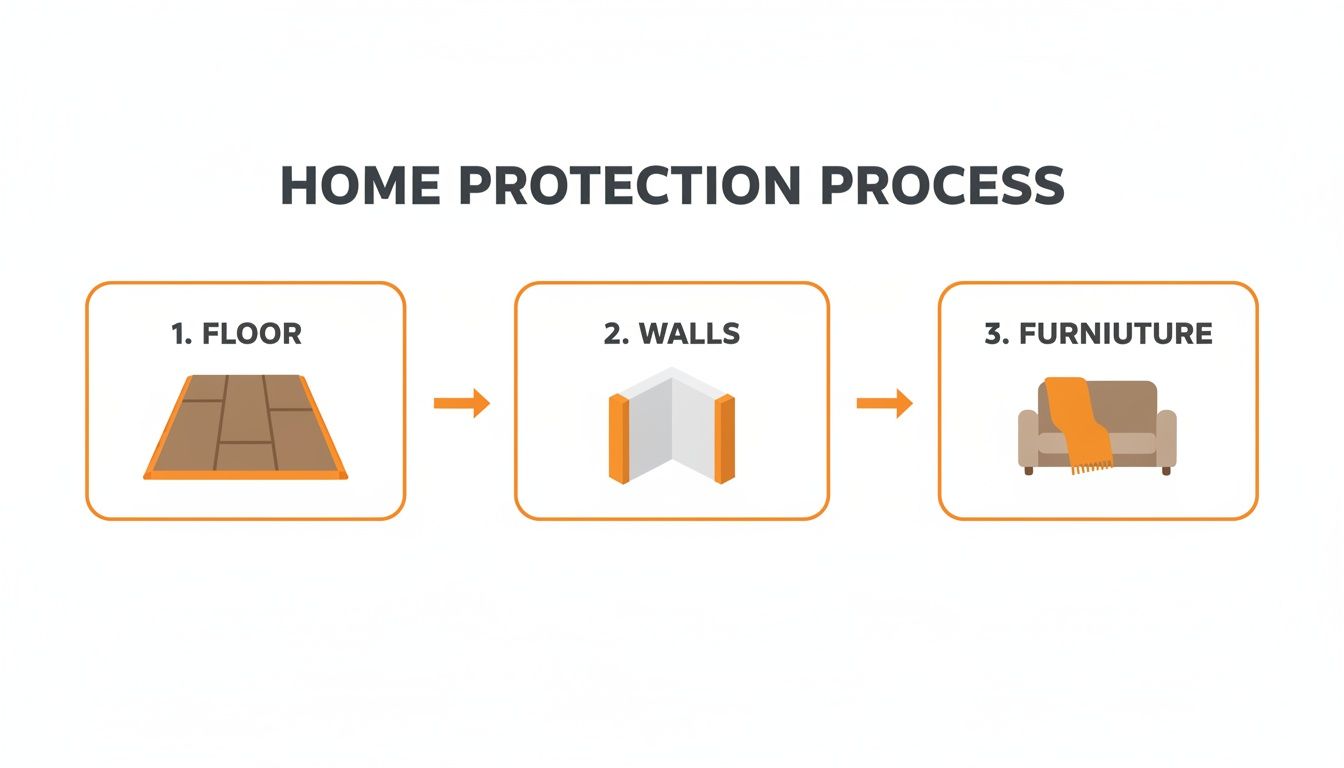
The idea is simple but critical: protect the floors, then the walls, and finally the furniture itself. It’s all about creating layers of defense against nicks and gouges.
Trying to get a long sofa around a 90-degree corner can feel like a frustrating geometry problem you forgot how to solve. The "hook" or "pivot" method is your secret weapon.
As you approach the tight turn, carefully stand the item up vertically on its end. Slide it as deep into the corner as you can get it. Then, you pivot the piece around the corner post, essentially "hooking" it through the doorway or into the connecting hallway. This trick uses the room's vertical height, letting you clear corners that seem impossible at first.
Pro Tip: Always measure the diagonal width of your furniture. A piece that won’t fit through a door horizontally will often slide right through once you tilt it and use that longer diagonal clearance.
Some pieces are just plain awkward. Instead of guessing, it helps to have a specific game plan for those common problem items.
| Problem Item | Primary Challenge | Recommended Tool | Key Technique |
|---|---|---|---|
| King Size Mattress | Floppy, awkward, and hard to grip. | Forearm Forklift straps | Two people use straps to create handles, keeping the mattress vertical and preventing it from buckling. |
| Heavy Armoire/Dresser | Top-heavy and prone to tipping. | Furniture Dolly | Tip the item back slightly onto a four-wheel dolly. One person pushes while the other guides and spots. |
| Long Sofa | Length makes cornering difficult. | Furniture Sliders | Place sliders under the feet to reduce friction, then use the "hook" method to pivot around corners. |
| Tall Bookshelf | High center of gravity. | Shoulder Dolly straps | These straps use leverage from your legs and shoulders, making it easier to carry tall items without straining your back. |
Having the right tool and technique for the job turns a potential disaster into a smooth, controlled move.
Sometimes, the most obvious solution is the best one: make the furniture smaller. For bulky items like sleeper sofas, solid wood bed frames, or massive entertainment centers, taking them apart isn’t just an option—it’s often a necessity for any moving furniture in house project.
Before you grab a screwdriver, give the piece a good look for any bolts, screws, or other fasteners. Most furniture from places like IKEA or Wayfair is designed to be taken apart and put back together.
Here’s how to do it without losing your mind (or any screws):
This methodical approach is the difference between a successful move and staring at a pile of mystery parts later on.
Let's be honest, even the most dedicated DIY-er has a breaking point. While shifting furniture around can be a super satisfying project, there are definitely times when trying to do it all yourself is inefficient, dangerous, or just plain impossible. Knowing when to wave the white flag and call in the pros is a huge part of making sure your in-house move actually goes smoothly.
Sometimes, the decision is pretty much made for you. If you’re looking at moving something like a piano, a slate pool table, or a priceless antique armoire, a DIY approach is just too much of a gamble. These aren't your average pieces of furniture; they often demand specialized equipment and a level of know-how you just don't have kicking around in the garage. Trying to brute-force these items is a recipe for disaster, risking serious damage or, worse, serious injury.
Take a good, hard look at your home. Are you working with a simple, open-concept space? Or are you staring down a multi-story maze of tight corners and narrow staircases? The layout of your house is a massive factor. That winding staircase or that sharp 90-degree turn in the hallway can quickly turn a simple job into a logistical nightmare if you don't have the experience.
The sheer scope of the project matters, too. If you’re just swapping the sofa and the loveseat, you’ve probably got this. But if you’re trying to redo multiple rooms or move a whole home office, the time and physical effort start to pile up fast.
The most critical thing to consider is your own physical ability. Be real with yourself and your helpers about what you can all safely manage. Pushing your limits just isn't worth a thrown-out back or a dropped heirloom that a pro could have moved without breaking a sweat.
Bringing in a professional moving team is about more than just getting some extra muscle. These folks bring efficiency, safety, and a whole lot of peace of mind to the table. They’re trained to handle tricky spaces and lift heavy items using techniques that protect both your furniture and your home.
This is a massive industry for a reason. In the US alone, the moving sector is on track to hit $23.4 billion by 2025, with countless businesses specializing in exactly these kinds of challenging jobs. You can read more about the scale of the moving services market and see how these small, expert crews make tough moves look easy.
Maybe the biggest perk, though, is the insurance. If you or a buddy accidentally drops a valuable piece or puts a giant scratch in the hardwood floor, that's on you. Reputable moving companies are insured, which means any accidental damage they cause is covered. That protection alone can be well worth the cost.
Think about calling a professional if:
Making the smart call to hire help ensures your project gets done right, saving you from a world of potential damage, injury, and stress.
For those tricky pieces that need to be taken apart and put back together, or when you just want the job done quickly and correctly, Assembly Smart is your go-to solution. Our experienced professionals handle the heavy lifting and technical work, ensuring your furniture is moved and set up perfectly. Get your free estimate and book your stress-free appointment today at https://assemblysmart.com.