-
CALL US:
- (866) 952-3456

That's a fantastic question, and one every new parent asks. You'd think the answer would be a simple "yes," but it's a little more nuanced than that.
While not all crib mattresses are the exact same size, the vast majority sold in the U.S. for standard, full-size cribs are. This isn't by accident—it's a critical safety feature mandated by strict federal regulations. Think of it as a lock-and-key system designed to keep your baby safe.
When you're swimming in a sea of baby gear decisions, the last thing you need is to worry about whether the mattress you bought will actually fit the crib. Thankfully, safety regulations have taken the guesswork out of this part of setting up the nursery.
The whole reason for this standardization is to prevent dangerous gaps from forming between the mattress and the sides of the crib. It's that simple, and that important.
Even a small gap can create a serious entrapment and suffocation risk for a baby. It's a scary thought, which is why the government stepped in.
Federal regulations in the US mandate that a standard full-size crib mattress must be at least 27 ¼ inches wide and 51 ¼ inches long. The rules also cap the thickness at a maximum of 6 inches. You can read a bit more about these critical safety dimensions on Amerisleep.com.
This strict sizing ensures that any standard mattress you pick up will fit snugly and securely inside any standard crib. It’s a built-in safety feature that provides serious peace of mind.
To make it even easier, there’s a simple at-home check every parent should know.
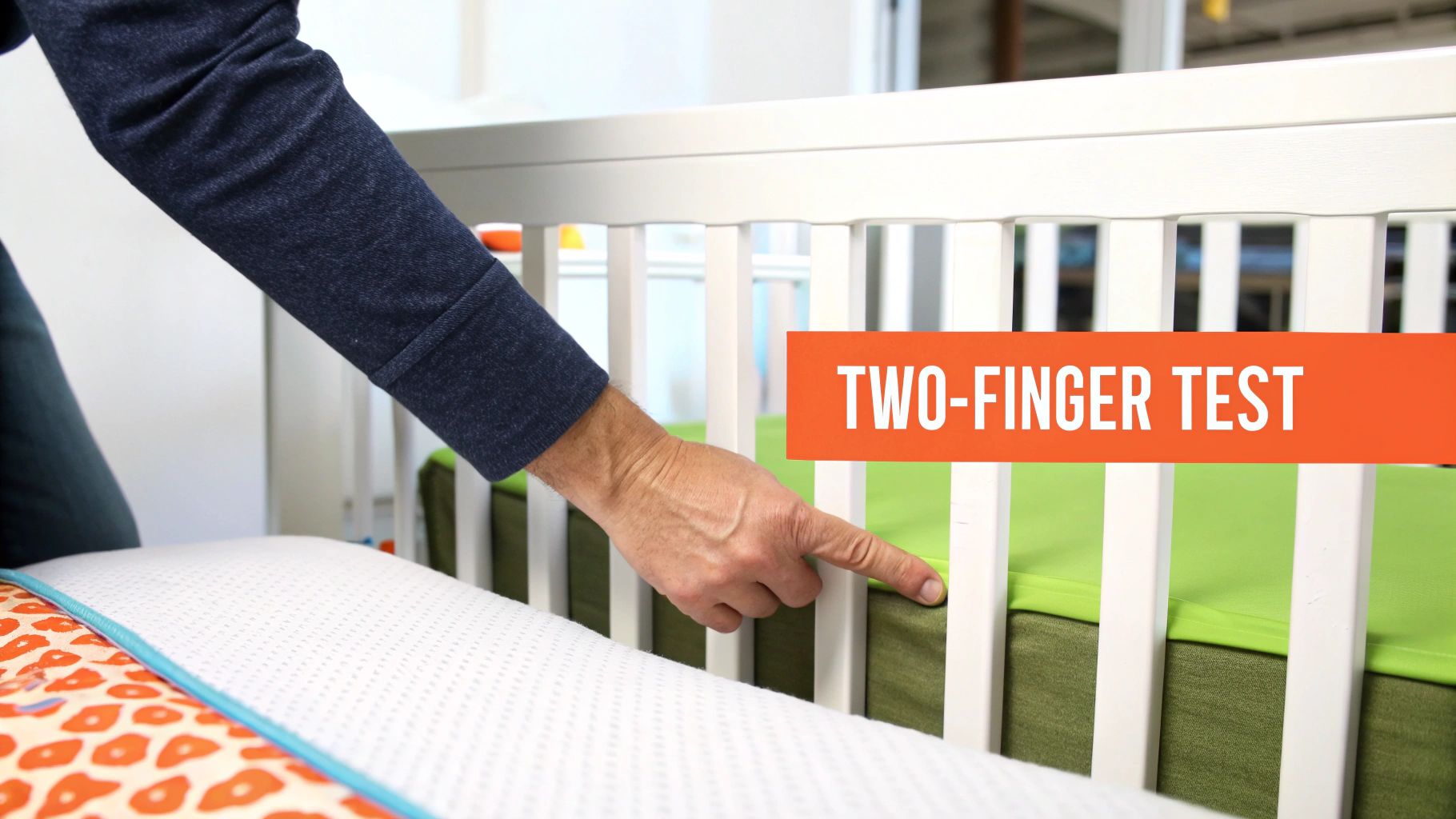
The Two-Finger Test
This is a quick and essential safety check. Once the mattress is in the crib, try to stick your fingers in the gap between the mattress edge and the crib frame. If you can fit more than two fingers, the gap is too big, and the mattress is not safe to use.
This simple trick gives you an immediate, clear way to confirm your baby’s sleeping space is secure. Knowing these basics helps you breathe a little easier, confident that you’ve created a safe environment for your little one.
When we talk about crib mattress sizes, we aren’t just dealing with helpful industry suggestions. We're talking about mandatory federal safety laws. These rules are enforced by the U.S. Consumer Product Safety Commission (CPSC) and were created with one critical mission: protecting your baby from preventable dangers. For any new crib sold in the United States, these regulations are strict, precise, and completely non-negotiable.
Think of it like a puzzle. The crib frame is the board, and the mattress is the piece that has to fit inside it perfectly. If that piece is too small, it leaves dangerous gaps. This is precisely why the CPSC created the “no-gap” rule, which has become the bedrock of modern crib safety.
So, what are these all-important numbers? The law stems from the Consumer Product Safety Improvement Act of 2008 (CPSIA), which mandated that all standard full-size cribs must have interior dimensions of 28 inches by 52 ⅜ inches. There's almost no wiggle room here—a mattress has to fit snugly inside, leaving no more than a ½-inch gap on any side. You can get a deeper dive into these precise mattress dimensions on Amerisleep.com.
To pull off that perfect, snug fit, a full-size crib mattress is required to be at least 27 ¼ inches wide by 51 ¼ inches long. That tiny difference between the crib’s interior and the mattress’s exterior is completely intentional. It makes the mattress just easy enough to get into the crib frame but leaves virtually no empty space for a baby to get trapped.
A gap of an inch or two might not sound like much to an adult, but for a tiny, curious baby, it’s a massive hazard. These spaces can lead to serious entrapment, where a baby's head, arms, or even their whole body can get stuck. Tragically, this can lead to severe injury or suffocation.
The CPSC's stringent regulations were put in place to eliminate these specific hazards. Adhering to these measurements isn't just about following rules; it's about creating the safest possible sleep environment where your child can rest securely.
This is why the answer to "are all crib mattresses the same size?" is a firm "yes" for standard models. The legal requirements force manufacturers to stick to a uniform size. This guarantees safety and makes sure that different brands of standard cribs and mattresses will work together, taking all the dangerous guesswork out of it for parents.
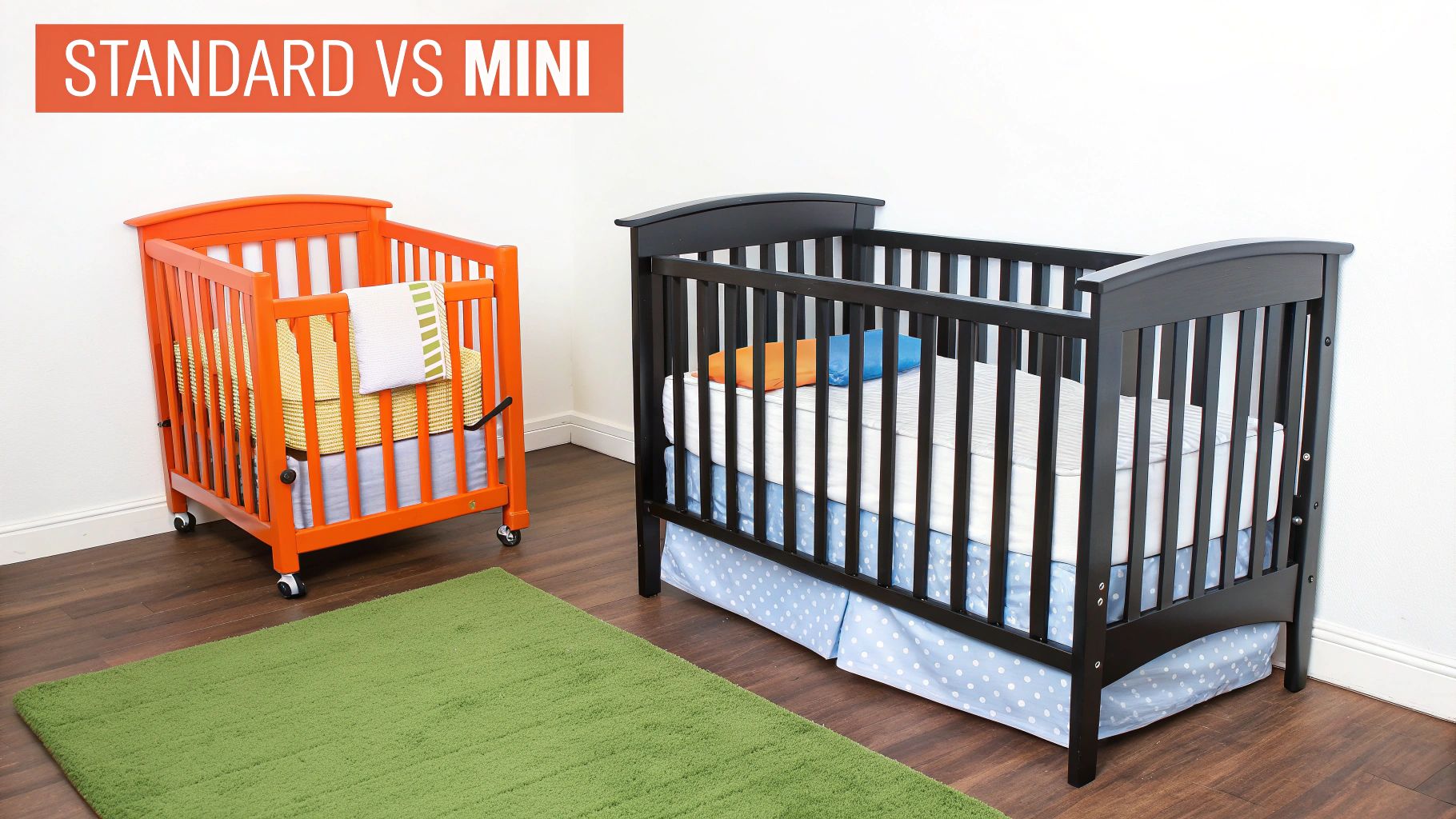
While most cribs you'll come across are standard, full-size models, you’ll also find a popular alternative: the mini crib. Getting the difference between these two is absolutely critical, since it directly impacts your baby’s safety and what you end up buying.
Think of it this way: a standard crib is like a universal system with interchangeable parts. A mini crib? It's more of a specialty item.
Standard cribs, as we've covered, are built to strict federal sizing rules. This makes shopping a breeze because any standard mattress will fit into any standard crib, guaranteeing that safe, snug fit we’re after. Mini cribs, on the other hand, are playing by a whole different set of rules—or really, a lack of them.
Here’s the single most important thing to remember: unlike their full-size cousins, there is no federally mandated size for mini cribs or their mattresses.
This means you can't just grab a mattress from one mini crib brand and expect it to fit into another. It almost certainly won't, and mixing and matching creates a serious safety hazard.
This free-for-all exists because mini cribs are designed for specific situations, like small city apartments or as a secondary crib at the grandparents' house, where a full-size one just won't work. These smaller cribs, which make up about 10-15% of the market, often use mattresses around 24 inches by 38 inches.
Because of this sizing chaos, the only safe way forward is to treat the mini crib and its mattress as a single, matched set. Don't ever assume you can buy them separately from different companies.
Crucial Safety Tip: When you buy a mini crib, you must buy the mattress that is specifically designed and sold by the same manufacturer for that exact model. In many cases, the mattress is already included with the crib frame.
Following this one rule takes all the dangerous guesswork out of the equation and ensures you get a perfect fit without hazardous gaps.
Here are a few other things to keep in mind:
Mini cribs can be a fantastic solution for tight spaces or as a portable option. As long as you stick to the golden rule—buy the crib and mattress as a dedicated pair—you can create a perfectly safe and cozy sleep space.
And no matter which style you choose, our guide on baby crib assembly can help you make sure it's all put together correctly from the very beginning.
Making sure your baby is safe isn't about guesswork; it’s about simple, concrete actions you can take right now. And one of the most important checks you'll ever do is verifying your crib mattress fit. This guide walks you through the exact steps to confirm your setup is perfectly secure, whether you're working with a brand-new crib or a trusted hand-me-down.
Before you even think about putting a mattress inside, the first and most critical step is to fully assemble the crib exactly as the manufacturer's instructions tell you to. Trust me, trying to measure a partially built frame is a recipe for getting inaccurate readings, which can lead to a false and dangerous sense of security. Only when the crib is sturdy and complete can you move on.
Okay, grab a reliable tape measure. We’re going to be checking the interior length and width of the crib frame itself.
These basic steps are useful for all sorts of projects around the house. If you want to get more comfortable with it, our article on how to measure furniture has some great tips. For a standard, full-size crib, you should be looking at measurements of approximately 28 inches wide by 52 ⅜ inches long on the inside.
Once you've confirmed the crib’s dimensions, go ahead and place the mattress inside. Now comes the most critical hands-on check for any parent.
The Two-Finger Test: This is the ultimate pass/fail safety check. Just slide your fingers into the gap between the edge of the mattress and the crib frame. Make sure you check all four sides. If you can fit more than two fingers in that gap, it's too big, and that mattress is unsafe to use.
This simple test immediately tells you if the fit is snug enough to prevent any entrapment hazards. A proper, safe fit should leave almost no room to spare at all.
Finally, give the mattress thickness a quick check. It should never be more than 6 inches thick. A mattress that's too thick can actually lower the effective height of the crib rails, creating a serious climbing hazard once your little one gets more mobile and curious. Getting a handle on these specific dimensions is much easier when you understand general mattress sizing, and you can find a great guide on how to choose the best bed mattress size for more context.
To make it even simpler, here's a quick checklist you can run through to make sure everything is just right. Go through each point to give yourself total peace of mind.
| Safety Check | What to Look For | Pass or Fail |
|---|---|---|
| Crib Dimensions | Interior measures approx. 28" W x 52 ⅜" L | |
| Two-Finger Test | Gap between mattress & crib is LESS than two fingers wide | |
| All Four Sides | Test the gap along the head, foot, and both sides | |
| Mattress Thickness | Mattress is 6 inches thick or less |
Following these simple checks ensures you've created the safest possible sleep environment. A snug-fitting mattress is non-negotiable, so take the few minutes required to get it right. It’s one of the best things you can do for your baby's safety.
Getting the nursery ready is about more than just picking out cute decorations—it's about sidestepping the common traps that could put your baby at risk. Knowing the answer to "are all crib mattresses the same size" is a great start, but steering clear of a few key buying mistakes is just as important. Even with the best intentions, it's easy to make a simple error that creates a totally preventable hazard.
One of the most frequent slip-ups is accidentally buying a European-sized crib or mattress. They can look almost identical in online photos, but their dimensions are completely different from the U.S. standards. This kind of mix-up can lead to dangerous gaps you might not even spot until it's too late.
The U.S. standard is worlds apart from what you'll find in Europe, where cribs are often 60x120cm (that’s about 23.6×47.2 inches). If you pair one of those with a standard American mattress, you're looking at a 25% mismatch risk with imported products. That's a huge difference that creates major safety gaps. The team at Amerisleep has a great breakdown of these international sizing differences if you want to dive deeper.
Another common mistake happens with mattress thickness. You might be tempted to get a thicker, cushier-looking mattress, thinking it'll be more comfortable. But anything over the federally mandated 6-inch maximum is a real hazard. A mattress that's too thick makes the crib rails effectively lower, giving a growing baby a much easier path to climbing and falling out.
A safe crib is a complete system where precise measurements all work together. If you change just one part—like the mattress thickness or its country of origin—you can unintentionally wreck the safety design of the entire crib.
Using a well-loved, hand-me-down crib can feel wonderfully sentimental, but it often comes with hidden dangers. Older cribs, particularly any made before the strict 2011 safety regulations were passed, probably don't meet today's tough standards. They might have slats that are too far apart, unsafe hardware, or old-school dimensions that just don't fit modern mattresses.
To make sure you avoid these issues, always run through this simple safety check.
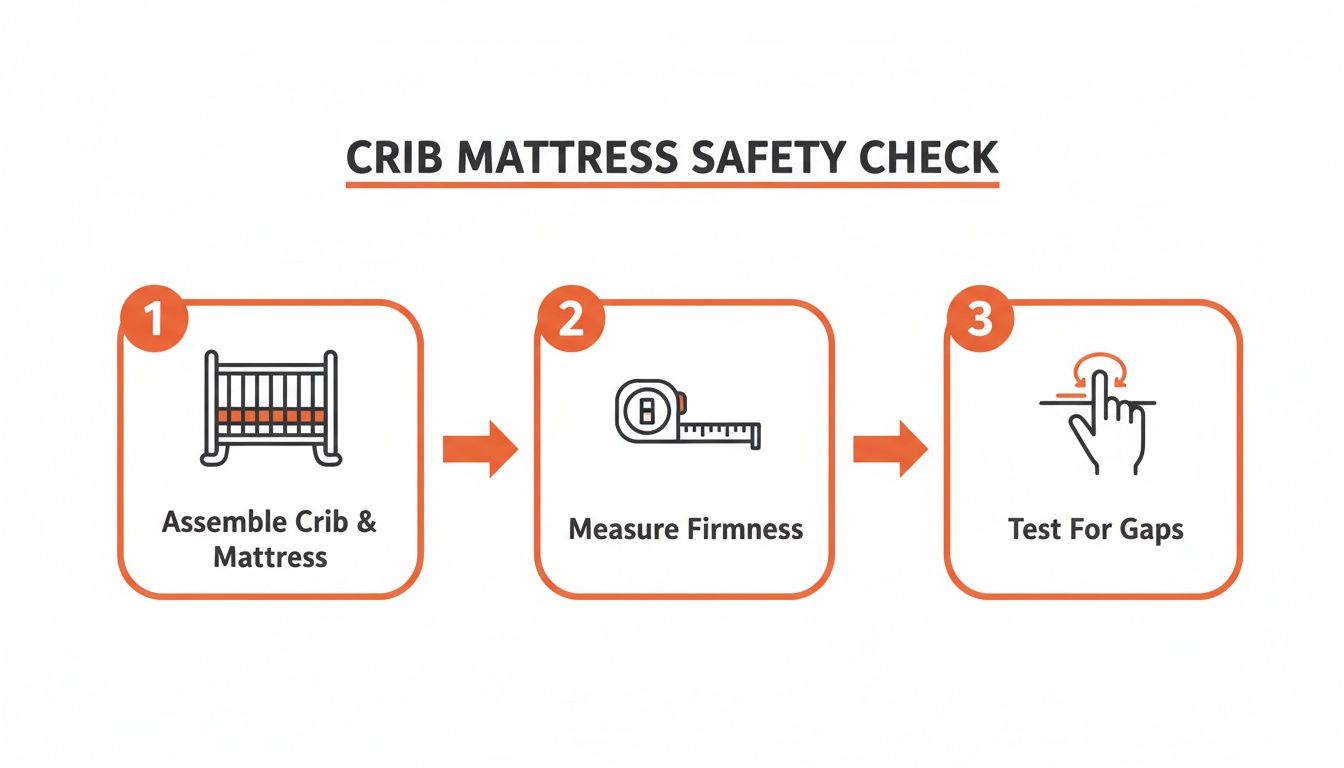
This graphic is a lifesaver. It shows you the essential steps: build the crib completely, measure the inside space, and then do that critical two-finger test to make sure the fit is perfectly snug. By staying aware of these common mistakes—from international size mix-ups to outdated hand-me-downs—you can confidently create a secure sleep space and protect your little one from accidents that are easy to prevent.
Getting the right mattress size is the non-negotiable first step, but it's really just the starting line. A perfectly snug fit is the foundation of a safe crib, but creating a truly safe space for your baby means looking at the bigger picture. The surface they sleep on is just as crucial as the gap—or lack thereof—around the edges.
After size, the single most important feature to focus on is firmness. A firm, flat surface is absolutely vital for reducing the risk of Sudden Infant Death Syndrome (SIDS). While a soft, plushy mattress might seem cozier to us, it poses a serious suffocation hazard for a baby who can't easily lift their head or roll over.
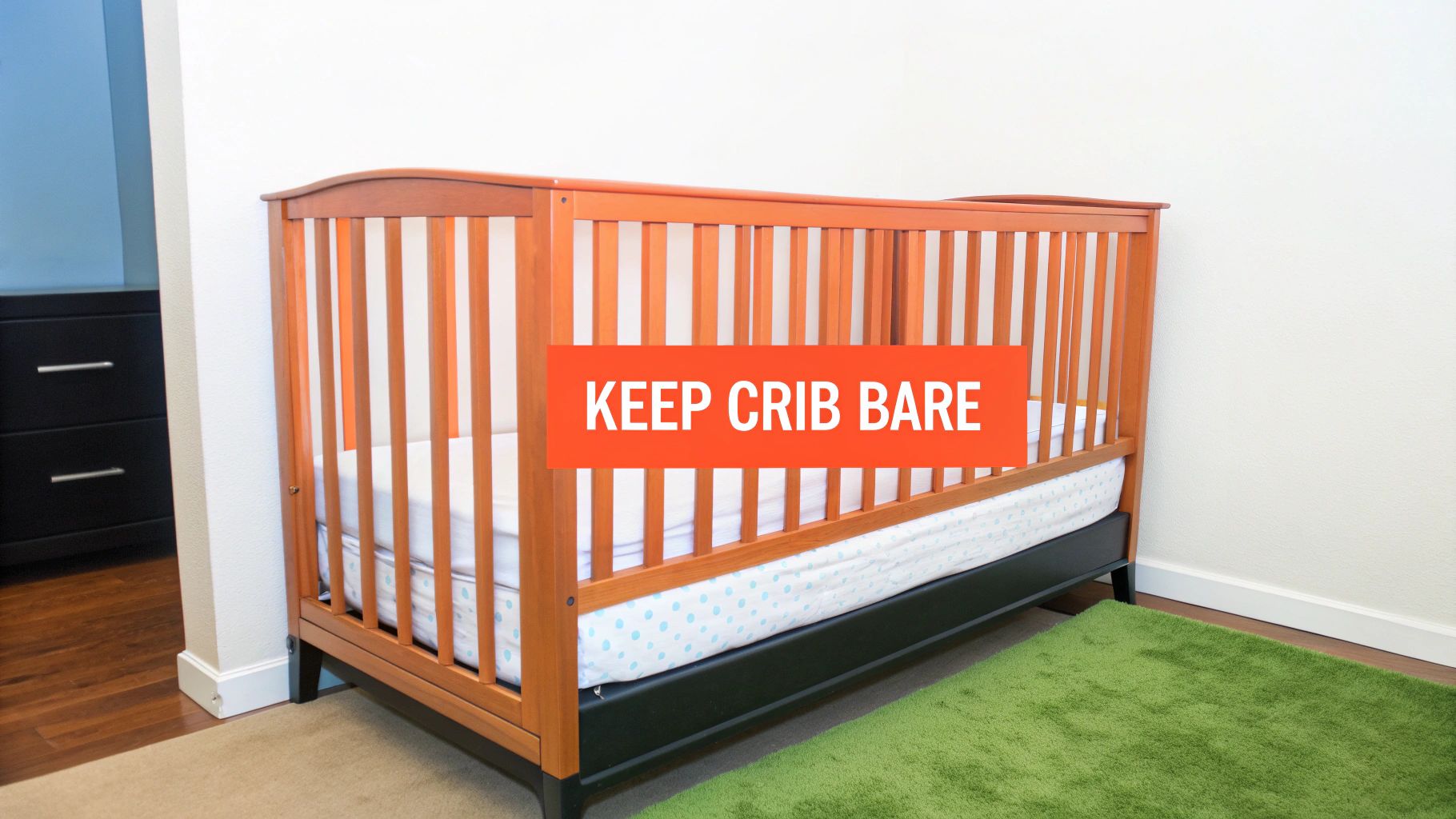
The American Academy of Pediatrics (AAP) gives one clear, simple directive for nursery safety that cuts through all the noise: keep the crib bare. Think of it as a minimalist sleep space, designed for one purpose and one purpose only. This isn't just a suggestion; it's a critical safety protocol.
A bare crib means absolutely nothing should be inside except for the baby, a fitted sheet, and the mattress itself. This includes no blankets, no pillows, no stuffed animals, and no crib bumpers. Every single one of these items introduces a potential suffocation or entrapment risk.
Maintaining a safe sleep space is an ongoing job, not a one-and-done setup. A few simple habits can make a huge difference in both safety and hygiene.
Of course, safety doesn't stop at the crib. Proper sleepwear is key for keeping your baby comfortable and safe without the need for loose blankets. You can learn more by understanding TOG ratings for baby sleep sacks.
Integrating these practices is all part of a holistic approach to nursery safety. As your baby grows and becomes more mobile, our guide to childproofing can help you secure the rest of the room.
Diving into the world of baby gear can feel like learning a whole new language. When it comes to the nursery, and especially your baby’s sleep space, getting it right is everything. Let's walk through some of the most common questions we hear from parents about crib mattresses, so you can feel confident you're making the safest choice.
A lot of parents wonder if they need to shell out for a whole new mattress once their little one is ready for a toddler bed. This is one area where you can breathe a sigh of relief.
Yes, you absolutely can, because they are one and the same. Standard-size crib mattresses and toddler mattresses are made to the exact same federally regulated dimensions. It’s a smart design choice, really, since most modern cribs are built to convert into toddler beds anyway. This lets the mattress grow right along with your child.
This built-in consistency is a huge plus. It saves you money and spares you the headache of mattress shopping all over again. If you have a dual-sided mattress, just remember to flip it from the firm infant side to the softer toddler side when you make the switch.
The big takeaway here is that a quality standard crib mattress isn't just for the baby years—it's an investment that will see your child safely through their toddler stage, too.
We all love a good hand-me-down, but a used crib mattress is one item experts strongly recommend you pass on. The risks just aren't worth the savings. An older mattress can lose its firmness over time, creating a softer surface that poses a suffocation risk for an infant.
You also have no idea what its history is. There could be hidden mold, mildew, or bacteria lurking inside, and there’s no way to know if it was ever part of a safety recall. For both safety and hygiene, starting fresh with a new mattress is always the best move. As you map out your nursery, thinking about standard sizes for other pieces is also a good idea; you can learn more about typical baby changing table dimensions to make sure everything fits together just right.
The "two-finger test" is a super simple, must-do safety check to ensure your mattress fits properly. Once the mattress is in the crib frame, try to stick your fingers in the gap between the edge of the mattress and the side of the crib.
If you can fit more than two fingers in that gap (which is about one inch), it’s too big. That space is a potential hazard where a baby could get trapped, so the mattress isn't safe to use. This quick test gives you instant peace of mind.
At Assembly Smart, we get that building a safe nursery is priority number one. If you need a hand putting together your new crib, changing table, or any other furniture, our professional team is here to make sure it’s done right, right from the start. Visit us at https://assemblysmart.com to book your stress-free assembly service today.