-
CALL US:
- (866) 952-3456

Staring at a small room, wondering how on earth you're going to fit furniture for both a toddler and a baby? A bunk bed with a crib on bottom is a seriously clever solution for growing families squeezed for space. This unique piece of furniture stacks a standard twin bed on top with a secure crib underneath, letting you use your room's vertical space and reclaim that precious floor.
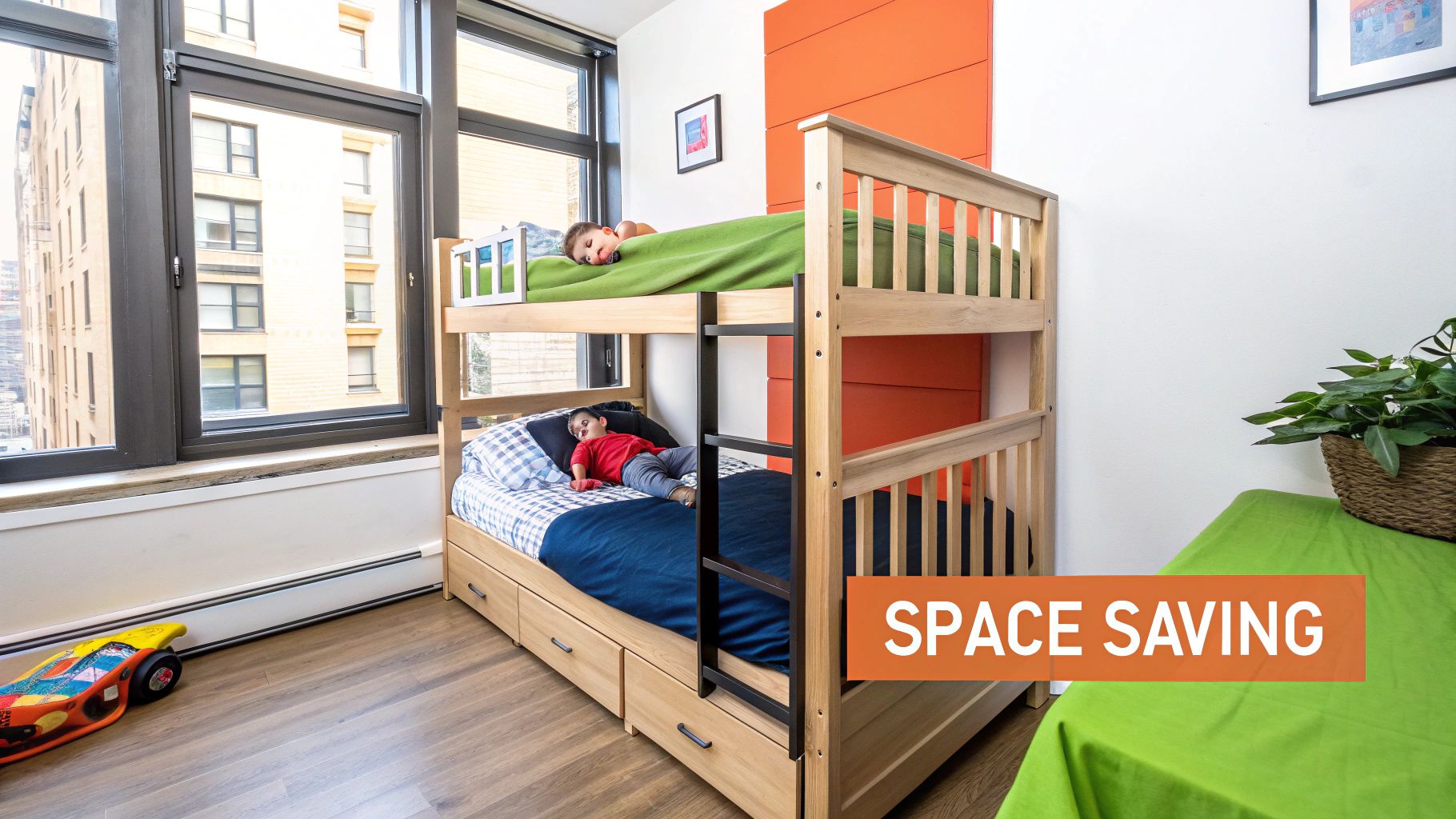
Choosing the right furniture for a shared kids' room can feel like playing a high-stakes game of Tetris. You're trying to find something functional, safe, and space-efficient that can actually adapt as your kids grow. The bunk bed with a crib on the bottom was designed specifically for this puzzle, meeting the needs of families with a new baby and a young child who isn't quite ready for their own room.
Think of it as a vertical answer to a horizontal space problem. This setup is a lifesaver in real-world scenarios where every square foot is prime real estate—like city apartments, smaller homes, or any situation where siblings have to bunk together. It takes two separate beds and stacks them into a single footprint, freeing up a ton of floor space for what really matters: play.
Sometimes, a quick checklist is the best way to see if an idea is a good fit. Use this table to gut-check whether this type of bed makes sense for your family right now.
| Your Family Situation | A Great Fit If… | You Should Reconsider If… |
|---|---|---|
| Living Space | You're in a smaller home or apartment and need to maximize floor space. | You have a separate nursery and a toddler room with plenty of space. |
| Children's Ages | You have an older child (6+) ready for a top bunk and a baby who needs a crib. | Both of your children are under 6, or you have twins needing cribs. |
| Future Plans | You want a long-term solution that can convert as your youngest grows. | You plan on moving to a larger home in the next year or two. |
| Budget | You're looking for an all-in-one purchase instead of two separate beds. | You prefer to buy furniture one piece at a time as needs change. |
Ultimately, it’s about finding a solution that eases your space crunch without adding new worries.
Before you pull the trigger, it's worth thinking about whether this unique bed really syncs up with your lifestyle. This setup is a fantastic match for families who are:
The market for baby furniture is huge and, thankfully, heavily focused on safety. The global baby cribs and cots market was estimated at USD 1.5–1.72 billion in 2023–2024 and is only expected to grow, with North America leading the charge due to its strong safety standards. These combo beds tap into that trusted market while offering a really innovative design.
Thinking ahead is key. As your family grows, you'll need a plan for when your youngest is ready to move out of the crib. Getting a handle on that transition now will make your life so much easier later. For some great, practical advice, check out a simple guide on how to transition from a crib to a bed.
And don't forget the rest of the room! Making the layout work is just as important as the bed itself. Our guide on kids' bedroom organization can help you create a functional, clutter-free space where both kids can thrive.
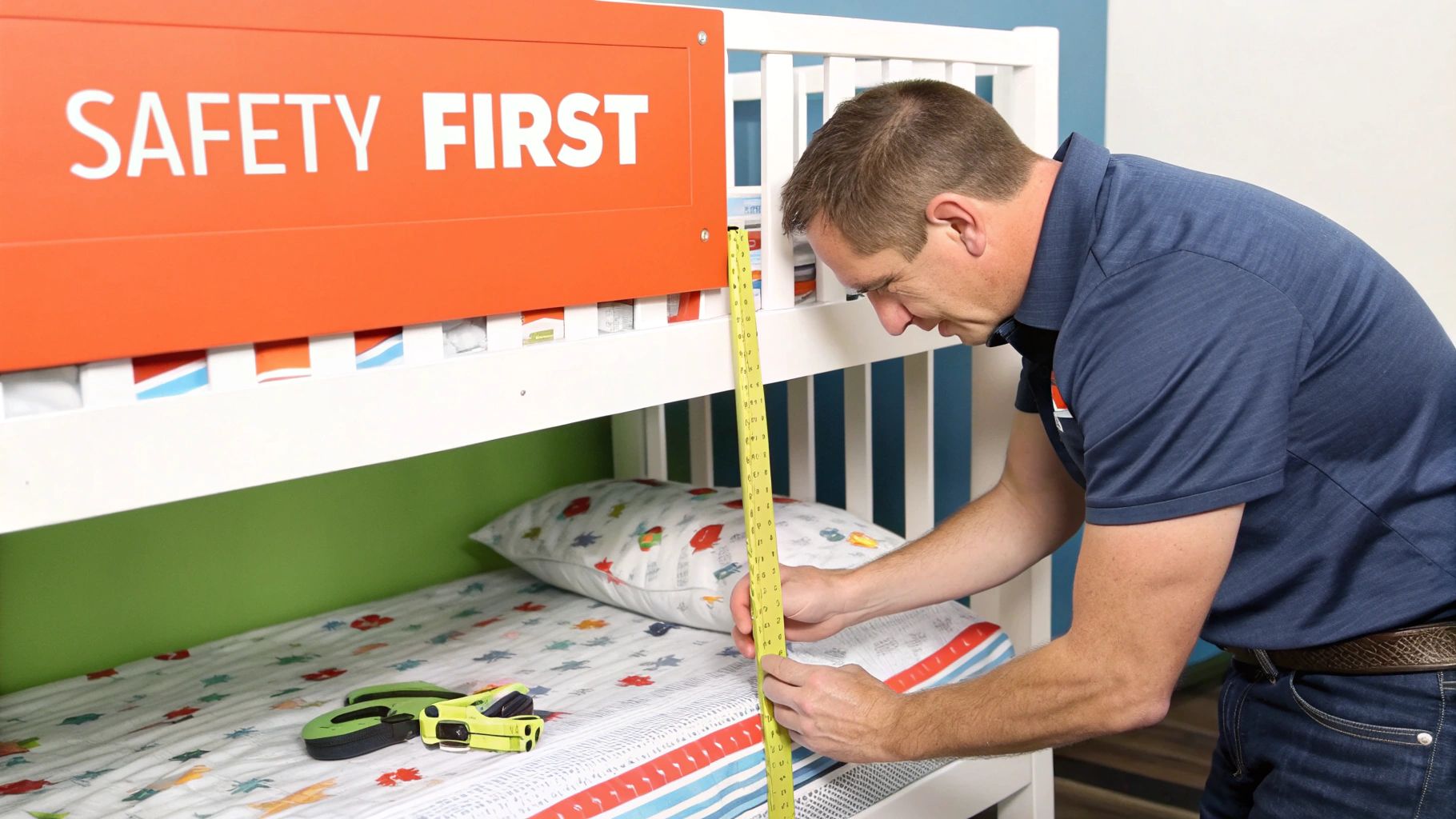
When you're picking out furniture for your kids, safety isn't just a feature—it's everything. A bunk bed with a crib on bottom is a unique piece of furniture, and that means you're dealing with two different sets of non-negotiable safety rules. Getting a handle on these standards is the only way to create a space that's truly secure for both of your little ones.
Think of safety regulations not as a bunch of confusing rules, but as a protective bubble built from decades of real-world experience. Organizations like the U.S. Consumer Product Safety Commission (CPSC) and ASTM International have put together a detailed blueprint for manufacturers. Your job as a parent is to double-check that the model you bring home was built to that exact blueprint.
First things first, the crib portion of the unit has to meet all the same federal safety standards as a standalone crib. These rules are in place to prevent the most common—and most serious—risks to infants.
Here’s what you absolutely must look for in the crib section:
Always look for a CPSC compliance certificate or label on the box or product itself. This is your proof that the manufacturer has met the mandatory federal safety standards for infant sleep products.
The top bunk has its own set of critical safety features, mainly designed to prevent falls—the number one cause of bunk bed-related injuries. The golden rule is that no child under six years old should ever be on the top bunk, but the bed's design is just as crucial.
Guardrails are your most important line of defense. They need to be on all four sides of the top bunk, even if you push that side against a wall. CPSC guidelines state that the top of the guardrails must be at least 5 inches higher than the top of the mattress to create an effective barrier.
You also need to check the opening for the ladder. The space where a child climbs up shouldn't be any wider than 15 inches. This keeps a sleeping child from accidentally rolling through the opening.
Beyond the individual crib and bunk parts, the entire structure needs to be solid and stable. A wobbly or rickety frame is a huge red flag. When you're putting it together, make sure every single bolt is tightened properly, and make a habit of checking them every few months as part of your regular home maintenance.
Proper assembly is the foundation of safety. If you’re not 100% confident in your ability to get it right, it's always smarter to get help. To learn more about securing your entire home, check out our comprehensive guide to childproofing, which covers everything from anchoring furniture to outlet covers. A secure bed in a secure room is what gives you ultimate peace of mind.
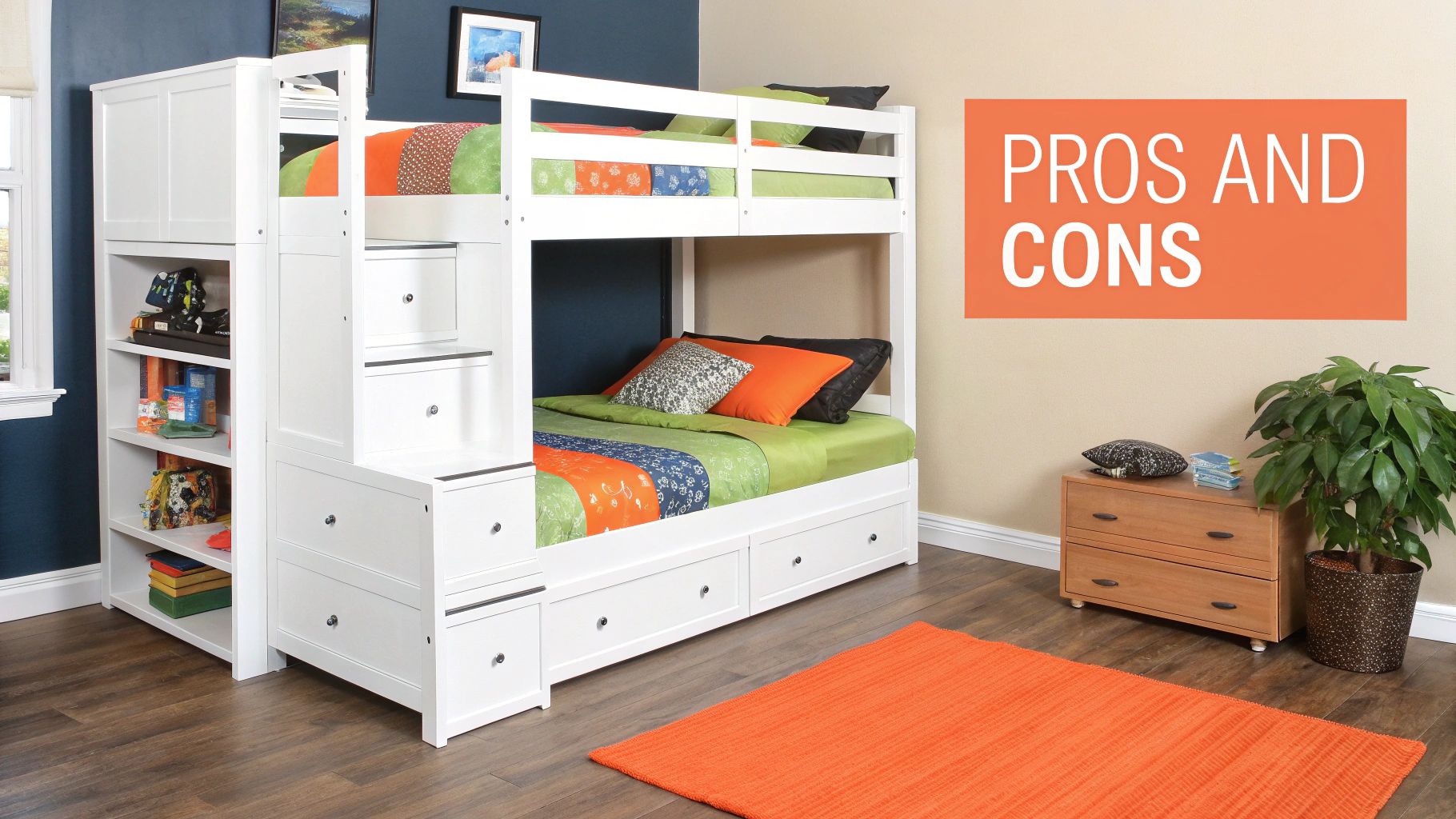
Deciding on a bunk bed with a crib on the bottom means you’re trying to balance its space-saving magic with a few real-world practicalities. The benefits are pretty clear right from the start. This design is an absolute game-changer for getting the most out of your square footage, carving out a sleep zone for two kids in the same footprint as a single bed.
This kind of efficiency is a lifesaver, especially for families in cities and suburbs where every inch of space counts. With the global urban population hitting around 57% in recent years, there's a huge demand for furniture that simply does more with less. It's no surprise that in North America, where safety standards are high and families look for long-term value, these convertible, multi-purpose units are catching on. You can actually read more about the global trends in the bunk beds market to see how modern lifestyles are shaping furniture design.
The biggest win here is reclaiming your floor. By building up instead of out, you free up a ton of room for a play area, a dresser, or just some open space for kids to be kids. But beyond the practical stuff, this setup can really nurture a wonderful sense of closeness between siblings. It creates a shared little sanctuary where they can feel secure together.
Here are the key benefits you can expect:
Of course, living with this setup isn't without its challenges. The reality of daily use can bring a few little hurdles. For example, changing crib sheets becomes a bit more like working inside a cozy cave—you’ll have to do some bending and reaching under the top bunk.
Another thing to think about is the potential for sleep disruptions. An older kid climbing down from the top bunk in the middle of the night could accidentally wake the baby. While many kids can sleep through anything, it's a possibility you should be prepared for.
The biggest practical drawback is often the daily chore of making the top bunk. The tight fit against the guardrails and the wall can make tucking in sheets a real pain, especially for kids trying to do it themselves.
When you're comparing different models, a few key features can make your day-to-day life so much easier. Look for convertible designs that let the crib transform into a toddler bed or a daybed later on. This extends the life of your furniture, giving you years of use well beyond the infant stage.
Built-in storage is another lifesaver. Models with integrated drawers or shelves can help you tame the inevitable clutter of a kids' room, keeping toys, books, and clothes organized and off the floor.
Finally, think about how your older child will get to the top bunk. Ladders are great for saving space, but a staircase is often a safer and easier climb for younger kids. Plus, many even come with handy storage built right into the steps.
Before you fall in love with a particular bunk bed, it's time to break out the tape measure. Seriously. Properly planning your room's layout is the single most important thing you can do to make sure your new bunk bed with a crib on bottom actually fits and, more importantly, is safe for your kids. A few minutes of measuring right now will save you a world of headaches later on.
Think of it like creating a blueprint for safety and comfort. You have to account for more than just the bed's footprint; you're mapping out the entire living space around it. After all, this isn't just another piece of furniture—it’s where your children will sleep, play, and grow.
First things first, let's get the basic measurements of your room. Don't just eyeball it; precise numbers are your best friend here. If you want a detailed walkthrough on how to get accurate numbers, our guide on how to measure furniture is a fantastic resource to check out.
You'll need to measure three things:
That vertical measurement is completely non-negotiable when it comes to bunk bed safety. You have to be certain there's enough clearance between the top bunk's mattress and the ceiling to prevent bumped heads and give your older child room to maneuver.
A safe clearance zone is essential. You should aim for at least 30 inches of space between the very top of the upper bunk's mattress and your ceiling. This gives an older kid enough room to sit up comfortably without clonking their head.
Once you have your core dimensions down, it’s time to think about how your family will actually use the room. A bed's dimensions on a website don't tell you anything about the "breathing room" you need for daily life. Grab a piece of paper and sketch out the room, making sure to note where the doors, windows, closets, and outlets are.
Now, think about these functional zones around where you plan to put the bed:
If you're planning the layout for a smaller nursery, looking into some small room decorating ideas can be a huge help in making every inch count. A well-planned room just feels bigger, safer, and much more organized.
Bringing your new bunk bed home is an exciting moment, but the real work has just begun. Proper assembly is the absolute foundation of safety for any bunk bed with a crib on bottom, turning that big box of parts into a secure, cozy spot for your kids.
Think of the instruction manual as your non-negotiable blueprint. It's tempting to guess or skip a step here and there, but resist the urge. Every single bolt and bracket was engineered for a specific job. And trust me, this is a two-person job. Having one person to hold and stabilize the heavy parts while the other secures the hardware makes the process smoother, safer, and results in a much sturdier bed.
Every model is a little different, so stick to your manufacturer’s instructions like glue. That said, most assemblies follow a pretty similar flow:
Of course, before you even open the box, you need a solid plan. This diagram gives you a simple look at the most critical first step: measuring your room.

As the visual shows, you have to account for the bed's full footprint—width, length, and especially height—to make sure it fits safely without any surprises.
A bunk bed isn’t a "set it and forget it" piece of furniture. With kids climbing and playing, it's going to see some action. Regular check-ups are the only way to keep it safe for the long haul.
Create a simple maintenance checklist and run through it every few months. Go around and tighten all the bolts, screws, and other hardware, because they will loosen over time with normal use. Give the frame a good look-over for any signs of wear, like stress cracks in the wood or bends in the metal. Most importantly, give the guardrails and ladder a firm shake to ensure they're still as solid as the day you built them.
Peace of mind is priceless. If the instructions look like a foreign language or you just don't have the time, calling in a pro is a smart investment in your family's safety.
Sometimes, the smartest move is knowing when to call for backup. If you feel even a little uncertain, it's worth considering a professional service. For those who want the job done right the first time, check out our guide to bunk bed assembly to find experts who will make sure everything is built to the highest safety standards.
Even after getting all the details, you probably have a few more questions rattling around. That’s completely normal. When you're choosing furniture that both of your kids will use, you want to be 100% confident in your decision.
Let's tackle the most common concerns parents have about bunk beds with a crib on the bottom. Think of this as your final check-in before you buy, making sure you’re creating a space that’s safe, smart, and full of love.
This is easily the most critical safety question, and the answer is non-negotiable. Safety experts and the U.S. Consumer Product Safety Commission (CPSC) are crystal clear: no child under six years old should ever sleep on a top bunk.
Younger kids just don’t have the coordination or spatial awareness to safely climb a ladder, especially when they're groggy from sleep or it's dark. The risk of a serious fall is just too high. Stick to this rule, no matter how grown-up your five-year-old seems. It ensures their bed is a cozy retreat, not a potential hazard.
Getting to a fussy baby at 2 a.m. is already a challenge, and having a top bunk overhead can make it feel a little like a game of human Tetris. The trick is to plan ahead and set up the room for easy, quiet access.
Here are a few tips that really work:
A little bit of prep for those nighttime wake-up calls goes a long way. Something as simple as a motion-activated floor light can be a total game-changer when you're navigating a dark room with a baby in your arms.
Let's be real—making any bunk bed can feel like a full-body workout. The lower crib can be especially tricky since you're working in a tighter, more enclosed space. And the top bunk, with its guardrails and snug mattress, has its own challenges.
One of the best hacks for this is zippered bedding. It’s brilliant. The fitted sheet part stays on the mattress, and the top comforter zips on and off along the sides. No more wrestling with heavy mattresses or trying to tuck in corners you can barely reach. It makes changing the sheets on both the crib and the top bunk ridiculously fast and easy.
Feeling a little overwhelmed by the thought of building this thing yourself? You don't have to go it alone. The pros at Assembly Smart can take care of the entire setup for you, ensuring every bolt is tightened and your new bunk bed is perfectly and safely built. Get your free estimate for professional furniture assembly today and rest easy knowing it's done right.