-
CALL US:
- (866) 952-3456

So, how much does it actually cost to get that new IKEA furniture put together? Straight up, you're looking at a range from about $40 for a simple item to over $200 for a beast like a PAX wardrobe. That's the quick answer if you hire a pro, but the real cost depends on whether you brave the instructions yourself or call in for backup.
Choosing between a DIY weekend project and hiring a professional is about more than just the money. The true cost isn't just a dollar figure—it's a trade-off. You're balancing your time, your sanity, and your skill level against a service fee.
Sure, building it yourself is technically "free," but you're paying with your time. Those are hours you could be doing something else. On the other hand, hiring an expert means you get a sturdy, correctly built piece of furniture without the headache of trying to figure out which screw is which.
This quick overview breaks down the main differences.
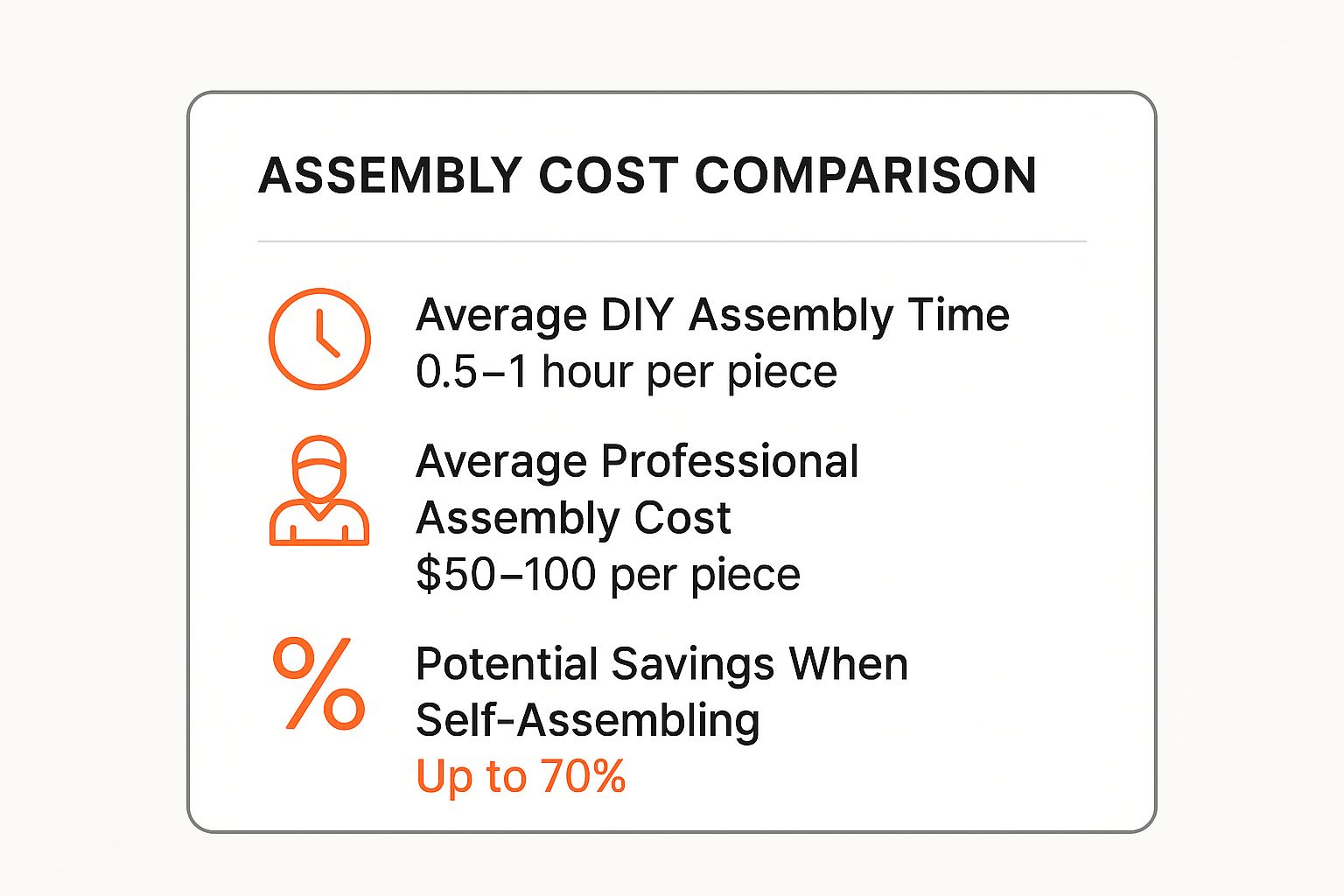
As you can see, while doing it yourself saves cash, bringing in a pro saves time and guarantees it's done right.
Did you know IKEA has its own assembly service? They typically charge a fee that's about 10% of your total order value. This makes things incredibly simple, as the cost just gets tacked onto your purchase. It's a convenient, all-in-one solution, though it can get pricey depending on how much you're buying.
Let's put the two options side-by-side to make the decision a little easier.
| Factor | DIY Assembly | Professional Assembly |
|---|---|---|
| Monetary Cost | $0 (plus cost of any needed tools) | $40 – $200+ per item, or hourly rate |
| Time Investment | Varies wildly; hours to a full day | Typically 1-3 hours for most items |
| Skill & Effort | High. Requires patience & following instructions | Low. Just clear a space and they handle it |
| Potential Risks | Damaged parts, wobbly furniture, frustration | Minimal. Pros are insured and experienced |
| Tools Needed | You'll need to own or buy basic hand tools | None. The assembler brings everything |
Ultimately, there's no single "right" answer—it's about what works best for your budget, schedule, and patience level.
Before you roll up your sleeves and open that box, think honestly about how complex the piece is. To get a better feel for what you're up against, take a look at our guide on how to assemble IKEA furniture. It'll give you a clearer picture and help you decide which path is the smartest one for you and your new furniture.
Trying to figure out how a professional assembler comes up with a quote can feel like you’re missing a page of the instructions. It’s not as mysterious as it seems, though. Most pros use one of three common pricing models, and once you understand them, you can easily decode their quotes and find the best deal.
The most common method is flat-rate pricing. It’s simple: you get one fixed price for each specific item. For instance, a MALM dresser might cost $75 to build, while a more involved PAX wardrobe could be $200. This approach is fantastic for budgeting because you know the exact cost upfront, no matter how long the job actually takes.
Then there's the hourly rate. Here, you're paying for the assembler's time. Rates can swing from $40 to over $100 per hour, usually depending on their experience and your location. This can be a real money-saver if you have a bunch of small, easy items that an expert can knock out in no time.
So, which is better? It really depends on what you need built. A flat rate is your safety net against a slow worker, but an hourly rate can be cheaper for quick jobs.
A third, less common method is pricing based on a percentage of the furniture's retail cost. A service might charge, say, 15% of what you paid for the items at IKEA. You'll typically see this model used for huge jobs, like furnishing an entire apartment or office space from scratch.
By understanding these pricing structures, you can better anticipate the final bill. It transforms the quote from a simple number into a clear reflection of the time, complexity, and expertise required for the job.
Getting a handle on how pros price their work is a useful skill that applies beyond just furniture. For a broader look into this, reading up on understanding the average cost of professional services can be really insightful. This kind of knowledge helps you evaluate any quote you receive, making sure you’re getting fair value for your money.
Ever wondered why the final number on your assembly invoice looks the way it does? It’s not just a random figure. A few specific things can take a simple job and turn it into a more complex—and expensive—project. Figuring these out ahead of time helps you get a much better handle on the real cost.
The biggest factor, hands down, is furniture complexity. Putting together a simple LACK side table is a breeze with just a handful of parts. But a sprawling PAX wardrobe system or a HEMNES eight-drawer dresser? That’s a different story entirely, involving dozens of pieces, tricky steps, and a whole lot more time, which pushes the price right up.
Beyond the item's basic design, a few other elements come into play. The sheer number of items is an obvious one; building ten chairs is naturally going to cost more than building just one. But certain tasks demand more skill and time, adding to the bill.
Think of it like this: a basic assembly job is like ordering a standard car off the lot. Custom modifications and wall mounting are the optional extras—the sunroof, the premium sound system—that add to the final sticker price.
These factors are just part of the picture. To see how these principles apply in a similar context, check out a complete cost breakdown for cabinet installation. For a more general overview, take a look at our guide on the overall furniture assembly cost. Knowing what drives the price ensures you’re never caught off guard by the final bill.
Thinking about building that new IKEA piece yourself to save a few bucks? It seems like a no-brainer, but the real cost of assembling IKEA furniture often has nothing to do with money.
The biggest hidden cost is your own time. Seriously, what's an afternoon worth to you? Those four, five, or even six hours you'll spend wrestling with confusing instructions could be spent doing literally anything else—working, relaxing, or spending time with your family.
This is what economists call opportunity cost. That "free" labor you're putting in isn't free at all when you think about what you're giving up to do it.
And then there are the real, out-of-pocket expenses. Do you actually have all the right tools? A rubber mallet, a level, a full set of drill bits—it all adds up. A basic toolkit just for this one job can easily run you $50 to $100. All of a sudden, your DIY project has a price tag.
Let’s talk about the risk. One wrong move—a misplaced screw or an overtightened bolt—and you could crack a panel on that brand-new dresser. Without a pro's insurance to back you up, that replacement cost is coming straight out of your pocket.
But the biggest cost might not be financial at all. The sheer frustration of IKEA assembly is practically a meme for a reason. In fact, one study found that a staggering 33.1% of all IKEA-related tweets in the U.S. were about stress. If you want to see just how common this is, you can learn more about the data behind IKEA stress.
This "emotional cost" is a huge part of the DIY equation. The stress, the second-guessing, and the potential arguments can easily cancel out any money you thought you were saving. It's not just a financial choice; it's a choice about your own sanity.
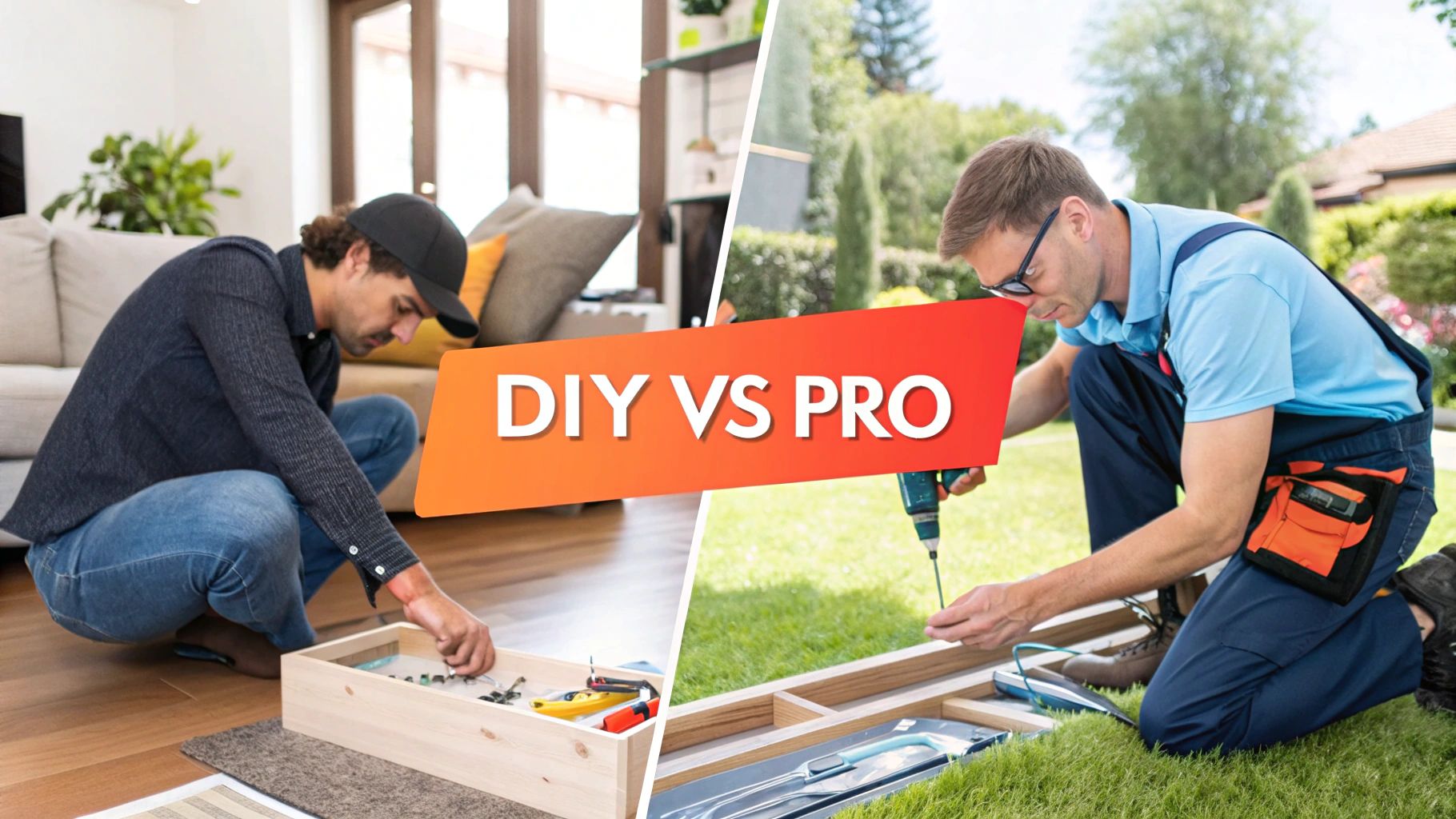
So, you’ve decided to skip the DIY headache. Smart move. Now comes the next big question: who do you hire to put it all together? The world of furniture assembly is bigger than you might think, and for good reason. People want convenience, and the market is stepping up to deliver.
The global furniture assembly market was valued at a whopping $63.41 billion in 2023, partly fueled by big moves like IKEA teaming up with TaskRabbit. It's clear that getting help is now the norm, not the exception.
This boom means you've got choices, each with its own quirks. It’s a bit like picking a mechanic for your car—you can go with the official dealer, a trusted national chain, or the local independent shop everyone raves about.
When it's time to hire someone, your main options boil down to three camps: IKEA's official partner, general gig platforms, and independent local professionals. Each one offers a different mix of price, ease, and peace of mind.
To help you sort through these options, here’s a quick breakdown of the big players in the IKEA assembly game.
| Service | Typical Pricing Model | Booking Process | Best For |
|---|---|---|---|
| IKEA (via TaskRabbit) | Flat-rate per item | Online, integrated with IKEA's website | Shoppers who want upfront, no-haggle pricing and official integration. |
| Thumbtack | Per-project or hourly bids | Post a job, receive quotes, and hire | People who like to compare multiple quotes to find the best deal. |
| Angi | Varies (hourly, flat-rate) | Get matched with pros or browse profiles | Homeowners looking for vetted professionals for various home tasks. |
| Local Handyman | Hourly or flat-rate | Direct contact (phone, email) | Those on a tight budget who are comfortable vetting pros themselves. |
Ultimately, choosing the right service comes down to what you value most. If you want a dead-simple booking process with a price that won’t change, TaskRabbit is hard to beat. If you're the type who likes to shop around for the best rate, platforms like Thumbtack give you that power.
Making a smart choice means comparing service costs and identifying hidden fees, just like you would for any other service.
Thinking about why you're hiring a pro in the first place is the best way to figure out which path is right for you. For a deeper dive, check out our article on why you should hire a professional to build IKEA furniture for you.
Even with the numbers laid out, you're probably still weighing a few things about the cost of putting together IKEA furniture. Let's tackle the most common questions head-on to help you feel confident in your decision.
On the surface, yes. You aren't paying a professional, so the direct cash cost is zero. But that’s not the whole story. The real cost has to include the value of your own time, any tools you might have to go out and buy, and the painful risk of scratching or breaking a brand-new piece of furniture.
Think about it: if a complicated PAX wardrobe takes you five hours on a Saturday, what's that time worth? For more complex builds, hiring a pro often ends up being the smarter financial move. It saves you hours of work, prevents expensive "oops" moments, and gets a huge source of stress off your plate.
Deciding between DIY and hiring a pro isn't just about the service fee. It's a trade-off. You're weighing your time, tool costs, and the potential price of mistakes against a professional's fee, which really buys you speed, skill, and peace of mind.
This really depends on where you look. If you use IKEA’s official partner, TaskRabbit, you'll often see a fixed price listed right there on the product page. It’s about as instant as it gets.
If you go with an independent local handyman or use a platform like Thumbtack, you'll need to submit a request with the details of your furniture. Pro tip: always include the specific IKEA model names (like "MALM" or "KALLAX") to get the most accurate quotes. You can usually expect a response within 24 hours.
For a deeper dive into how these prices are calculated, check out our guide on the overall furniture assembly service cost.
Tipping is never mandatory, but it's definitely a common and appreciated way to say "thank you" for a job well done. If your assembler was on time, efficient, and skillfully handled a tricky build, a tip is a great way to show your gratitude.
A standard tip usually falls in the 10-20% range of the total service cost. Most platforms, including TaskRabbit, make it super easy and let you add a tip right through the app after the job is done—no awkward cash exchange necessary.
This is one of the biggest reasons to hire a professional in the first place. Reputable assemblers and service platforms always carry liability insurance to cover accidental damage. TaskRabbit, for instance, has its "Happiness Pledge" that covers damages up to a certain amount.
Before you hire anyone, just ask if they're insured. It gives you a safety net. After all, if you accidentally damage the furniture yourself, you're on the hook for the entire replacement cost.
Ready to skip the frustration and get your furniture built right the first time? Assembly Smart gives you clear, upfront pricing and professional service to get the job done quickly and correctly. Get your free estimate and book a stress-free assembly today at https://assemblysmart.com.