-
CALL US:
- (866) 952-3456

Moving into a new home is an exciting milestone, but staring at empty rooms can feel overwhelming. The key to transforming a blank canvas into a functional, comfortable living space is a strategic approach to furnishing. This guide isn't just another list; it's a comprehensive furniture checklist for new home movers designed to prioritize your purchases and ensure you cover the absolute essentials first. We'll walk you through the non-negotiable pieces for each primary living area, providing practical insights on what to look for in terms of size, functionality, and style.
By focusing on these foundational items, you'll build a comfortable home from day one, with a solid base you can add to over time. This approach prevents impulse buys and helps you allocate your budget effectively, ensuring every piece serves a distinct purpose. When planning your foundational furniture, considering starting with complete living room furniture sets can help establish a cohesive design from the start, simplifying your initial decisions.
This checklist will serve as your roadmap, helping you make informed choices that fit your lifestyle, from selecting the right mattress for restful nights to finding a dining table that will host future memories. Let's get started on turning that new house into your personalized home.
The sofa is the undisputed anchor of the living room, a foundational piece that dictates both the style and layout of your primary social space. It's more than just seating; it's where you unwind after a long day, host movie nights, and connect with family and friends. For this reason, selecting the right sofa is a critical first step in any comprehensive furniture checklist for new home.
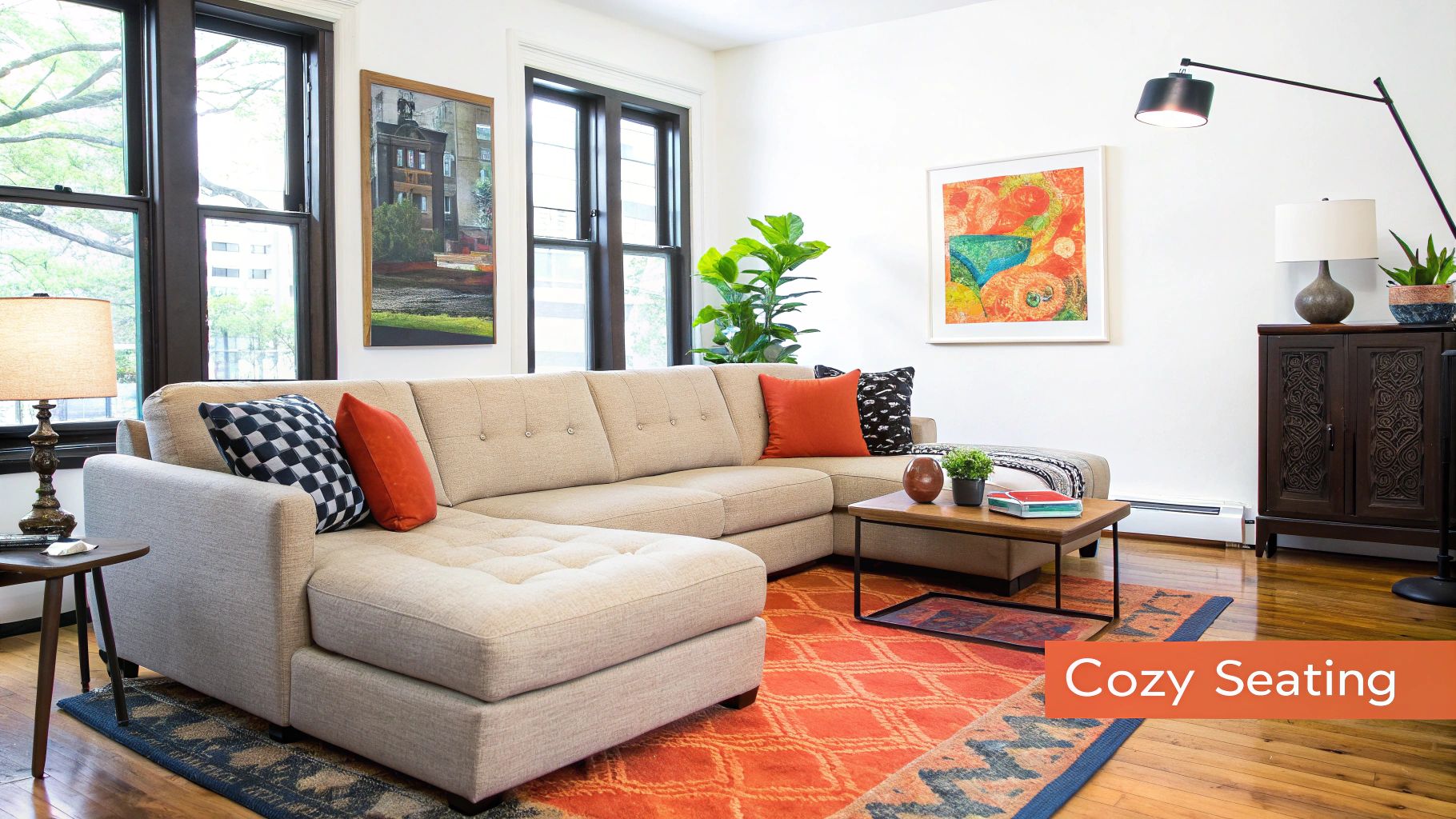
Its function as the room's centerpiece means your choice will influence all subsequent furniture and decor decisions. A well-chosen sofa provides comfort, defines the traffic flow, and sets the overall aesthetic tone.
When selecting a sofa, balance form with function. Your lifestyle is the most important factor. Families with pets and children might prioritize durable, stain-resistant fabrics, while a household that entertains frequently may opt for a large sectional.
Key Insight: Always measure your space and your delivery path. This includes doorways, stairwells, and tight corners. A dream sofa that can't fit into your home is a costly mistake.
Popular options like the CB2 Flex Gravel Sectional are great for smaller, modern spaces, while the Restoration Hardware Cloud Collection is synonymous with ultimate luxury comfort. Test sofas in-store whenever possible to gauge seat depth and back height for your personal comfort.
Your bed is the cornerstone of your personal sanctuary, the one piece of furniture that most directly impacts your health and well-being. It is the functional and aesthetic centerpiece of the bedroom, where you rest and recharge. Prioritizing a quality bed frame and mattress is a non-negotiable part of any well-considered furniture checklist for new home.
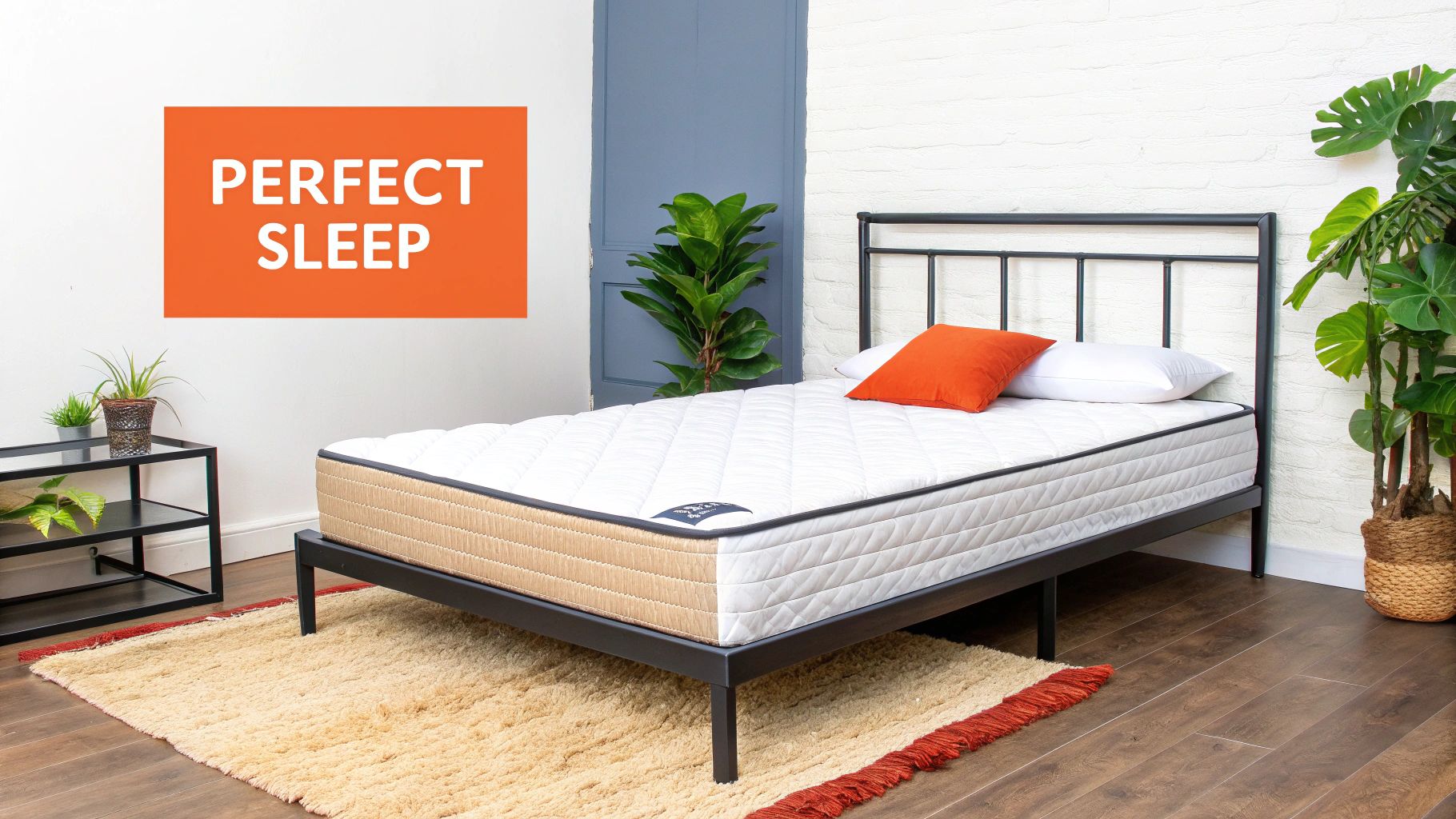
This combination does more than just fill a room; it provides the essential support for restorative sleep, influencing everything from your mood to your daily productivity. A thoughtful choice ensures comfort, promotes good posture, and establishes the bedroom's overall style.
Selecting the perfect bed involves a two-part decision balancing the mattress's comfort with the frame's style and support. Your sleep habits and physical needs should guide your mattress choice, while the frame should complement your room's dimensions and decor.
Key Insight: Don't rush the decision. You spend a third of your life in bed, making this one of the most important furniture investments. Take full advantage of in-home sleep trials, which many direct-to-consumer brands like Casper and Purple offer.
Popular pairings include the Casper Original Mattress on a simple platform frame for a minimalist look or a Purple Hybrid mattress with an adjustable base for customized comfort. Always test mattresses in a store for at least 10-15 minutes, lying in your typical sleep position to get a true feel.
Beyond just a place to eat, the dining table and chairs set is the functional heart of your home’s gathering spaces. It’s where family meals are shared, homework is completed, and celebrations are hosted. For this reason, a well-chosen dining set is a non-negotiable part of any thorough furniture checklist for new home, creating a central hub for daily life and special occasions.

This set serves as a versatile anchor for your dining room or kitchen, supporting everything from formal dinners to casual board game nights. The right combination of table and chairs enhances your home's functionality while complementing its overall design aesthetic.
Selecting the right dining set requires a balance between your everyday needs and your hosting aspirations. Your primary consideration should be the size and shape that best fits your room and lifestyle. A small, round table might be perfect for a breakfast nook, while a large, rectangular table is better suited for a formal dining room.
Key Insight: Before purchasing, map out the table's footprint on your floor with painter's tape to visualize its scale and impact on traffic flow. You can learn more about how to measure furniture for your space to ensure a perfect fit.
Popular choices range from the modern West Elm Penelope Dining Table to the rustic, reclaimed look of Restoration Hardware's salvaged wood collections. Always prioritize materials that can withstand daily use, such as solid wood or durable metal frames.
The coffee table is the functional and aesthetic nucleus of the living room, bridging the gap between seating and creating a convenient central hub. It serves as a surface for drinks, a display for decor, and often provides crucial hidden storage. As an essential part of any furniture checklist for new home, it grounds the conversation area and ties all the seating elements together.

More than just a low table, its shape, material, and scale directly impact the room's flow and usability. A well-selected coffee table completes the living room's layout, providing balance and utility without overwhelming the space.
Choosing the right coffee table is a game of proportions and practicality. Your goal is to find a piece that complements your sofa in both size and style while meeting your household's needs.
Key Insight: Think about how you live. If your family eats or works in the living room, a sturdy, lift-top coffee table can provide a versatile, elevated surface. If aesthetics are paramount, a sculptural piece like the West Elm Penelope can act as a work of art.
Popular choices range from the sleek CB2 Smart Round Marble Coffee Table, perfect for compact, modern interiors, to the grand, rustic Restoration Hardware Balustrade Salvaged Wood Coffee Table, which makes a powerful statement in larger rooms.
Effective wardrobe and closet storage is the backbone of an organized home, especially in the bedroom. This furniture is essential for protecting your clothing investment and streamlining your daily routine. From freestanding armoires to sophisticated built-in systems, the right storage transforms a chaotic pile into a functional, accessible wardrobe, making it a non-negotiable part of any furniture checklist for new home.
Without proper organization, bedrooms can quickly become cluttered, making it difficult to find what you need. A well-planned storage solution maximizes space, preserves the condition of your garments, and contributes to a serene and orderly living environment.
Your choice depends on your existing closet space, clothing inventory, and budget. If your new home has small closets, a freestanding armoire or a modular system can provide the necessary storage. For larger walk-in closets, a custom organization system can optimize every square inch.
Key Insight: Plan for the future. Leave about 20-25% of your storage space free to accommodate future purchases. This prevents immediate overcrowding and extends the life of your system.
Custom closet companies like California Closets provide premium, professionally installed solutions tailored to your exact needs. Budget-friendly brands like ClosetMaid offer excellent DIY kits that significantly improve basic closet layouts. No matter the choice, investing in good storage is investing in daily peace of mind.
A bookshelf or storage unit is a vital piece that moves beyond simple book storage, serving as a powerful tool for organization, display, and personalization. It helps maximize vertical space, keeping floors clear and rooms feeling larger while showcasing your personality through books, art, and treasured objects. Including a versatile storage unit is a smart move for any furniture checklist for new home, as it adds both function and form to spaces like the living room, home office, or even a bedroom.
This furniture is essential for decluttering and organizing, transforming potential mess into a curated display. By providing a dedicated home for various items, it establishes order and allows you to craft a space that feels both tidy and uniquely yours.
When selecting a storage unit, consider what you need to store and the aesthetic you want to achieve. The scale of the unit should complement the room's proportions without overwhelming it.
Key Insight: Anchor any tall or heavy bookshelf directly to the wall using anti-tip hardware. This is a non-negotiable safety step, especially in homes with children or pets, to prevent serious accidents.
Popular choices range from the iconic and budget-friendly IKEA Billy bookcase to the sleek CB2 Stairway Wall-Mounted Bookcase for a minimalist look. For a touch of mid-century modern style, the West Elm Penelope Bookshelf is a frequently cited favorite.
In an era of remote work and flexible schedules, a dedicated workspace is no longer a luxury but a necessity for many households. A desk and chair form the core of a functional home office, creating a zone for productivity, studying, or managing daily tasks away from the distractions of main living areas. Including this duo in your furniture checklist for new home is an investment in focus and efficiency.
This designated area promotes a healthy work-life boundary and provides the ergonomic support needed for long hours of sitting. A well-planned workspace can significantly boost comfort and concentration, making it a crucial component for any modern home.
Selecting the right combination involves prioritizing ergonomics without sacrificing style. Your specific work needs and the available space will guide your choices. For those planning a dedicated workspace, exploring the best home office chairs can make a significant difference in daily comfort and productivity.
Key Insight: Position your monitor at or slightly below eye level and about an arm's length away. This simple adjustment helps prevent chronic neck and eye strain, which are common issues in poorly designed home offices.
Popular pairings include an IKEA Bekant desk with a Markus chair for a budget-friendly setup, or a premium combination like a Steelcase adjustable desk with a Herman Miller Aeron chair for ultimate ergonomic support. Once you've made your selections, you may want to ensure a flawless setup; you can learn more about professional office furniture installation.
Often overlooked but functionally indispensable, side tables and nightstands are the unsung heroes of a well-furnished room. These compact surfaces provide crucial support in living rooms and bedrooms, offering a convenient place for lamps, drinks, books, and charging devices. Including them in your furniture checklist for new home is essential for creating accessible, organized, and complete living spaces.
Whether placed beside a sofa or a bed, these pieces anchor their larger counterparts and ensure everyday necessities are always within arm's reach. Their presence transforms a simple furniture arrangement into a practical, user-friendly environment.
The key to selecting the perfect side table or nightstand is to consider its specific location and purpose. A living room side table may prioritize surface area for decor and drinks, while a bedroom nightstand needs to accommodate a lamp, an alarm clock, and personal items.
Key Insight: In bedrooms, using a symmetrical pair of nightstands creates a sense of balance and harmony. However, in living rooms, using mismatched but complementary side tables can add visual interest and personality.
Always ensure there is enough clearance around the table for comfortable movement and easy access to drawers or shelves. The right choice will enhance both the form and function of your most-used rooms.
The kitchen island or table serves as the heart of the kitchen, acting as a multifunctional hub for meal prep, casual dining, and social gatherings. Its role has evolved beyond a simple work surface; it's a central feature that anchors the kitchen's layout and enhances its usability. Including a functional table or island in your furniture checklist for new home is essential for creating a practical and inviting culinary space.
This piece bridges the gap between cooking and living, providing much-needed counter space in smaller kitchens or a dedicated spot for homework and morning coffee in larger ones. Its presence defines the room's workflow and adds significant value to your daily routine.
Selecting the right piece depends on your kitchen's size, your cooking habits, and how you envision using the space. A large, fixed island is perfect for homeowners who need extra storage and seating, while a smaller, mobile cart or bistro table offers flexibility for renters or compact layouts.
Key Insight: Maintain at least 36 to 42 inches of clearance on all sides of a kitchen island. This "work triangle" rule ensures safe and efficient traffic flow, allowing you to open appliance doors and move around without obstruction.
Options like the IKEA VADHOLMA island provide affordable, modular solutions, while the Williams Sonoma Marble-Top Kitchen Island is ideal for serious home chefs. For a contemporary look, the CB2 Vapor Acrylic Kitchen Island adds a sleek, modern touch that can make a space feel larger.
| Furniture Item | Implementation Complexity 🔄 | Resource Requirements ⚡ | Expected Outcomes 📊 | Ideal Use Cases 💡 | Key Advantages ⭐ |
|---|---|---|---|---|---|
| Sofa/Couch | Moderate – requires space and delivery | Medium to High – materials and size | High comfort and social gathering | Living rooms, entertaining guests | Comfortable multi-seat seating; centerpiece of living space |
| Bed Frame and Mattress | Moderate to High – setup and mattress choice | Medium to High – mattress quality impacts | Improved sleep quality and health | Bedrooms for rest and well-being | Essential for quality sleep; health investment |
| Dining Table and Chairs | Moderate – size and chair coordination | Medium – varies by materials and set | Facilitates meals and social interaction | Dining rooms and kitchens | Defines dining space; multi-functional (eating, work) |
| Coffee Table | Low – simple placement | Low to Medium – smaller scale | Convenient surface and living room anchoring | Living rooms for convenience and style | Affordable; adds storage and decorative value |
| Wardrobe/Closet Storage | High – installation and customization | Medium to High – modular/custom systems | Organized clothing storage, protected garments | Bedrooms and dressing areas | Maximizes storage; protects clothes; customizable |
| Bookshelf/Storage Unit | Low to Moderate – assembly and positioning | Low to Medium – depends on size | Vertical storage and room organization | Various rooms for books and display | Maximizes vertical space; versatile and affordable |
| Desk and Chair | Moderate – ergonomic setup needed | Medium to High – quality ergonomic importance | Enhanced productivity and posture | Home offices, study areas | Improves work ergonomics; storage and organization |
| Side Tables/Nightstands | Low – compact and simple | Low – small scale | Convenient surface for essentials | Next to sofas or beds | Accessibility; adds storage and style |
| Kitchen Table or Island | Moderate to High – requires space and possibly electrical | Medium to High – materials and installation | Increased kitchen workspace and social area | Kitchens for prep, casual dining | Adds storage, workspace, and social hub |
Embarking on the journey of furnishing a new home is one of life’s most exciting chapters. You’ve moved beyond the abstract floor plans and paint swatches into the tangible reality of building your personal sanctuary. This comprehensive furniture checklist for new home essentials has provided a roadmap, guiding you through the foundational pieces that transform an empty space into a functional and inviting environment. From the living room’s central sofa to the bedroom’s restorative bed and the dining area’s communal table, each item plays a critical role in your daily life.
The core takeaway is not to rush the process but to approach it with intention and strategy. Your home should evolve with you, and that begins with making smart, prioritized decisions.
The true value of this checklist lies in its application. It’s a tool designed to prevent overwhelm and help you focus your budget and energy where they matter most. Before you start shopping, take a moment to personalize this guide.
Key Insight: A successful furnishing project isn't about speed; it's about creating a foundation of quality, comfort, and function. The goal is to build a home that supports your lifestyle, not just to fill a house with objects.
Ultimately, each piece of furniture you select is an investment in your comfort, productivity, and happiness. A well-chosen bed frame and mattress contribute to better sleep and health. A sturdy dining table becomes the backdrop for cherished memories. By using a furniture checklist for new home planning, you ensure these foundational investments are sound, creating a cohesive and enduring living space. You're not just buying furniture; you're curating an environment that reflects who you are and supports the life you want to live.
This methodical process transforms the monumental task of furnishing a new house into a manageable and rewarding experience, setting the stage for years of comfort and enjoyment in a home that is uniquely yours.
Ready to bring your new furniture to life without the stress and confusion of complicated instructions? Let the experts at Assembly Smart handle the hard work. We specialize in fast, professional assembly for all major furniture brands, so you can start enjoying your perfectly built pieces right away. Book your appointment with Assembly Smart today and turn your checklist into a completed, comfortable home.