-
CALL US:
- (866) 952-3456

So, what exactly is a furniture pickup and delivery service? Think of it as your personal moving crew, ready to go whenever you are. It’s the perfect solution for transporting those items that are just too big, heavy, or delicate for a standard shipping company. Whether it's a gem you found on Facebook Marketplace or a brand-new purchase from a store, these services get it home for you.
Let's say you just scored the perfect antique armoire online. The only problem? It’s across town and definitely not fitting in your car. Or maybe you ordered a new sectional sofa that showed up in a bunch of massive, awkward boxes. This is exactly where a furniture pickup and delivery service comes in to save the day, bridging that gap between a great find and getting it settled in your living room.
Unlike your average parcel service, these companies have the right trucks, the right tools, and the know-how to handle bulky stuff. They take care of all the heavy lifting, make sure everything is secure for the ride, and navigate tricky doorways and staircases without putting a scratch on your new piece or your walls.
A good delivery service isn't just about moving something from point A to point B. It's a full-on logistics solution that makes buying and moving furniture a whole lot simpler. The global furniture market is huge—valued at roughly USD 568.6 billion—and it just keeps growing. With more people shopping online, professional delivery isn't a luxury anymore; it's a must-have.
This demand has created different levels of service to fit any need and budget. You can get anything from a basic drop-off to a complete in-home setup, so it pays to know your options. For a great deep dive into how these services work, especially when you're moving things into storage, check out this complete guide to storage pickup and delivery.
At its core, a furniture delivery service sells peace of mind. It's the assurance that your heavy, awkward, or cherished items will be handled with professional care, saving you from the physical strain and potential damage of a DIY move.
The top-tier option is often called white glove service. This includes the delivery team bringing the item into any room you choose, doing the full assembly, and even hauling away all the packaging. To see everything this premium option involves, take a look at our guide on what white glove delivery service entails.
To make it easier to decide what's right for you, we've put together a quick comparison of the most common service levels out there.
This table breaks down what you can generally expect from each type of furniture delivery.
| Service Level | What It Includes | Best For |
|---|---|---|
| Curbside Delivery | The item is delivered to the curb or driveway. You handle moving it inside. | Budget-conscious buyers who can manage heavy lifting. |
| Threshold Delivery | The item is brought just inside the front door or garage. | A middle-ground option for those who need a little help. |
| Room of Choice | The delivery team places the item in your preferred room, including up stairs. | Large, heavy items that are difficult to maneuver alone. |
| White Glove | Includes room-of-choice placement, unpacking, full assembly, and debris removal. | Complex furniture, high-value items, or a completely hands-off experience. |
Choosing the right level depends on the item, your budget, and how much work you want to do yourself. For big or complicated pieces, investing in a higher-tier service can save you a ton of hassle.
Knowing what to expect when you buy a new piece of furniture can turn that anxious waiting game into a smooth, predictable process. Professional furniture pickup and delivery services have a well-oiled system to get your items from point A to point B safely and efficiently. Once you understand the steps, you can prepare properly and feel confident the whole way through.
The journey really starts well before a truck ever pulls up to your curb. It kicks off with some simple planning and doesn't end until your new piece is sitting exactly where you want it in your home. This graphic breaks down the basic three-step flow of a typical delivery.
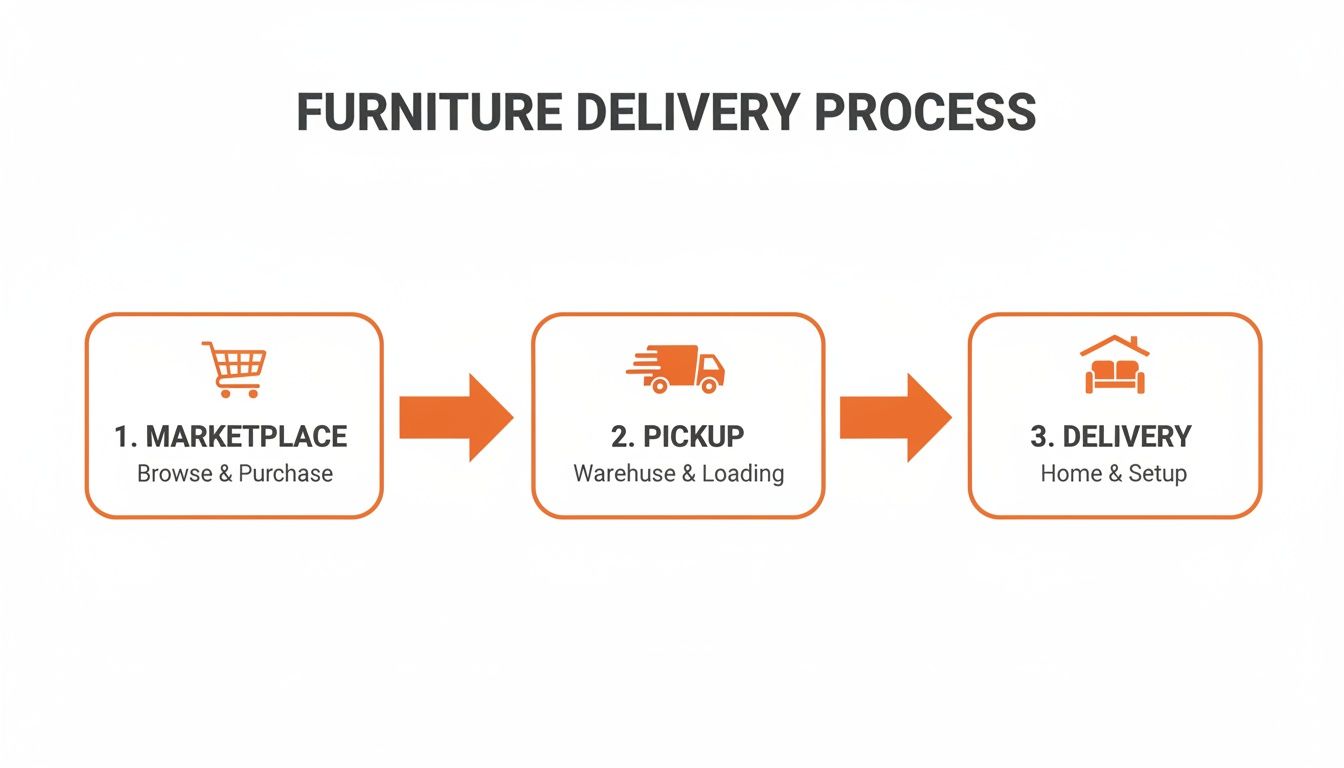
As you can see, it’s all about connecting the seller or store to your living space, with pros handling the heavy lifting in between.
First things first, you need a clear, detailed quote. This means giving the delivery company all the key details: the item's dimensions, its weight, and any special instructions for handling it. You’ll also need to provide the pickup and delivery addresses and give them a heads-up about any obstacles like flights of stairs, tight hallways, or tricky parking spots.
With that info, the company will give you a price and a delivery window. If you agree, you’ll lock in a pickup time that works for everyone involved. This is the planning stage, and getting it right sets the whole delivery up for success.
A little prep work before the delivery team shows up makes a world of difference. At the pickup location, this just means making sure the furniture is easy to get to and ready to go. For you, on the receiving end, the focus is on prepping your home.
Here are a few key things to tackle:
When the crew arrives to pick up the item, they’ll size up the situation, then wrap it professionally in moving blankets and secure it with plastic wrap for the ride.
Once your furniture is loaded securely, it's on its way. For local moves, this part is pretty quick. If it's coming from further away, your item might first go to a central hub before getting loaded onto another truck headed in your direction.
During transit, communication is key. A reputable service will provide tracking information or proactive updates, so you are never left guessing where your furniture is or when it will arrive.
This is where you really see the value in hiring pros. They use specialized equipment and tie-down techniques inside the truck to keep things from shifting and getting damaged. Their experience ensures even the most delicate or awkwardly shaped pieces are transported with care.
On the big day, you’ll get a call or text with a more precise arrival window. When the team arrives, they’ll carefully unload your furniture and navigate it through the path you cleared earlier.
Now, depending on the service you paid for, their job might be done right there, or it could be just getting started. To see what a full-service delivery looks like, check out our guide on professional furniture delivery and installation. Services like "white glove" delivery mean the team will carry the item to the room of your choice, unwrap it, assemble it if needed, and haul away all the packaging.
Before they leave, give the furniture a good look-over. Compare it to those "before" photos you took. Once you’re happy with everything, you'll sign the delivery receipt, and the job is officially done.
Trying to nail down the price of a furniture pickup and delivery service can feel like trying to hit a moving target. The final number you see on the invoice isn't just one flat fee; it’s a blend of several key variables. Figuring out what those are is the first step to setting a real budget and avoiding sticker shock.
Think of it like ordering a pizza. The base price gets you the dough and sauce, but every topping adds a little more to the bill. With furniture delivery, the "base" is the core service, and the "toppings" are all the specific details of your job—from how far it's going to how tricky it'll be to get into your living room.
This is especially true today. Online furniture sales are booming, with projections showing the market will grow by around USD 282.1 billion in the next few years. That’s created a massive demand for specialized delivery. Since the last-mile costs for bulky items can eat up 20–40% of the total logistics expense for an order, every little detail matters.
At the heart of any quote, you’ll find three main things: distance, the item itself, and the level of service you pick. Each one plays a big part in the final cost. Moving a small armchair across town will have a completely different price tag than delivering a heavy sectional sofa to a fourth-floor apartment two states away.
Here’s a closer look at what really moves the needle:
Beyond the big three, a few other things can quietly add to your delivery cost. These usually have to do with how complex or accessible the pickup and drop-off spots are. Think of them as special conditions that demand extra time and effort from the crew.
For example, a few flights of stairs, a narrow hallway, or no place to park nearby can all increase the labor involved. When you're trying to figure out the costs for bigger items, a good guide on finding cheap big parcel delivery can offer some great tips for keeping these expenses in check.
The best quotes come from giving the most details. A delivery company's biggest fear is the unknown, so being upfront about challenges like a steep driveway or a tricky staircase helps them price the job right and prevents surprise fees on delivery day.
And don’t forget about assembly. If your new furniture needs to be put together, that service is often a separate line item. Some companies bundle it into their white-glove packages, while others offer it as an add-on. For a full breakdown of what to expect, our guide on furniture assembly service costs gives a clear overview of how these services are priced. Once you understand all these pieces, you can look at any quote with confidence and pick the right service for your needs and your wallet.
A successful furniture delivery actually starts long before the truck even pulls up. Think of it like a chef prepping their ingredients before starting a big meal—a little bit of prep work for your furniture pickup and delivery service makes sure the whole process goes off without a hitch. By taking just a few simple steps to get your furniture and your home ready, you can sidestep all those common moving day headaches.
This isn't just about making things easier; it's about protecting your valuable furniture, your home, and even the moving crew. When you create a clear, safe path for them to work, you’re letting the pros do their job at peak efficiency, which saves time and dramatically cuts down the risk of accidental dings or scratches. It’s a small investment of your time that pays off big in peace of mind.
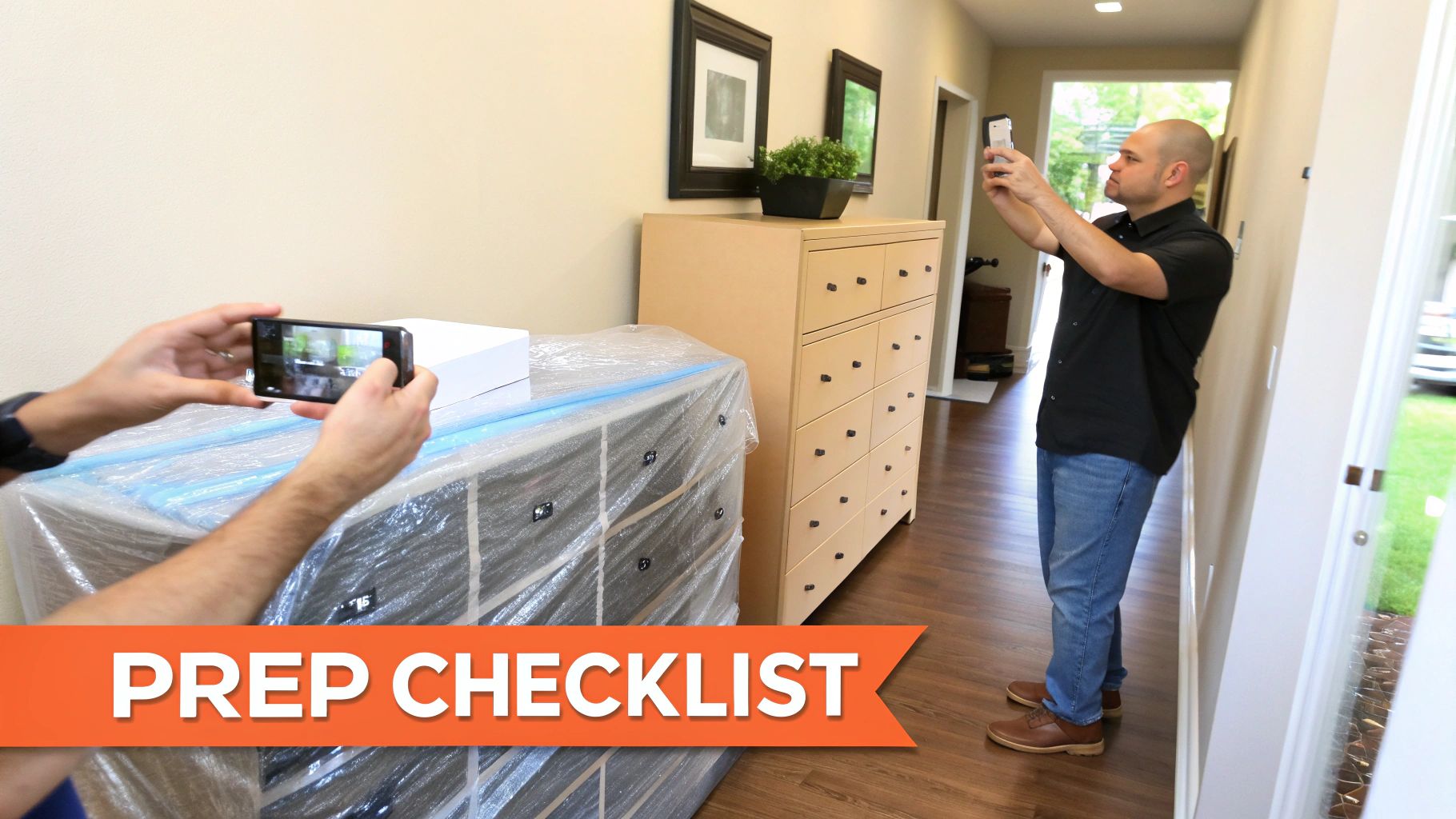
First thing's first: let’s focus on the furniture itself. You wouldn’t just toss everything into a suitcase for a trip, right? The same idea applies here. That beautiful dresser or antique cabinet is about to be tilted, lifted, and secured onto a truck, so it needs to be ready for the journey.
Here's your pre-pickup checklist for the furniture:
Think of this as a pre-flight check for your furniture. By securing all the loose parts and documenting its current condition, you’re setting it up for a safe and sound trip to its new home.
Once your furniture is ready to go, it's time to prep your space. The goal here is to create a totally clear "runway" from where the furniture is now, all the way to the front door. A clear path is a safe path, and it minimizes the risk of damage to both your home and the item being moved.
This part of the process requires you to think like a mover. Walk the path they’ll take and get rid of any potential hazards. A little bit of foresight goes a long way in helping the delivery team work quickly and safely, which is a win for everyone.
For a deeper dive, our complete guide explains how to protect furniture when moving with the techniques the pros use.
Just follow these steps to get your home mover-ready:
By taking this two-part approach—prepping the furniture and prepping your home—you aren’t just crossing your fingers for a smooth pickup. You’re making it happen.
Picking the right partner for your furniture pickup and delivery service is easily the most important decision you'll make in this whole process. It’s not just about finding someone with a truck. It’s about trusting a company with your valuable items and your time. The right provider can turn a potentially stressful day into a smooth, professional experience.
With so many options out there—from massive national chains to local one-truck operations—it’s easy to get overwhelmed. But if you focus on a few key things, you can cut through the noise and find a reliable partner. The three pillars of any trustworthy service are proper licensing and insurance, a solid history of positive reviews, and completely transparent pricing.

Before you even ask for a quote, do a little background check. Any legitimate moving or delivery company has to be licensed for commercial transport and carry insurance. Don't be shy about asking for proof of both. This isn't just red tape; it's your main protection if anything goes wrong.
Next, dive into what past customers are saying. Look for patterns in feedback on sites like Google, Yelp, or the Better Business Bureau. A single bad review isn’t necessarily a dealbreaker, but a consistent theme of damaged items, missed appointments, or surprise fees is a huge red flag. A company’s track record is the best predictor of the experience you’re going to have.
This diligence really matters. In the U.S. furniture market, which is valued at around USD 172.5 billion, the residential segment makes up about 60% of all revenue. That means providers need to be experts at navigating the complexities of working inside people's homes and meeting the high expectations that come with white-glove service. You can discover more insights about the US furniture market on ibisworld.com.
Furniture delivery companies come in a few different flavors, each with its own pros and cons. Understanding these differences helps you match the right service to what you actually need, whether you're moving a priceless antique or a budget-friendly flat-pack bookcase.
To help you get a clearer picture, here’s a quick breakdown of the most common options available.
A breakdown of the different types of providers to help you choose the best fit for your needs.
| Provider Type | Best For | Typical Cost | Key Considerations |
|---|---|---|---|
| National Movers | Large, long-distance moves with multiple items. | $$$ | High-quality service but can be expensive for single items. |
| Local Independents | Single-item or local moves requiring personalized attention. | $$ | Often more flexible and affordable, but vet insurance carefully. |
| App-Based Services | On-demand, last-minute local deliveries of smaller items. | $-$$ | Very convenient and fast but service quality can vary. |
| Freight Companies | Cost-effective long-distance shipping for sturdy items. | $$ | Great for budget moves, but you may need to handle packaging. |
As you can see, there isn't one "best" option—only the best fit for your specific situation. A national mover is overkill for a local marketplace find, while a freight service might not offer the delicate handling an antique requires.
Choosing a delivery service is a balance of cost, convenience, and confidence. The cheapest quote isn't always the best value if it comes with poor communication and a higher risk of damage.
Once you've narrowed your list down to a few promising candidates, it's time to get specific. The answers to these questions will tell you a lot about a company's professionalism and how they treat their customers. A reputable provider will have clear, ready answers for you.
Arm yourself with this checklist before you make that final call:
Here at Assembly Smart, we believe in being completely upfront. We provide clear, hourly pricing and are happy to match competitor estimates, so you know exactly what to expect from the get-go. Our focus on reliable, insured, and professional service is all about giving you complete peace of mind, from the moment you book to the final, perfect placement of your furniture.
So, you’ve picked a delivery service and cleared a path in your home. Awesome. Still, a few last-minute questions might be nagging at you. That’s perfectly normal. Using a furniture pickup and delivery service is pretty simple, but knowing exactly what to expect can make all the difference.
Think of this as your final checklist for peace of mind. We’ll tackle the most common questions head-on so you can feel completely ready for delivery day.
This is the big one, right? The honest answer is: it really depends. For a simple, local delivery of one piece of furniture (think under 50 miles), you’re generally looking at a range of $75 to $250. But that number isn’t pulled out of thin air; a few key things go into calculating the final price.
The biggest factors are the size and weight of your item. It just takes more muscle and care to move a massive sleeper sofa than it does a small accent chair, and the price reflects that. The level of service you choose also plays a huge part. A basic drop-off at your curb will be on the cheaper end, while a full-service, white glove delivery will naturally cost more.
Other things that can nudge the price up or down include:
The bottom line? Always ask for an itemized quote before you book. This way, you know exactly what you’re paying for and won’t get hit with any surprises.
Figuring out the difference between service levels is key to getting what you need. The two most common options, curbside and white glove, are polar opposites.
Curbside delivery is your no-frills, budget-friendly choice. Just like the name says, the delivery team will drop off your boxed-up furniture at the curb, in your driveway, or at your building’s loading dock. After that, it’s all on you—getting it inside, up the stairs, unboxing it, putting it together, and dealing with all the cardboard. It's a solid option if you’re up for the heavy lifting and have a friend to help.
White glove delivery is the complete opposite. It’s the premium, all-in-one service for a totally hands-off experience. This isn’t just a drop-off; it’s a full installation.
With a white glove service, the team handles everything. They will:
This is the way to go for big, heavy, or complicated pieces. It’s also perfect for valuable antiques that need an expert touch, or for anyone who just wants zero hassle.
Tipping is never required, but in the service world, it’s always appreciated. If your delivery crew did a great job, a tip is a fantastic way to say "thank you" for their hard work.
Think about how it went. Were they professional and on time? Did they handle your furniture and your home with care? If they managed to get that giant armoire up a tricky staircase without leaving a single scuff, that’s a sign of a job well done.
A good rule of thumb is to tip $10 to $20 per crew member for a standard delivery. If the job was especially tough—like moving a super-heavy item or navigating a really difficult space—you might consider giving a little more. It’s a small gesture that acknowledges their effort and professionalism.
It’s the worry that’s in the back of everyone’s mind. The good news is that any reputable company will have insurance and a clear process for handling accidents. Before you even book a furniture pickup and delivery service, make sure you ask about their liability coverage.
Most professional movers offer a couple of levels of protection. The first is basic "released value protection," which is included for free but offers very minimal coverage based on weight (like 60 cents per pound). The second option is "full value protection." It costs extra, but it covers the full cost to repair, replace, or reimburse you for the item's value if something goes wrong.
If you spot any damage when your furniture arrives, you need to act fast:
By being quick and thorough, you make the resolution process much smoother. A professional company will work with you to make it right.
At Assembly Smart, we know that trust is everything. Our teams are experienced, insured, and treat every delivery with the care it deserves. With our transparent, upfront pricing, you’ll never see a surprise fee. We're here to make your delivery experience completely seamless and stress-free. Ready for a delivery that just works? Visit us at https://assemblysmart.com to get your free estimate today.