-
CALL US:
- (866) 952-3456

We’ve all been there. That moment of pure frustration when your screwdriver just spins and spins, getting you nowhere. A stripped screw can stop a project dead in its tracks, but don't throw your tools across the room just yet.
Figuring out how to get a stripped screw out is all about a little bit of diagnosis and picking the right tool for the job. You might get lucky with something as simple as a rubber band, or you might need to bring in the heavy hitters like a screw extractor. The most important thing? Stop trying to force it before you make the problem worse.
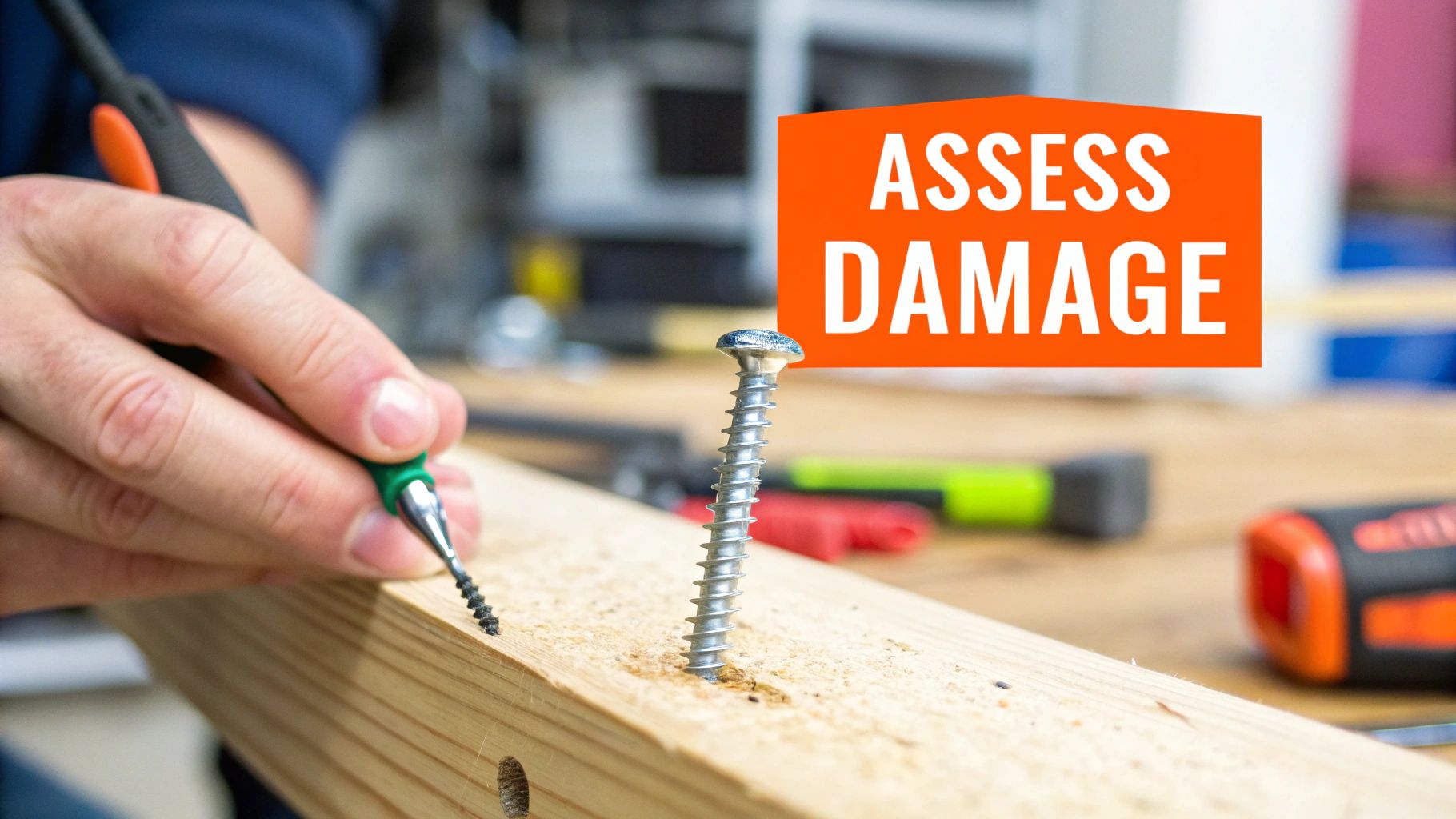
It’s a sinking feeling, isn't it? You lean in, give the screwdriver a good turn, and all you hear is that awful grinding sound. The bit just slips and chews up the screw head even more. Knowing why it happened is the first step to getting that stubborn fastener out.
You almost never strip a screw on purpose, but it happens all the time. Usually, it's because of a few common slip-ups when we're in a hurry or grabbing the wrong tool for the job.
Pro Tip: Before you go grabbing special tools, try this old-school trick. Place your screwdriver in the screw head and give the end of the handle a firm tap with a hammer. That little jolt can sometimes be enough to break the screw free and give you the grip you need.
Taking a moment to figure out how stripped the screw is will save you a ton of time and effort. It helps you pick the right method from the start so you're not making things worse. This guide will walk you through everything from simple tricks to the more advanced techniques the pros use.
Our goal is to give you the confidence to handle any stripped screw that comes your way. For an even deeper dive, our comprehensive guide on how to get a screw out covers more methods and tool suggestions.
So you've hit a wall—or rather, a screw that won't budge. Before you go rummaging through the garage for heavy-duty gear, your first move should be to try a few tricks with items you already have lying around the house.
For screws that are only slightly worn out, all you might need is a little extra friction. These simple but surprisingly effective hacks can save you a ton of time and, more importantly, stop you from making the damage even worse.
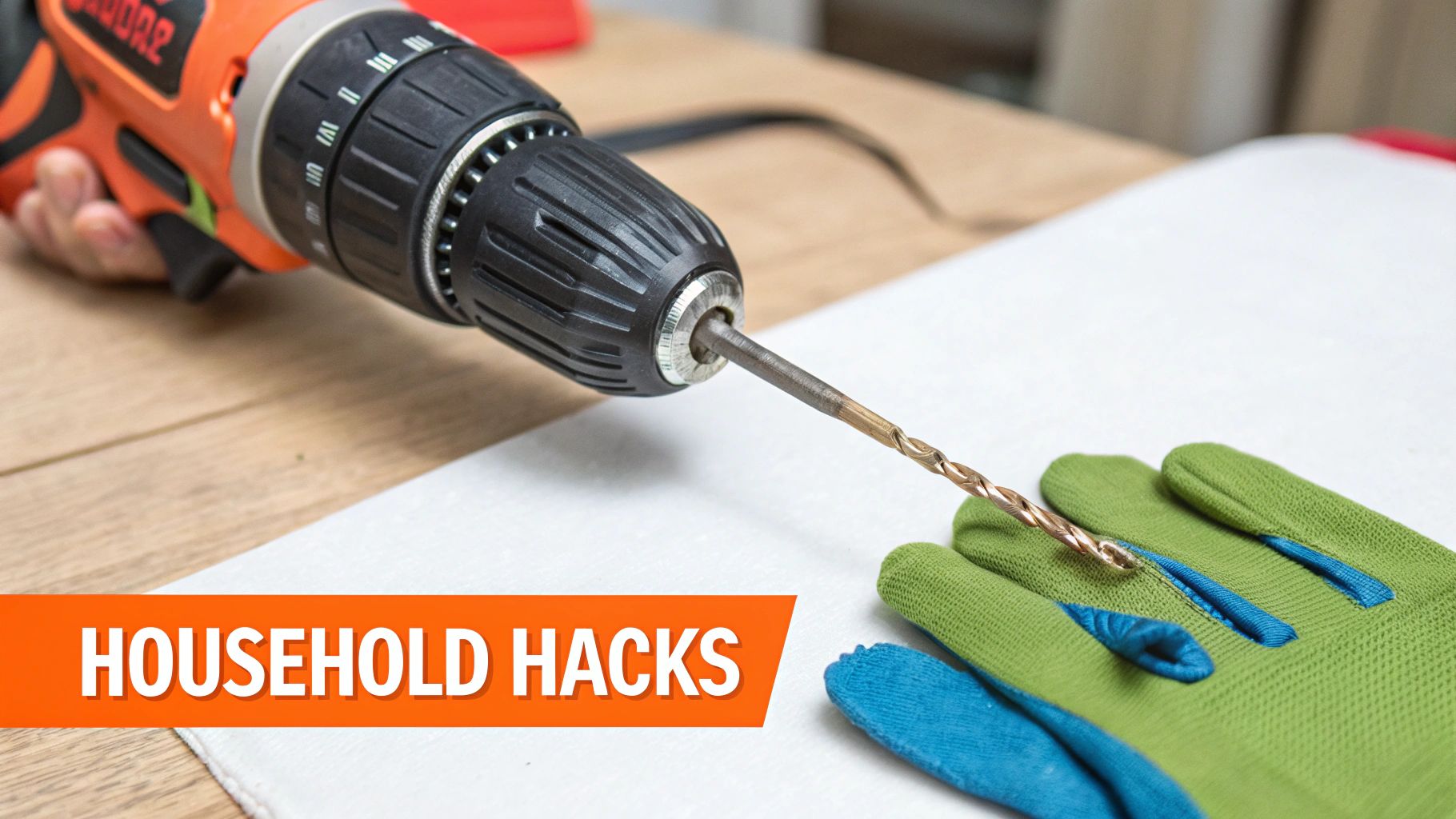
The most famous and accessible trick is the rubber band method. It’s a classic for a reason. By laying a piece of a wide rubber band over the screw head, you effectively fill in those worn-out gaps. This gives your screwdriver something to bite into, creating just enough traction to turn the screw.
Think of it like trying to open a stubborn jar lid. Your bare hands might slip, but a rubber grip gives you the leverage you need. The rubber band works on the same basic principle, molding itself into the damaged part of the screw to create a new, grippable surface.
Ready to give it a shot? First, find a wide, flat rubber band. You'll want to avoid the thin, flimsy ones, as they’ll probably shred the second you apply any pressure.
The magic words here are slow and steady pressure. Don't try to force it. If the band tears, just slide it over to a fresh section or grab a new one and try again. This technique is perfect for those small screws in electronics or the hardware that comes with flat-pack furniture, where the metal is often soft and strips easily.
The concept is simple: you're increasing the surface area for the driver to grip. The rubber fills the voids where the metal has been chewed up, letting you apply torque without the bit slipping and causing more damage.
If the rubber band isn't cutting it or you just don't have one handy, a similar trick involves using a piece of a disposable glove. A small scrap of a latex or nitrile glove offers the same kind of pliable, grippy material.
This isn't just a garage hack, either. The technique has even been documented in clinical settings for removing tiny, stripped medical screws, which really proves how effective it can be in delicate situations. You can read more about this simple removal technique from professional research.
Just like with the rubber band, you’ll lay a small piece of the glove over the screw head and press your screwdriver into it. The material sinks into the gaps and provides the friction you need to get the screw turning.
If neither of these tricks works after a few attempts, it’s a good sign that the screw is too damaged or seized. At that point, it’s time to move on to a method with a bit more muscle.
So, the rubber band trick didn't work. You’re still staring down that same stripped screw, and it’s not budging an inch. It's time to stop with the simple hacks and get a little more serious. When a screw is moderately or even severely stripped, you need methods that rely on pure force and leverage, not just finesse. These are the go-to techniques the pros use when a screw just won't listen to reason.
If you're lucky enough to have part of the screw head sticking up above the surface, your new best friend is a solid pair of locking pliers. You might know them by the brand name Vise-Grips. Unlike regular pliers that depend on how hard you can squeeze, locking pliers clamp down with an incredible, steady pressure. This lets you get a real bulldog grip on whatever is left of that mangled screw head.
Once you’ve got them clamped on good and tight, start turning counter-clockwise—slowly. The goal here isn't speed. It's all about steady, powerful rotation. Think of it like turning a rusty, old valve. If you jerk it, the pliers might slip off, or worse, you could snap the screw head clean off.
But what if the screw is flush with the surface? You can't very well grab something that isn't there. This is a super common problem, and the solution is to actually reshape the screw head. By cutting a brand new slot into it, you can turn a hopelessly stripped Phillips head into a simple flathead, giving your screwdriver a fresh new place to bite.
A rotary tool, like a Dremel, fitted with a metal cutting wheel is perfect for this. Here’s how you do it:
The real key here is to make a slot that works without cutting so deep you weaken the entire screw head. A clean, shallow groove gives you the best shot at getting it out.
No Dremel? A small hacksaw can do the job in a pinch, but it takes a lot more patience and a very steady hand. The idea is exactly the same: create a new channel so your flathead screwdriver can finally get some traction.
Before you start clamping and cutting, just take a second to look at the situation. Is the material around the screw delicate, like a finished wood tabletop? One slip with a hacksaw or Dremel could leave a nasty gouge. It's smart to protect the area around the screw with some painter's tape or a piece of cardboard with a small hole cut out for the screw head.
These more aggressive methods are a real turning point when you're trying to get a stripped screw out. They definitely require more specialized tools and a bit of caution, but they're incredibly effective when the simpler tricks have failed. If even these don't work, don't despair. The next step is to bring in the most powerful tool in the arsenal: a drill and a proper screw extractor.
Alright, when the household hacks have let you down and just trying to force it isn't working, it's time to bring out the big guns. For those screws that are completely mangled, broken off just below the surface, or absolutely seized in place, a screw extractor set is your best bet. This is what the pros reach for when nothing else will do the job.
Using an extractor might sound a little intense, but it's more straightforward than you'd think. These kits usually come with a few different-sized bits, and each bit has two ends. One end drills a clean, cone-shaped hole into the screw, and the other end has reverse threads that bite into that hole to back the screw right out.
This infographic breaks down the decision-making process, showing when to stick with simple tools versus when it's time for more aggressive tactics.
As you can see, things like pliers or a rotary tool are great if you can get a grip on the screw head. But once that head is gone or the screw is recessed, the extractor becomes the only logical next step.
Getting this right is all about the prep work. Your first move is to pick the right size bit from your kit. A good rule of thumb is to choose an extractor that’s a bit smaller than the screw's head but still big enough to get a solid bite.
Of course, you’ll need a drill. If your kit happens to come with left-handed drill bits, you're in luck. These are designed to drill counter-clockwise, and sometimes, the friction and torque from drilling are enough to loosen the screw on their own. You might get it out before you even need the extractor end!
Pro Tip: Before you start drilling, grab a center punch and a hammer. A quick tap in the dead center of the broken screw creates a small dimple. This little guide prevents your drill bit from wandering off-center, which is absolutely critical for the extractor to work its magic.
With your pilot hole drilled, it's time for the main event. Flip the bit around to the threaded extractor end and lock it into your drill. Now, set your drill to its lowest speed setting and make sure it’s in reverse (counter-clockwise).
Press the tip of the extractor firmly into the pilot hole. Apply steady, downward pressure and slowly pull the trigger. Those reverse threads will begin to bite into the screw. As they dig in, the counter-clockwise force will start to turn the stripped screw, backing it cleanly out of its hole.
A decent set of essential furniture assembly tools should always include an extractor kit for exactly these kinds of headaches. You can check out our guide on other must-have tools here: https://assemblysmart.com/furniture-assembly-tools/.
It's no surprise these tools are popular. Globally, there are over 46,000 screw extractor products from more than 12,000 vendors. With reorder rates hitting 33%, it's clear these kits are saving people from furniture-assembly nightmares all the time. For really stubborn screws, investing in a quality set like the Faithfull 4 Piece Screw Extractor Kit can make all the difference.
We've all been there. You're trying to get a stubborn screw out, it strips, and suddenly you're in a race against time. But letting frustration take over is where a small problem spirals into a big one. Acting in a hurry can turn a screw you could have saved into one that needs to be drilled out—or worse, damage the very material it's set in.
The absolute number one mistake? Using the wrong tool for the job.
Grabbing a Phillips screwdriver that's just a little too small or using a bit that's already worn down is a surefire way to chew up a screw head. Every time that driver slips, it grinds away more metal, leaving you with even less to grip onto later.
This is especially true with delicate electronics. Using the wrong driver or just muscling through can cause serious damage. That's why understanding and using specialized tools like pentalobe screwdrivers is so important for those kinds of repairs.
Another classic mistake is just trying to brute-force it. When a screw refuses to budge, our first instinct is often to push down harder and turn faster. This almost always causes the screwdriver to "cam out"—popping right out of the screw head and destroying what little grip you had left. You'll have much better luck with slow, steady, downward pressure instead of aggressive twisting.
Using a power drill at high speed is another recipe for disaster. While a drill is a key tool for screw extractors, setting it too fast on an already damaged screw will just polish the head smooth in seconds. Always use the lowest speed setting on your drill. This gives you control and lets the bit or extractor do its job properly.
Don't immediately jump to the most aggressive solution. Starting with a drill when a simple rubber band might have worked can escalate a minor inconvenience into a major repair project.
Your technique makes a massive difference. An experimental study really hammered this home, showing just how much user skill matters. The study found that a standard straight-handle screwdriver led to a shocking 75% stripping rate. But when users switched to an ergonomic T-handle, that rate dropped to just 40%.
Even more telling? The study showed that using the non-dominant hand sent the stripping rate skyrocketing to 90%. It’s a perfect illustration of how critical proper grip and leverage really are.
Finally, failing to prepare your workspace is an oversight that can sink the whole project. Not having the right bits and tools handy before you start leads to improvising with whatever’s nearby, which is rarely a good idea. Keeping your gear in order is half the battle. If you need some inspiration, check out our guide on hardware organization ideas to make sure you’re always ready for the task at hand.
Knowing how to get a stripped screw out is a fantastic DIY skill, but honestly, knowing when to throw in the towel is even more important. There are definitely times when pushing forward can turn a small headache into a full-blown, expensive disaster. If you've tried a couple of different methods and that screw still isn't budging, it might be time to step back.
Think about what you're working on. Are you dealing with a beautiful piece of antique furniture where one slip of the drill could ruin its value forever? Maybe it’s a delicate piece of electronics where a wrong move means you’ve just created a very expensive paperweight. These high-stakes situations are almost always best left to an expert who has the right tools and, more importantly, the experience.
Sometimes, a screw is just too mangled or seized for the standard tricks in the DIY playbook. Here are a few dead giveaways that it’s time to pick up the phone and call a pro:
A professional can get a seized screw out without causing a bunch of collateral damage. This can save you the headache and the much bigger expense of a larger repair job down the road. Think of their expertise as an investment in protecting your property.
At the end of the day, if your gut is screaming that the risk is too high, you should probably listen to it. For those really tough or delicate situations, looking into professional home repair handyman services is the smartest—and safest—move you can make.
When you're staring down a stripped screw, a few questions always seem to come up, especially if rust or delicate electronics are part of the equation. Let’s tackle some of the most common problems you might run into.
You bet. If you’re wrestling with a screw that’s seized up from rust or corrosion, a penetrating oil like WD-40 is your best friend.
Give the screw head a good spray, making sure the oil gets down into the threads. Now, the important part: walk away for 15-30 minutes. You need to give the oil time to work its magic and break down the rust. Once it has soaked in, whatever method you try next has a much better shot at success.
Working on a laptop or smartphone is a whole different ballgame. With those tiny, delicate screws, you have to start with the least aggressive approach. The rubber band trick is perfect here—it gives you that extra bite without putting any stress on the sensitive components nearby.
If the rubber band doesn’t cut it, a tiny, tiny drop of super glue on the tip of your screwdriver can be a lifesaver. Carefully place the screwdriver into the screw head, let the glue completely harden, then give it a slow, steady turn to back it out.
Okay, don't panic. When the head snaps clean off, your options get a bit more limited, but the situation is far from hopeless.
If a bit of the screw’s shaft is still sticking out, grab a pair of locking pliers. Clamp down on that stub as tightly as you can and twist it out. But if the screw broke off flush with the surface (or even below it), you’ll need to bring in the heavy machinery: a screw extractor set. These tools are specifically designed to bite into the body of a broken screw and pull it out.
Sometimes, a DIY job just isn't worth the headache or the risk of ruining your furniture. If you’re at your wits' end, it's time to call in the pros. Assembly Smart offers expert handyman services to handle those stubborn stripped screws and other repairs, saving you from causing more damage. Skip the frustration and book a reliable technician at https://assemblysmart.com.