-
CALL US:
- (866) 952-3456

It's so easy to get carried away when you're dreaming up your perfect bedroom. But before you fall head over heels for that gorgeous king-sized bed, let's talk about the most crucial first step: creating a blueprint. This isn't just about filling a room; it's about crafting a personal sanctuary that actually works. A little planning now prevents a lot of headaches later.
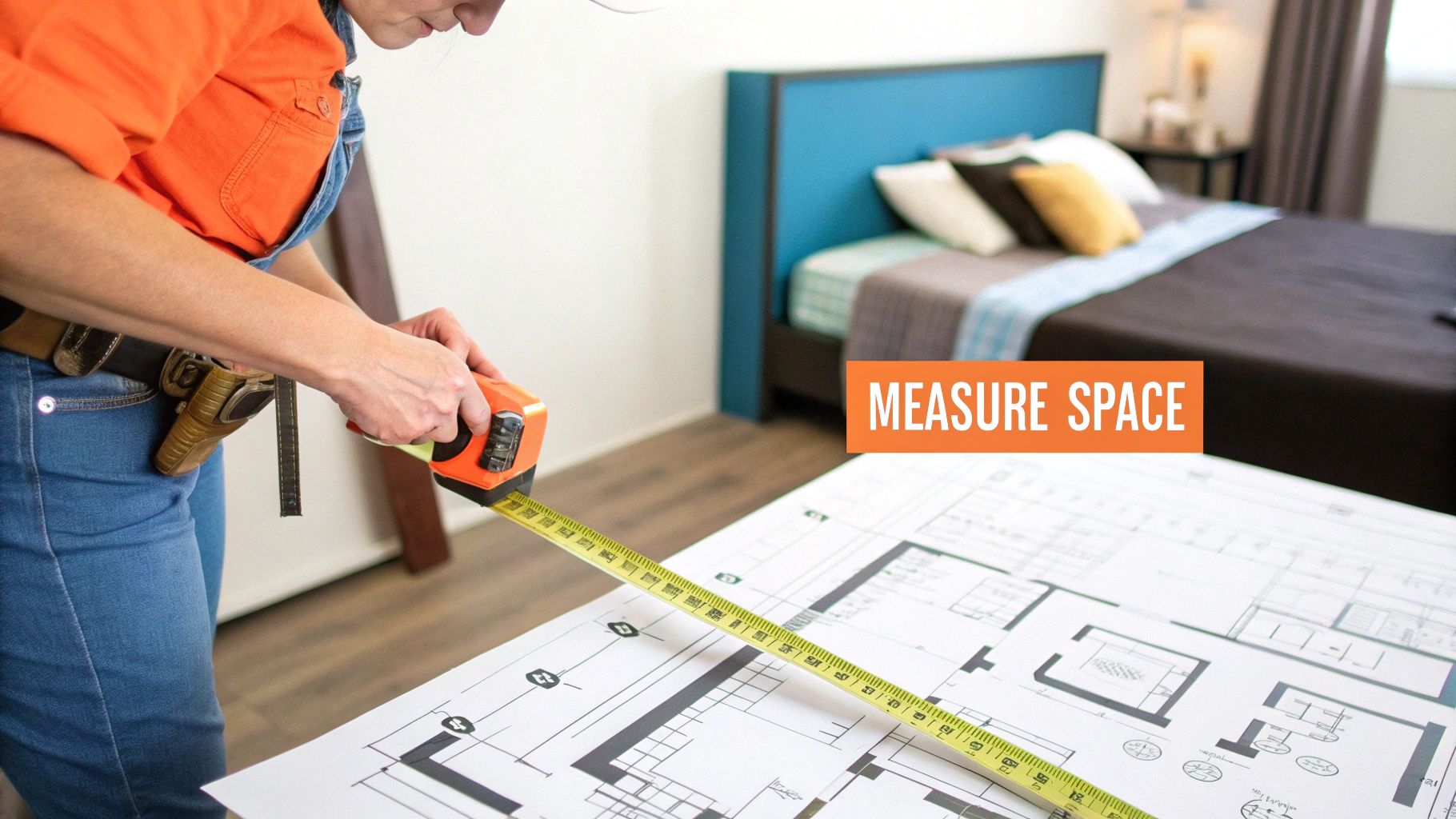
Before you even think about swiping your card, your best friend in this process is a simple tape measure. Trust me, it's the one tool that will save you from the classic case of buyer's remorse. The single biggest mistake I see homeowners make is getting the scale wrong—they either pick pieces so massive the room feels cramped, or so small they just look lost.
Your first move is to measure the room's total length and width. From there, you need to map out every single fixed element. Don't skip anything!
We're talking about:
Once you have these numbers, sketch out a quick floor plan. This visual guide is a game-changer for figuring out your "traffic paths"—the space you need to walk around your bed, get to the closet, and open dresser drawers without bumping into things. As a rule of thumb, always leave at least 30 inches for your main walkways.
If you're working with a cozier room, these tips for decorating small spaces can be a real lifesaver when it comes to maximizing every square inch.
A well-thought-out floor plan does more than just ensure things fit; it creates a sense of calm and flow. It’s the difference between a functional sanctuary and a cluttered obstacle course.
To help you get started, I've put together a quick checklist. Run through these points before you start shopping to make sure you have all your bases covered.
| Checklist Item | Why It Matters | Quick Tip |
|---|---|---|
| Room Dimensions | Establishes the maximum size for your furniture. A king bed might not work in a 10×10 room. | Measure wall-to-wall for both length and width. Don't forget ceiling height! |
| Door & Window Placement | Dictates where you can place tall items like wardrobes or headboards without blocking access or light. | Note the swing direction of doors—an inward swing can eat up valuable floor space. |
| Outlet Locations | Determines where you can place lamps, chargers, or other electronics without running messy extension cords. | Plan for outlets near your nightstands and any potential desk or vanity area. |
| Walkway Clearance | Ensures you can move around freely without squeezing past furniture. | Aim for at least 30 inches for main paths and 24 inches for smaller ones. |
| Drawer & Door Space | You need enough room to fully open closet doors, dresser drawers, and nightstand drawers. | Use your tape measure to mark out the full extension of drawers on your floor plan. |
This simple exercise ensures you're choosing furniture that truly fits your space and your life, turning your bedroom into the relaxing retreat it's meant to be.
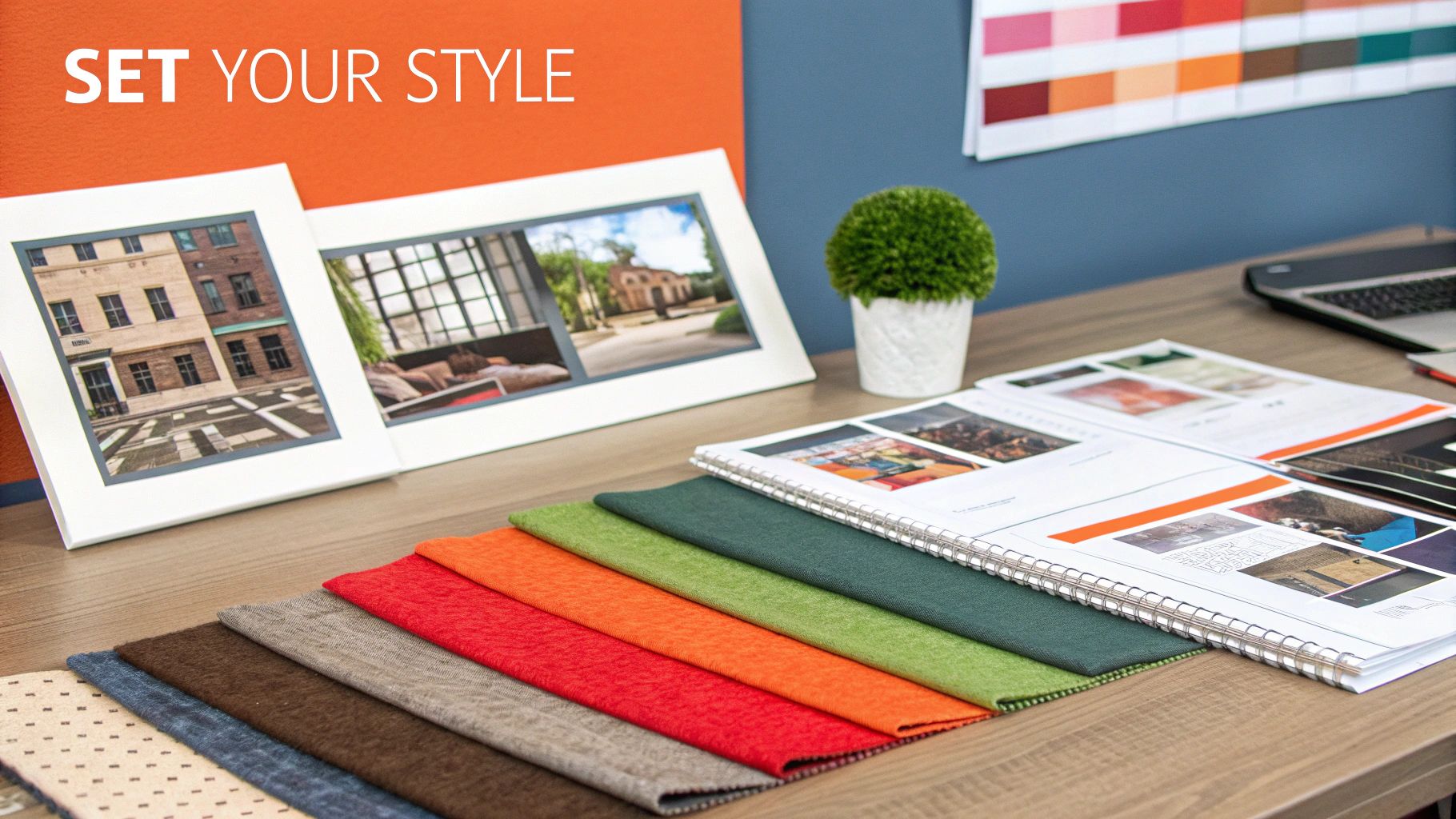
Once you've got the floor plan sorted, the real fun can begin. Choosing your bedroom's style isn't just about slapping a label like "modern" or "farmhouse" on it. It’s about crafting a vibe—a specific feeling you get the moment you walk through the door.
Forget what you see in catalogs for a minute. What actually makes you feel at ease? Do you find yourself drawn to the crisp, clean lines of minimalist pieces, or does the warmth of aged wood and cozy, layered fabrics speak to your soul? Your furniture choices will do most of the talking here.
While it's true that trends lean towards multi-functional pieces and minimalist designs, your personal taste should always be the deciding factor. You'll see a lot of nature-inspired elements and vintage throwbacks out there right now, but don't feel pressured.
The goal is to build a personal sanctuary, not a showroom. A room filled with furniture you genuinely love will never go out of style.
The best-designed rooms are the ones where style and daily life click together perfectly. This is where you connect your aesthetic to your actual routines. It helps to run through a quick "day-in-the-life" checklist.
Get practical and ask yourself a few questions:
Thinking this way makes sure every piece you bring in has a purpose beyond just looking good. You’re building a space that actively works for you. If you need some visual inspiration to get the wheels turning, browsing a few luxury bedroom design ideas can help you pinpoint the look you're after.
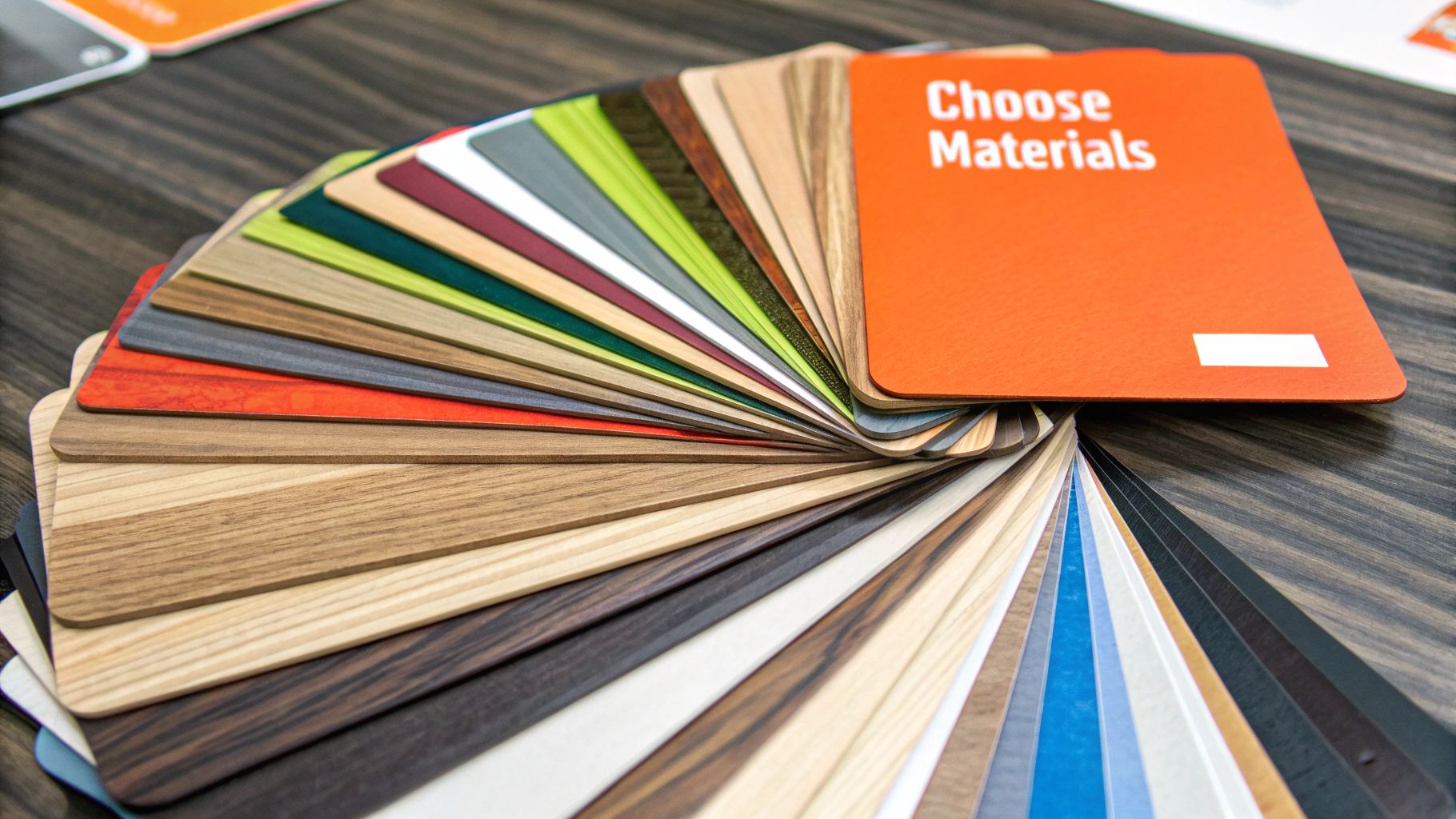
The materials you pick for your bedroom furniture do a lot more than just look good. They set the tone for the whole room and, more importantly, dictate how long your pieces will actually last. It's really a balancing act between your personal style, what you're willing to spend, and the realities of your day-to-day life.
Solid wood, for example, is a classic for a reason. It's timeless and incredibly durable. When you're looking at a wooden dresser, keep an eye out for signs of real craftsmanship, like dovetail joints in the drawers. Those interlocking joints are a world away from simple glue and staples and tell you a piece was built to last for years.
The same goes for fabrics. If you're eyeing an upholstered headboard, ask about the "rub count." A high number there means the fabric can stand up to a lot more wear and tear.
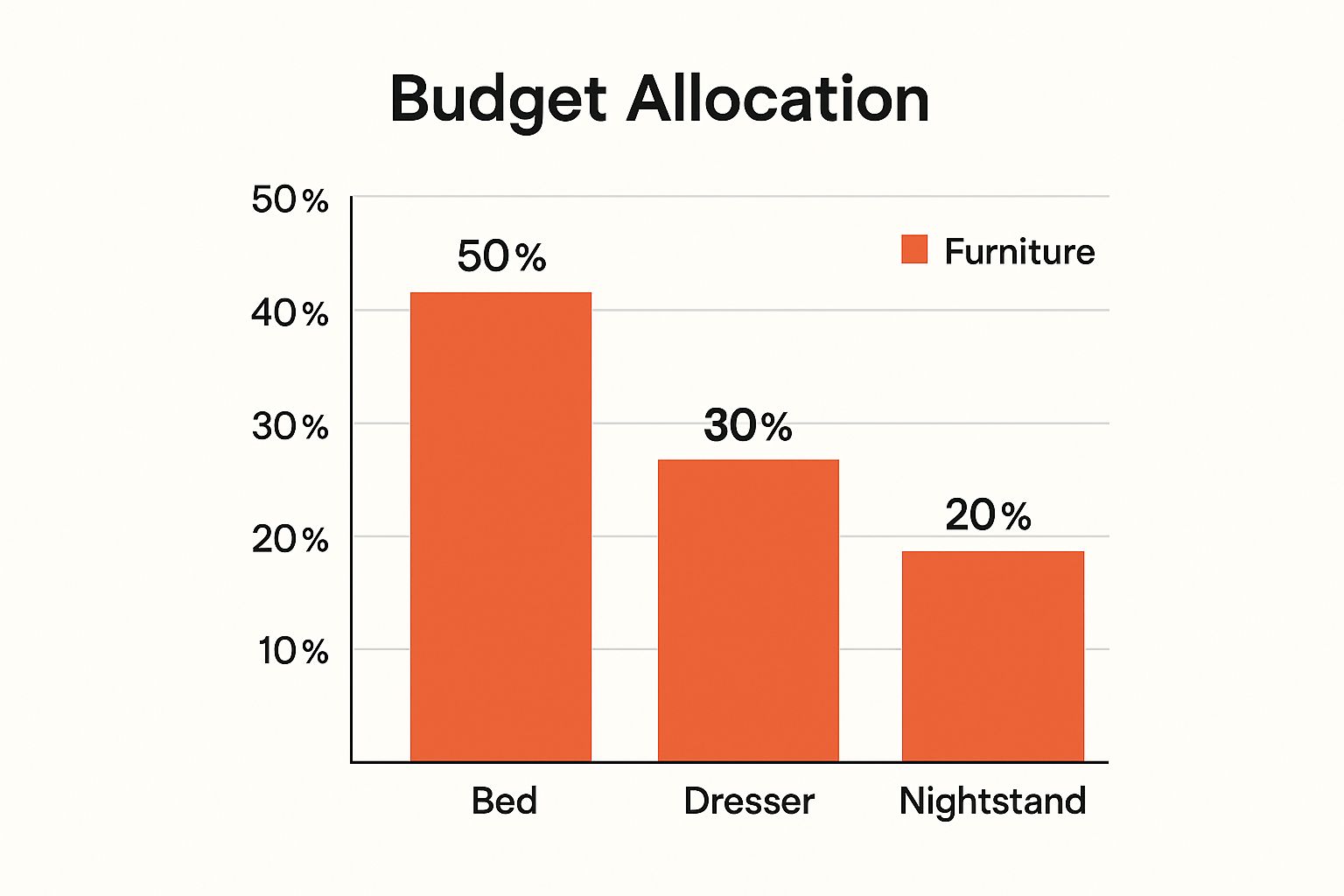
As you can see, the bed is the star of the show and usually takes up the biggest slice of the budget. That just reinforces how crucial it is to get that centerpiece right.
While wood is a popular choice, holding about a 40% market share for its classic look, it's definitely not your only option. Metal frames can give off a sleek, industrial vibe, while upholstered furniture adds a welcome layer of softness and texture.
Just remember that different materials require different levels of care. Keeping fabric pieces looking fresh might mean calling in professional upholstery cleaning services now and then to extend their life and keep your bedroom feeling healthy.
We're also seeing a cool trend toward eco-friendly materials like bamboo, reclaimed wood, and even recycled plastics, which are growing in popularity at a rate of 6.5% annually. People are looking for pieces that are both sustainable and have a unique story.
To help you sort through it all, here's a quick look at some of the most common materials you'll run into.
| Material | Durability | Average Cost | Best For |
|---|---|---|---|
| Solid Wood | High | High | Timeless, heirloom-quality pieces that can be refinished. |
| Metal | Very High | Mid-Range | Minimalist, industrial, or modern styles; very low maintenance. |
| Veneer/MDF | Medium | Low | Budget-friendly options with a consistent, polished look. |
| Upholstery | Varies | Mid to High | Adding softness, color, and texture to headboards and accent chairs. |
Each material brings its own character to a room. Your job is to find the one that fits not just your aesthetic but also how you live.
Your furniture's material is its handshake—it's the first thing you feel and it tells you a lot about its quality. Take the time to choose materials that not only match your style but are also suited to your lifestyle.
One last tip: before you fall in love with that perfect, beautifully crafted piece, make sure it will actually fit. It's a heartbreaking mistake we've seen too many times. Take a minute to check out our guide on how to measure furniture to ensure everything will slide into place perfectly.
Let's talk money. Figuring out your budget can feel like the least exciting part of choosing bedroom furniture, but trust me, a smart plan is what turns that dream Pinterest board into a reality without the financial headache.
This isn’t about being cheap; it's about being strategic with every dollar you spend.
Think about it: you spend roughly a third of your life in bed. This makes your bed and mattress the absolute number one place to invest your money. Comfort and support here are non-negotiable. After that, focus on the high-use "workhorse" pieces like your dresser or wardrobe. The fun, decorative items? That's where you can get creative and find some real bargains.
Getting more for your money without settling for junk is easier than you think. Timing is everything. Major holiday weekends—think President's Day, Memorial Day, Labor Day—are famous for bringing the best sales.
And don't be shy about asking for a discount on floor models! They often have tiny, unnoticeable scuffs but can be snagged for a fraction of the original price. Exploring secondhand shops and online marketplaces can also uncover some incredible finds, especially solid wood pieces that just need a little TLC to look brand new.
A well-planned budget isn't a restriction; it's a tool that empowers you to make intentional choices, ensuring you invest in quality where it counts and save where it's smart.
Finally, remember to look beyond the price tag. Delivery fees, taxes, and potential assembly services can add up fast. Factoring in the furniture assembly service cost right from the start prevents any nasty surprises later on. By planning for these extras, you create a realistic budget that covers everything, ensuring your bedroom makeover is smooth, successful, and something you'll absolutely love.
Okay, you've done the hard work of planning and measuring. Now for the exciting part—actually buying your new bedroom furniture. The big question is often whether to buy online or head to a brick-and-mortar store. Honestly, it just boils down to your personal preference, but it’s smart to know the pros and cons of each.
Going to a physical store lets you get hands-on. You can see the exact shade of that wood finish, feel the texture of the upholstery, and give those drawers a good pull to test the glide. On the flip side, shopping online offers a dizzying amount of variety and often better prices, but you are putting your faith in photos and customer reviews.
This is a big one. No matter where you decide to buy, dig into the delivery and return policies before you click "purchase" or hand over your card. Some companies offer a fantastic "white glove" service where they'll carry the piece into the room and place it exactly where you want it. Others? They’ll just drop a heavy box on your curb and drive away.
A painful return policy can turn what should be an exciting purchase into a massive headache. Know your options before you commit. And please, don’t overlook the warranty, especially for big-ticket items like your bed frame or that beautiful dresser. A solid warranty is a good sign that the company believes in its own product.
The last leg of the journey—the purchase and setup—is just as crucial as the initial design. A great deal can be instantly ruined by surprise delivery fees or a nightmarish assembly process. Reading the details is non-negotiable.
Last but not least, have an honest conversation with yourself about assembly. Building flat-pack furniture can be a super rewarding DIY project if you have the time, patience, and tools. But it can also be the fastest way to start an argument and ruin a weekend.
If the thought of deciphering vague instructions and sorting through a hundred tiny screws makes you break out in a cold sweat, it's worth looking into professional furniture assembly help. It can save you a world of frustration and ensure your new furniture is sturdy and safe. Your setup day should be exciting, not stressful.
Stepping into the world of bedroom furniture can feel overwhelming. It’s natural to have questions, and getting them answered is the best way to feel confident you’re choosing pieces you’ll love for years.
Let's dive into some of the most common things people ask when they're trying to pull a room together.
One of the first things on everyone's mind is budget. Where should the money really go? Without a doubt, your bed and mattress should be the top priority. Think about it—great sleep is the foundation of your health, and this is the one spot you really don't want to cut corners. A solid, supportive bed frame and a high-quality mattress are going to have a bigger impact on your daily life than anything else in the room.
Another big question is how to mix and match different furniture pieces without making the space look like a chaotic mess.
The secret to mixing furniture successfully is to find a common thread that ties everything together. This unifying element acts as an anchor, creating harmony even when the pieces aren't from the same collection.
Here are a few ways to pull it off:
This approach gives you a curated, personal look that feels more interesting than a pre-packaged set.
Buying a matched set is the fastest way to get a coordinated look, but mixing individual pieces is where you get to inject your personality and create a space that’s truly your own.
Ultimately, choosing between a full bedroom set and individual pieces is a matter of personal taste. A set is easy and can sometimes be a better deal. But if you have the confidence, buying piece by piece gives you the freedom to create something much more dynamic.
Finally, there’s the practical hurdle of assembly. If you’ve bought flat-pack furniture, you know what’s coming. For anyone who’d rather skip the frustration, getting professional help with IKEA furniture assembly or other brands can be a huge time-saver and guarantees a solid, wobble-free build.
Ready to skip the frustration of confusing instructions and a pile of screws? Let Assembly Smart handle the setup for you. Our professional team ensures your new bedroom furniture is assembled correctly and securely, so you can start enjoying your perfect space sooner. Get your free estimate today!