-
CALL US:
- (866) 952-3456

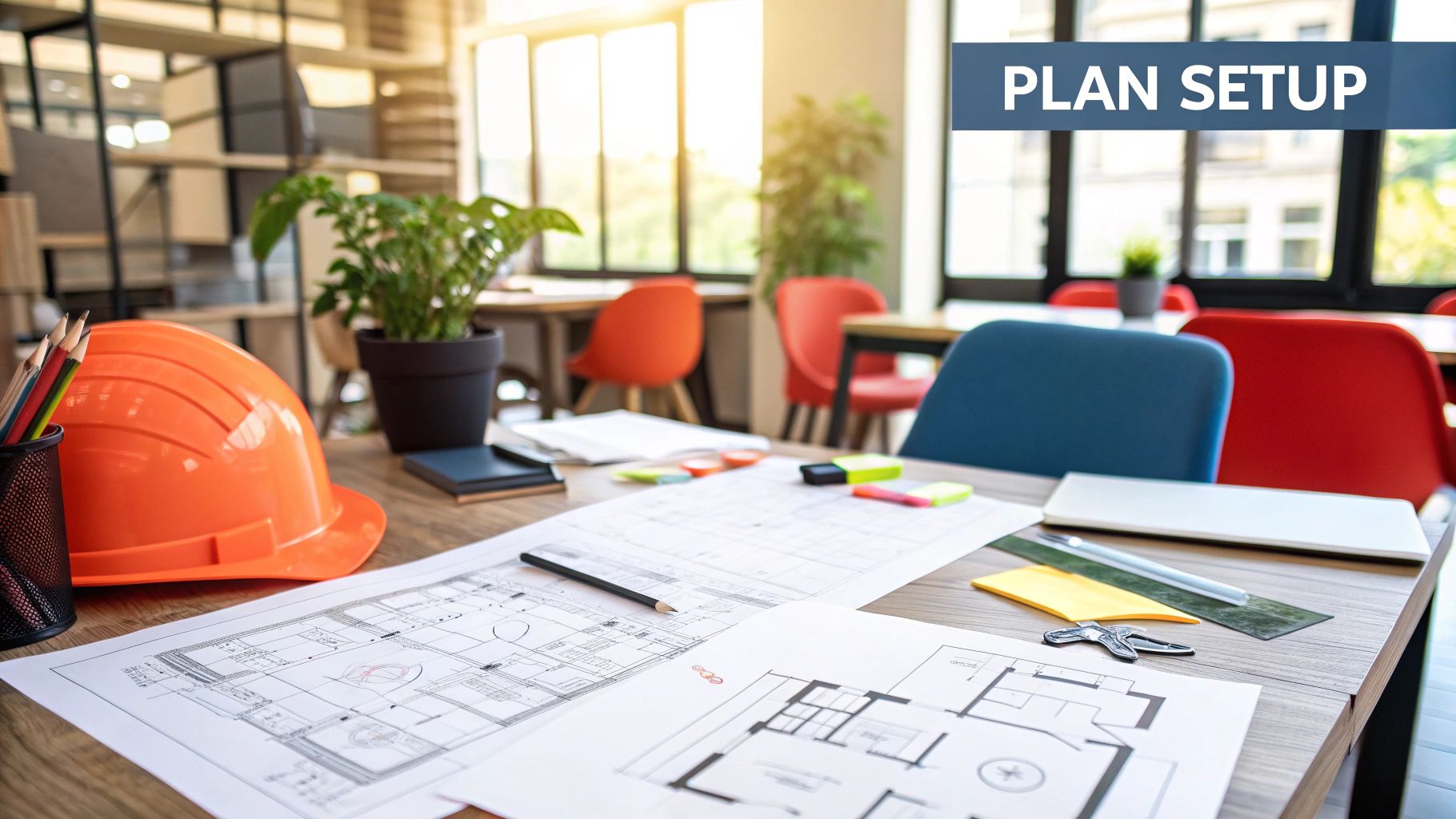
Office furniture installation is more than just putting together desks and chairs; it's about creating a workspace that actually works. I learned this the hard way once. We squeezed everything into a room based solely on the dimensions, only to discover a filing cabinet was blocking the main walkway. Talk about a facepalm moment. The takeaway? Measure everything.
That means not just the length and width of the room, but also window placement, how the doors swing, and where the power outlets are located. Existing fixtures matter too. A rogue pillar can completely derail your carefully planned layout.
Imagine arranging rows of desks, only to realize the only outlets are on the opposite wall. Suddenly, you're dealing with a tangled mess of extension cords – a safety hazard and an eyesore. Speaking of headaches, accurately measuring doorways and hallways is crucial. I once had a gorgeous conference table delivered that wouldn't fit through the door. We ended up disassembling it on the spot, which added hours to the project. You might find our guide on preparing for your furniture assembly project helpful.
These experiences taught me the importance of taking precise measurements and sketching multiple layouts before the installation even begins. Effective planning is key for a smooth furniture installation. For a broader perspective on furniture installation within a larger project, check out FF&E project management strategies.
And while we’re on the topic of furniture, the market is changing. The demand for flexible and sustainable office furniture is growing, driven by hybrid work models. In fact, the market, estimated at USD 71.11 billion in 2025, is projected to reach USD 107.00 billion by 2032. Modular desks and mobile storage cabinets are gaining popularity, offering adaptability and efficiency. This shift highlights the need to plan for future needs, not just current ones. You can learn more about office furniture market trends.
Before you even think about unpacking, having a solid plan is the foundation of a successful installation. Trust me, a little planning upfront saves you a lot of time, money, and frustration in the long run.
The table below offers a practical guide to gathering the crucial measurements you’ll need. It highlights key areas to focus on and explains why they’re so important for a smooth installation process.
Essential Measurements Checklist for Office Planning
Key measurements and considerations to record before starting your furniture installation
| Room Element | What to Measure | Why It Matters | Pro Tips |
|---|---|---|---|
| Room Dimensions | Length, width, height | Determines furniture fit and overall layout | Measure at multiple points in case of variations |
| Windows | Width, height, distance from floor and other walls | Impacts natural light and furniture placement | Consider window treatments and their impact on available space |
| Doors | Width, swing direction | Ensures furniture can be moved into the room | Check both interior and exterior doors leading to the space |
| Power Outlets | Location, number | Dictates placement of electronics and desk configurations | Map out outlets on your floor plan to avoid surprises |
| Existing Fixtures | Size, location (columns, pipes, radiators) | Can obstruct furniture placement or walkways | Incorporate these into your layout sketches |
| Hallways & Elevators | Width, height, turning radius | Confirms large furniture pieces can be transported | Consider any tight corners or stairs along the route |
This checklist provides a crucial starting point for efficient office planning. By addressing these key measurements, you'll be well-prepared to create a functional and comfortable workspace.
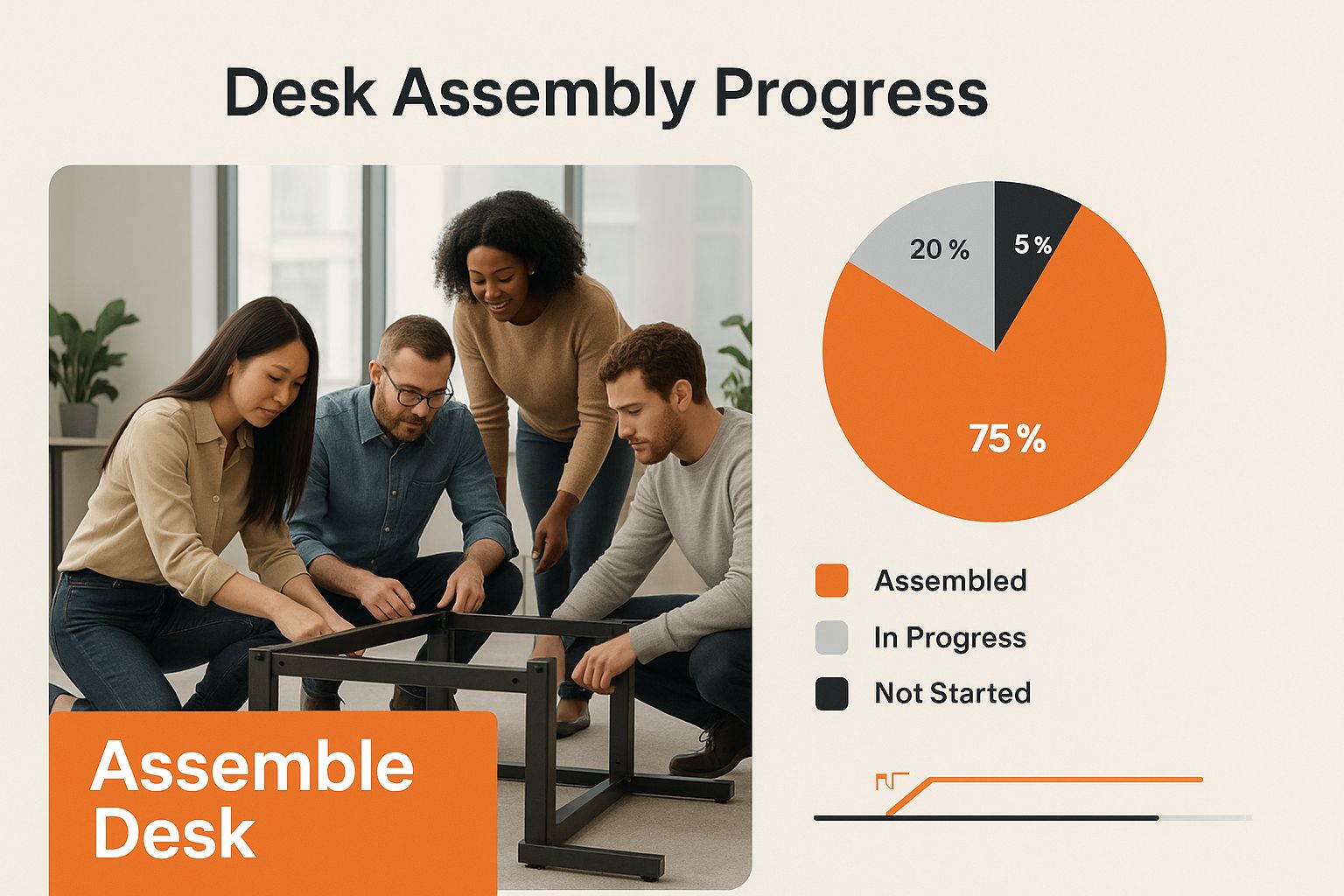
This image shows a team putting together a modular desk – a perfect example of why the right tools matter. Trust me, having the right gear and knowing how to use it can dramatically speed things up. When planning your office, a good expert installation guide can be a lifesaver.
A well-stocked toolkit is essential. Think of it as your best friend during installation. Take Allen wrenches, for example. The standard set is a must-have, but a ratcheting set is a game-changer, especially for bigger projects. Same goes for screwdrivers. A basic one will do the job, but a multi-bit driver with different Phillips and flathead sizes will save you tons of time.
Don’t stop at the essentials. I've been there, stuck without a rubber mallet. Trust me, it's a lifesaver for gently tapping in connectors without causing damage. A level, tape measure, and pencil are your constant companions – keeping everything aligned and in place. Having these on hand prevents costly mistakes.
It's the little things that often make the biggest difference. Zip ties for cable management? Essential. Furniture glides to protect your floors? Absolutely. I've also learned that seemingly unnecessary tools, like a small pry bar for carefully separating parts or needle-nose pliers for grabbing tiny screws, can become your new best friends. Investing in quality tools pays off in efficiency and a much smoother installation process. You'll thank yourself later!
Before we dive deeper, let's talk tools. The table below breaks down essential versus optional items, their costs, and when they’re most useful. This will help you build a toolkit that fits your needs and budget.
Complete Office Furniture Installation Toolkit
| Tool Category | Essential Items | Optional Upgrades | Typical Cost Range | Best Use Cases |
|---|---|---|---|---|
| Drivers | Phillips & Flathead Screwdrivers | Ratcheting Screwdriver Set, Multi-bit Driver | $10 – $50 | Assembling most furniture components, tightening screws |
| Wrenches | Allen Wrench Set | Ratcheting Allen Wrench Set | $5 – $30 | Working with Allen key fasteners, common in most furniture |
| Measuring & Leveling | Tape Measure, Level, Pencil | Laser Level, Digital Angle Finder | $10 – $50 | Ensuring proper alignment and placement of furniture |
| Hammers & Mallets | Rubber Mallet | Claw Hammer | $10 – $20 | Gently tapping connectors, assembling components without damage |
| Other Essentials | Utility Knife, Safety Glasses, Work Gloves | $10 – $30 | Unboxing, general safety, and handling materials | |
| Cable Management | Zip Ties | Cable Clips, Wire Loom | $5 – $20 | Organizing cables and wires, keeping workstations tidy |
| Floor Protection | Furniture Glides | Felt Pads | $5 – $15 | Preventing scratches and damage to flooring during installation and movement |
| Advanced Tools | Pry Bar, Needle-nose Pliers | Power Drill, Electric Screwdriver | $15 – $100 | Disassembling parts, handling small screws, speeding up complex assemblies |
As you can see, having the right tools can make all the difference. While the essential items will get you through most installations, consider investing in some optional upgrades for larger or more complex projects. A little upfront investment can save you a lot of time and frustration down the road.
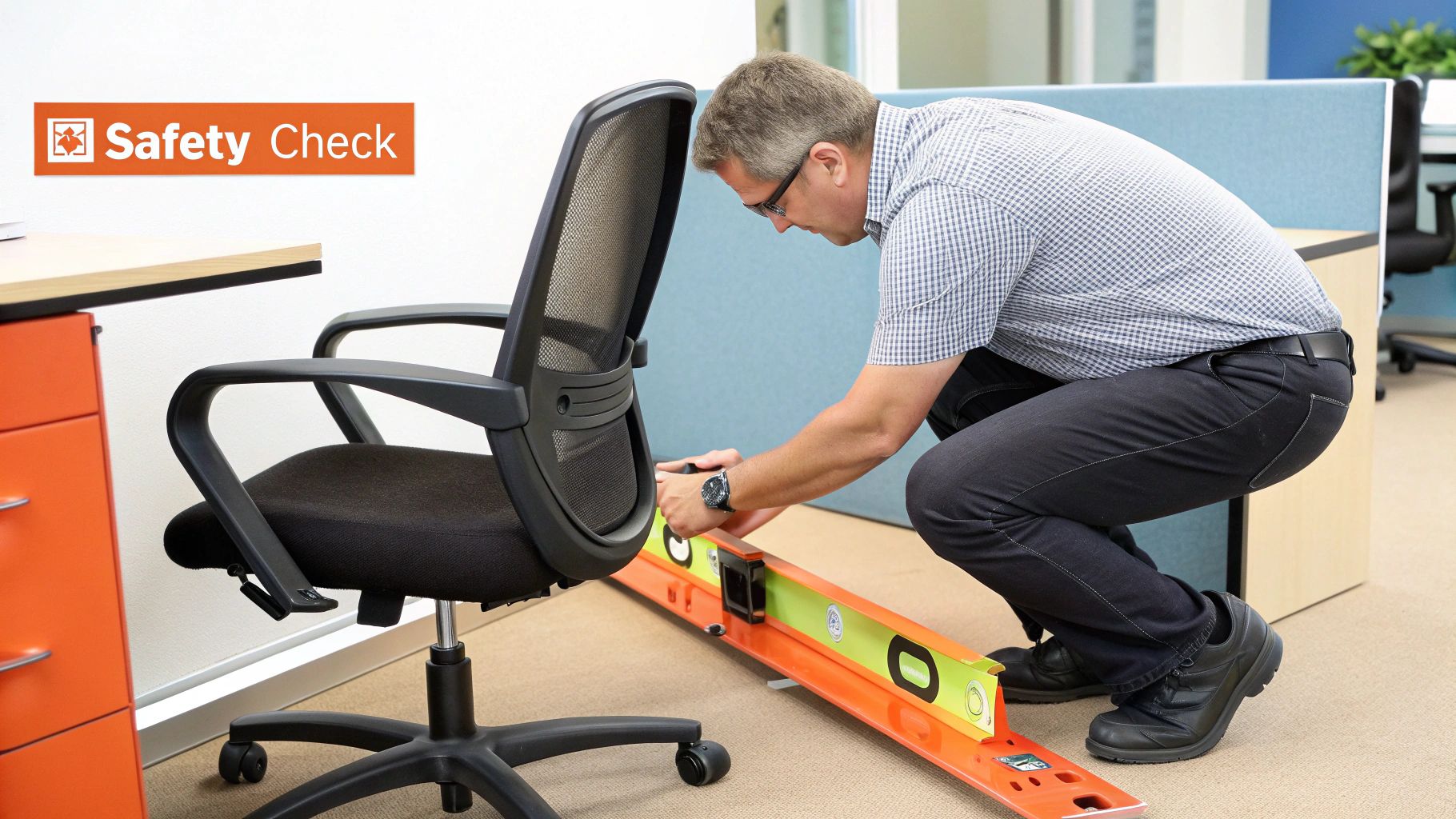
Having clear assembly instructions is a great starting point, but honestly, office furniture installation is about more than just following the manual. It’s about strategy. I learned this the hard way. Picture this: I once spent hours assembling individual desks, only to discover they were too big to fit through the doorway after they were built. Talk about frustrating! So, trust me on this one: think big picture before you even open the first box.
For example, if you’re putting together a bunch of workstations, start with the main desk frames. This creates a solid base and lets you get the overall layout right before dealing with smaller parts like drawers and keyboard trays. This way, you avoid a lot of unnecessary heavy lifting and rearranging. Speaking of helpful tips, you might find these 12 helpful tips for assembling IKEA furniture useful.
Large conference tables or bulky storage units require a different approach. Don't try to tackle the whole thing at once. Break the assembly down into smaller, manageable stages. Assemble the table base first, position it carefully, then attach the tabletop. This distributes the weight and makes the whole process safer and easier.
Also, consider the flow of your installation. Don't block access routes with half-assembled furniture. Think about how each piece will fit into the final arrangement and plan your assembly accordingly. This will save you from major logistical headaches later.
Interestingly, the furniture market itself has seen some big changes. After a significant dip during the pandemic – a decline of -19.21% in 2020 – the industry rebounded strongly. By 2025, it was valued at USD 61.35 billion and is projected to reach USD 99.58 billion by 2032. This growth is driven by the increasing demand for ergonomic and modern workspace solutions as more and more offices embrace hybrid work models. You can learn more about the trends shaping the office furniture market. This rebound shows how the needs of modern offices are changing and highlights the importance of flexible furniture installations that can adapt.
Even with a solid plan, office furniture installation can be tiring. Knowing when to take breaks is essential. Pushing through exhaustion is a recipe for mistakes and potential injuries. Short, regular breaks help you stay focused and avoid burnout. Remember, slow and steady wins the race, especially when it comes to furniture assembly. Believe me, taking a few extra minutes is always better than having to redo an entire assembly because of a mistake made when you were tired. A well-paced approach, combined with strategic planning, makes the whole process much smoother and less stressful.
Getting your office furniture assembled is just the first step. The real magic happens when you arrange everything to create a productive and comfortable workspace. I've learned this the hard way over years of setting up offices. I remember one time we put a fancy new printer in a seemingly perfect spot, only to discover it blocked the only access to the supply closet – talk about a design fail! Even small things can make a big difference.
Consider the flow of traffic in your space. Where do people naturally walk? Where are the entrances and exits? Your furniture should complement these patterns, not disrupt them. Placing desks near high-traffic areas can create a constant stream of distractions, while isolating key team members can hinder communication.
It’s a delicate balance.
Believe it or not, desk placement can subtly influence how people interact. Positioning desks face-to-face can encourage collaboration. Angling them slightly outwards can provide a good balance between teamwork and focused individual work. I once helped a team rearrange their desks from a rigid row to a more open cluster, and the change in their communication was immediate and noticeable. It was like they suddenly rediscovered each other!
Ergonomics isn't just about adjustable chairs. It’s about how all the elements in your office work together. Ensure there’s enough space between desks and other furniture so people can move around comfortably. Think about the location of shared resources like printers and filing cabinets. Easy access for everyone can greatly improve efficiency. I recall visiting a client's office and noticing their filing cabinets were tucked away in an inconvenient corner. A quick reshuffle made a huge difference for the team's workflow.
After the initial setup, take time to observe and adjust. Watch how people use the space. Are there any bottlenecks or awkward pathways? Don’t hesitate to rearrange things. Sometimes a small shift in furniture placement can significantly improve both workflow and team dynamics. It's all about creating a space that works for the people using it.
Office furniture installation isn't just about putting pieces together; it's about doing it safely. I've seen projects go south quickly because of preventable accidents – everything from wobbly desks to heavy filing cabinets causing real injuries. So, let's talk about how to protect everyone involved, from the installers to the folks who will eventually use the furniture. You might also be interested in our guide on furniture assembly.
Lifting heavy furniture the wrong way, especially in a tight office space, is asking for trouble. I once threw my back out wrestling a bulky desk by myself. Learned my lesson! Now I always use proper lifting techniques: bend at the knees, keep the load close to my body, and tighten those core muscles. Even something that seems light can strain you if you lift it incorrectly. And remember, teamwork makes the dream work. Never hesitate to ask for help with those awkward or heavy pieces.
It's easy to underestimate the weight of certain items. Office chairs, for example, can be surprisingly heavy, especially the ergonomic ones. A good rule of thumb: if you're unsure, ask for a hand.
Anchoring furniture to the wall might seem like an afterthought, but it's crucial. Tall bookshelves are obvious candidates, but did you know some desks need anchoring too? Especially in earthquake-prone areas, this is non-negotiable. Skipping this step can lead to tipping furniture, which is a serious hazard. I saw a freestanding cabinet tip over during a minor tremor once – thankfully, no one was hurt. Always check your local building codes and the manufacturer's instructions for specific anchoring requirements.
Electrical safety during installation is about more than just avoiding overloaded outlets. Think about cable placement too. You don’t want tripping hazards all over the office. Secure those cables properly with cable ties and clips, and never, ever run them under carpets or rugs. I've seen situations where exposed wires created a potential fire hazard. This highlights why proper cable management is so important. Good cable management isn't just about aesthetics; it's about safety.
Documentation is key. Keep records of every installation step, safety checks performed, and any modifications you made. This protects both you and your client if there are any accidents or warranty issues down the line. I’ve seen warranties voided because of missing documentation. Think of documentation as your safety net. It's also wise to have liability insurance to cover potential accidents during the installation process. Understanding these safety protocols is crucial for smooth, safe, and successful office furniture installations.
You know, even with the most careful planning, furniture assembly can throw you a curveball. I remember once, the floor looked level, totally flat. But the minute we started putting together the desks, it became obvious – a noticeable slope. We ended up using shims under the desk legs, a quick solution that thankfully saved the day. It’s these little surprises that really put your problem-solving skills to the test.
Sometimes, you just run into unexpected issues mid-installation. Maybe a wall isn't as straight as it looked on the blueprints, or there are hidden pipes you never knew about. In these cases, being flexible is essential. I once had to completely redesign an office layout on the spot because the furniture that arrived was a different size than what was ordered! Talk about stressful. But, we managed to create a workable solution by rearranging the desks and using a different wall.
Another common headache is missing or damaged parts. I've learned from experience to always check for damage before starting the assembly. If something is missing, contact the supplier right away. While you’re waiting for replacements, work on assembling other parts. This keeps the project moving and minimizes delays. I remember one time a key part for a conference table was missing. We improvised a temporary support while we waited for the replacement, which allowed us to get other things done.
Every now and then, you'll find a space isn’t as big as you thought. I had this happen once in a small office that looked much larger during the initial walkthrough. We had to completely rethink the layout to make the most of the space. This meant rearranging desks and using vertical space with shelves and wall-mounted organizers. It wasn't the original plan, but it worked out great. That experience taught me creativity is key in tight spaces.
Finally, understanding your limits is important. Some problems are just too big for a DIY fix. If you run into complicated electrical issues or structural problems, call a professional. Trying to handle these yourself can be dangerous and might even void warranties. I once found faulty wiring during an installation and made the smart decision to call in a qualified electrician. It was definitely the right call, ensuring safety and preventing future problems. Even with the best planning, office furniture installation can have unexpected challenges. It’s how you adapt and overcome these obstacles that really makes a project successful.
Sometimes, tackling furniture assembly yourself just isn't the best approach. I've learned this the hard way. There’s a world of difference between putting together a small bookshelf and furnishing an entire office. Knowing when to bring in the pros can save you time, stress, and potentially even some cash.
Let’s face it, some furniture setups are complicated. If you’re dealing with systems furniture, complicated modular configurations, or a mountain of boxes, professional installers are often the best choice. They’ve got the know-how and the right tools to get these complex projects done right. Think of it this way: you probably wouldn’t attempt to rewire your whole house, right? Sometimes you just need a specialist.
We all know time is precious. Professional office furniture installation frees you up to focus on what matters most. If you’re a busy professional, spending your valuable time wrestling with furniture assembly probably isn’t ideal. Professionals can knock out the installation quickly and efficiently, so you can get back to business.
While hiring professionals involves an upfront cost, consider the hidden expenses of doing it yourself. You could accidentally damage the furniture, lose valuable work time due to assembly delays, or even get injured. Any of those things could end up costing you more in the long run. Professional installers are usually insured and experienced, reducing these risks significantly. Check out our guide on professional furniture assembly for more helpful tips.
Finding reliable installers is key. Look for companies with a proven track record, positive online reviews, and the right insurance. Ask them about their experience with similar projects and if they have any references you could contact. A reputable installer will be happy to answer all your questions and give you detailed information about their services and pricing.
Once you’ve chosen an installer, clear communication is crucial. Give them detailed floor plans, furniture specifications, and any other specific needs you have. A pre-installation walk-through with the installers is a great idea. It helps make sure everyone's on the same page and avoids potential problems later on. This collaborative approach ensures the final result will match your vision. By understanding when and how to use professional office furniture installation services, you can create a functional, safe, and productive workspace without all the DIY stress.
Ready to simplify your life and transform your office? Contact Assembly Smart today for a free estimate and see what professional furniture assembly can do for you. We handle everything from basic desks to complex systems with expertise and care.