-
CALL US:
- (866) 952-3456

If you've ever bought furniture from a big box store, chances are you've encountered flat pack furniture. You might also know it by its other common name: ready-to-assemble (RTA) furniture.
The concept is brilliantly simple. Instead of shipping a fully built, bulky piece of furniture, manufacturers break it down into its core components. Everything is then packed neatly into a single, slim box for you to take home and build yourself.
Think of it like getting a life-sized model kit for your home. When you open it up, you're not just looking at a pile of wood and screws; you're looking at your next bookshelf or desk in its most basic form. This whole approach has made modern, stylish furniture more accessible and affordable than ever before.
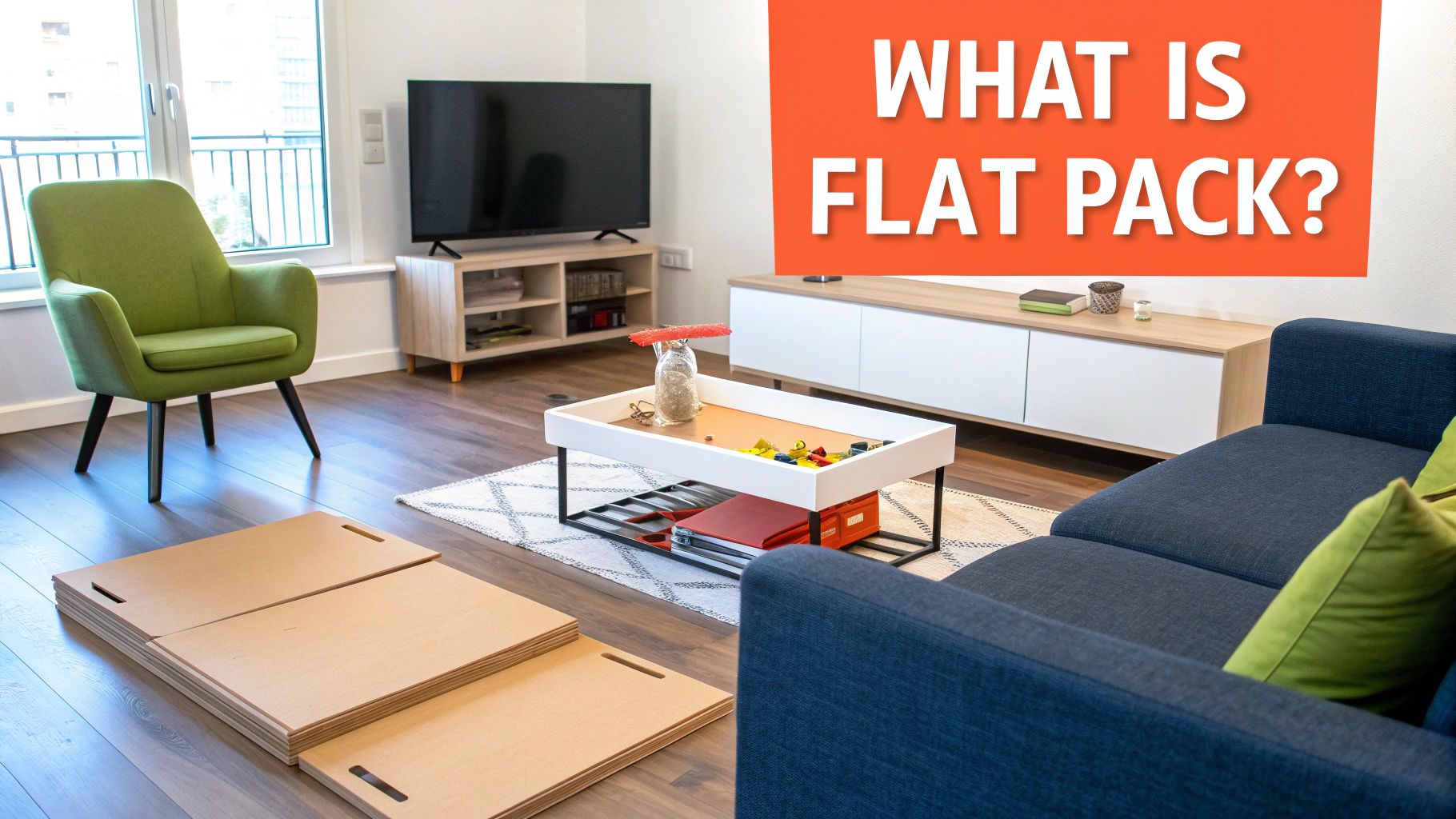
The idea is to deconstruct a large item into manageable pieces, making it incredibly easy to transport and store until you're ready to put it together.
Every kit is designed to be a self-contained project, giving you everything you need to get the job done. Inside, you'll almost always find these three things:
The real magic of flat pack furniture is how it balances cost, style, and practicality. It gives you the power to furnish your space without the logistical headaches and high price tag of traditional, pre-built furniture.
This hands-on, DIY approach is what makes it all possible. And while assembling it yourself can be a great way to save money, it's always a good idea to weigh the pros and cons of professional vs. DIY flat pack furniture assembly before you start turning that first screw.
To really understand what sets flat pack apart, it helps to break down its defining features. This table summarizes the core elements that make it such a popular choice for consumers all over the world.
| Characteristic | Description | Primary Benefit |
|---|---|---|
| Disassembled State | Furniture is sold in pieces rather than fully constructed. | Easy to transport and fit through doorways. |
| Compact Packaging | All components are packed into one or more flat, rectangular boxes. | Lower shipping costs and reduced storage space. |
| Self-Assembly | The customer is responsible for building the final product at home. | Significant cost savings on labor. |
| All-in-One Kit | Includes all necessary panels, hardware, and instructions. | No need to buy extra parts or tools. |
| Standardized Parts | Uses common fittings like cam locks, dowels, and screws. | Simplifies the manufacturing and assembly process. |
Ultimately, these characteristics work together to create a system that is efficient for the manufacturer, affordable for the retailer, and incredibly convenient for the end-user.
The whole idea of flat pack furniture didn’t come from some fancy design lab. Nope, it started with a problem anyone who’s ever moved can understand. The year was 1956, and an IKEA employee named Gillis Lundgren was having a hell of a time trying to stuff a new table into his car.
In a flash of pure, practical genius, he just took the legs off. That simple act of packing the parts flat planted the seed for what would become a massive global industry.
This wasn't just about making things fit in a car. It completely changed how furniture was designed, shipped, and sold. By shipping furniture in pieces, companies slashed their transportation and storage costs. Those savings were passed right on to the customer, making modern, stylish designs affordable for almost everyone. It was exactly what the post-war world was looking for: cheap, functional, and good-looking home goods.
The idea caught on fast, helped along by big cultural shifts like more and more people moving into cities. Suddenly, the ability to carry a slim box up three flights of narrow stairs wasn't just a gimmick—it was a huge selling point. Ready-to-assemble furniture went from being a quirky solution to an absolute staple in homes everywhere.
This infographic breaks down some of the key moments in that incredible journey.
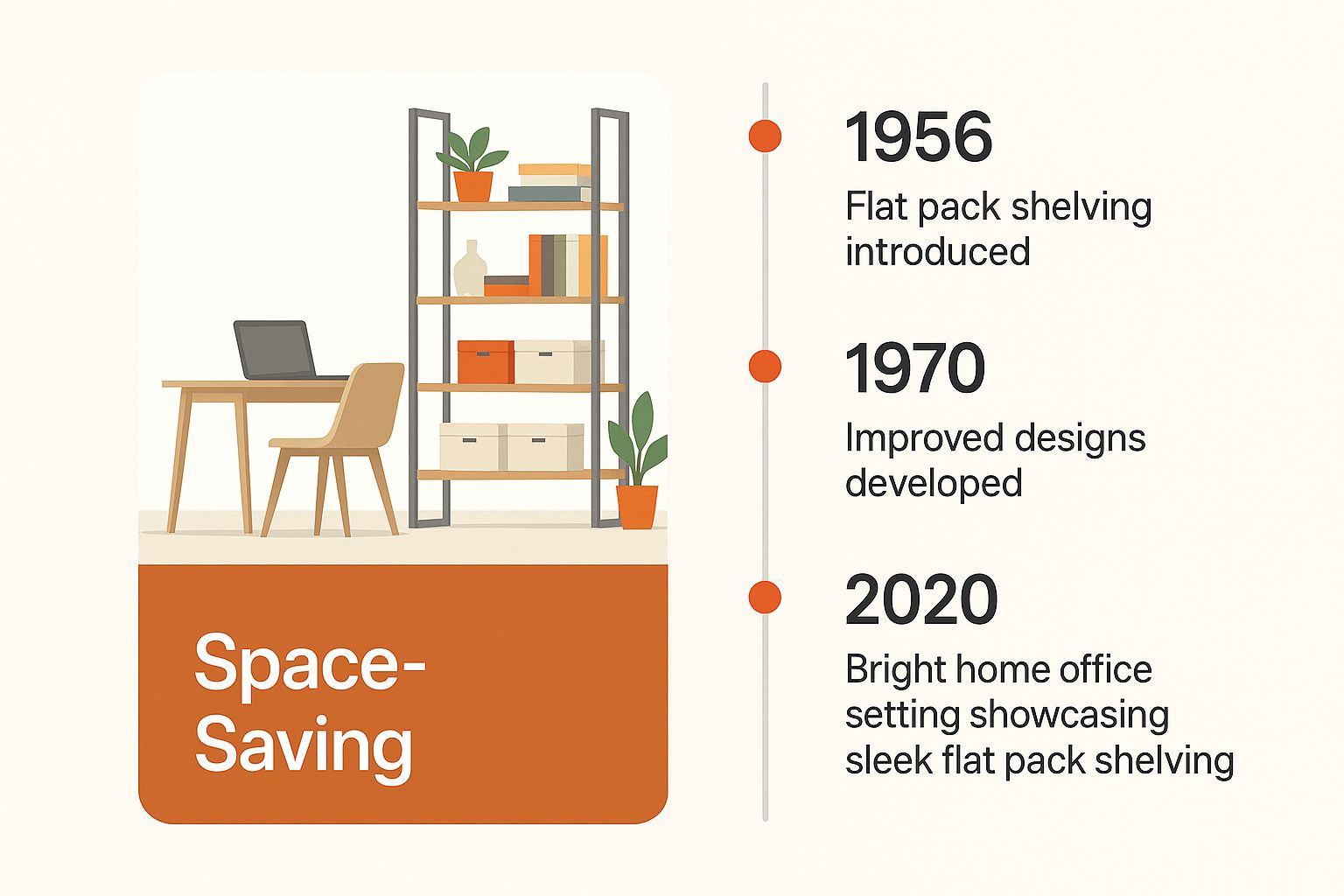
As you can see, what started as one guy's clever hack grew into a dominant force in home furnishings, all thanks to the space-saving benefits that are still a huge deal for us today.
The real innovation wasn't just selling parts in a box; it was flipping the entire supply chain on its head. By handing off the final assembly to the customer, manufacturers unlocked incredible savings and logistical efficiencies.
And it's not slowing down. The flat pack furniture market is a testament to how powerful that idea still is. Projections show the global market is expected to hit a staggering $40 billion by 2033, growing steadily year after year. This growth is being pushed by e-commerce and our ongoing need for affordable, flexible furniture that just works for modern life. If you want to dive deeper, you can find more insights about flat pack furniture trends and where the industry is headed.
The incredible popularity of flat pack furniture isn't some happy accident. It’s the result of some seriously clever thinking that clicks perfectly with how we live today. The biggest hook, without a doubt, is the price.
Think about it. By having you, the customer, handle the final assembly, manufacturers slash their own labor and shipping costs. A fully assembled wardrobe is a bulky beast that takes up a ton of space on a truck. The flat pack version? It's just a slim, tidy box. They can ship way more for way less.
That efficiency rolls right downhill into a much lower price tag for you.
But it's not just about the money. The convenience is a huge part of the appeal. Anyone who’s ever tried to wrestle a traditional sofa up a narrow staircase knows the pain. Flat pack furniture just sidesteps that whole nightmare. A single box can slip through tight doorways, pop into an elevator, and swing around tricky corners with ease, making it a lifesaver for apartment dwellers or anyone who moves around a lot.
The perks go way beyond saving cash and avoiding a moving-day disaster. The design flexibility and even the environmental benefits play a huge role in why people love this stuff.
This same logic applies beyond the living room, too. You see it in products like this guide to portable outdoor furniture, where easy transport and compact storage are the name of the game.
The real magic of flat pack furniture is the trade-off it offers: you put in a little of your own time with assembly, and in return, you get stylish, functional furniture for a fraction of the cost—all without the delivery headaches.
Of course, the whole DIY thing isn't for everyone. The time it takes and the potential for frustration are very real. If you love the price but are already dreading the build, you might want to look into why you should hire a professional to build IKEA furniture for you. It's a great way to get the best of both worlds.
The flat pack revolution isn't just for your living room; it's made a massive impact on the commercial world. Think about it: from scrappy startups building their first office to huge retail chains needing the same look in every store, ready-to-assemble furniture offers a powerful combo of affordability and flexibility.
For a new business, outfitting an entire office on a shoestring budget is a classic headache. Flat pack furniture makes it doable. Companies can create a professional, functional workspace—desks, shelves, storage cabinets—without that huge upfront cash burn. You can buy in bulk for a fraction of what traditional, pre-built commercial furniture would cost.
That cost-efficiency alone is a game-changer for businesses trying to scale up fast.
The adaptability of flat pack furniture is also a perfect match for today's ever-changing offices, like co-working spaces or places with flexible layouts. The real magic is in its modularity. As teams grow or projects shift, businesses can easily add a few more desks or rearrange a whole section without the chaos and cost of a full office gut-job.
The commercial sector really leans on flat pack furniture to create a uniform, branded look across dozens or even hundreds of locations. A retail brand can make sure every single store has the exact same shelving and displays, which keeps the customer experience consistent no matter where they shop.
The market numbers back this up. The commercial flat-pack furniture space is on track to hit a whopping $25 billion by 2033. This boom is all about the demand for cost-effective, space-saving solutions in offices and retail stores, especially as flexible work becomes the norm. You can dig into more data on the commercial flat pack market's growth to see just how big this trend has become.
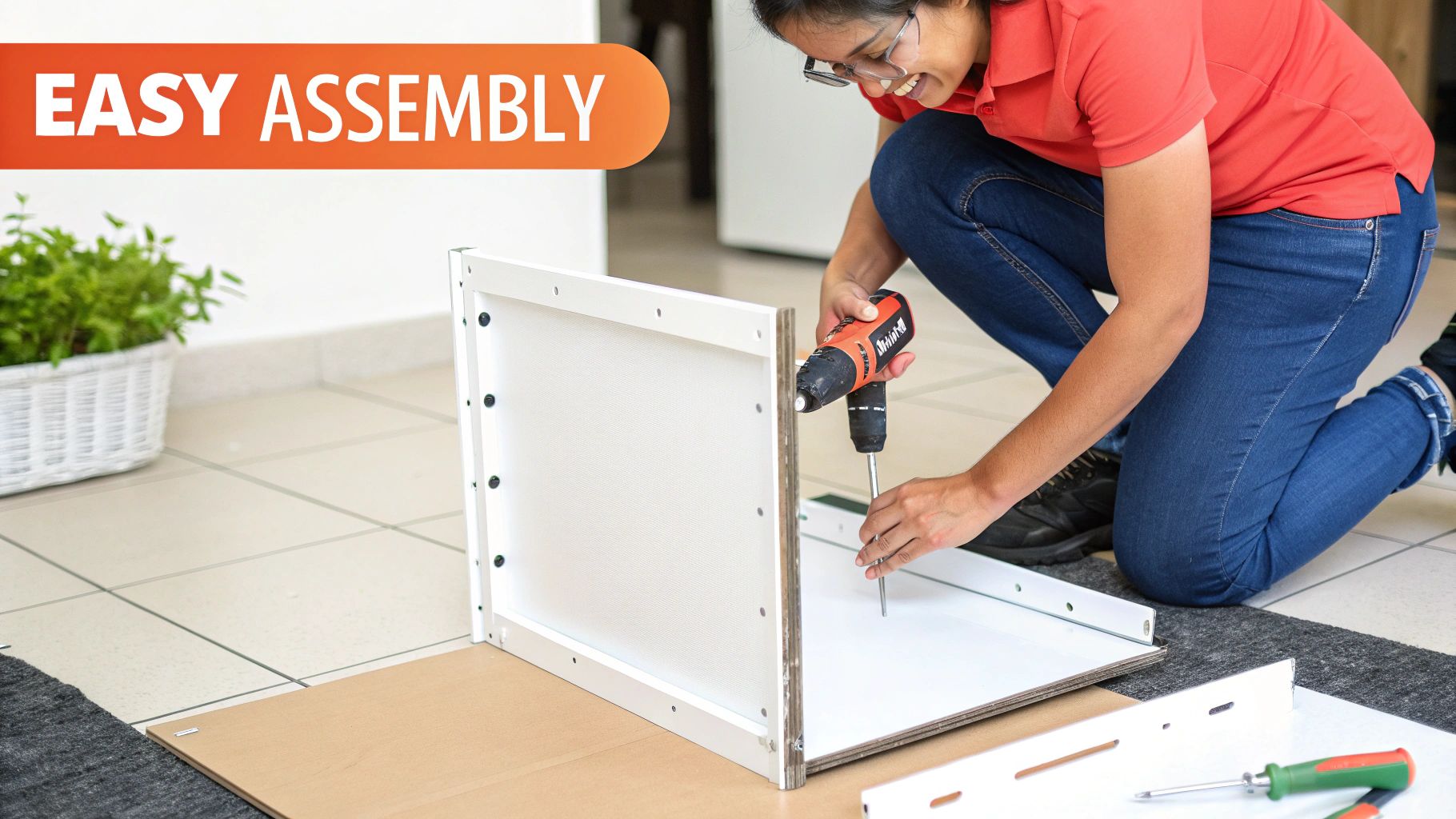
This is it—the final step. Getting your new furniture from box to beautiful can be either a moment of triumph or a source of major frustration. The difference almost always comes down to good old-fashioned preparation. Before you even touch a single screw, take a minute to set the stage.
First, give yourself plenty of room to work. You'll need more space than you think, so clear a nice big area on the floor. Then, carefully unbox everything and lay out all the pieces. Check them against the parts list in the manual to make sure nothing’s missing. A pro tip? Grouping all your hardware—screws, dowels, and those funny-looking cam locks—into little piles will save you a ton of searching later.
By far, the most common mistake is jumping into the build without really reading the instructions. Just taking 10-15 minutes to look through the diagrams first will save you from painful mistakes and having to backtrack.
Even with the best prep, a few common traps can trip you up. Those wordless, diagram-heavy instruction manuals can feel like trying to read a foreign language. Pay very close attention to the orientation of each piece in the drawings, especially where the pre-drilled holes are. Getting one panel backward can throw the whole project off.
Another classic mistake is overtightening the screws, especially if you're using a power drill. It's so easy to strip the screw head or, even worse, crack the particleboard. This can seriously compromise the sturdiness of the finished piece. Just hand-tighten everything until it’s snug, and don't force it.
Here are a few more tips to make life easier:
If the thought of puzzling over confusing diagrams and fiddling with tiny screws still sounds like a nightmare, don't worry. Sometimes, calling in professional furniture assembly help is the smartest move. It guarantees a perfect, stress-free result, turning that pile of parts into a piece of furniture you can start enjoying right away.
If you think flat pack furniture is still just about cheap bookcases and wobbly desks, it’s time to look again. The whole industry is growing up, shifting its focus toward smarter design and, frankly, a much better customer experience. Innovations are finally tackling the one thing everyone dreads: the assembly process.
Imagine furniture that just clicks together in a few minutes, no tools required. That’s not a far-off dream. Brands are pouring money into clever interlocking systems and pre-installed hardware that make putting things together genuinely intuitive. This directly attacks the biggest headache for customers, making DIY furnishing a whole lot more appealing. Of course, for those who'd rather skip it entirely, professional services like IKEA furniture assembly are always a great option.
Technology is also changing the way we shop. Ever bought a chair only to find it looks totally wrong in your living room? Augmented reality (AR) apps are here to help, letting you use your phone to "place" a digital version of a product in your space before you spend a dime. No more guesswork.
The industry is also making some serious moves toward sustainability. Get ready to see a lot more furniture made from recycled plastics, fast-growing bamboo, and other eco-friendly materials that look great without trashing the planet.
This push for innovation is fueling some major growth. The global market for flat pack furniture, dominated by giants like IKEA and Wayfair, is expected to jump from $16.7 billion in 2025 to a massive $28.4 billion by 2033. You can read more about the growth of the modular furniture market to see where things are headed.
Jumping into the world of ready-to-assemble furniture usually brings up a few questions. Getting the real story helps you know what to expect and pick the right stuff for your home. Let's tackle some of the most common things people wonder about.
This one really comes down to the materials and how well you put it together. Sure, some of the super budget-friendly pieces use basic particleboard, but plenty of modern furniture is built with solid wood or high-quality MDF that can last for years.
The real secret weapon for durability? Proper assembly. Making sure every single screw, cam lock, and dowel is secure is what transforms a box of parts into a sturdy piece of furniture.
Most kits will give you the bare essentials, like that little Allen key we all have a drawer full of. But honestly, having a basic home toolkit on hand will make your life so much easier.
A good Phillips head screwdriver, a rubber mallet (for gentle persuasion), and a tape measure can turn a frustrating afternoon into a surprisingly quick job.
A power drill with a low torque setting can also be a game-changer. Just be careful not to go overboard and overtighten the screws—that's a quick way to damage the wood.
You bet, and that’s one of its biggest perks. Most pieces are designed to be taken apart and put back together again, which is a lifesaver when you're moving.
Here's a pro tip: when you take it apart, keep the original instructions and pop the screws and small parts for each section into labeled Ziploc bags. Future you will be very grateful.
Tired of confusing instructions and leftover screws? Let the experts at Assembly Smart handle the build for you, ensuring a perfect, sturdy result every time. Get your free estimate today!