-
CALL US:
- (866) 952-3456

An acacia dining table is so much more than a place to eat. It’s a durable, beautiful centerpiece, crafted from a uniquely resilient hardwood that really makes a statement. Known for its rich, contrasting grain patterns and warm, golden hues, acacia brings a touch of natural elegance into any home. Its inherent strength means it’s built to handle the chaos of daily life for years and years.
When you're picking out a dining table, you're really choosing the heart of your home. It’s the spot for family dinners, holiday get-togethers, and quiet morning coffees. An acacia dining table stands out as a superb choice, perfectly blending stunning looks with practical, long-lasting performance. It's a material that tells a story through its distinctive visual character.
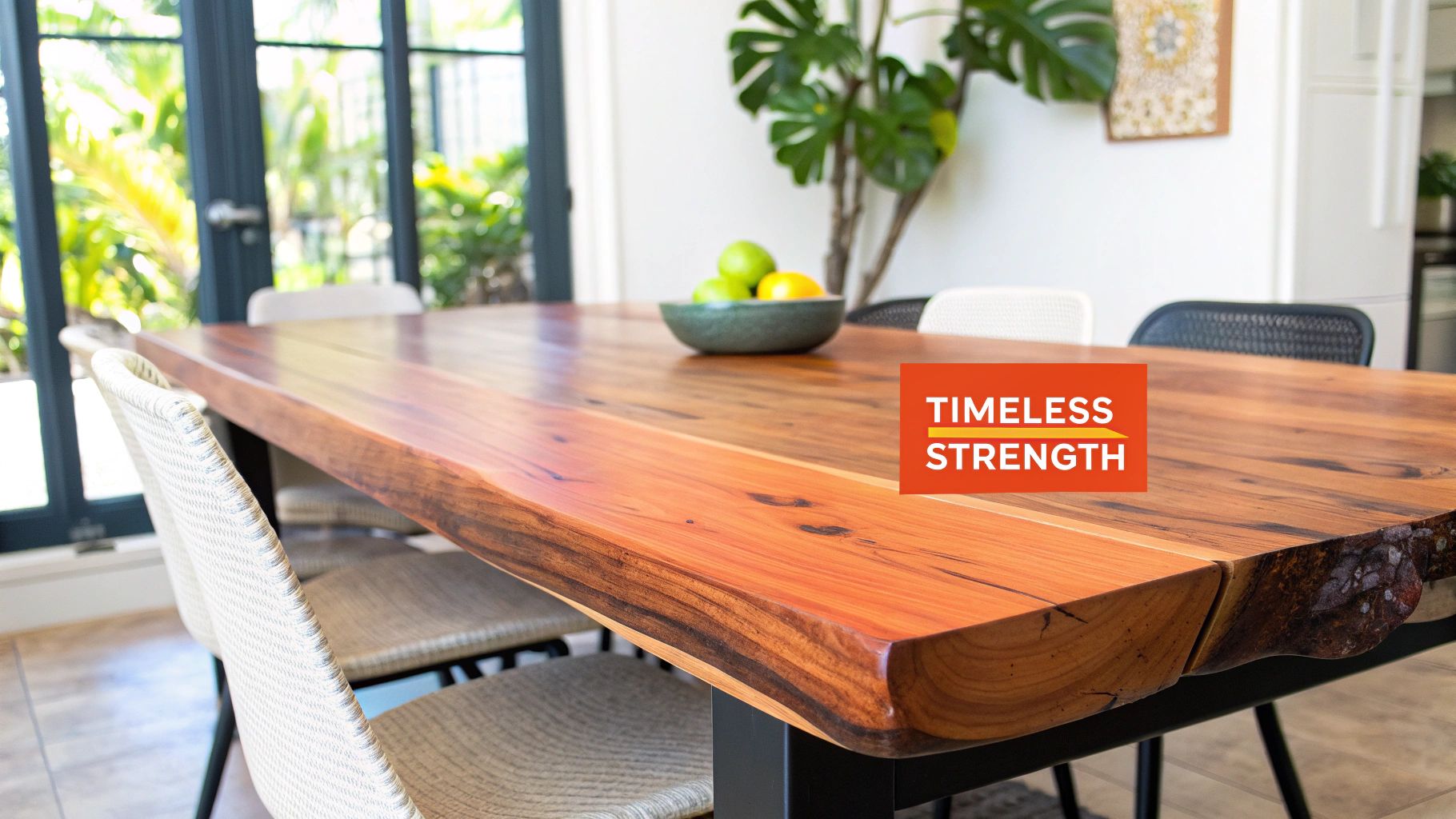
Unlike more uniform-looking woods, no two acacia tables are ever exactly alike. The grain can shift from straight, clean lines to dramatic, swirling waves, and its color can range from a light honey tone to deep mahogany, sometimes all within the same plank of wood. This natural variation guarantees your table is a true one-of-a-kind piece.
Acacia is a hardwood that’s famous for its impressive density and natural resistance to wear and tear. This makes it an ideal material for a high-traffic item like a dining table that sees action every single day.
The growing appreciation for this kind of durable, attractive furniture is easy to see in market trends. The global dining table market was valued at $8.68 billion in 2025 and is projected to rocket to $13.71 billion by 2032, driven by the demand for quality pieces in both homes and commercial spaces.
An acacia dining table isn’t just a purchase; it's an investment in a timeless centerpiece that will host countless memories. Its unique combination of strength and beauty sets it apart from other options.
Ultimately, choosing an acacia dining table means you don't have to sacrifice style for sturdiness. If you're weighing your options and comparing different materials, our guide on the best wood for tables can provide some extra context. This beautiful wood offers the best of both worlds, giving you a reliable and elegant foundation for your dining space.
Every acacia dining table has a pretty incredible story—one of serious strength and resilience that goes back centuries and crosses entire continents. This isn't just another pretty wood; it’s a material that’s been celebrated for its sheer toughness long before it became a hot item in modern homes. Its journey from ancient forests to your dining room is a real testament to its lasting appeal.
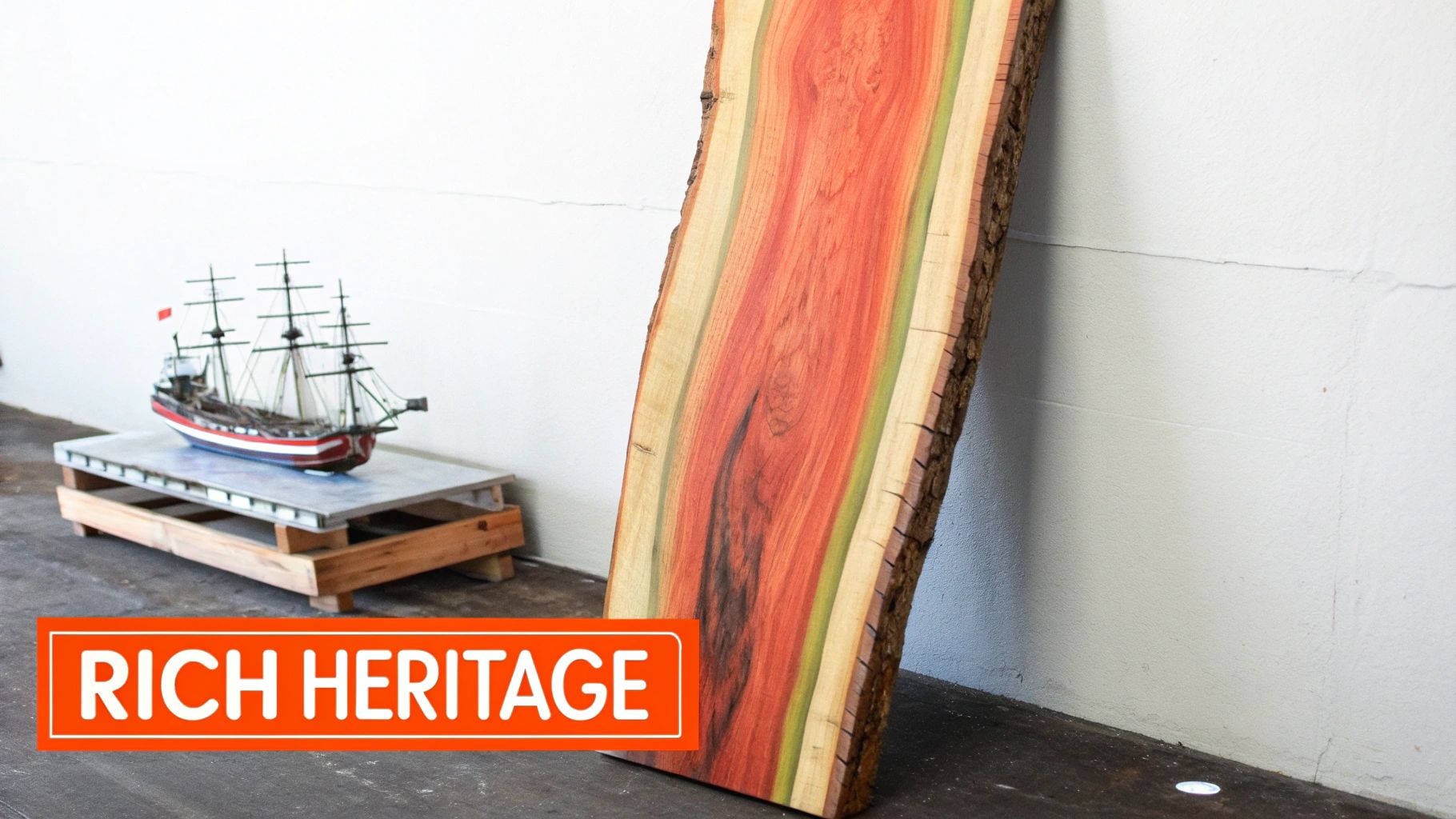
The history of acacia is deeply connected to the high seas. Ages ago, its unique qualities were recognized and prized by one of the most powerful naval forces the world has ever seen.
Acacia's strength was put to the ultimate test out on the ocean. Back in the 18th century, the British Royal Navy depended on acacia to build its massive "Ships-of-the-Line"—the very warships that helped them dominate the seas. This bit of history really drives home the wood's value; its hardness, density, and natural water resistance weren't just nice-to-haves, they were absolutely critical for building ships that could survive the toughest conditions imaginable. You can learn more about acacia's historical significance in Austin furniture making and its naval past.
That heritage is exactly what makes an acacia dining table such a brilliant choice today. The same natural durability that shrugged off ocean waves now handles spilled drinks, hot plates, and the daily chaos of family life without breaking a sweat.
The resilience that once made acacia seaworthy is the same resilience that makes it family-proof. It's a material that was literally built to endure.
Think of it this way: your table has a legacy of strength. It’s more than just a beautiful piece of furniture; it’s crafted from a material proven to handle incredible challenges. That history is baked right into every single knot and grain.
Acacia’s story is also a global one. The name "acacia" doesn't actually refer to one single type of tree. It’s a huge genus with over 1,350 species spread across Africa, Australia, and Asia. This incredible diversity is what gives every acacia dining table its own unique personality.
The look of the wood can change dramatically depending on where it grew, leading to a stunning range of colors and patterns:
This global sourcing means your table isn't just a product; it’s a piece of natural art with a fascinating international backstory. Every swirl in the grain and shift in color tells the story of the specific tree it came from—its climate, its soil, its entire journey. Having an acacia dining table is like owning a small piece of natural history, right in the heart of your home.
One of the best things about bringing an acacia dining table into your home is its incredible versatility. This isn't a one-trick pony. Acacia wood can adapt to just about any interior design scheme out there, morphing its personality to match whatever you're envisioning.
Think of it as a style chameleon. An acacia table can be the rugged, welcoming centerpiece of a farmhouse kitchen or a polished, sleek statement piece in a minimalist apartment. Getting the look you want all comes down to two things: the design style of the table itself and the surface finish.
Before we dive into the details, it helps to see how different design choices can completely change the character of an acacia table. The shape, the legs, and the edges of the wood all work together to create a distinct personality.
Here’s a quick look at some popular styles and where they shine best:
| Style | Key Features | Best For Interior Schemes |
|---|---|---|
| Live-Edge Rustic | Natural, uncut edges that follow the tree's original contour. Celebrates organic shapes and wood grain. | Rustic, Bohemian, Modern Farmhouse, Industrial |
| Sleek and Modern | Clean lines, sharp angles, and often paired with metal legs (black steel, brass). Smooth, polished surfaces. | Minimalist, Contemporary, Mid-Century Modern |
| Classic Farmhouse | Sturdy, traditional silhouette with solid wood legs (often turned or straight-cut). Projects a warm, inviting feel. | Traditional, Farmhouse, Transitional, Coastal |
As you can see, the same wood can tell very different stories. A live-edge table feels raw and authentic, straight from nature, while a table with sharp, geometric legs speaks to precision and modern design. It all sets the stage for the room's entire feel.
Once you've landed on a style, the finish is what truly brings the acacia dining table to life. This is what dictates its final color, texture, and overall mood. Each finish interacts with acacia's rich, varied grain in a different way, so the end result is always unique.
You can think of the finish as the table's outfit—it can be dressed up for a formal dinner or dressed down for a casual family meal.
A natural oil finish, for example, soaks into the wood and enhances its inherent golden and deep brown tones. This gives you a warm, matte look that feels incredibly authentic and really lets the wood's natural beauty shine through.
On the other hand, a dark stain can give the table a much more dramatic and formal appearance, which works great in a traditional or even an industrial-style dining room. A popular modern choice is a grey wash, which mutes the wood's warmer tones for a cool, coastal, or contemporary vibe.
And for those who want an ultra-durable, high-sheen surface, you can even explore using an epoxy resin for a glossy table top.
By thoughtfully pairing a style with the right finish, you can create a look that feels cohesive and completely personal. An industrial-style table with a dark stain feels entirely different from a rustic live-edge table with a simple oil finish. Understanding this interplay is the key to choosing an acacia table that doesn't just fit your space, but truly completes it.
Choosing that perfect acacia dining table is about more than just falling for its gorgeous wood grain. Let's be honest, that part is easy. The real challenge is finding a piece that truly fits your home, your life, and how you actually use your space.
This guide will walk you through the practical side of things, making sure your new table is a perfect match in every way that counts.
The first, and most critical, step? Get a handle on the scale of your dining room. A table that's too big will make the whole room feel cramped and awkward to move around in. On the flip side, a table that's too small will look lost and out of place. Before you even start browsing, grab a tape measure.
Here’s a simple rule of thumb to avoid those common sizing mistakes: leave at least 36 inches of clearance on all sides of the table. This gives everyone enough space to pull out their chairs without bumping into a wall and lets people walk around the table easily. For a deeper dive, our guide on how to measure furniture has more detailed tips to get it just right.
Next up, think about how many people you typically have at the table. Are you a growing family that needs space for daily meals, or do you love hosting big dinner parties? The shape of your acacia table plays a surprisingly big role in this.
Don't forget to think about the future, too. An extendable acacia dining table offers incredible flexibility. You can keep it compact for everyday family dinners and then easily expand it when the holidays or special occasions roll around.
This decision tree can help you match an acacia table style to your home's existing aesthetic.
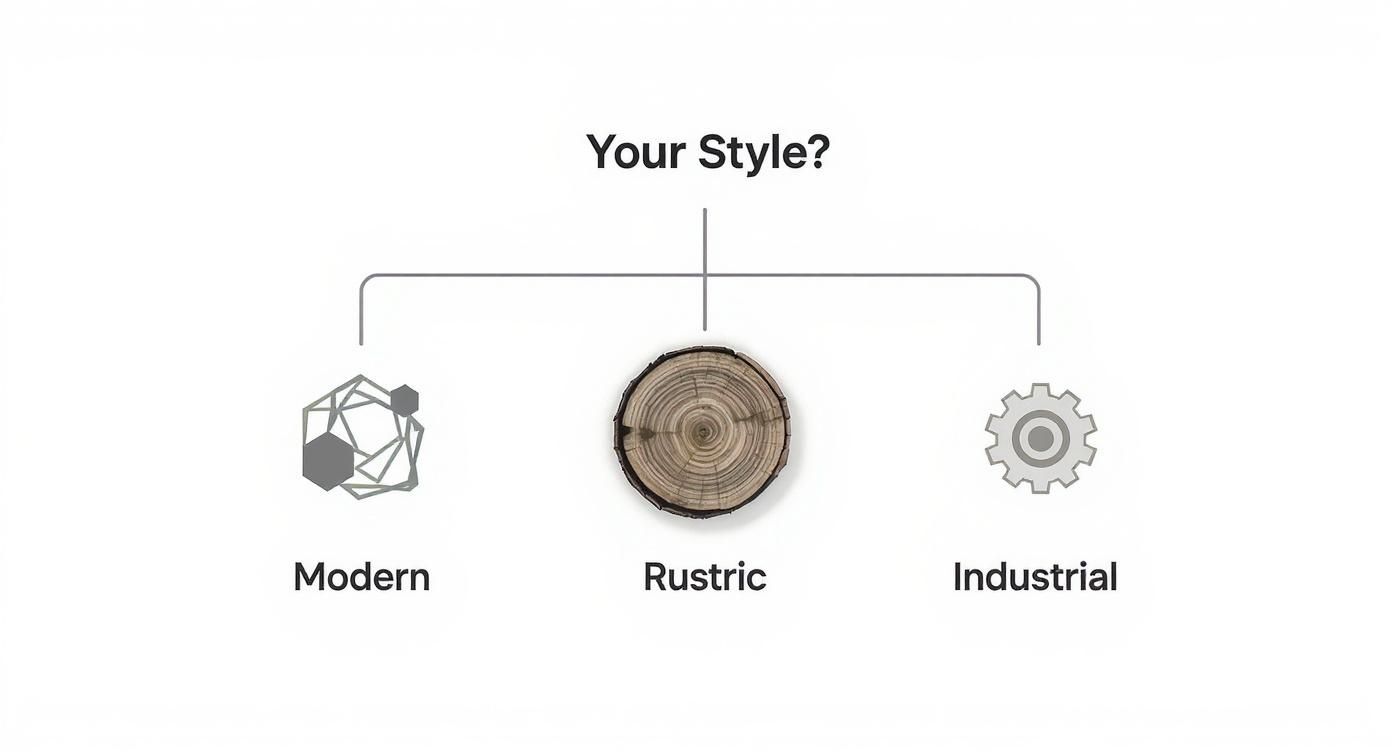
This visual breaks down the choice by connecting popular interior design themes to specific table features, making it much easier to find one that looks like it was made for your decor.
Here's the thing: not all acacia tables are built the same. You'll want to pay close attention to the construction. Always look for tables made from solid acacia wood instead of thin veneers. Solid wood is far more durable and has the huge advantage of being able to be refinished years down the line if it gets scratched or worn.
Take a close look at the joinery—that’s where the legs connect to the tabletop. Strong, well-made joints are absolutely essential for a stable table that will last. Also, give some thought to the finish. A sealed, lacquered surface is super low-maintenance and a great choice for busy families. An oil finish, on the other hand, provides a more natural, organic look but will require a bit more regular upkeep on your part.
A dining table is a big investment, and it reflects a larger trend of people wanting high-quality things that last. The market for solid wood dining tables, where acacia is a huge player, is projected to jump from $10.5 billion in 2023 to $15.8 billion by 2032. This shows a real demand for furniture that's both beautiful and built to stand the test of time.
Taking the time to make the right choice means you'll end up with a table that truly fits your life. For some more great general advice, these 5 key steps to picking the perfect dining table are also a really helpful resource.
You’ve brought home a beautiful acacia dining table, a real investment piece crafted from a seriously tough hardwood. The good news is, keeping it looking incredible isn't a huge chore. With just a bit of regular attention, it'll stay the stunning centerpiece of your dining room for years and years.
Think of it less as cleaning and more as a simple routine to protect its natural charm.
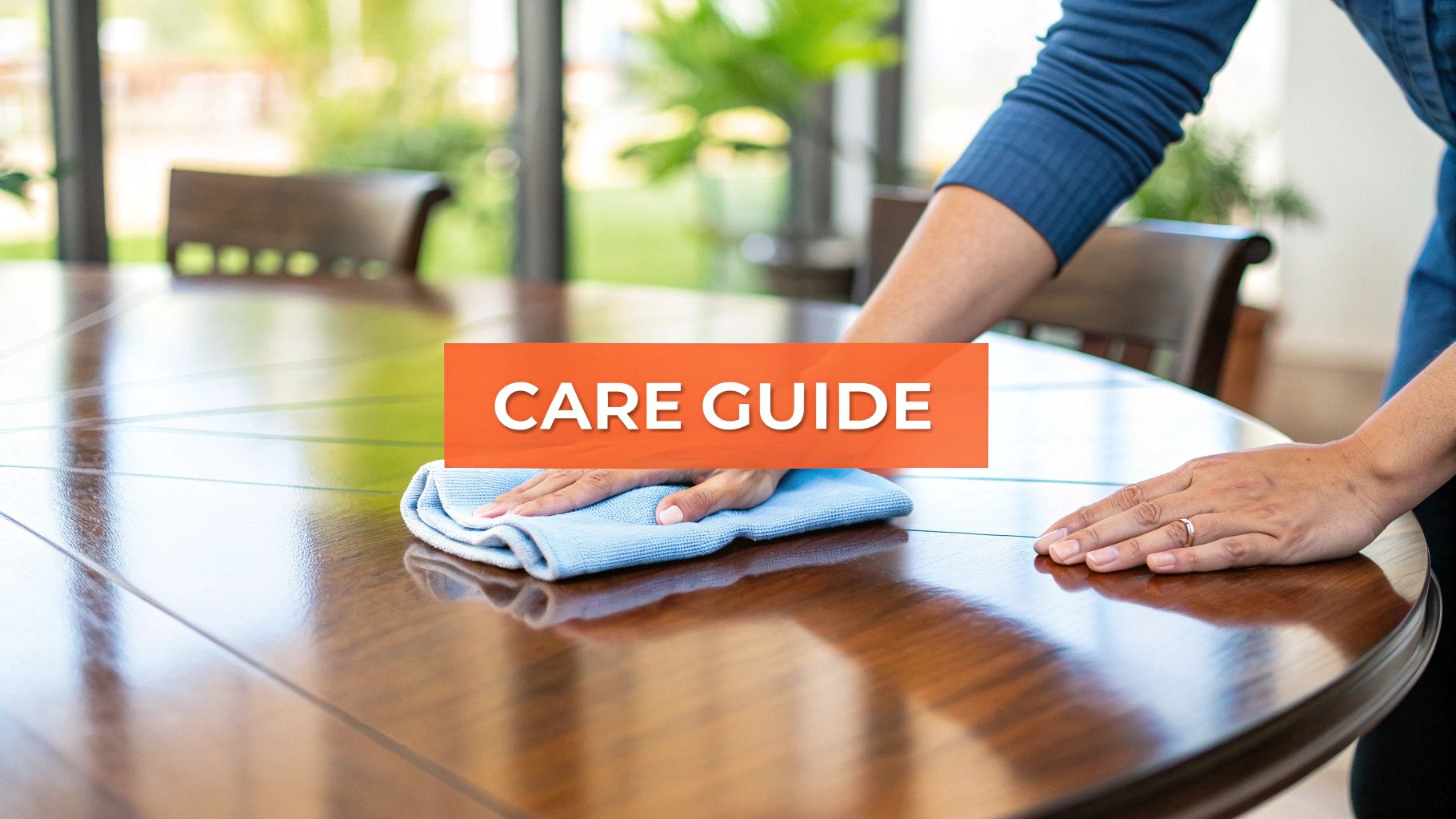
The trick is to be gentle. You want to avoid harsh chemical cleaners and anything abrasive at all costs. That stuff can strip the wood's protective finish right off, dulling that gorgeous, vibrant grain you fell in love with. A simple, consistent cleaning schedule is really all you need.
When it comes to wood care, consistency beats a once-a-year deep clean every single time. Breaking it down into tiny daily habits, a monthly check-in, and yearly tasks makes everything manageable and stops small issues from turning into big headaches.
Daily Care (Less Than a Minute):
Monthly Check-in (5-10 Minutes):
An acacia dining table is a lot like any other piece of quality wood furniture—it thrives on a routine. A few simple, preventative steps are your best defense against wear and tear, making sure it ages gracefully instead of just looking old.
Honestly, the care principles for acacia are pretty similar to other durable hardwoods. Our guide on the care of teak furniture echoes many of these same core ideas about protecting natural wood oils and finishes.
Beyond the day-to-day, how you care for your table long-term really boils down to its finish. Each type needs a slightly different approach to keep its protective layer intact and looking its best. The first step is figuring out what kind of finish you're working with.
An oiled finish gives you that beautiful, natural, matte look, but it needs a little more love. Plan on re-oiling the surface every 6-12 months, or basically whenever the wood starts to look a bit thirsty and dry. This puts that protective barrier back and really deepens the color.
A lacquered or sealed finish is the low-maintenance champ because it creates a hard, protective shell over the wood. The biggest thing to remember here is to avoid any furniture polishes that have silicone in them. They can create a cloudy, ugly buildup over time. Just stick to gentle cleaning with a damp cloth.
For waxed finishes, you'll want to reapply a coat of good quality paste wax every so often, usually once or twice a year. This is great for buffing out minor surface scratches and restoring that protective sheen, keeping your table looking practically new.
Making the final call on a piece as important as a dining table usually brings up a few last-minute questions. You've gotten to know the unique beauty and rich character of acacia wood, but now it’s time to tackle the practical stuff—the details that make sure you'll love your choice for years to come.
This section is all about clearing up any of those lingering doubts. We'll give you straight, clear answers to the most common questions we hear from people considering an acacia dining table.
Absolutely. Acacia is a fantastic choice for a dining table, mostly because of its incredible durability and beautiful look. It’s a dense hardwood, which means it naturally stands up to scratches, dings, and the general chaos that comes with daily family life. This thing is built to last.
On top of its strength, it has natural water-resistant properties that give you an extra layer of defense against spills—a daily hazard in any dining room. When you combine that toughness with its gorgeous, swirling grain patterns, you get a table that’s both a reliable workhorse and a stunning centerpiece.
When you’re shopping for a wood table, it helps to have a little perspective. Here’s a quick rundown of how acacia stacks up against other common choices:
The bottom line is that acacia easily holds its own against even the most famous hardwoods. It offers a visual pop that sets it apart while delivering the top-tier durability you need from a quality piece of furniture.
Yes, acacia is widely seen as a sustainable option for furniture. Many acacia species are fast-growing trees, meaning they can be harvested and replenished much more quickly than slow-growing hardwoods like oak. This rapid growth cycle helps prevent deforestation and makes it a more environmentally friendly choice.
For even more peace of mind, look for an acacia dining table that is FSC (Forest Stewardship Council) certified. This label guarantees the wood came from a forest managed in a way that protects biodiversity and supports local workers and communities.
The price tag on an acacia dining table can vary quite a bit. It all depends on factors like its size, the complexity of the design, and whether it’s solid wood or a veneer. For the most part, they are priced competitively within the solid wood furniture market, often giving you more bang for your buck than woods like teak or walnut.
It’s also smart to factor in potential assembly costs. While some tables are a breeze to put together, others can be a real headache. You can check out our guide on furniture assembly costs to get a better idea of what to budget for professional help. That way, your beautiful new table gets put together perfectly without any of the frustration.
Ready to find the perfect team to assemble your new furniture? Assembly Smart is here to provide fast, professional, and stress-free assembly services for your new acacia dining table and more. Visit us at https://assemblysmart.com to get your free estimate today.