-
CALL US:
- (866) 952-3456

When it comes to picking out the best swing sets for your kids, you're really looking for a sweet spot between something that's built to last, completely safe, and a whole lot of fun. For most families, a quality cedar wood swing set hits all the right notes, giving you a great mix of features and a classic backyard look. If you'd rather not deal with upkeep, powder-coated metal sets are a fantastic, durable alternative. And for the littlest ones, you can't go wrong with a simple plastic set—just know they'll outgrow it in a flash.
Let’s be honest, choosing the right swing set is about more than just finding a new way to keep the kids busy. It’s an investment in their childhood—a place where they can grow physically, learn to get along with others, and let their imaginations run wild. A good playset quickly becomes the heart of the backyard, pulling them away from screens and into the fresh air for some good old-fashioned active play.
This guide is here to walk you through all of it. We'll cover everything from the best materials to safety tips and even how to tackle assembly without pulling your hair out.
A swing set is basically a playground for development disguised as fun. That simple back-and-forth on a swing? It’s building core strength and balance. Scrambling up a rock wall or a ladder? That’s boosting coordination and motor skills. And when friends come over, that playset becomes a classroom for learning how to share, communicate, and solve little squabbles on their own.
It's amazing how much is happening out there.
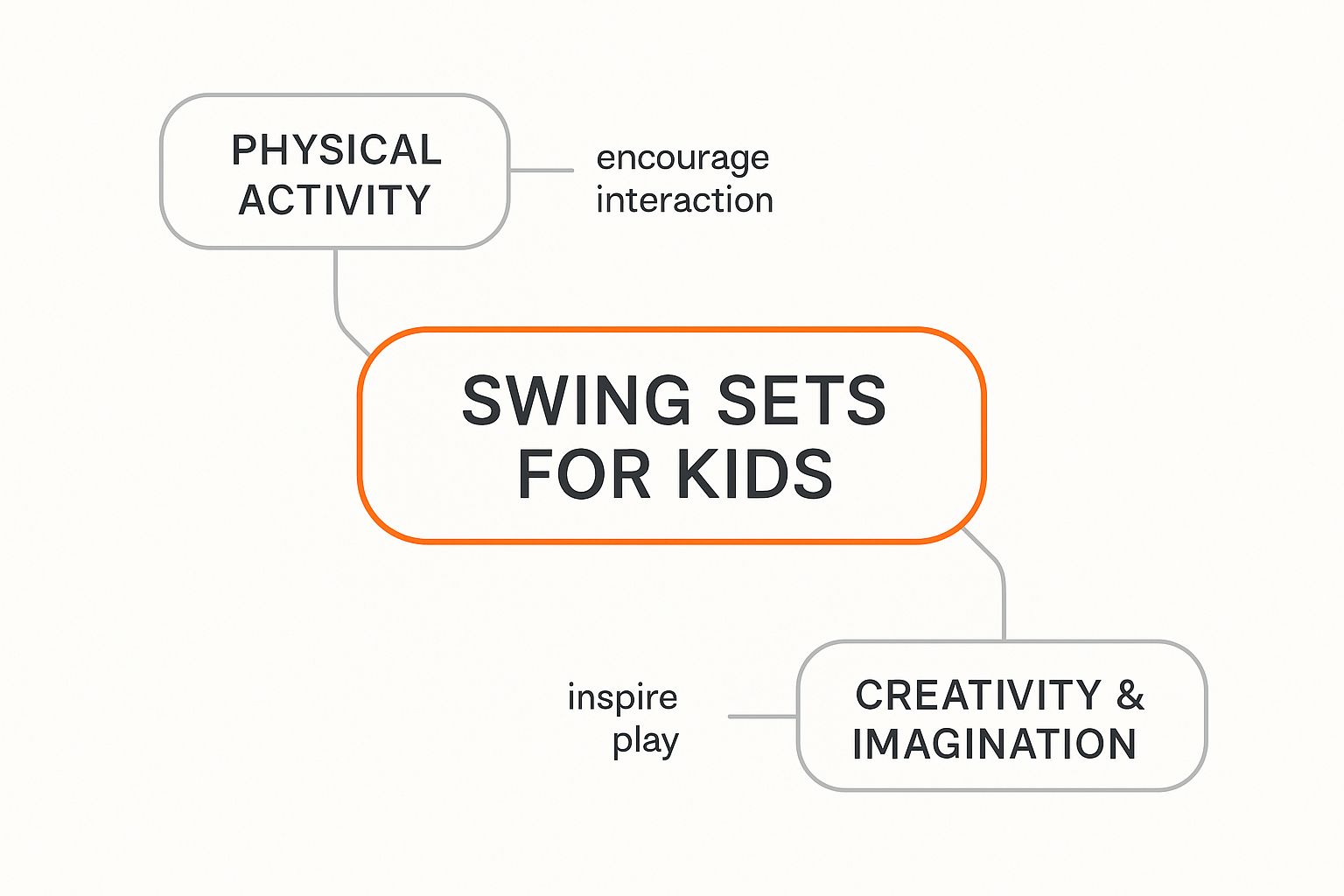
Every part of the set, from the slide to the monkey bars, helps nurture a different piece of your child's growth. So while they're just having a blast, you can feel good knowing you’re investing in their development. If you're interested in the science behind it all, you can dive deeper into the transformative power of play on learning.
To get you started, let's break down the big three materials. This table gives you a quick, side-by-side look to help you figure out which one makes the most sense for your family.
| Material | Best For | Pros | Cons |
|---|---|---|---|
| Wood | Families wanting a durable, long-term playset that looks great in the backyard. | Looks beautiful and natural; highly customizable with tons of add-on features. | Needs annual maintenance (staining/sealing) to keep it from rotting or splintering. |
| Metal | Parents who want a sturdy, low-maintenance option for active kids. | Super durable and weather-resistant (if powder-coated); usually a bit more affordable. | Can get hot in the sun; not as many customization options as wood. |
| Plastic | Toddlers and preschoolers, generally ages 2-5. | Safe with rounded edges; it’s lightweight, a breeze to clean, and requires zero upkeep. | Kids will outgrow it fast; can fade or crack over time in harsh weather. |
Each material has its own set of trade-offs, so it really comes down to your budget, how much maintenance you're willing to do, and how long you want the set to last.
The material you choose is really the foundation of your playset’s longevity, safety, and style. Think of it like picking a vehicle for your family—each type serves a different purpose and comes with its own list of pros and cons. The right material for you boils down to your local climate, your budget, and frankly, how much maintenance you're willing to put in over the years.
This decision is more than just about looks. As more and more parents look for ways to get their kids playing outside, manufacturers are stepping up with more durable and specialized options. In fact, the global swing set market was valued at a whopping USD 365.34 million in 2023 and is only expected to grow. You can read the full research about swing set market growth if you're curious about where the industry is heading.
Wooden swing sets are the timeless station wagon of the backyard. They just blend right into a natural landscape and have that traditional, sturdy feel everyone loves. If you're looking for top-tier options, cedar and redwood are the way to go because they naturally resist rot and insects. That makes them some of the best swing sets for kids who will be using them for years to come.
But, this classic choice does require a little TLC. To keep a wooden set from splintering and getting beat up by the weather, you’ll need to seal or stain it every year or two. Keeping it in good shape is key, and you can find some great effective methods for protecting outdoor wood furniture that apply perfectly to playsets, too.
Key Takeaway: Wood looks fantastic and offers a ton of customization, but it comes with a commitment to regular maintenance to keep it safe and beautiful.
If wood is the station wagon, a metal swing set is the durable, all-weather SUV. Built from galvanized or powder-coated steel, these sets are made to handle rough-and-tumble play and stand up to rust and corrosion. They’re a fantastic low-maintenance choice for families who want a set-it-and-forget-it kind of solution.
The biggest drawback? Heat. On a hot summer day, metal parts can get incredibly hot in direct sunlight, which can be a burn risk for little hands and legs. While they are definitely sturdy, they also don't typically offer as many creative add-ons or clubhouse features as you’d find with wood, focusing more on the core activities like swinging and sliding.
Plastic swing sets are like the perfect compact car for a new driver—or in this case, a new player. They're designed with toddlers and preschoolers in mind, featuring bright colors, rounded edges, and a lightweight build for maximum safety. Plus, they’re a breeze to clean and need pretty much zero maintenance.
That convenience, however, comes with a shorter lifespan. Most kids will outgrow a plastic set by the time they're five or six. While they’re a perfect way to introduce young children to outdoor fun, they aren't a long-term investment. Think of them as the ideal starter set before you upgrade to one of the best swing sets for kids of all ages.
When you're picking out a swing set, the material is important, but safety? For any parent, that's everything. It’s not just a feature; it’s the entire point. This simple checklist will help you turn those complex safety rules into real-world actions, so you can have total peace of mind every time the kids run out to play.
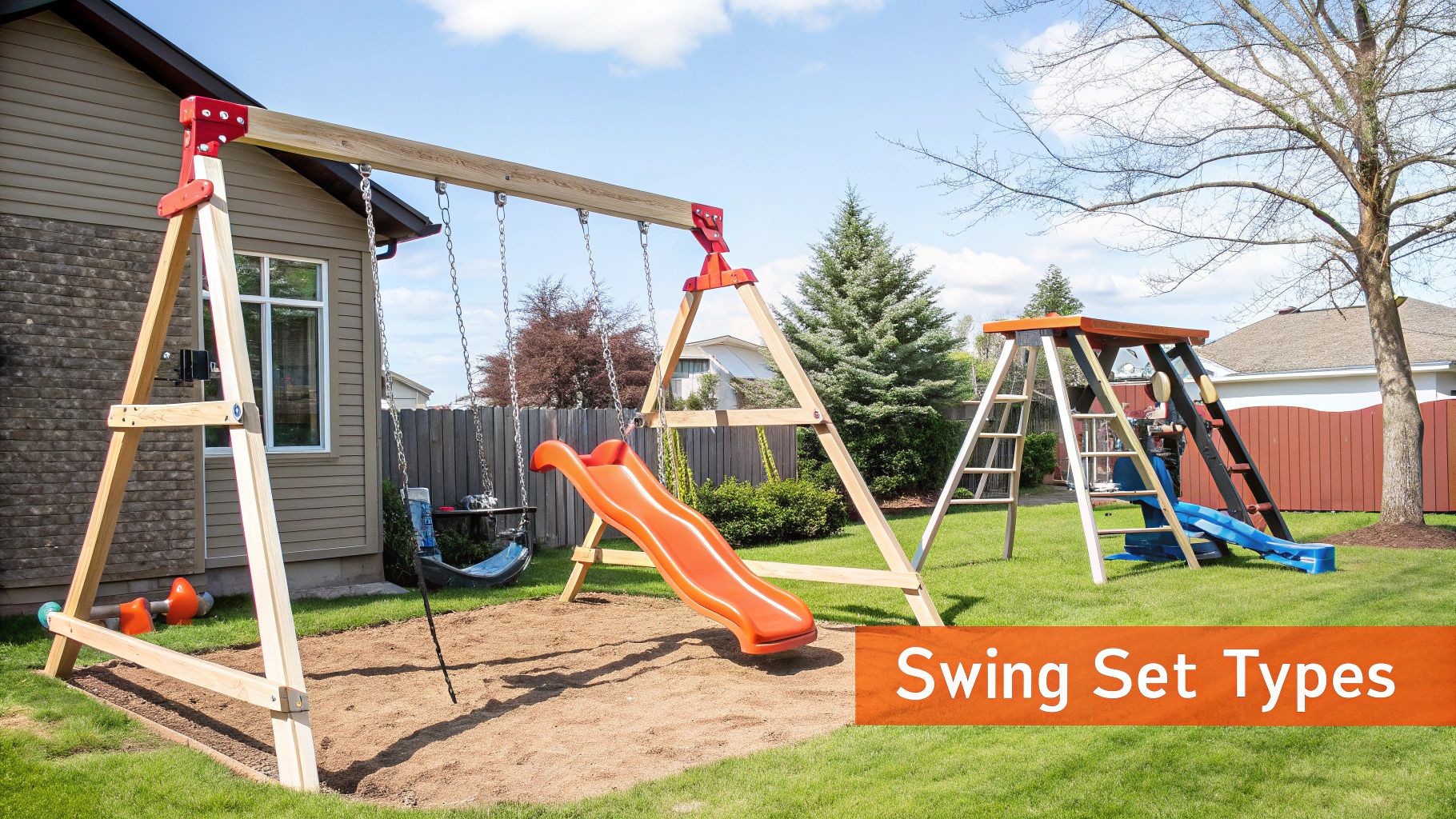
The gold standard for playground equipment comes from official guidelines set by organizations like the CPSC and ASTM. Now, the technical documents can be pretty dense, but they all boil down to one thing: smart design that prevents common injuries. If you want to get into the nitty-gritty, you can learn more about these crucial playground safety standards in our detailed guide.
Think of the space around your swing set as its own "safety bubble." This is a non-negotiable clear zone that needs to be free of any hard obstacles—we're talking fences, trees, sheds, you name it. A kid jumping off a moving swing needs a soft place to land, not a collision course.
As a general rule, this safety bubble should extend at least six feet in all directions from the main playset structure. For the swings themselves, you need even more room. Measure the height of the swing beam, double that number, and make sure you have that much clear space both in front of and behind the swings.
Crucial Tip: Whatever you do, never install a playset on concrete, asphalt, or even hard-packed dirt. The U.S. Consumer Product Safety Commission reports that falls onto the surface are the #1 cause of playground injuries.
The right material on the ground is your best defense against bumps and bruises from the inevitable fall. It acts as a shock absorber, cushioning the impact when it matters most.
Finally, make a habit of doing regular hardware checks. All bolts and screws should either be recessed or have protective caps on them to prevent nasty scrapes and snagged clothing. Look at the S-hooks on the swings to make sure they're completely closed, and check that the chains have a protective coating to stop little fingers from getting pinched. These small details really do make a massive difference in creating a truly safe place for your kids to play.
One of the most common mistakes I see parents make is underestimating just how much room a swing set really needs. It’s not just about the playset’s physical footprint. You have to account for a safe perimeter for all that swinging, sliding, and running around. Getting this right from the start is the key to making sure your investment is both fun and secure for years to come.
Think of it like parking a car. You don't just need a space the exact size of your vehicle; you need extra room to open the doors. A swing set is the same way. It needs a "use zone"—that safety bubble we talked about—so kids have plenty of room to swing high and jump off safely without hitting a fence, a tree, or the side of the house.
Before you even start browsing, grab a tape measure and head outside. You’ll need to measure the length and width of the flattest, most level area you can find. A slope of more than a few degrees can make installation a real headache and, more importantly, unsafe.
Once you have your core measurements, it's time to add that safety buffer. Here’s a simple way to figure it out:
This total area—the footprint plus the safety zone—is the actual space you need to block off. And don't forget to look up! You need to be clear of any low-hanging tree branches or power lines.
Kids grow like weeds, and the best swing sets are the ones that can grow with them. When you're measuring your space, think a few years down the road. Could you add on to it? Modular designs are a fantastic option here, letting you add features like monkey bars or a new slide as your kids get older and more adventurous.
Choosing a playset with an adjustable swing beam or interchangeable components means you won't have to buy a whole new set in just a few years. It's a smart way to get the most value out of your purchase.
By planning ahead, you can find a playset that fits your yard perfectly today and continues to be the go-to spot for fun for many seasons to come. For more inspiration, check out these amazing DIY backyard playground ideas that can adapt as your family’s needs change.
So, you’ve brought home a mountain of boxes. Now comes the real adventure: turning that pile of wood and hardware into a backyard kingdom for your kids. This is the moment where you decide if you're up for a rewarding (but challenging) DIY project or if it's time to call in the pros.

Let's be honest, many of the best swing sets for kids arrive with hundreds of pieces. It's a serious undertaking, and it’s smart to know exactly what you’re getting into before you start tearing open boxes.
Feeling brave? Ready to tackle it yourself? Great! But listen up: preparation is your best friend here. Think of this as building a massive piece of outdoor furniture where your kids' safety is on the line. Before you even touch a single screw, clear a large, flat space in your yard and lay out every single component.
Seriously, organizing your parts first will save you a world of headaches later. Group all the similar bolts, sort the brackets, and stack the boards. Nothing is more frustrating than digging through a giant pile for one specific washer when you’re halfway through the build.
Pro Tip: The tiny wrench they include in the box isn't going to cut it. You'll want a real socket set, a power drill with a full bit collection, and a good level. Be prepared to block off an entire weekend—most large wooden sets take two adults a solid 10-15 hours to put together.
For a lot of busy families, giving up a whole weekend to wrestle with confusing instructions just isn't in the cards. That’s where hiring a professional service becomes a lifesaver, and it buys you something priceless: peace of mind.
Think about it. Professional installers have built hundreds of these things. They’ve seen every model, know all the weird quirks in the instruction manuals, and can spot a potential problem from a mile away. They ensure the final product is perfectly level, rock-solid, and up to every safety standard.
Here’s what you get when you hire an expert:
Services that specialize in professional swing set installation can take the whole project off your plate, turning a potential nightmare into a completely stress-free experience. Yes, it’s an added cost, but for many parents, the trade-off for guaranteed safety and getting their weekend back is more than worth it.
https://www.youtube.com/embed/EEh_ExhVwAE
Choosing the right swing set is a big decision, and it’s natural to have questions that go beyond just the basics of wood versus metal. Let's tackle some of the most common things parents ask so you can feel completely confident when you make that final choice.
The price tag on a swing set can swing wildly, so it helps to think about the cost in tiers.
Don’t forget to earmark some of your budget for the extras. Professional assembly might add another $200 to $600, and a safe ground cover like rubber mulch is another essential investment.
The upkeep really comes down to the material you choose. Plastic sets are the easiest to manage; a simple wipe-down is usually all it takes to keep them looking good.
Metal sets need a bit more attention. It’s a good idea to check the joints and welds for any hints of rust each season. If you find a spot, just sand it down and touch it up with rust-resistant paint to stop it in its tracks.
Wood demands the most care, but it’s worth it. Plan on giving it an annual inspection for splinters or rough patches. To protect it from the weather and prevent rot, you’ll want to apply a fresh coat of water-repellent sealant or stain every one to two years. For any type of set, a regular check to tighten bolts and inspect chains is a must.
Key Insight: A little bit of regular maintenance is the single best way to make your swing set last for years and, more importantly, keep it a safe place for your kids to play.
This part is non-negotiable. Anchoring is what keeps the swing set from tipping over when the kids are really going for it. Most kits come with auger-style ground anchors that you twist deep into the ground and bolt to the playset’s legs. This is the absolute minimum you should do for safety.
For rock-solid stability, especially if your yard has loose or sandy soil, you can take it a step further. Dig a hole at each leg, set the anchor inside, and then fill the hole with concrete. This creates a permanent footing that isn't going anywhere. Always, always follow the specific anchoring instructions that came with your model.
Kids can start enjoying the fun earlier than you might think, as long as you have the right setup. Once a baby has good head and neck control, usually around 6 to 9 months, they can safely use a full-bucket infant swing with you right there watching.
Toddlers between 2 and 4 are ready to graduate to low slides and special toddler swings. The bigger features—like standard belt swings, monkey bars, and taller slides—are generally best for kids aged 4 and up who have the coordination and strength to handle them safely.
Ready to skip the frustration of a weekend-long assembly project? Assembly Smart provides expert swing set installation to ensure your new playset is built safely and correctly, giving you total peace of mind. Get your free estimate and book your stress-free setup at https://assemblysmart.com.