-
CALL US:
- (866) 952-3456

Are you tired of battling a chaotic closet every morning? Storing clothes effectively is about more than just freeing up space. It is about preserving your favorite garments, simplifying your daily routine, and creating a sense of calm in your home. Many of us fall back on familiar habits that leave our closets cluttered and our clothes wrinkled, damaged, or difficult to find. The reality is that the best way to store clothes involves a strategic approach, not just more hangers.
This guide moves beyond generic advice to provide eight distinct, actionable strategies for transforming your wardrobe. We will explore proven systems, from the minimalist KonMari Method to practical seasonal rotations and protective preservation techniques. Whether you're a fashion lover with an extensive collection or simply someone seeking order, these expert-approved methods will turn your storage from a source of stress into a system that works for you. These principles of order can extend beyond the closet, too. To dive deeper into creating a truly clutter-free environment, exploring general organization tips and tricks for a clutter-free space, many of which can be adapted for your wardrobe, can be beneficial. Prepare to revolutionize your wardrobe and reclaim your space with techniques designed for modern living.
The KonMari Method, created by Japanese organizing consultant Marie Kondo, is more than just a storage technique; it's a philosophy for curating a joyful and clutter-free life, starting with your wardrobe. This approach is the best way to store clothes for those who feel overwhelmed by clutter and want to create a system rooted in intentionality. The core principle is to evaluate every single clothing item and ask a simple question: "Does this spark joy?"
This method requires you to gather all your clothes in one pile, handle each item, and decide its fate. If an item brings you genuine happiness, you keep it. If not, you thank it for its service and let it go. This process transforms your closet from a mere storage space into a curated collection of pieces you truly love to wear.
Once you've decluttered, the KonMari Method's signature storage technique comes into play: vertical folding. Instead of stacking items flat, you fold them into compact rectangles that can stand upright on their own. This revolutionary approach allows you to see every item in your drawer at a single glance, eliminating the need to dig through piles.
This method is ideal for anyone starting a major decluttering project or seeking a long-term, sustainable organization system. It fosters a mindful relationship with your belongings, ensuring you only store what you truly value.
The infographic below summarizes the core principles of this transformative method.
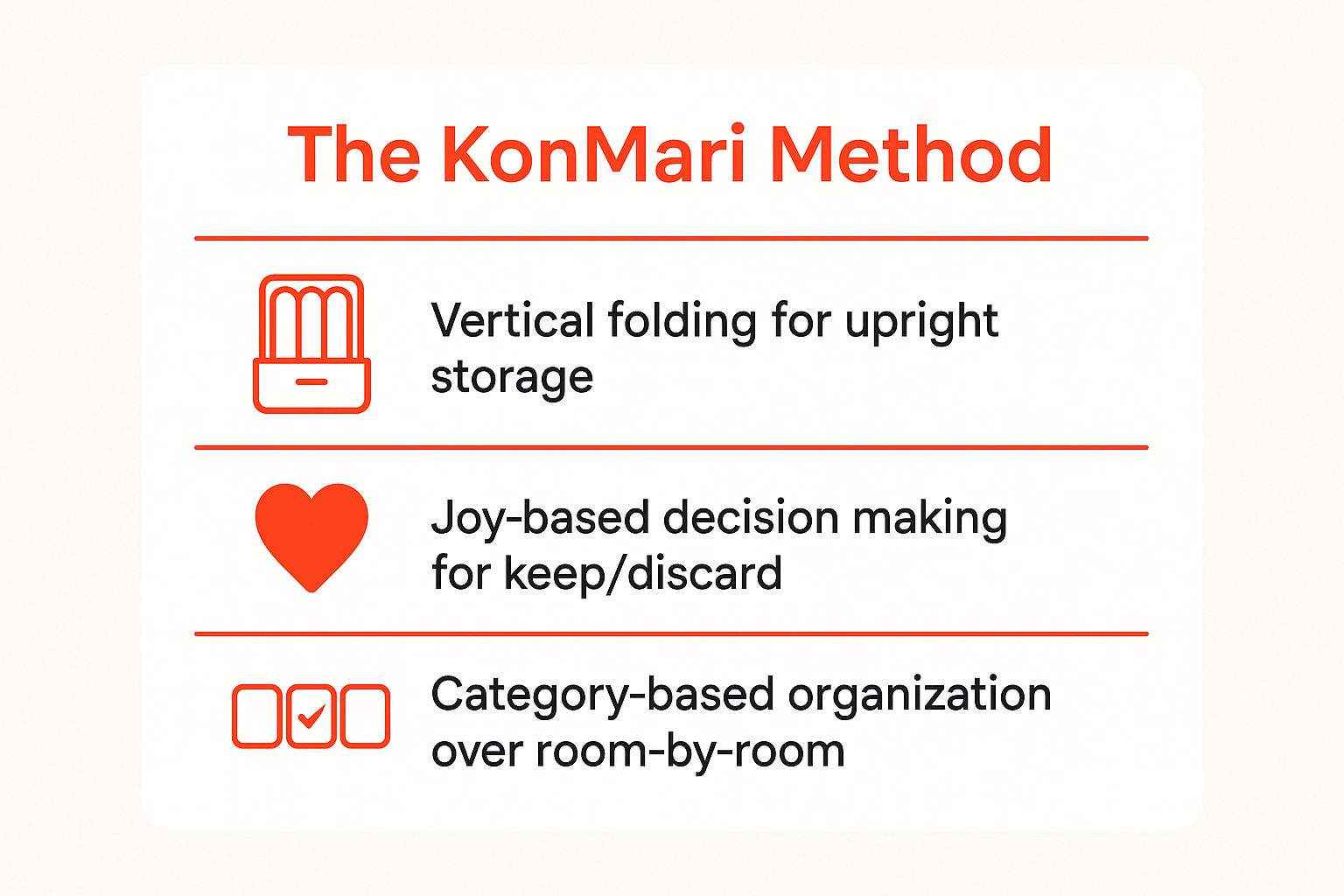
These three pillars work together to create a comprehensive system that not only organizes your space but also reshapes your approach to consumerism and ownership. By focusing on joy and visibility, you build a wardrobe that is both functional and deeply personal.
The Capsule Wardrobe System is a minimalist approach focused on curating a small, highly versatile collection of clothing. Instead of owning an overflowing closet, you intentionally select a limited number of essential items that can be mixed and matched to create numerous outfits. This method is the best way to store clothes for those who value simplicity, quality, and efficiency, transforming daily dressing into a streamlined process.
Popularized by boutique owner Susie Faux and bloggers like Caroline Rector, the core principle is quality over quantity. The goal is to build a functional wardrobe with pieces you love, eliminating decision fatigue and closet clutter. This approach encourages mindful consumption and a deeper appreciation for each garment, as every item serves a distinct purpose.
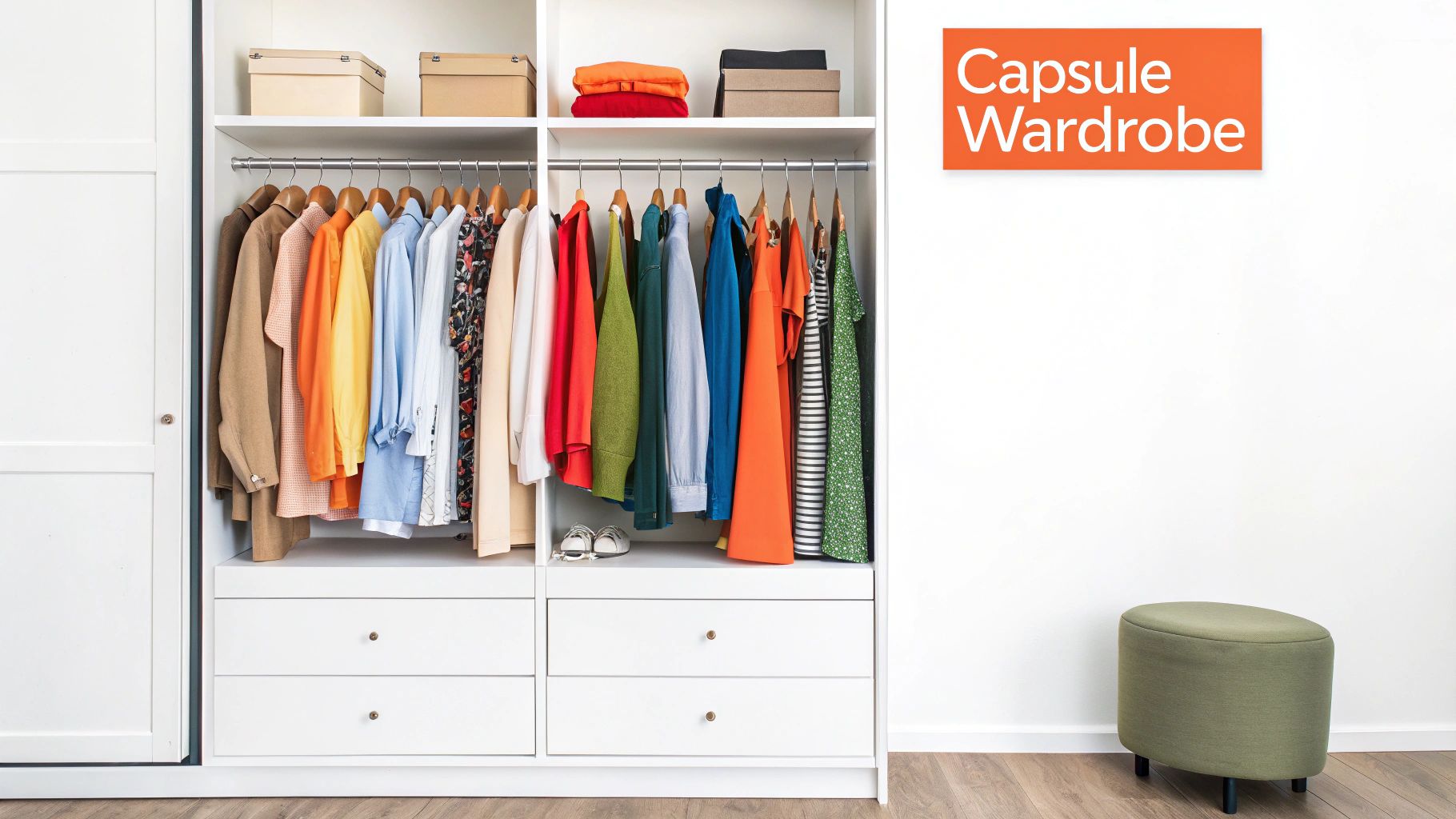
Creating a capsule wardrobe begins with defining your personal style and lifestyle needs. Once you have a clear vision, you select a base color palette and build a collection of around 30-40 pieces per season, including tops, bottoms, outerwear, and shoes. Everything else is stored away until the appropriate season.
This system is ideal for anyone seeking to simplify their routine, reduce their environmental footprint, and create a sophisticated, functional closet. It proves that having more clothes doesn't mean having more options. By carefully selecting each piece, you unlock maximum versatility with minimal storage space.
Color-coded organization is a visually driven and highly effective method for arranging your wardrobe. This approach, favored by professional stylists and high-end retail stores, turns your closet into a functional and aesthetically pleasing space. This is the best way to store clothes for individuals who think visually and want to simplify the process of creating outfits. The core principle is simple: arrange all garments according to the color spectrum.
This systematic approach makes it incredibly easy to find specific items, assess what you own, and identify gaps in your wardrobe. Instead of searching through categories, your eyes are immediately drawn to the color you need, streamlining your morning routine. It transforms a chaotic closet into a curated, boutique-like display.
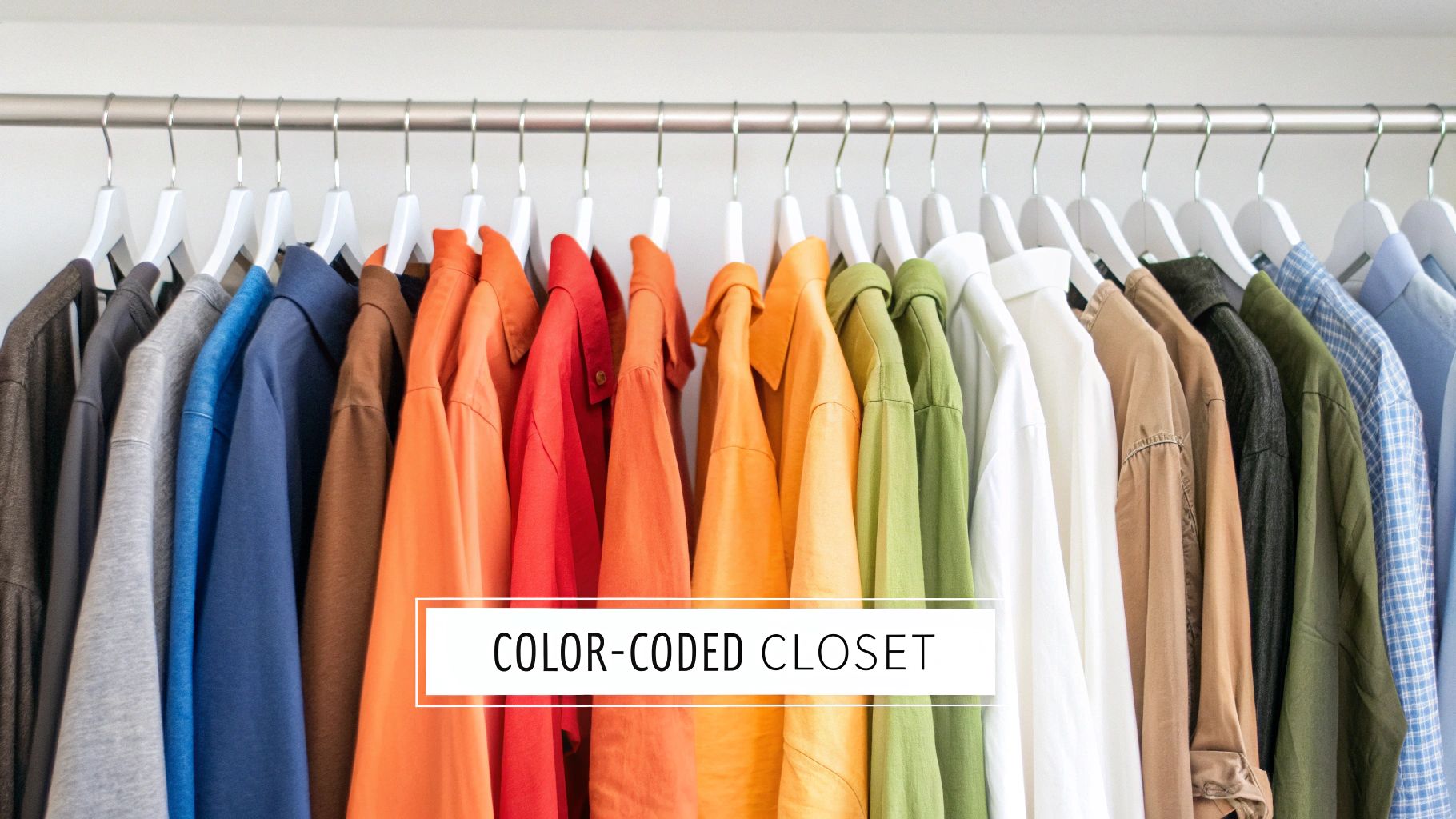
To get started, first group all your clothes by type (shirts, pants, dresses) and then sort each group by color. The most common order follows the rainbow, bookended by neutrals, creating a pleasing gradient effect. This system works equally well for hanging clothes and folded items in drawers.
This method is ideal for anyone looking to bring a strong sense of order and visual harmony to their space. The principles of color organization can be a game-changer, especially when you're organizing small apartments where visual clutter can make a space feel smaller. By creating a clean, organized spectrum, you make your closet feel more spacious and manageable.
Garment Type Categorization is a classic, intuitive, and highly effective storage method that organizes your wardrobe based on the function of each item. This approach is the best way to store clothes for those who value efficiency and logic. The core principle is straightforward: group similar items together. All your t-shirts have a designated home, your pants are consolidated in one area, and dresses are hung in a single section.
This system, widely used in retail stores and by professional organizers, eliminates the guesswork when you get dressed. Instead of searching your entire closet for a specific blouse, you go directly to the "blouse" section. It creates a predictable and orderly environment, making it easy to find what you need quickly and to assess your inventory at a glance.
Once you've decided to organize by garment type, the key is to create clear and distinct zones within your closet. This systematic structure prevents categories from blending and maintains order over the long term. It simplifies both finding clothes and putting them away, making it a sustainable practice for busy individuals.
This method is ideal for anyone who prefers a pragmatic, no-fuss system. By organizing clothes by their purpose, you build a functional wardrobe that is easy to navigate and maintain. If you want to enhance this system, you can build a closet organizer to create dedicated spaces for each category.
Seasonal rotation is a practical and highly efficient method for managing your wardrobe by keeping only in-season clothing accessible. This approach is the best way to store clothes for those living in climates with distinct seasons or anyone with limited closet space. The core principle is to divide your wardrobe into seasonal categories and store the off-season items elsewhere, freeing up valuable primary closet space for what you're currently wearing.
This method declutters your immediate environment and simplifies your daily routine by reducing the number of choices you have to sift through. By swapping out your heavy winter coats for lightweight summer dresses, you create a more functional and organized closet that adapts to your needs throughout the year. It also protects your off-season garments from dust, pests, and wear.
Once you've sorted your clothes by season, the key is to store the off-season items correctly to ensure they remain in great condition. This involves cleaning everything thoroughly before packing it away, as residual oils and stains can attract pests and become permanent over time. Proper storage containers and locations are also critical for long-term preservation.
This method is ideal for anyone looking to maximize a small closet or simply create a less cluttered, more manageable wardrobe. To explore more ideas for maximizing limited areas, check out these storage solutions for small spaces on assemblysmart.com. By implementing a seasonal rotation, you ensure that your closet is always relevant, organized, and filled with clothes ready to be worn.
Vacuum-sealed storage is a highly effective, space-saving solution that compresses bulky clothing and textiles to a fraction of their original size. This method is the best way to store clothes for those with limited space or a large volume of seasonal items. The core principle involves placing items into a specially designed plastic bag and using a vacuum cleaner to remove all the air, creating a compact, airtight block.
This technique is revolutionary for maximizing storage capacity in closets, under beds, or in attics. By removing air, you not only drastically reduce the physical volume of items like puffy jackets, comforters, and sweaters but also protect them from dust, moisture, pests, and odors. It’s an ideal system for long-term storage or for individuals navigating small living quarters.
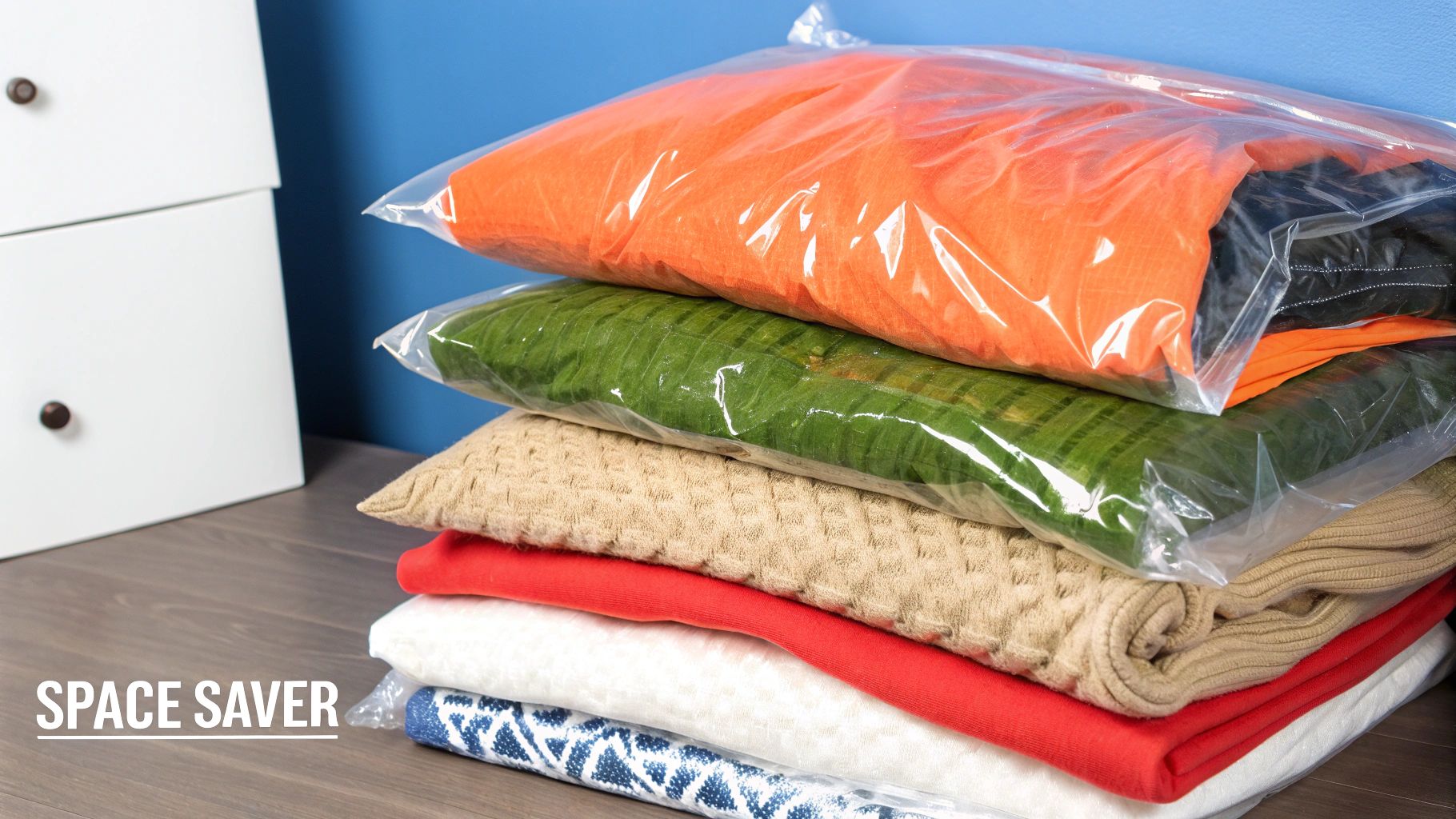
Once you have your vacuum-seal bags, often sold by brands like Space Bag or Ziploc, the process is straightforward. You simply fold your clean, dry clothes neatly and place them inside the bag, being careful not to overfill it. After sealing the zip-top closure, you use a standard vacuum hose on the bag’s valve to suck out the air until the bag is fully compressed.
This method is perfect for anyone needing to reclaim valuable storage space, such as college students in dorms, city dwellers in small apartments, or families managing seasonal wardrobe rotations. By compressing items you don’t currently need, you make more room for the clothes you use every day.
Frequency-Based Organization is a highly practical and efficient method for arranging your wardrobe. Rather than grouping by color or item type alone, this system prioritizes accessibility based on how often you wear each piece. This approach is the best way to store clothes for busy professionals, parents, or anyone looking to streamline their daily routine and minimize decision fatigue. The core principle is simple: keep your most-worn items in the most accessible, prime-real-estate locations of your closet and drawers.
This strategy transforms your closet into a tool for efficiency. By placing everyday essentials within easy reach, you save time and mental energy getting dressed. It requires you to realistically assess your lifestyle and clothing habits, ensuring your storage system directly supports your daily needs rather than conforming to a purely aesthetic standard.
To begin, you first need to identify your high-frequency items. You can do this by tracking what you wear for a few weeks to recognize clear patterns. Once you know your go-to pieces, you can reorganize your space to reflect that usage, placing less-worn items like formal wear or seasonal garments in harder-to-reach spots.
This method is ideal for those who value function over form and want a closet that works for their fast-paced life. It simplifies the process of getting ready, ensuring your favorite and most necessary items are always right at your fingertips.
Cedar and Natural Preservation is a timeless, eco-friendly approach to clothing storage that leverages the power of natural elements to protect garments. This method is the best way to store clothes for those who need to safeguard delicate or long-term items, particularly natural fibers like wool, silk, and cashmere, from common threats. The core principle is using aromatic woods like cedar, along with botanicals like lavender, to repel moths, absorb excess moisture, and prevent musty odors.
This traditional technique has been used for centuries, seen in everything from heirloom cedar chests to the cedar-lined closets of historic homes. It offers a chemical-free alternative to mothballs, protecting your valuable clothing while imparting a pleasant, subtle fragrance. Instead of masking odors, cedar and other botanicals actively neutralize them, ensuring garments remain fresh even after months in storage.
To effectively use this method, you integrate cedar and other natural repellents directly into your storage spaces. This creates a protective environment that is particularly beneficial for seasonal items like heavy winter coats or fine suits that are stored for extended periods. The aromatic oils in the wood are key to its effectiveness.
This method is ideal for anyone looking to preserve investment pieces or protect seasonal wardrobes naturally. It’s a sustainable, effective strategy that maintains the integrity and freshness of your most cherished clothing. Integrating natural elements can also be part of a larger organizational strategy, such as when setting up an entryway with smart furniture. For more ideas on combining storage and natural materials, you can find inspiration for a bench and shoe storage solution that keeps your home organized and fresh.
| Method | Implementation Complexity 🔄 | Resource Requirements ⚡ | Expected Outcomes 📊 | Ideal Use Cases 💡 | Key Advantages ⭐ |
|---|---|---|---|---|---|
| KonMari Method | Moderate to High – Learning folding and decision technique | Medium – Time and some materials (dividers) | Highly organized, maximized drawer space, mindful consumption | Those seeking lifestyle change and drawer storage | Maximizes space, reduces wrinkles, promotes mindfulness |
| Capsule Wardrobe System | High – Careful curation and planning | High – Investment in quality pieces | Minimal wardrobe, easy outfit choices | Minimalists, busy professionals, simplified wardrobes | Reduces clutter, sustainable, simplifies dressing |
| Color-Coded Organization | Moderate – Requires consistent maintenance | Low – Mainly time and lighting | Visually appealing, easy color coordination | Visual learners, fashion enthusiasts, aesthetic focus | Stunning visual appeal, easy outfit coordination |
| Garment Type Categorization | Low – Intuitive grouping | Low – Minimal extra resources | Practical, easy item location | Practical individuals, large families, diverse wardrobes | Easy to maintain, intuitive, works well for shared closets |
| Seasonal Rotation Storage | Moderate – Twice yearly rotation | Medium – Storage containers, space | Maximized closet space, protected garments | Distinct climates, small spaces, large wardrobes | Saves space, protects off-season clothes, reduces clutter |
| Vacuum-Sealed Storage | Moderate – Requires equipment | Medium – Vacuum bags and cleaner | Significant space savings for bulky items | Small spaces, seasonal storage, travel | High compression, moisture and pest protection |
| Frequency-Based Organization | Moderate – Ongoing reassessment | Low – Organizational effort | Efficient access to frequently used clothes | Busy professionals, parents, those prioritizing efficiency | Maximizes daily efficiency, reduces decision fatigue |
| Cedar and Natural Preservation | Low – Periodic maintenance | Low to Medium – Cedar products | Long-term protection with natural fragrance | Natural fiber garments, long-term storage, eco-friendly users | Eco-friendly, pest deterrent, naturally fragrant |
Navigating the world of wardrobe organization can feel overwhelming, but finding the best way to store clothes is fundamentally about personalization. As we've explored, there is no single "correct" method; the ideal solution is one that aligns with your lifestyle, your space, and the specific items you own. Whether you're drawn to the minimalist philosophy of a capsule wardrobe or the visual harmony of a color-coded system, the true power lies in creating a strategy that serves you.
The most effective approach often involves a hybrid model. Imagine combining the ruthless decluttering of the KonMari Method with the practicality of seasonal rotation. You could categorize your remaining essentials by garment type, ensuring everything has a designated home. This synthesis transforms your closet from a source of stress into a streamlined, functional space that simplifies your daily routine and protects your valuable clothing investments.
Remember these core principles as you begin your organizational journey:
Once you've selected your strategy, the next phase is implementation. This often means acquiring new furniture like dressers, shelving units, or complex closet systems to bring your vision to life. For larger-scale projects, such as managing a significant seasonal wardrobe shift or decluttering during a move, you may need more space than your home allows. In these cases, leveraging external options like professional storage solutions can provide the secure, climate-controlled environment needed to protect your belongings long-term, complementing your in-home setup perfectly.
Ultimately, mastering the art of clothes storage is an investment in your peace of mind. It clears physical and mental clutter, saves you time and money, and allows you to appreciate the wardrobe you've thoughtfully curated. By choosing a system that fits your life and executing it with the right tools and support, you can build a sustainable, stress-free organizational system that lasts.
Ready to build your dream closet but dread the thought of assembling new furniture? Let the experts at Assembly Smart handle the hard part. Their professional technicians can build your new dressers, shelving units, and closet systems quickly and correctly, so you can focus on organizing your perfect space. Visit Assembly Smart to get your new storage solutions set up without the hassle.