-
CALL US:
- (866) 952-3456

So, you're dreaming of a gazebo. It's a fantastic addition to any backyard, but before you get too far down the path of picking out styles, let's talk numbers. The total cost for a fully installed gazebo usually lands somewhere between $5,365 and $9,025, with most people spending about $7,590.
That price covers both the gazebo kit itself and the professional labor to put it all together.
It’s easy to get excited about adding a gazebo, but turning that vision into a real, sturdy structure starts with a solid grasp of the costs. The final price tag is a lot more than just the number on the box. It’s a mix of the materials, the size of the structure, who's building it, and any personal touches you decide to add.
Think of it like buying a car. The base model always looks like a great deal, but once you start adding the features you really want—like leather seats or a better sound system—the price starts to climb. A simple 8×8 foot vinyl gazebo will have a completely different budget than a sprawling, custom-built cedar one with built-in benches and electrical outlets.
To give you a starting point, here's a quick breakdown of what you can expect to pay for a fully installed gazebo based on some of the most common sizes.
| Gazebo Size (Feet) | Approximate Square Footage | Estimated Total Installation Cost Range |
|---|---|---|
| 8' x 8' | 64 sq. ft. | $4,480 – $6,400 |
| 10' x 10' | 100 sq. ft. | $7,000 – $10,000 |
| 12' x 12' | 144 sq. ft. | $10,080 – $14,400 |
These numbers are a great baseline, but remember that the final cost will shift based on the specific materials, features, and the complexity of your particular project.
A few key things will make your final cost go up or down. Getting a handle on these now will save you from sticker shock later.
A well-planned budget is the foundation of any successful backyard project. Accounting for both the gazebo and the installation from the start prevents surprises and ensures you can afford the retreat you've envisioned without compromise.
Knowing these numbers helps you set a realistic goal. You're not just buying a gazebo; you're investing in a project that will add real value and enjoyment to your home for years to come.
If you want to see how this stacks up against other outdoor projects, this guide to decking prices offers some great insights into how materials and labor play out in a different context. By breaking down the costs, you can make smarter decisions and plan for your new backyard centerpiece with total confidence.
Now that you have a ballpark idea of the cost, let's dig into the two biggest factors that will swing your final price tag: the materials you pick and the size of the gazebo. It’s a lot like choosing countertops for a kitchen remodel. You can go for a luxurious granite that commands a premium, or you can opt for a durable laminate that’s much friendlier on the wallet. The same exact logic applies to your new backyard centerpiece.
The material you choose doesn’t just set the initial price. It also locks in your long-term maintenance duties, affects how long the structure will last, and defines the overall vibe of your outdoor space. Each option, from classic wood to sleek metal, has its own pros and cons.
Choosing a material is really a balancing act between your budget, your style, and how much weekend time you’re willing to give up for upkeep. Let's look at what most people are choosing and what you can expect to pay.
This chart really puts the potential cost spectrum into perspective, showing everything from a simple DIY kit to a professionally installed, high-end custom build.
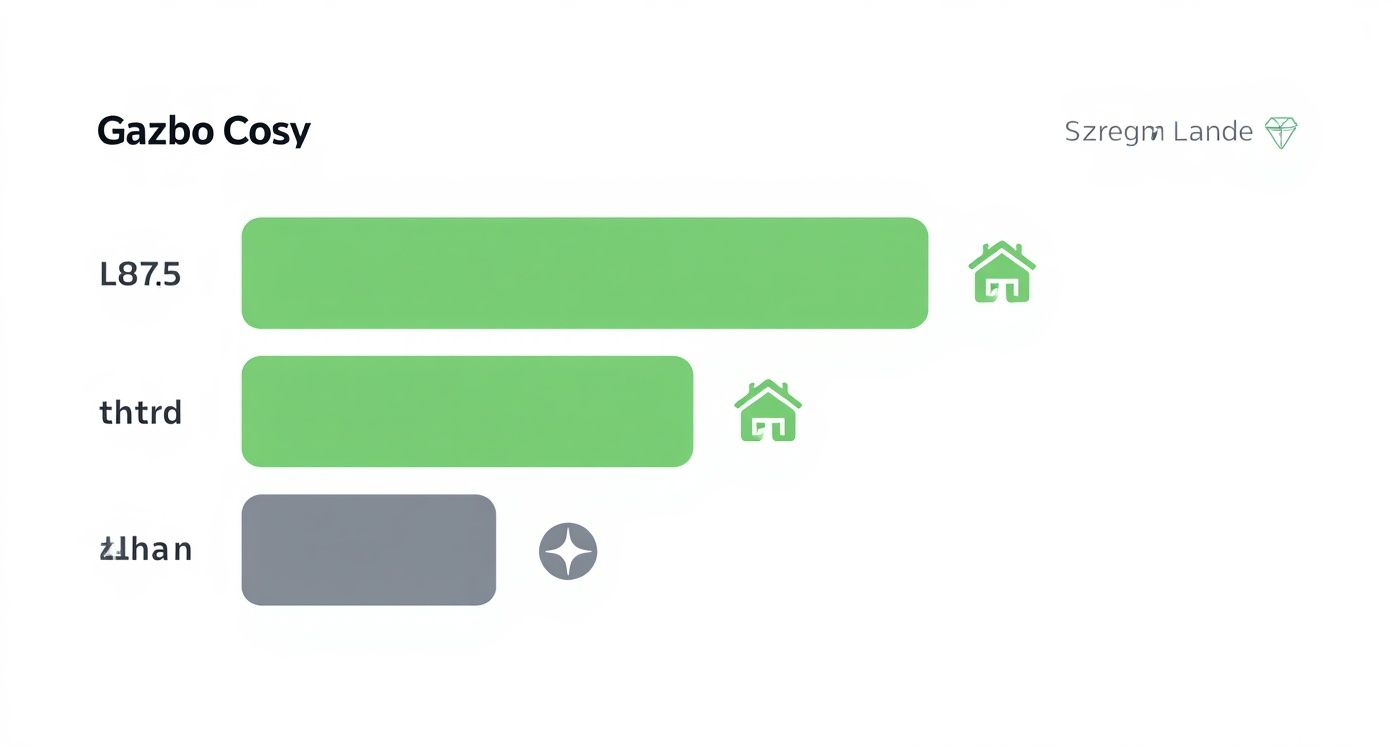
As you can see, an entry-level project can be quite affordable. But the average and high-end costs quickly climb when you factor in professional installation, larger footprints, and premium materials.
Just as critical as the material is the sheer size of your gazebo. The math here is simple: a bigger footprint means more materials and more hours of labor to build it. It’s a direct line to a higher total price. This is why most installers will give you an estimate based on square footage.
With materials and size driving the final number, you'll see prices quoted per square foot. Wood gazebos, typically cedar or redwood, run between $4,000 and $7,000 for the materials alone. Metal structures can range from $3,000 to $8,500. Vinyl is often the most budget-friendly, averaging $2,000 to $3,500 for the kit.
Installation then adds another $75 to $100 per square foot. So, a medium 10×10 gazebo (100 sq ft) might cost between $7,500 and $10,500 fully installed. A larger 14×20 model could easily push past $21,000.
Let's put this into real-world terms.
Key Takeaway: When you’re putting your budget together, don't just look at the price of the kit on the box. Think in terms of the total installed cost per square foot. This gives you a much more realistic picture and helps you make smart trade-offs between the size you want and the budget you actually have.
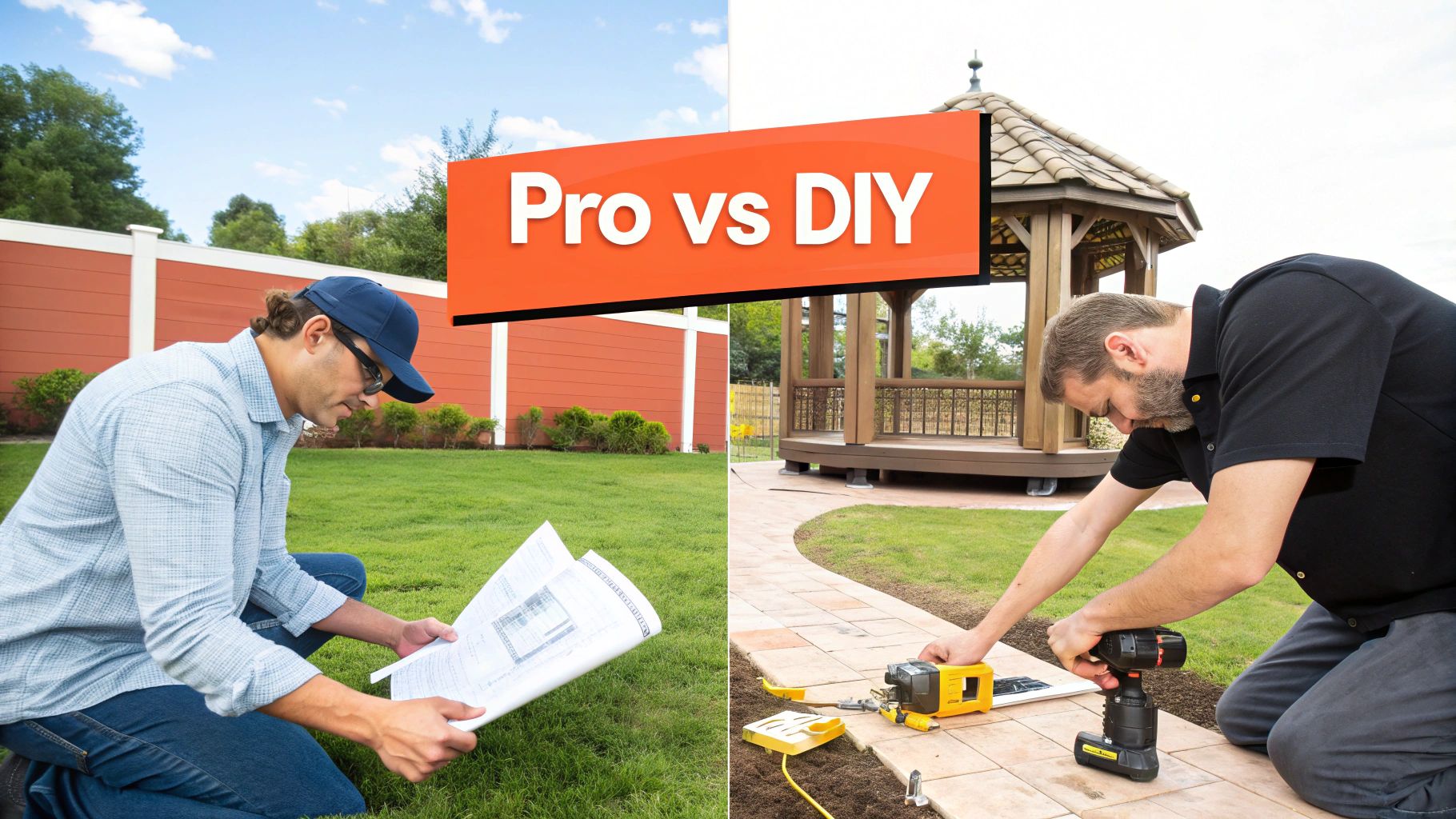
You’ve picked the materials and figured out the perfect size for your dream gazebo. Now you’ve hit the classic homeowner crossroads: do you roll up your sleeves and build it yourself, or do you call in a pro?
This one decision will have the biggest impact on your final gazebo installation cost. Think of it like this: assembling a simple bookshelf is one thing, but building a custom wardrobe is another beast entirely. One is a manageable weekend task; the other demands precision, the right tools, and real expertise.
The DIY path promises some serious savings since you're cutting out all labor costs. On the flip side, hiring a professional buys you peace of mind, speed, and the confidence that your gazebo is rock-solid and perfectly assembled. Let’s walk through both options to see which route makes the most sense for your wallet, your schedule, and your sanity.
Building your own gazebo can be an incredibly rewarding project, and yes, it can save you a good chunk of change. If you're handy with tools and have a free weekend (or two), it’s definitely an achievable goal.
But it’s important to be honest with yourself about what you’re getting into. This is a lot more than just following a few instructions. A successful DIY build requires:
The biggest risk with a DIY job is that one small mistake can snowball into a huge problem. An improperly anchored gazebo could become a serious safety hazard in high winds. A structure that isn't perfectly level can lead to premature wear and tear.
If you're still leaning this way, our guide on assembling a gazebo offers a more detailed look at the steps involved.
When you hire a professional installer, you're investing in quality and safety. You aren't just paying someone to screw some pieces together; you're paying for their experience, their specialized tools, and the guarantee that the job will be done right the first time. That expertise is what turns a heavy box of parts into a durable, beautiful backyard escape.
So, what does that investment look like? Professional assembly for a simple gazebo kit typically runs between $300 and $800. For larger, more complex kits or custom builds, labor costs can climb, ranging from $1,000 to over $4,000.
If your project requires serious site prep, like pouring a new concrete slab, you can expect to add another $500 to $2,000 to the final bill.
A professional installer does more than just assemble; they ensure the foundation is sound, the structure is perfectly level, and every component is securely anchored. This expertise is crucial for the long-term safety and lifespan of your gazebo.
The right choice really boils down to your personal situation—your budget, your timeline, and how comfortable you are with a big construction project.
Here’s a quick comparison to help you weigh the pros and cons.
| Feature | DIY Installation | Professional Installation |
|---|---|---|
| Upfront Cost | Lower (materials only) | Higher (materials + labor) |
| Time Investment | High (can take days) | Low (often done in a single day) |
| Required Skills | Intermediate construction skills | None required from you |
| Tools | You must own or rent them | Professionals bring all tools |
| Potential Risks | Mistakes, safety issues, voided warranty | Minimal risk, often insured |
| Outcome | Satisfaction of building it yourself | Guaranteed quality and structural integrity |
Ultimately, you need to weigh the potential savings of a DIY project against the value of your own time and the assurance that comes with professional craftsmanship. For many homeowners, especially those with a complex kit or a packed schedule, the extra cost for a pro is a worthwhile investment for a flawless, stress-free result.
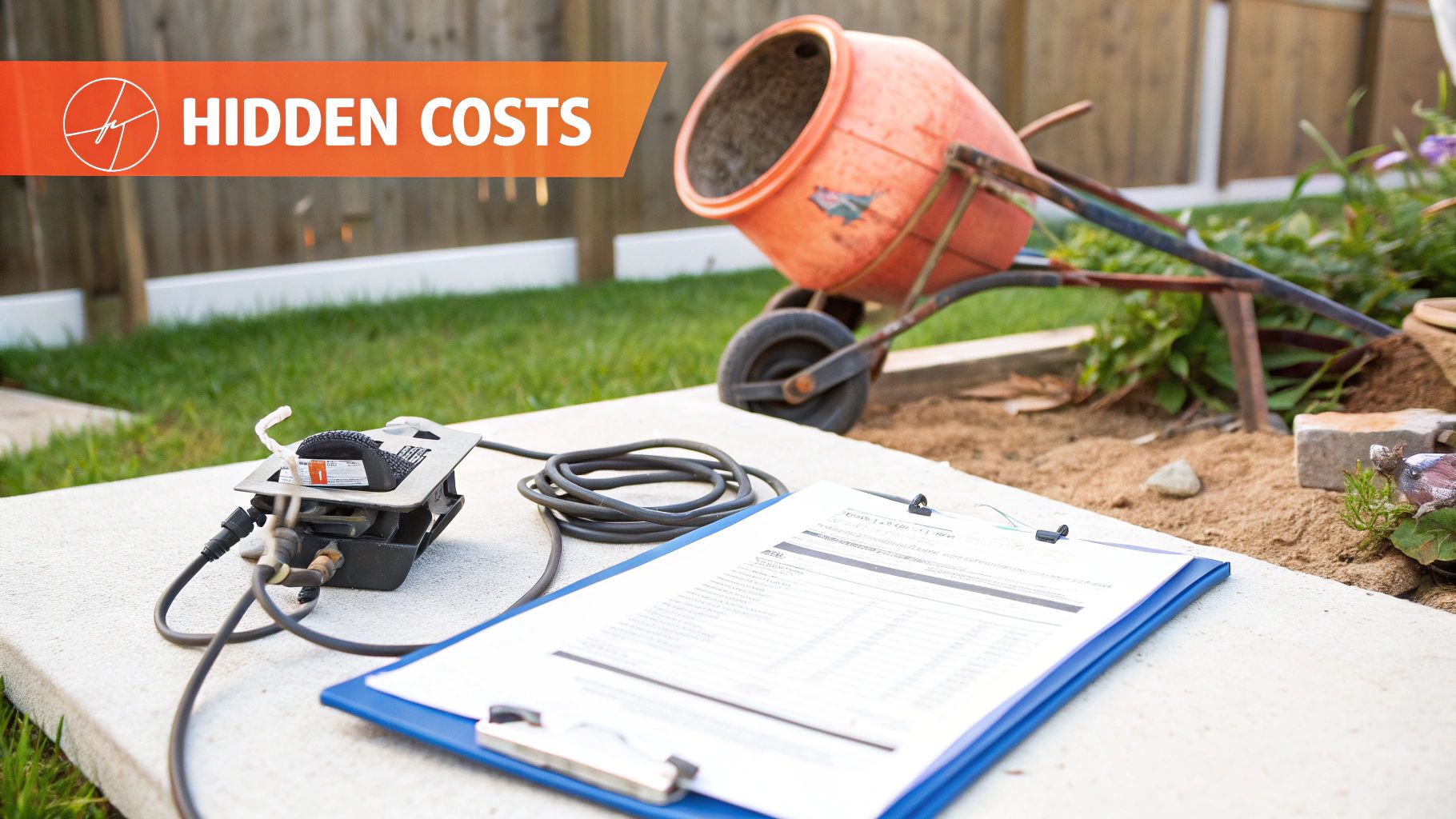
A smart gazebo budget looks past the sticker price of the kit and the basic assembly fee. The real cost to install a gazebo often includes a few "hidden" expenses that can catch you by surprise, turning a fun project into a financial scramble.
Think of it like buying a plane ticket. The base fare looks great, but once you add baggage fees, seat selection, and taxes, the final price is a different story. Your gazebo project is a lot like that; it’s crucial to account for these "add-ons" right from the start.
Before a single screw goes in, the ground has to be ready. If your chosen spot isn't perfectly flat, you’ll need to budget for site preparation. This isn't an optional step—it's what makes sure your gazebo is stable and will last for years.
The costs here can really vary depending on your yard's condition.
Depending on where you live and the size of your gazebo, you might need a building permit. This is an administrative cost that’s easy to forget but can cause major headaches if you do. The permit fees alone can be anywhere from $50 to over $200.
It's so important to look into this before you buy anything. For example, this guide on council approval for sheds in NSW shows the kind of due diligence you need to do. While the laws are different everywhere, it’s a good reminder to check first. Skipping this step can lead to fines or, even worse, an order to tear your new gazebo down.
Always check with your local city hall or homeowner's association before you begin. They’ll give you the clear guidelines on size limits, how far it needs to be from your property line, and any permits you need to stay on the right side of the law.
Once the basic structure is planned out, it’s time for the fun stuff—the features that turn it from a simple shelter into your personal backyard oasis. These popular add-ons will bump up your total cost, but they also seriously boost your enjoyment.
By thinking about these often-overlooked costs for site prep, permits, and extras, you can build a budget that’s actually realistic. A little foresight here means no nasty surprises down the road, letting you build the backyard retreat you’ve been dreaming of without the financial stress.
Bringing a new gazebo to life in your backyard is about more than just picking a design you love. It’s a project that needs a solid game plan, both for your wallet and your calendar. Nailing down a detailed budget is probably the single most important thing you can do to keep your gazebo installation cost from spiraling and avoid that sinking feeling of an unexpected bill.
Think of your budget as a roadmap. A good one isn't just a single number you hope to stick to; it's a line-by-line breakdown of every single expense you can think of. When you map it all out, you're in the driver's seat, able to make smart choices about where to invest and where you might be able to find some savings.
Your budget is the financial blueprint for your project. The goal is to list every single component and leave absolutely no room for guesswork. A vague plan is practically an invitation for costs to creep up, so the more detail you can get into now, the smoother things will go later.
One non-negotiable? Always build in a contingency fund of 10-15% of your total estimated cost. This isn't fun money for last-minute upgrades. It's your safety net for the curveballs projects inevitably throw, like discovering the ground needs more leveling than you thought or a sudden jump in material prices.
A contingency fund is what turns a potential project crisis into a minor hiccup. Planning for the unexpected keeps your project moving without forcing you to cut corners or rack up debt.
To get you started, here’s a simple worksheet you can use to track every potential cost. This kind of structure helps you see the whole financial picture at a glance.
Use this template to itemize all your potential expenses. It's a great way to stay organized and ensure no cost is overlooked.
| Expense Category | Estimated Cost | Actual Cost | Notes |
|---|---|---|---|
| Gazebo Kit/Materials | Model, brand, and supplier | ||
| Professional Labor | Quote from installer | ||
| Site Preparation | Leveling, demolition, etc. | ||
| Foundation Work | Concrete slab, pavers, etc. | ||
| Building Permits | Check with your local municipality | ||
| Add-Ons (Electrical) | Lights, fan, outlets | ||
| Add-Ons (Screens) | Screening kit or custom screens | ||
| Landscaping | Paths, plants, mulch | ||
| Subtotal | |||
| Contingency (10-15%) | |||
| Total Estimated Cost |
By filling this out, you're not just guessing—you're planning.
Once your budget is locked in, it's time to think about your schedule. A realistic timeline is crucial for managing your own expectations and coordinating all the moving parts, like making sure the site prep is done before your installers show up.
A typical gazebo project flows through a few key stages. Here’s a rough idea of what to expect:
By building out both a detailed budget and a clear timeline, you take all the guesswork out of the process. This disciplined approach is your best defense against costly delays and ensures your new backyard oasis turns out exactly how you envisioned it—on time and on budget.
By now, you've got a solid picture of the costs, materials, and sheer effort that goes into a gazebo project. The final decision—to DIY it or call in a pro—really boils down to an honest look at your skills, your free time, and the real-world complexity of the gazebo you’ve chosen. This isn't just about saving a few bucks or the convenience of having someone else do it; it's about making sure your investment is safe, sound, and will last for years.
For a lot of projects, bringing in an expert isn't just a nice-to-have, it's the only sensible path forward. Think of a professional installer as an insurance policy for your backyard oasis. Their experience is what guarantees the structural integrity of your gazebo, protecting it from whatever the weather throws at it and ensuring it’s a safe spot for your family to gather.
Sure, a simple pop-up gazebo or a small kit might be a fun weekend project. But some situations just flat-out demand the precision and experience only a professional can bring. Don't ever compromise on safety when these factors are in play.
Hiring a professional isn't admitting defeat; it's a smart investment in quality. A flawless installation protects your product warranty, adds real value to your property, and gives you the peace of mind that your gazebo is built right from the ground up.
At the end of the day, the higher upfront gazebo installation cost of hiring an expert like Assembly Smart pays for a perfect, stress-free result. For homeowners who value a flawless finish and want their backyard vision brought to life without the headaches, a professional service is the obvious choice. It guarantees your new outdoor retreat is everything you dreamed it would be.
When you're planning a project like this, a few specific questions always pop up. Let's clear the air on some of the most common ones so you can move forward with your plans confidently.
Almost never. That price tag you see on the box at the store is just for the pile of wood, metal, and hardware inside. Think of it like buying groceries—the ingredients are all there, but someone still has to cook the meal.
Professional assembly is a totally separate service. It can run from a few hundred dollars for a straightforward kit to several thousand if the design is large or complex. Before you commit, always double-check with both the retailer and your installer to see exactly what’s covered in their quotes. You don't want any surprises later.
A solid foundation is non-negotiable for a permanent gazebo. For a professionally poured concrete slab, you're generally looking at a cost between $6 and $12 per square foot.
So, for a standard 10×10 foot gazebo (100 sq ft), you can budget between $600 and $1,200. A few things can nudge that price up or down:
A proper concrete slab isn't just a place for your gazebo to sit. It’s the key to its longevity. It provides a stable, level base that protects your investment from shifting ground and moisture, adding years to its life. It's a foundational cost that pays for itself in durability.
Yes, you can, but you have to do your homework first. This isn't a "set it and forget it" situation.
You absolutely must confirm that your deck or patio can handle the gazebo's weight, especially if you live somewhere that gets heavy snow. For a deck, this often means calling in a pro to add extra support posts or reinforce the frame underneath. Don't skip this step.
Patios are usually a better bet, but the gazebo still has to be securely anchored. The last thing you want is a strong gust of wind turning your new centerpiece into a neighborhood hazard. Properly assessing the structure and anchoring it down isn't just a good idea—it's a critical safety measure.
Planning a project like this can feel like a lot, but you don't have to tackle the assembly on your own. For a perfect, stress-free installation that ensures your gazebo is safe and built to last, you can trust the experts at Assembly Smart. Get your free, transparent quote today and let us bring your backyard vision to life.