-
CALL US:
- (866) 952-3456

Figuring out the best wood for a table really comes down to how you’re going to use it. If you're building a high-traffic dining table for a busy family, you'll want to lean towards hardwoods. Oak and Maple are top contenders here, simply because they can take a beating.
But if you’re aiming for a luxurious statement piece that turns heads, the unmatched richness of Walnut is hard to ignore. For a charming coffee table that's easy on the wallet, Pine brings a cozy, rustic feel that's tough to beat.
This guide will walk you through the nitty-gritty of each popular wood choice. We’ll help you weigh the important stuff—durability, looks, and cost—so you can find the perfect material for your table and feel good about your decision. It's all about understanding the critical factors, from the wood's hardness to its grain pattern, that make or break a project.
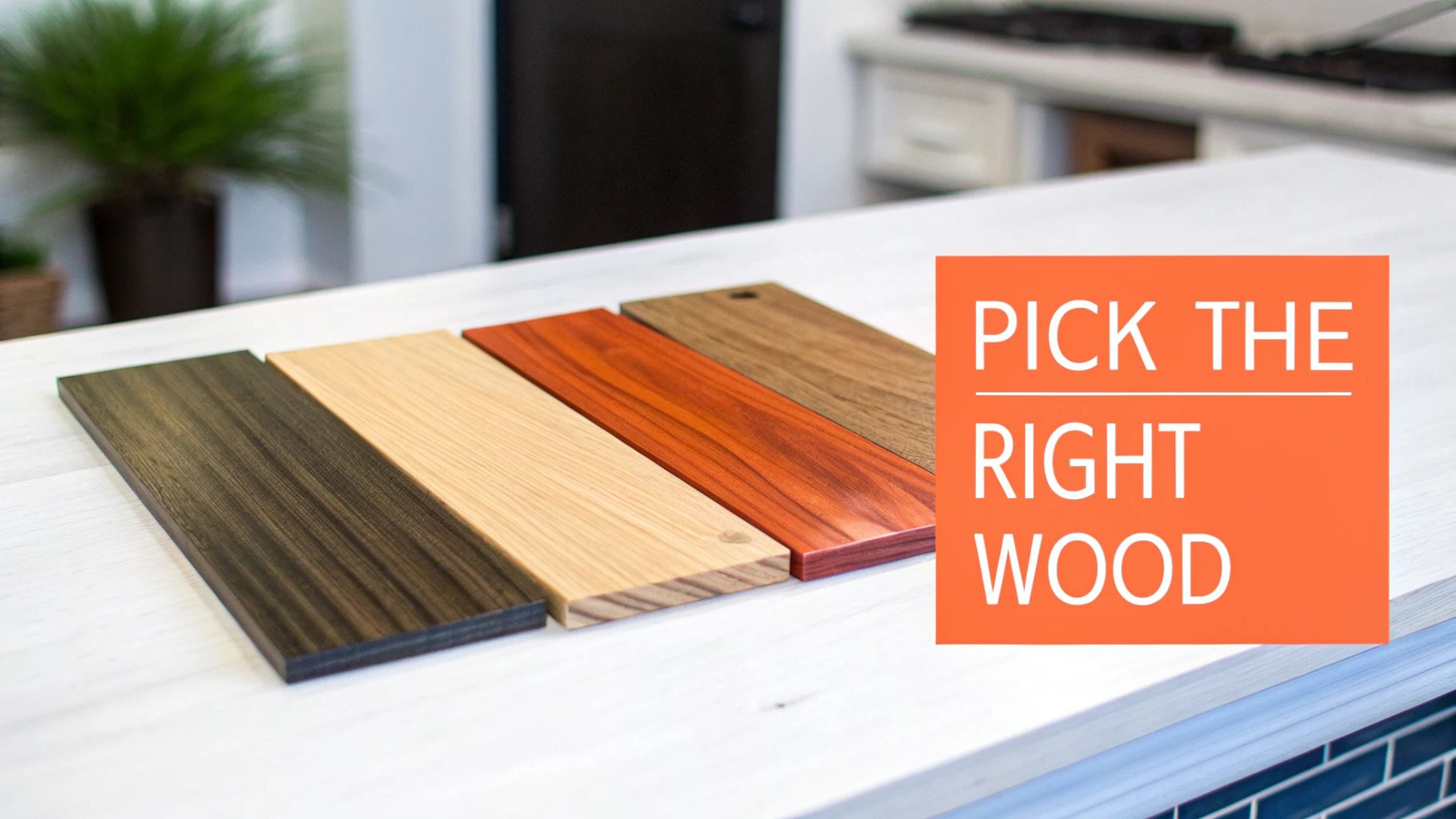
Before you get lost in the different species, the first step is always to think about the table's job. A dining table has to stand up to daily meals, spills, and constant cleaning. On the other hand, a decorative console table in a quiet hallway can get away with prioritizing looks over sheer toughness. The best choice almost always becomes clear when you think about it in this practical context.
The room where your table will live is just as crucial as the wood itself. A table sitting in a sunny spot might need a wood and finish with good UV resistance to keep it from fading over time. Likewise, if you live in a humid climate, you'll want a wood stable enough to avoid warping. Getting the dimensions right is the first step—check out how to measure furniture https://assemblysmart.com/how-to-measure-furniture/—but thinking through these environmental factors will ensure your table lasts.
While it's geared toward flooring, this complete guide on how to choose hardwood has some fantastic insights that apply just as well to tables, covering everything from wood types to finishes and durability. The principles are the same and will help you predict how your chosen material will hold up down the road.
The most successful furniture choices are made when you honestly assess your daily habits. A family with young children will value scratch resistance far more than the owner of a formal, rarely used dining room.
To get you started, I've put together a quick cheat sheet that matches the best wood choices to common situations. Think of it as a starting point for your project.
This table summarizes our top recommendations for different needs, helping you quickly narrow down your options.
| Use Case | Top Wood Choice | Key Benefit |
|---|---|---|
| Family Dining Table | White Oak | Excellent durability and moisture resistance |
| Luxury Statement Table | Walnut | Rich, deep color and elegant grain |
| Budget-Friendly / Rustic | Pine | Affordable with charming, natural character |
| Modern & Minimalist | Maple | Smooth grain and a bright, clean appearance |
Each of these woods has its own personality and set of strengths. Now, let's dive deeper into what makes each one tick.
Before you can pick the perfect wood for your new table, you need to speak the language of lumber. A few key traits determine not just how a table looks, but how it holds up to the chaos of daily life. Once you get these fundamentals down, you'll be able to choose a piece that nails the balance between beautiful and practical.
The first and most basic split in the wood world is between hardwoods and softwoods. This isn't about how tough the wood feels; it's all about biology. Hardwoods are sourced from deciduous trees—the ones that drop their leaves, like oak and maple. Softwoods come from conifers, the trees that produce cones, like pine and fir.
As a general rule, hardwoods are denser and tougher, which is why they're the go-to for high-quality furniture. The industry knows this well; hardwoods are expected to capture 54.9% of the wooden furniture market, largely because people want furniture that's built to last. You can dive deeper into these market trends over at Future Market Insights.
If you want a real, measurable number for a wood's durability, you look at the Janka Hardness Scale. It’s a straightforward test that measures how much force it takes to press a small steel ball halfway into a plank of wood. The score, given in pounds-force (lbf), tells you exactly how well a wood can handle dents, dings, and scratches.
For a kitchen or dining table that's going to see a lot of action, a higher Janka rating is your best friend. A wood like Hard Maple, which scores 1,450 lbf, will shrug off dropped keys and sliding plates much better than a softwood like Eastern White Pine, which comes in at just 380 lbf.
The Bottom Line: Think of the Janka rating as your most reliable guide for picking a tabletop. A bigger number means it can take more abuse, protecting your investment for years to come.
Understanding this scale helps you see past the simple labels. For instance, even though Walnut is a hardwood, its Janka score of 1,010 lbf makes it quite a bit softer than Red Oak at 1,290 lbf. That doesn't make Walnut a bad option—its deep, rich look is hard to beat—but it does mean it might start showing its age a little sooner in a busy household.
Hardness is only half the story. The wood's grain is just as important, affecting both how the table looks and how stable it is. The grain pattern is essentially the direction, texture, and visual layout of the wood fibers. These patterns are as unique as a fingerprint and define the character of your table.
Here are a few common grain types you'll run into:
The grain also influences how easy the wood is to work with. Wood with a straight, even grain is typically a breeze to cut, sand, and finish. On the other hand, woods with wild, interlocking grains can be a real challenge to work with, but they often make up for it with incredible stability and a natural resistance to warping.
Okay, we've covered the key characteristics that separate a good tabletop wood from a great one. Now, let's get into the fun part: pitting the most popular options against each other. Each wood has its own personality, and finding the right one is all about matching it to your project's specific needs.
The demand for high-quality, natural wood isn't just a trend; it's a growing market. The global wood tabletops market was recently valued at $65 million and is expected to climb at a rate of 6.1% annually through 2033. Hardwoods like oak and mahogany are really driving that growth.
So, let's break down the real-world differences between Oak, Walnut, Maple, Cherry, and Pine. We'll go beyond the basic pros and cons to give you insights you can actually use.
This infographic gives a great visual starting point, showing how these woods stack up in terms of hardness and grain.
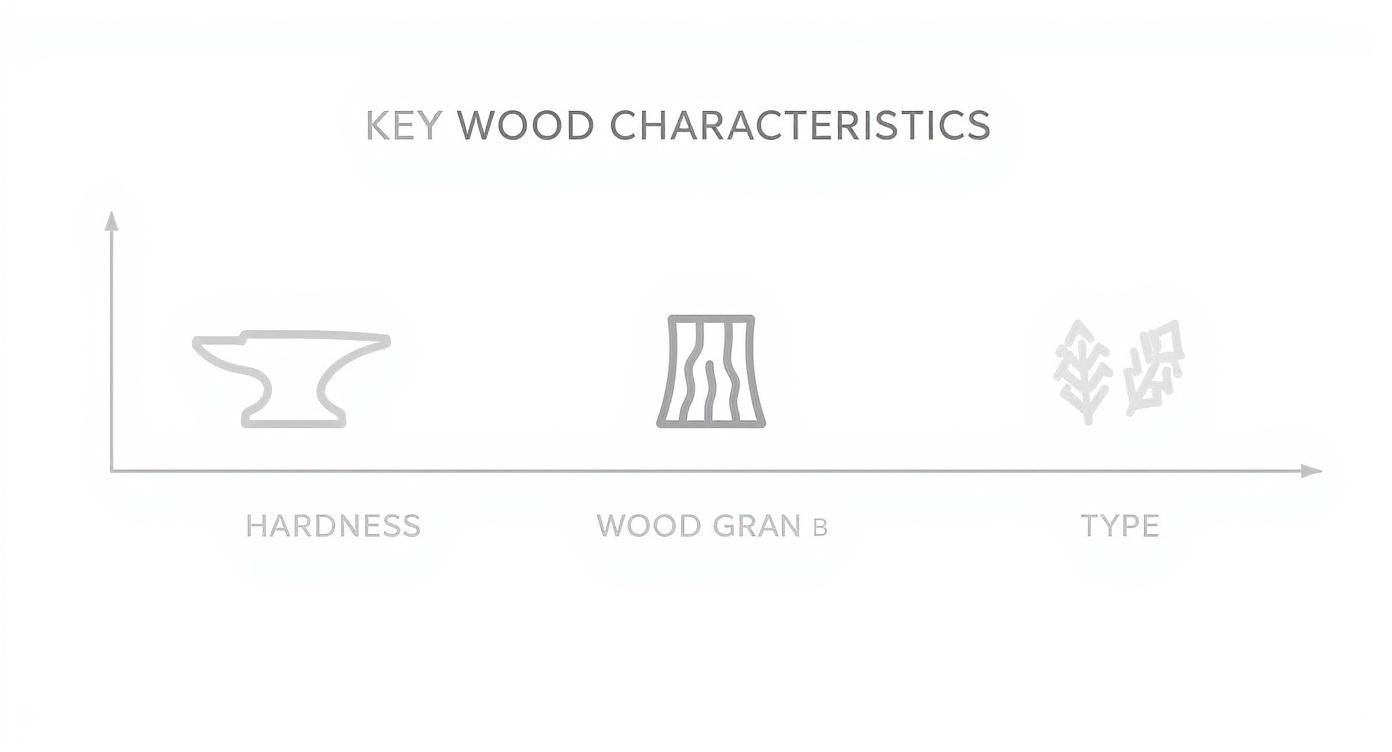
As you can see, hardwoods like Oak and Maple are workhorses, while a softwood like Pine has a completely different profile, which really defines where it shines.
To make comparing these woods even easier, here’s a quick-reference table summarizing their key features at a glance.
| Wood Species | Type | Janka Hardness (lbf) | Average Cost ($/bd. ft.) | Primary Aesthetic |
|---|---|---|---|---|
| Oak | Hardwood | 1,290 – 1,360 | $6 – $15 | Traditional, Rustic, Prominent Grain |
| Walnut | Hardwood | 1,010 | $12 – $25 | Luxurious, Elegant, Rich & Dark |
| Maple | Hardwood | 1,450 | $7 – $12 | Modern, Minimalist, Light & Clean |
| Cherry | Hardwood | 950 | $10 – $20 | Formal, Classic, Warm & Reddish |
| Pine | Softwood | 380 – 600 | $2 – $5 | Rustic, Farmhouse, Knotty & Casual |
This table is a great starting point, but the real story is in the details of how each wood performs in a real home.
There's a reason Oak is the quintessential furniture wood in North America. It’s incredibly strong, with a prominent, open grain that gives any piece a timeless, almost stately character. You really can’t go wrong with it.
You'll mainly encounter two varieties: Red Oak and White Oak. Red Oak leans a bit reddish or pink with a more porous grain. White Oak, on the other hand, is the star player—it has a beautiful golden-brown color and a tighter grain, making it much more resistant to water.
For a family table that needs to endure decades of life, Oak is a no-brainer. Its strong grain is also great at hiding the little dings and scratches that inevitably happen over the years.
If you're going for a high-end, sophisticated look, Walnut is in a league of its own. Its rich, chocolate-brown color and smooth, flowing grain instantly make a room feel more luxurious.
It's a bit softer than Oak, with a Janka rating of 1,010 lbf, so it's more prone to dents. But for a statement piece like a formal dining table or an executive desk, its jaw-dropping beauty is well worth the tradeoff.
Walnut is the perfect choice when aesthetics are the top priority. Its deep, warm tones and straight or sometimes wavy grain create a sense of luxury that few other woods can match.
It’s also an absolute dream to work with. Walnut cuts, shapes, and sands to a silky-smooth finish, which is why you see it so often in fine, handcrafted furniture.
For anyone drawn to a bright, clean, and modern vibe, Maple is the answer. This is an incredibly dense hardwood known for its light, creamy color and a very subtle, uniform grain pattern.
Hard Maple, the variety used for furniture, has a Janka hardness of 1,450 lbf, making it one of the toughest woods you can buy. It can handle the chaos of a busy kitchen or dining room without breaking a sweat.
Its smooth, fine grain is a perfect canvas for finishes, but it can be a little tricky to stain because it’s not very porous. Most builders opt for a clear or light-toned finish to let its natural brightness shine. This understated look makes Maple perfect for minimalist, Scandinavian, or contemporary designs where clean lines are everything. To get a better sense of how it compares visually, it can be helpful to explore various hardwood types and their characteristics.
Cherry is another beloved hardwood, prized for its warm, reddish-brown hue and a smooth, satin-like texture. It has a fine, straight grain that gives it a very refined and elegant feel.
The most unique thing about Cherry is how it ages. When it's new, it has a lighter, almost pinkish color. But over time, with exposure to light, it darkens into a deep, rich reddish-brown. This graceful aging process adds a layer of character that makes it a top choice for heirloom pieces.
At 950 lbf on the Janka scale, Cherry is one of the softer hardwoods. It needs a bit more care to prevent scratches, so it’s best for furniture that won’t see constant, heavy action.
Pine is the go-to softwood for furniture, and for good reason. It’s affordable, easy to find, and has a rustic charm that’s hard to beat. Its light color, prominent knots, and distinct grain create a warm, cozy feel perfect for farmhouse or cottage-style decor.
Let’s be clear: as a softwood, Pine is not durable. With a Janka rating often under 600 lbf, it dents if you look at it too hard. This is its biggest weakness and why I’d never recommend it for a high-traffic dining table.
But that softness can be a feature, not a bug. If you love a distressed, lived-in aesthetic, the dings and marks Pine collects over time just add to its character. It’s a great, low-cost choice for a coffee table, side table, or any decorative piece where durability isn't the main concern.
Picking the right wood for a table isn't a one-size-fits-all deal. What works perfectly for a decorative coffee table would be a total disaster for a kitchen island that gets hammered with daily use. It's all about context. The secret to a table you'll love for years is matching the wood's natural strengths to how you'll actually use it.
When you think about it this way, you avoid the common mistakes. You won't end up with a soft wood in a high-traffic spot or blow your budget on a super-durable wood you just don't need. This approach ensures your table not only looks fantastic but performs exactly how it should.
The family dining table is more than just furniture; it's the heart of the home. It’s where meals are shared, homework gets done, and memories are made. This workhorse needs a wood that can take a beating, day in and day out. That's why tough hardwoods like Oak and Maple are the undisputed champs here.
Their high Janka hardness ratings mean they laugh off dents, scratches, and the general chaos of family life. White Oak is a particularly fantastic choice because its closed-grain structure makes it naturally resistant to water and spills—a must-have feature for any dining surface.
There's a reason wood is the go-to material. The global dining table market, currently sitting at around $4.58 billion, is set to grow as more people choose wood for its blend of beauty and toughness. These tables aren't just purchases; they're long-term investments. You can check out more of these wood dining table market insights on fortunebusinessinsights.com.
Not every table needs to be built like a tank. For a console table in the hallway, a small bedside stand, or an accent table, you can focus more on looks and character instead of pure durability. This is where a softer wood like Pine really shines as a beautiful and budget-friendly choice.
Pine brings a warm, rustic charm with its prominent knots and distinct grain. Sure, it will pick up dings and scratches more easily than a hardwood, but those marks often just add to its lived-in, distressed character over time. It’s perfect for pieces that are meant to be seen more than they’re meant to be used.
A key differentiator in choosing the best wood for a table is accepting the role of the furniture. A console table's primary job is visual appeal, allowing for softer, more character-rich woods. A dining table’s job is endurance, demanding a material that prioritizes durability above all else.
Tables serve all sorts of purposes beyond the dining room, and each one has its own set of demands. Thinking through these specific jobs will lead you to the perfect wood.
Choosing the right wood for your table is only half the battle. The finish you apply is what truly stands guard against daily life, and this protective layer is just as critical as the wood itself. It dictates your table's appearance, feel, and ultimately, its long-term durability.
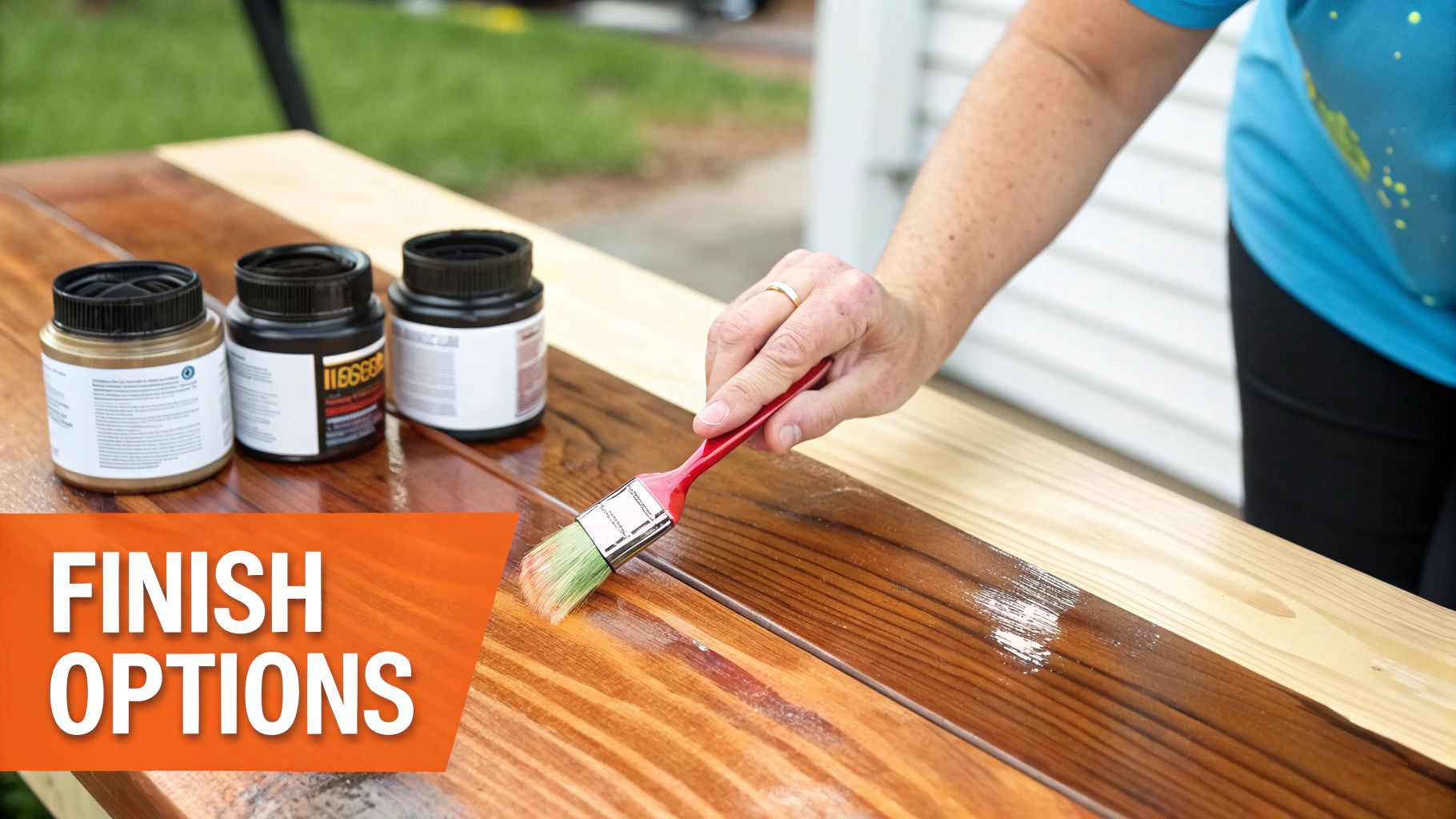
Finishes generally fall into two camps: those that soak into the wood and those that form a protective film right on top. Getting your head around the difference between these two approaches is the key to picking the perfect finish for your table and your lifestyle.
Penetrating oils, like Tung oil or Danish oil, work by soaking deep into the wood fibers and then hardening from within. This process doesn't just protect the wood; it enhances its natural grain and color, leaving you with a warm, satin feel that’s inviting to the touch. You’re actually feeling the wood, not a layer of plastic.
One of the biggest draws of an oil finish is how easy it is to repair. If you get a scratch or a scuff, you can simply sand the spot lightly and wipe on a bit more oil. The fix blends right in, making this a fantastic choice if you want a finish you can easily maintain yourself over the years.
On the other side of the spectrum are surface finishes like polyurethane, shellac, and lacquer. These products create a hard, durable barrier that sits on top of the wood. Think of it as a clear coat of armor for your tabletop. It offers top-notch protection against spills, heat, moisture, and scratches.
This heavy-duty protection makes polyurethane the go-to for high-traffic surfaces like kitchen and dining tables. A well-applied poly finish can handle years of abuse from daily meals, homework sessions, and clumsy spills. The only real downside? A deep scratch can be tough to fix without refinishing the whole surface.
Key Insight: The choice between oil and polyurethane really comes down to feel versus fortification. Oil gives you that natural aesthetic and simple spot repairs, while polyurethane provides a tough, plastic-like shield for maximum protection.
Beyond the basic type, a few other factors will steer your decision. Each one plays a big part in the final look and performance of your table's finish.
For certain woods, especially outdoor-friendly ones like Teak, specific care routines are crucial for keeping both the finish and the wood in good shape. You can dive into those specialized techniques in our guide on the proper care of Teak furniture.
Even after you've weighed all the options, a few last-minute questions always seem to pop up. It's completely normal. Getting those final details ironed out is what gives you the confidence to pull the trigger on the right wood for a table that fits your home and your life.
Think of this section as that final gut check before you commit. We're tackling the most common questions we hear from woodworkers and homeowners alike, covering everything from daily durability to whether a DIY project is really cheaper.
When you need a table that can handle the daily grind of family life—spills, homework, dinner parties, you name it—hardwoods are your best bet. We're talking about heavy hitters like White Oak, Red Oak, and Hard Maple. Their high Janka hardness ratings mean they can take a beating from scratches, dings, and dents without showing much wear.
If I had to pick one, White Oak often gets the edge because of its closed-grain structure. This little detail makes it exceptionally resistant to water and stains, which is a huge plus for any dining or kitchen table. It's a true workhorse and a fantastic long-term investment.
For a table that has to survive a busy household, my rule of thumb is to stick with woods that have a Janka rating of 1,200 lbf or higher. That's the sweet spot where you stop worrying about every little knock and just enjoy your furniture.
Absolutely, you can! But you have to be smart about where you use it. Pine is soft by nature, which means it will dent and mark easily. For that reason, I’d steer clear of using it for a primary dining table, a kitchen island, or any work desk that gets a lot of action.
Where pine really shines is in its rustic character and affordability. It's a fantastic choice for a coffee table, a console table in the hallway, or a decorative side table where durability isn't the main concern. Plus, a distressed finish on pine turns future dings into part of its charm, adding to that lived-in, rustic vibe over time.
The finish you choose is your table’s armor. It’s the first line of defense against everything life throws at it, and picking the right one can dramatically extend the life of your furniture by protecting it from moisture, scratches, and daily wear.
You've really got two main paths to go down:
Building it yourself can save you money, but you've got to be honest about all the costs involved before you start. The real savings depend entirely on the wood you pick and how complex your design is.
If you're planning a simple table with an affordable wood like pine, a DIY project will almost always be cheaper than buying one from a store. But the math changes quickly when you start looking at premium hardwoods like Walnut. Add in the cost of good clamps, specialized tools, finishes, and your own time, and those savings can shrink fast. For trickier designs, the cost of the tools alone might be more than you'd save.
Sometimes, even the most carefully built table develops a wobble. If you find your masterpiece isn't as solid as you'd like, our guide on how to fix a wobbly table has some practical tips to get it standing firm again. A stable table is just as important as the wood it's made from.
Building or buying the perfect wood table is a huge accomplishment, but getting the assembly right is the final piece of the puzzle. If you’d rather leave the nuts and bolts to someone with experience, Assembly Smart is here to help. We offer professional, stress-free assembly services, making sure your new table is put together correctly and safely from the get-go. Visit us at https://assemblysmart.com to get a free estimate and book your appointment today!