-
CALL US:
- (866) 952-3456

Putting up a swing is about more than just tossing a rope over a branch. I've seen it done wrong plenty of times, and the results can be dangerous. Doing it right means picking a safe spot, using the right gear, and making sure there’s plenty of room to fly. The perfect location, whether that's a solid tree limb or a dedicated A-frame, is really the foundation for years of fun.
Before you even touch a drill or a ladder, the very first thing to do is walk your yard and assess the location. This isn’t just about finding a spot with a nice view—it’s the most critical safety check you'll perform. The place you choose dictates the entire project's success and, more importantly, its safety.

These same principles apply whether you’re putting up a simple rope swing or a full-blown playset. Backyard fun has exploded in popularity, which makes getting this stuff right even more important. It's a big market—the global outdoor swings industry was valued at US$5.0 billion in 2024 and is only expected to grow. It just shows how many families are adding this simple joy to their homes.
If you've got your heart set on that classic, nostalgic tree swing, your choice of branch is everything. Don't just glance up and look for something thick; you need to get up close and really inspect its health.
Just as crucial as the branch itself is the space around the swing. You need to map out a clear, hazard-free zone that gives the swing its full range of motion—not just forward and back, but side-to-side, too.
Safety First: The biggest mistake I see people make is underestimating the swing's arc. You need to plan for at least six feet of clear space in front of and behind the swing. Make sure there’s also plenty of room on either side to avoid smacking into a fence, a wall, or another piece of play equipment.
And don't forget what's underneath. The ground surface needs to be soft and forgiving—think mulch, wood chips, or rubber matting. Never, ever install a swing over concrete or asphalt.
For those working with a tight space, it's worth checking out some of the best playsets for small yards to get ideas on how to create a fun and safe zone, even when you don't have a huge lawn.
Once you've found the perfect spot for your new swing, it's time to gear up. I can't stress this enough: having the right tools and hardware is absolutely non-negotiable for a safe installation. This is definitely not a project where you can just "wing it." One of the most common missteps I see is people grabbing the wrong components, and that’s a fast track to a wobbly, insecure swing.
You don't need a full-blown professional workshop, but a few basics are essential. A good power drill with a fresh set of sharp bits will be your best friend for making clean pilot holes. You’ll also want a socket wrench set to get those nuts and bolts good and tight, a tape measure for getting your spacing just right, and a level to make sure everything hangs straight and true.
This part is where your specific setup really dictates the plan. The hardware you'd use to hang a swing from a solid wood beam on your porch is completely different from what you need for a living tree branch in the backyard. Let’s break down the most common choices.
Heavy-Duty Eye Bolts: These are the go-to for mounting into a thick, dimensional lumber beam, like you'd find on a porch ceiling or a playset A-frame. When you install them correctly—drilling all the way through the beam—they create an incredibly strong anchor point.
Swing Hangers: Think of these as a major upgrade from simple eye bolts. They often have a nylon bushing or a pivoting loop that makes for a much smoother, quieter swing. This little feature also cuts down on wear and tear on the hardware itself over time.
Tree Strap Kits: If you're hanging your swing from a tree, straps are the only responsible way to do it. Drilling into a live branch can permanently injure or even kill it. These wide straps are designed to wrap around the branch, distributing the weight evenly and protecting the tree's bark from damage.
Here's a critical safety tip: the hardware's weight rating must always exceed the combined weight of the swing plus anyone who will be on it. Always, always check the manufacturer's specs. Most heavy-duty kits are rated for 500 lbs or more, but you have to confirm.
To help you visualize the options, I've put together a quick comparison of the main hardware types you'll encounter.
| Hardware Type | Best For | Typical Load Capacity | Installation Notes |
|---|---|---|---|
| Eye Bolts | Wooden beams, playsets | 250-400 lbs per bolt | Requires drilling clean through the beam and securing with a washer and nut on the other side. |
| Swing Hangers | Wooden beams, porches | 400-1,000 lbs per hanger | Often requires lag bolts for installation; provides a much smoother and quieter ride. |
| Tree Strap Kits | Live tree branches | 1,000-2,000 lbs per set | No drilling is needed. This is the best method to protect the tree, and they're super easy to adjust. |
At the end of the day, choosing the right gear is all about matching the component to the job at hand. Proper installation is what brings it all together, ensuring the swing is stable and secure for years to come. Of course, the hanging hardware is only one piece of the puzzle. To learn more about keeping the entire structure from moving, check out our detailed guide on how swing set ground anchors work to prevent any tipping or sliding.
Alright, so you’ve got a swing and you’re ready to get it hung up. Let’s walk through how to do it safely so you can have peace of mind. This isn't just about throwing a rope over a branch; it's about making sure every bolt is tight and every measurement is right.
First things first, you'll need your tape measure and a level. Getting your measurements spot-on from the beginning is the key to a swing that hangs straight and doesn't tilt awkwardly to one side. A little prep here saves a lot of headaches later.
Before you grab a drill, you need to mark exactly where your hardware will go. The center-to-center distance is what you're after, and this depends on the swing you bought. For most standard single swings, a spacing of 16 to 18 inches apart is the sweet spot.
Grab a pencil and make some light, clear marks on the beam. Don't press too hard. Once you think you have them right, put your level up there to double-check that they’re perfectly aligned. This simple step is your best defense against a lopsided swing.
With your marks in place, it’s time to make the holes.
Using a power drill, create pilot holes that are just a tiny bit smaller than the diameter of your bolts. This gives the hardware something to bite into without splitting the wood. And please, wear some eye protection.
Safety first! I can't stress this enough. Always wear goggles when drilling and a good pair of gloves when handling the hardware.
Now you’ll drive your heavy-duty eye bolts or swing hangers into the pilot holes you just drilled. Keep turning them until all the threads are completely sunk into the wood for a secure fit. If you're going through a beam, you'll want to add washers and nuts on the other side to really lock them in place.
Working with a tree branch? The approach is different and, frankly, a bit easier. Skip the drilling altogether and use wide, heavy-duty straps. Just wrap them tightly around a healthy, thick branch, feed the strap back through its buckle, and pull it tight. This method is great because it gives you a solid anchor without harming the tree.
Here’s a quick visual that lays out the hardware options.
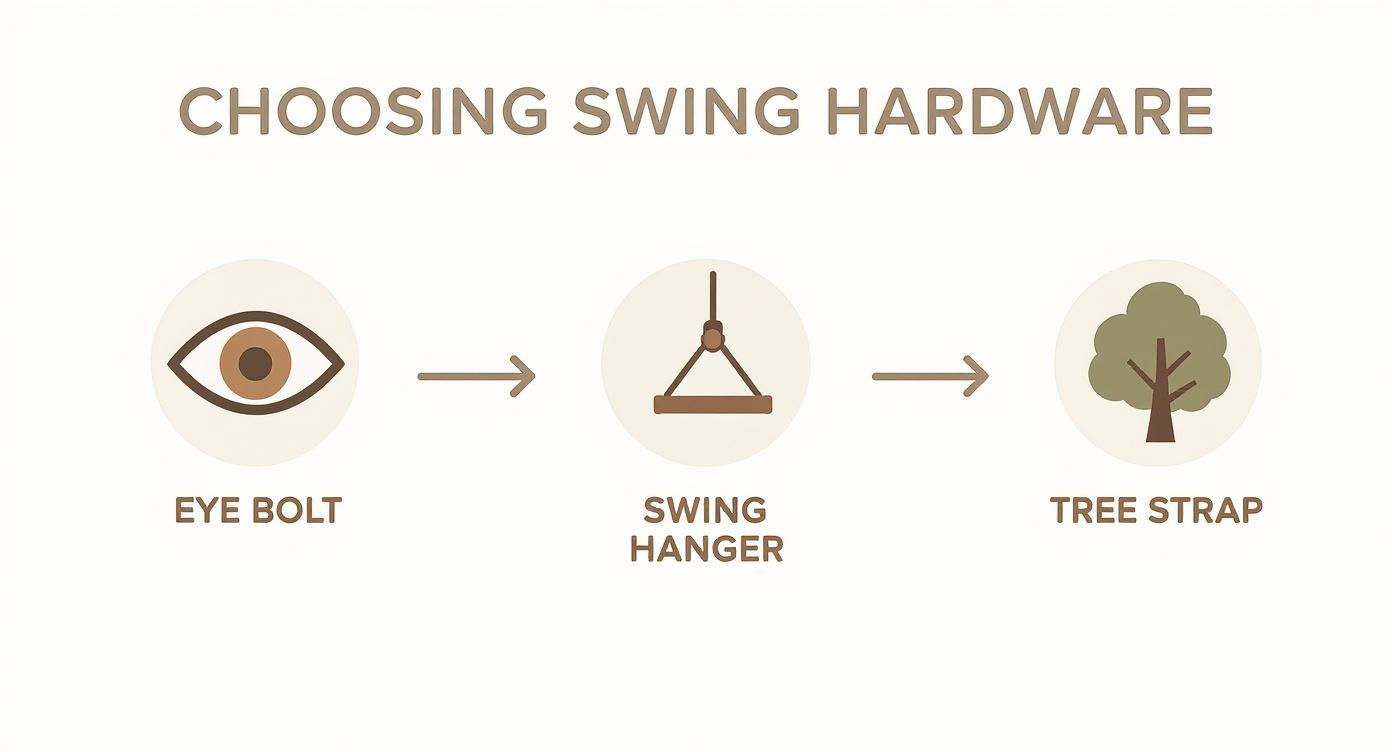
As you can see, choosing between eye bolts, hangers, or straps really comes down to where you're installing the swing.
If you find yourself getting into other garden projects, this guide to garden fence installation has some similarly helpful, practical advice.
Once the hardware is set, attach the swing chains or ropes and check how it hangs. Place a level on the seat to see if it’s sitting flat. You may need to adjust the strap length or tighten a bolt a little more to get it perfect.
Of course, if this feels like a bit much or you're short on time, there's no shame in calling in the pros. You can always find experienced swing set assemblers who do this stuff day in and day out.
With everything aligned, give those bolts a final, firm tightening. You want them snug, but don't go crazy and strip the threads. Give the swing a few good tugs and pushes to see if there’s any wobble.
Pro Tip: Make it a habit to check all the connections once a month. A quick look-over and re-tightening any bolts that have loosened up will keep everything safe for the long haul.
Before you let anyone hop on, run through a quick final inspection.
That's it! By taking your time and following these steps, you've got a backyard upgrade that's not just fun, but built to last. Enjoy it
The core rules of hanging a swing—find a sturdy anchor and give it plenty of room—are pretty universal. But the swing itself is what really dictates the finer details. A classic plank swing just doesn't have the same requirements as a big multi-kid glider or a heavy-duty porch swing.
Getting these details right is the key to a safe installation that will actually last.
For example, a lot of hammock chairs or simple disc swings are designed to hang from a single, central anchor point. For these, you absolutely need a heavy-duty swivel hanger. This lets the swing spin a full 360 degrees without twisting and fraying the ropes, which is a huge safety and longevity win. On the other hand, a two-person glider needs two anchor points set perfectly parallel to each other to get that smooth, back-and-forth motion.
When you're dealing with a baby or toddler swing, the safety game gets even more serious. You’ll notice these swings almost always use a four-point connection. This design is non-negotiable, as it’s what keeps the swing from tipping over and ensures the little one stays securely inside. It's a perfect example of how parental demand for safety has directly shaped how these products are made.
The market for these swings is massive for a reason. Valued at roughly USD 1.7 billion in 2025, it’s only expected to grow as parents continue to seek out products with strict quality controls and safety certifications. You can see more on these trends in the full baby swing market report.
A Quick Word on Porch Swings: Don't treat a heavy wooden porch swing like a toy. It's basically a piece of suspended furniture. It demands serious support from ceiling joists and must be installed with specialized porch swing hangers built to handle both static weight and the stress of movement. A single joist will never be enough.
Not every ceiling is a simple, flat surface. If you're trying to hang a sensory swing indoors from a sloped or vaulted ceiling, you're going to need specialized mounting brackets.
These brackets are designed to handle the angle, ensuring the hardware hangs straight down. This is critical because it prevents weird, uneven stress on the components and keeps the swing path safe and vertical. For unique situations like this, always go back to the swing manufacturer's instructions—they know their product best.
Hanging a swing correctly is a great first step, but that's not where the job ends. To get years of safe fun, you need to stay on top of maintenance. Think of it like any other piece of outdoor equipment—a little bit of consistent care goes a long way in keeping it sturdy and preventing accidents down the road.
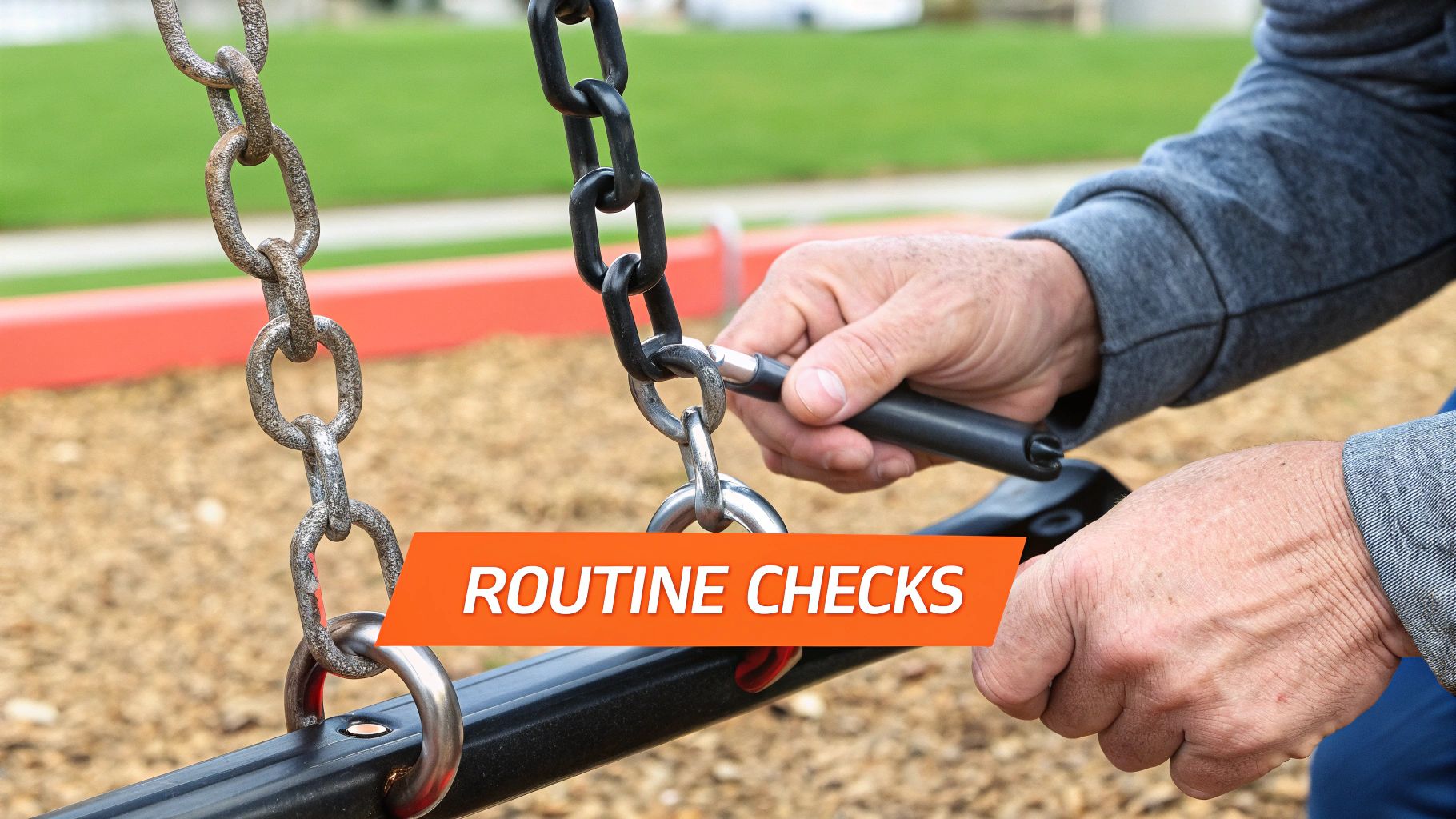
It’s easy to set it and forget it, but outdoor gear takes a beating from the weather and constant use. A proactive approach is always, always better than discovering a problem when it’s too late.
I recommend giving everything a quick look-over at least once a month. It's also smart to do a spot check after a big storm or a weekend with lots of use. This simple habit helps you catch small issues before they snowball into real hazards.
Here’s what I always look for:
The big takeaway here is that outdoor equipment is constantly under stress. A simple monthly once-over is one of the most effective safety precautions you can take. Consistent checks are a core part of our comprehensive swing set safety guidelines.
For those of us living in places with harsh winters or brutal summer heat, a bit of seasonal care can make a huge difference.
If you know a big storm is rolling in or you’re packing things up for the winter, I strongly suggest taking the swing seat and ropes down. Storing them in a garage or shed protects them from moisture, ice, and damaging UV rays, which can easily add years to their lifespan.
Thinking about the big picture of home upkeep is always a good idea. Understanding some essential home maintenance tips for new homeowners can help you build good habits for keeping your entire property in great shape.
Even the clearest instructions can leave you with a few head-scratchers once you're out in the yard with tools in hand. Let's walk through some of the questions that come up most often to make sure your swing project goes off without a hitch.
A big one we get is about drilling directly into the tree branch. It feels like the simplest way to do it, right? But arborists will tell you that’s a bad idea. Drilling a hole is like creating an open wound, inviting pests and diseases that can seriously weaken, or even kill, a perfectly healthy branch.
Tossing a rope over the branch is another classic mistake people make. As the swing moves back and forth, the friction slowly grinds away at the bark. This is a process called girdling, and it can choke the life out of the branch by cutting off its nutrient supply.
The special tree-friendly strap kits are designed specifically to avoid this. They spread the weight across a wide, soft surface, protecting the tree from damage.
Always stick with wide, flat straps made from weather-resistant material. They’re not just safer for the tree; they give you a much more secure and easily adjustable anchor point for the swing itself.
Getting the seat height just right really comes down to who’s going to be using the swing the most. For kids, you want them to be able to plant their feet firmly on the ground. It's a simple safety measure that lets them stop themselves easily.
Make sure you measure and get the height right before you tighten everything down. A level seat at the perfect height makes all the difference for a fun, safe swing.
If you'd rather leave the measuring, drilling, and securing to the experts, Assembly Smart offers professional installation services to get your swing hung perfectly. Find out more at https://assemblysmart.com.