-
CALL US:
- (866) 952-3456

Let's be honest, finding the perfect piece of furniture that truly fits your space and style can feel like an impossible quest. When you hire someone to build furniture, you're not just buying an item; you're investing in a personalized solution that big-box retail stores simply can't offer.
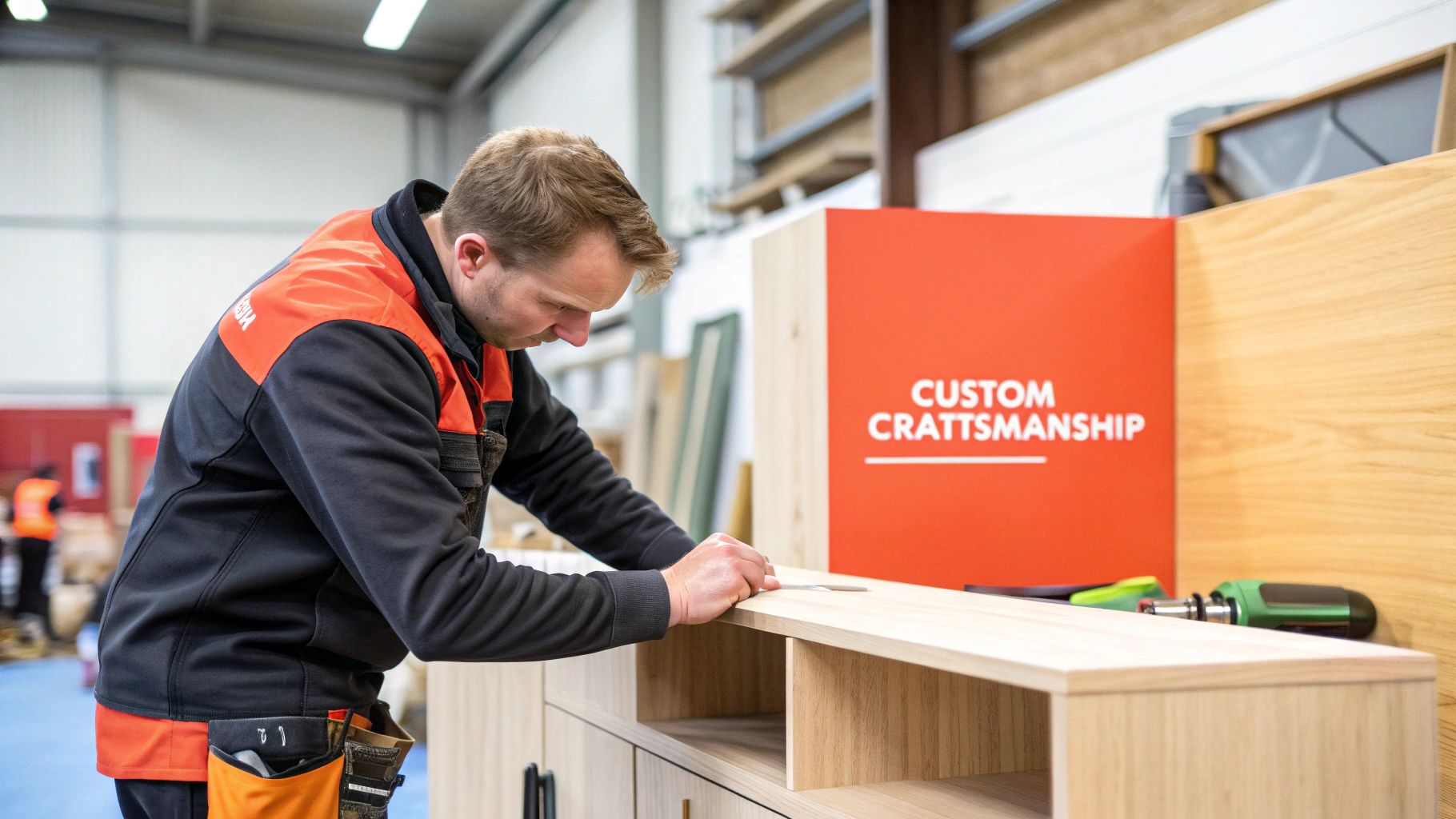
The decision to commission custom furniture usually starts with frustration. Maybe you've got an awkward alcove that no standard media console will fit into. Or perhaps you need a dining table that can comfortably seat your whole family without swallowing the entire room. These are common headaches that off-the-shelf furniture just doesn't solve.
But working directly with a professional builder transforms these challenges into creative opportunities. Instead of settling for "good enough," you get to collaborate on a piece designed specifically for your home and how you live in it. This partnership goes way beyond just getting the dimensions right.
One of the biggest wins is gaining access to top-notch materials and real, honest craftsmanship. A professional builder can source high-quality woods, finishes, and hardware that you just won't find in mass-produced items.
They bring years of experience in joinery and construction techniques, ensuring your piece is not only beautiful but built to last for generations. We're talking about something you can pass down, not something you'll be replacing in five years.
A custom piece tells a unique story. It's a reflection of your taste and a testament to the artisan's skill, creating an heirloom that can be passed down through your family.
Consumer tastes are also shifting what "custom" means. As more of us live in smaller spaces, the demand for multifunctional and smart designs has shot up. Today, hiring an expert often means tapping into skills beyond traditional woodworking—think smart-home integration and sustainable sourcing to fit a modern lifestyle.
Choosing between a custom piece, a DIY project, and a retail purchase can be tough. This quick table breaks down the main differences to help you decide what's best for you.
| Factor | Hiring a Professional | DIY Project | Buying Retail |
|---|---|---|---|
| Cost | Highest initial investment | Lower, but tools can add up | Varies from low to high |
| Customization | Fully customizable to your needs | Limited by your skills & tools | No customization |
| Quality | Superior craftsmanship & materials | Depends on your skill level | Inconsistent; often lower |
| Time Investment | Minimal; design & consultation | High; planning & labor-intensive | Low; quick purchase |
| Final Result | Guaranteed professional finish | Varies; risk of mistakes | What you see is what you get |
Ultimately, the right choice depends on your budget, timeline, and how much you value a perfect, one-of-a-kind fit for your home.
While custom work is the ultimate solution for unique needs, even standard furniture assembly can be a real pain. For many, the time and frustration of trying to decipher flat-pack instructions just isn't worth it.
You can learn more about why you should hire a professional for IKEA furniture assembly in our detailed guide. In either case, bringing in an expert ensures the job is done right, saving you a whole lot of time and stress.
So, you've decided to hire someone to build your furniture. That's the easy part. The real work starts now: finding the perfect artisan for the job. This isn't just about a quick Google search; it's about finding a craftsperson whose style, skill, and process click with your vision.
Your search can, and should, start locally. Check out woodworking guilds, artisan collectives, and even ask interior designers. These groups often have a curated list of trusted furniture makers. It's a great way to find pre-vetted talent and save yourself a ton of time. Online marketplaces for handmade goods are also gold mines for discovering artisans, especially if you're looking for something specific.
Once you've got a shortlist, it's time to dive into their portfolios. You need to look past the pretty, staged photos and train your eye to spot the details that scream "expert."
Don't be afraid to ask for more photos. Request close-ups of the joints or even a shot of the underside of a table. A confident maker will be proud to show off the quality of their construction, not just the polished final product.
A portfolio shows you what they've done. A conversation tells you how they’ll handle your project. When you start talking to a potential maker, you need to be thorough. It's a lot like the advice for questions to ask when hiring any service—due diligence pays off.
You need a crystal-clear picture of their process from start to finish. Ask about their experience with the materials you want, what their typical project timeline looks like, and how they handle client communication or design changes. A little structure goes a long way here. To make sure you cover all your bases, our free contractor hiring checklist is a great framework for that conversation.
Ultimately, remember that this is a two-way street. You're evaluating their skills, but they're also figuring out if they're the right person to bring your vision to life. This kind of collaborative start is the foundation for every successful custom furniture project.
When you decide to hire someone to build furniture, you're not just buying a product. You're kicking off a creative partnership. This whole process has a few key stages, and knowing what’s coming helps everything go smoothly for both you and the maker. It almost always starts with a good, long design talk.
This first meeting is where your ideas start to become real. You’ll talk about what you need, your style, and whatever problem you're trying to solve with this new piece. My advice? Come prepared. Bring inspiration photos, your own rough sketches, and any measurements you have. The more you bring to the table, the better a furniture maker can turn your vision into an actual concept. If you're planning a custom built-in, for example, knowing exactly how to measure furniture and the space around it is absolutely critical.
After that first chat, the maker will usually whip up some design mockups. These could be anything from detailed sketches by hand to fancy 3D computer models. This is your first real look at the piece, and it's your chance to give feedback. Once you give the design a thumbs-up, you'll get to the fun part: picking out materials. You'll get to feel different wood samples, look at finish options, and choose the hardware.
Clear communication is everything on a custom project. Seriously. If something on the mockup isn't clear, ask. If you want to see another wood sample, say so. This is the moment to make sure the final piece is exactly what you've been picturing.
Once the materials are locked in, the real work begins. A good artisan will keep you in the loop, maybe sending you some progress photos so you can see your piece taking shape. It’s a great way to build trust and feel involved without getting bogged down in the nitty-gritty. The last steps are always the finishing touches, delivery, and installation—turning that idea you’ve had for so long into a beautiful, real thing in your home.
This simple flow chart really breaks down the key steps for finding and choosing the right maker for your project.
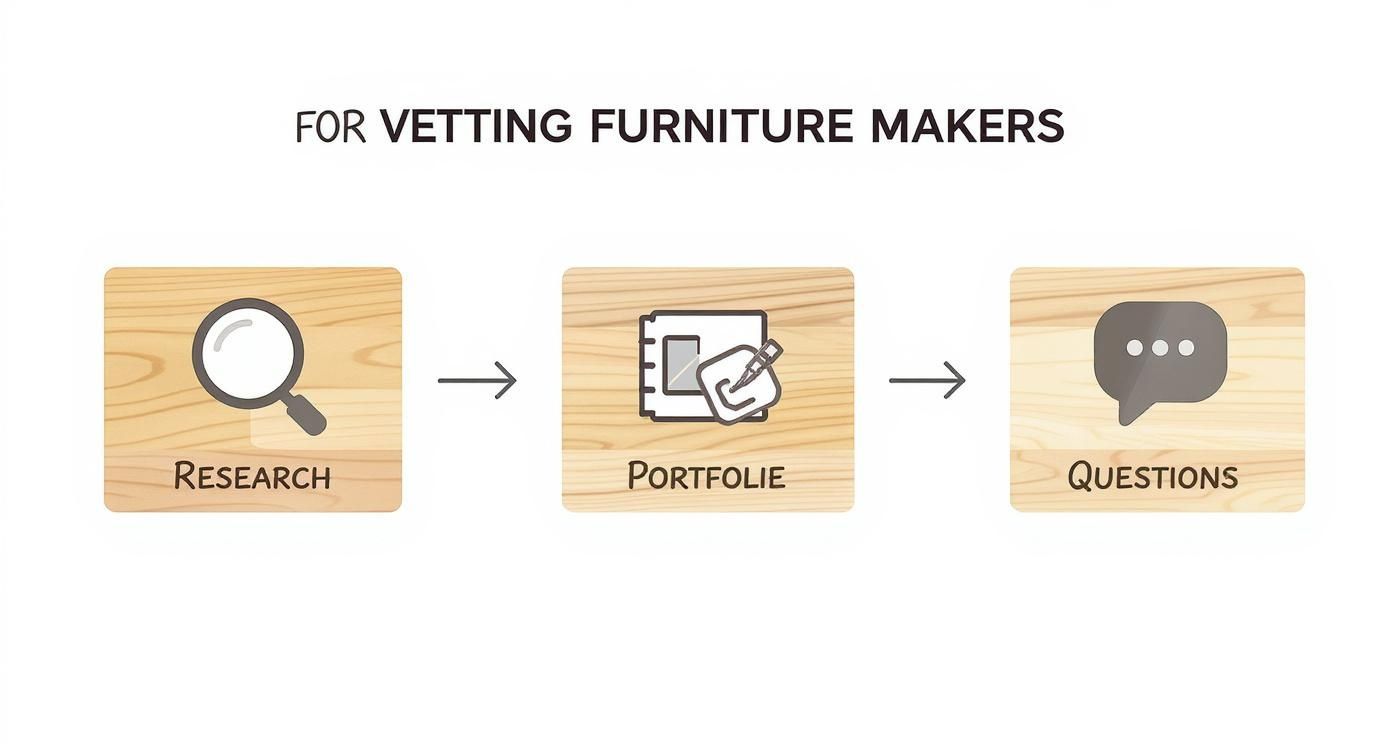
As you can see, doing your homework—thorough research, checking out portfolios, and asking the right questions—gives you a solid path to finding the perfect artisan for the job.
Let's talk about the two things nobody loves but everyone needs: money and paperwork. Getting these sorted out upfront is the only way to ensure your project goes off without a hitch.
When you hire a pro to build your furniture, the final price tag is shaped by a few key things. The type of wood, how complex the design is, and the builder's experience are all big factors.
For instance, a simple pine bookshelf is going to be worlds apart, cost-wise, from a fancy walnut dining table with custom inlays. This is where an itemized quote becomes your best friend. It should clearly break down the costs for materials, labor, any finishing work, and delivery. No surprises.
Don’t be shy about asking for that level of detail, either. Any transparent pro will be happy to provide it. You can see how the pros break down their pricing in our guide to typical furniture assembly service costs.
I'll say it louder for the people in the back: a detailed contract is non-negotiable. It’s there to protect both you and the person you hire. A verbal agreement just leaves way too much room for things to go sideways, and it offers you zero recourse if they do.
Your contract is the roadmap. It should be a clear, written document that spells out every critical detail of the job. It's the single most important tool you have to make sure what you're expecting is what gets delivered.
A strong contract is the foundation of a successful custom furniture project. It transforms expectations into agreements, preventing costly disputes and ensuring everyone is aligned from the very first cut to the final delivery.
It's also worth noting that bigger economic trends can trickle down to your project. While international furniture trade has been huge, the market is shifting. Now, nearly 60% of global trade happens within regional economic blocs. This can impact everything from material availability to labor costs in your area. If you're curious, you can read more about these evolving trade patterns at World Furniture Online.
To save yourself a massive headache later, make sure your agreement has these key elements locked down.
The job isn't done just because the last coat of varnish has dried. A smooth, stress-free delivery and installation is the final, crucial step to making your custom furniture journey a success.

Long before the delivery truck pulls up, you need to play navigator. Grab a tape measure and walk the exact path the furniture will take, from your front door to its final home.
Measure every doorway, every hallway, and every tight corner. You don’t want to discover your beautiful eight-foot credenza can’t get past a seven-foot-eleven-inch hallway arch. I've seen it happen, and it's heartbreaking.
Once your new piece finally arrives, take a deep breath and give it a thorough inspection before you sign off on the delivery. This isn't the moment to be polite or rushed; you've invested in a quality item, and it's your right to make sure it's perfect.
Here’s what to look for:
Don't let the delivery team leave without asking for specific care instructions. The maker knows exactly what products and techniques will keep your piece looking its best for decades to come.
As you're planning out these final logistics, it's also smart to make sure you understand all the potential expenses. This includes accounting for specialty furniture shipping costs, which can vary quite a bit based on the item's size, weight, and how far it has to travel.
Thinking about going the custom furniture route? It’s a great way to get exactly what you want, but a few key questions almost always come up. Getting these sorted out from the start will save you a lot of headaches down the road.
This is the big one, right? Custom pieces can run anywhere from 30% to several times more than something you'd pull off a showroom floor. The final price tag really boils down to the materials used, how complex the design is, and the artisan’s skill level.
Sure, the initial investment is higher. But what you're really paying for is heirloom-quality craftsmanship that’s built to last for generations—not just a few years.
Patience is key here, as timelines can be all over the map. A simple side table might only take 4-6 weeks, but if you’re commissioning something like a massive built-in shelving unit, you could be looking at 3-6 months.
So many things factor into this: the builder’s current workload, whether the wood you want is in stock, and how quickly you sign off on the design. It’s crucial to get an estimated completion date in your contract.
A detailed contract and good communication are your best friends here. A solid process means you approve detailed drawings or 3D models before a single piece of wood gets cut. If the final piece doesn’t match what you signed off on, your contract should lay out exactly what happens next, like revisions or a partial refund.
Now, if the builder delivers exactly what you approved but you’ve simply changed your mind, your options will be a lot more limited.
Whether you've commissioned a one-of-a-kind masterpiece or just need to get that flat-pack dresser out of the box, Assembly Smart can handle it. Our pros deliver fast, reliable furniture assembly services to get the job done right. Get your free estimate today at https://assemblysmart.com.