-
CALL US:
- (866) 952-3456

Before you can fix that annoying wobble, you have to play detective and find the real culprit. Most of the time, the fix is surprisingly simple—loose screws or an uneven floor are the usual suspects. But every now and then, the table's legs themselves are the problem.
Getting the diagnosis right is the most important part. It’s the difference between a quick, permanent fix and stuffing a folded napkin under the leg every other week.
Hold off on grabbing that screwdriver for a second. The key to a solid, lasting repair is knowing exactly what you’re up against. A quick, systematic inspection will tell you whether you're dealing with a simple hardware issue, a problem with your floor, or something more structural with the table itself.
The first move? Try to place the table on a surface you know is perfectly level. If you don't have a spot you're sure about, it can be a little tricky, but doing this helps isolate the problem to the table, taking the floor out of the equation.
First, give the table a gentle rock to confirm the wobble. Now, get down underneath and take a good look at how the legs connect to the tabletop or apron. Are the bolts, screws, or corner brackets tight? You’d be amazed how many wobbles are solved right here with just a few turns of a wrench or screwdriver.
If all the hardware is snug, the issue likely lies with the legs or the floor. An analysis of common furniture repairs shows a pretty clear pattern.
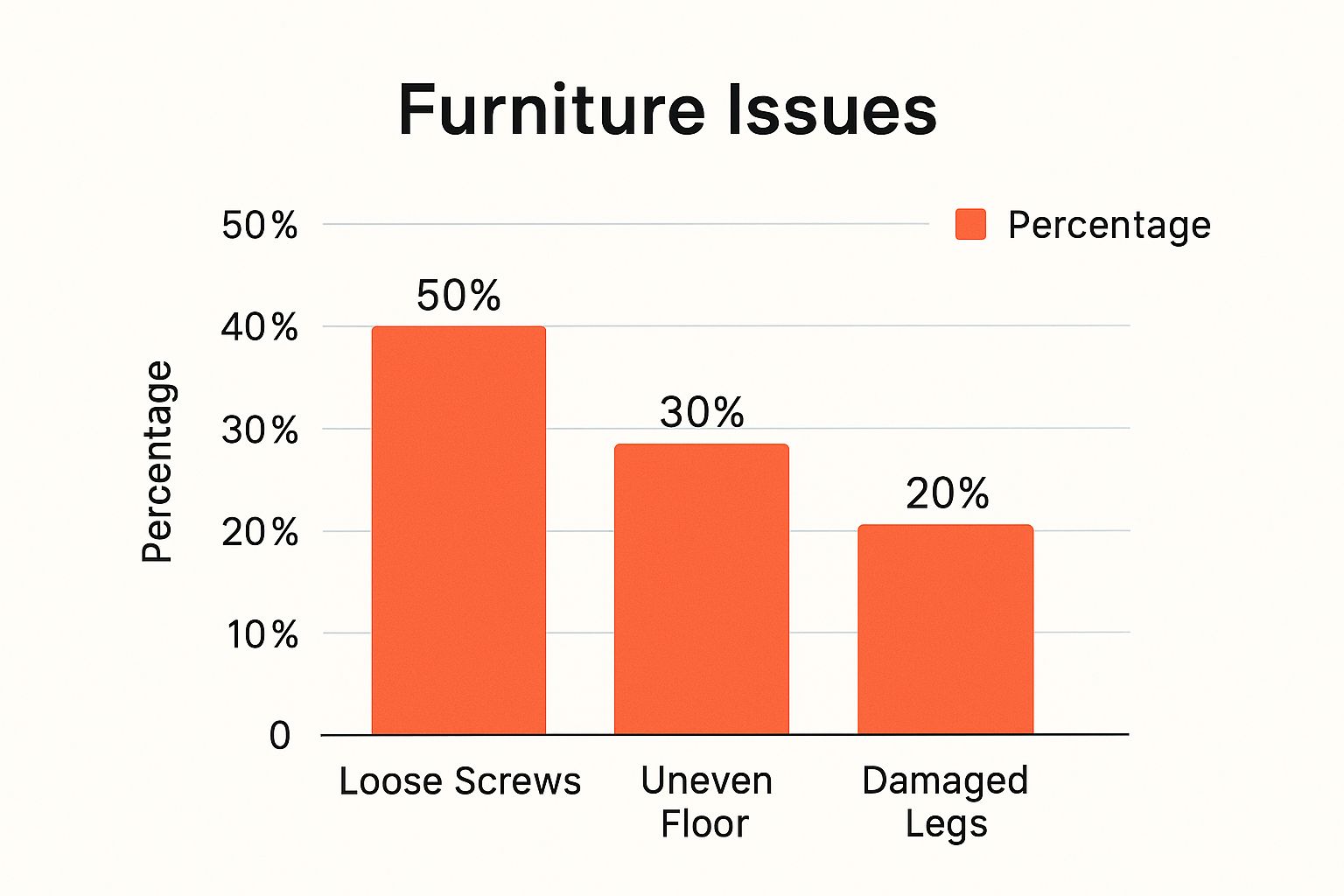
The data really spells it out: half of all wobbles come from loose fasteners. That’s why it should always be your first check. The other half are split between the environment (the floor) and the table's own structure.
Pro Tip: As you rock the table, notice which corner lifts off the floor. The problem is almost always with the leg diagonal to the one that's lifting. That diagonal leg is either too short or isn't making solid contact for some reason.
To help you narrow it down even faster, here's a quick guide to what you might be looking for.
Use this quick reference guide to diagnose why your table is wobbling and find the right path forward.
| Potential Cause | How to Check | Typical Fix Difficulty |
|---|---|---|
| Loose Fasteners | Wiggle each leg by hand. Look underneath for loose bolts, screws, or brackets where the legs attach. | Easy |
| Uneven Floor | Use a level on the floor where the table sits. Or, move the table to a different spot and see if it still wobbles. | Easy |
| Uneven Legs | Place a level across the tabletop. If fasteners are tight and the floor is level, measure each leg. | Medium |
| Worn/Damaged Glides | Check the feet of each leg. Look for worn down, broken, or missing plastic or felt pads. | Easy to Medium |
| Structural Damage | Inspect the legs and apron for cracks, splits in the wood, or joint separation. | Difficult |
Once you know the root cause, you can move on to the right repair strategy instead of just treating the symptom.
More often than not, a wobbly table is just telling you that day-to-day life has loosened things up a bit. Before you even think about more complicated fixes, your first and most effective move is to simply tighten every single connection. Honestly, this one step solves a huge percentage of table stability problems I've come across.
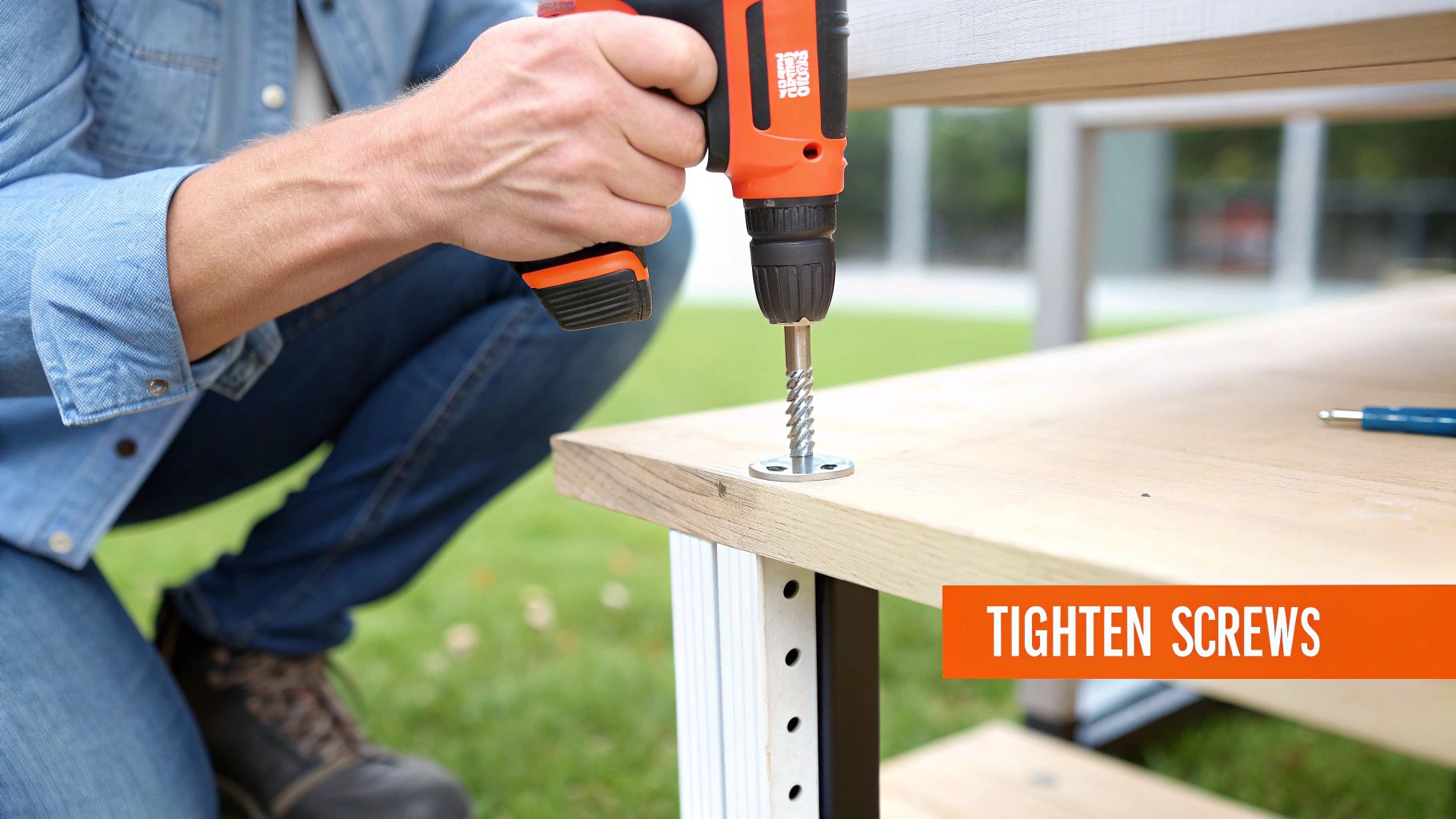
Get started by carefully flipping the table over or laying it on its side so you can easily see what you're doing. Take a good look at how the legs are attached to the tabletop. You'll usually see some combination of bolts, screws, or maybe corner brackets holding it all together. The goal here is to give each one a good, snug turn.
Using the right tool for the job is crucial. You don’t want to strip a screw or, even worse, crack the wood—that's how a simple fix turns into a real headache. Just take a second to see what kind of hardware you're dealing with.
Once you have your tools, work your way around the table, tightening each fastener in a crisscross pattern. Think of it like tightening the lug nuts on a car tire. This approach applies even pressure and pulls the joint together securely without putting too much stress on any one spot.
Pro Tip: If you're tightening a screw in a wooden table and it just keeps spinning without getting tighter, the wood threads are probably stripped out. It's an easy fix. Just back the screw out, squeeze a few drops of wood glue into the hole, and then put the screw back in. Let it sit and cure for a full 24 hours. The glue essentially creates new material for the screw threads to bite into, giving you a rock-solid, permanent repair.
This simple tightening routine is often all it takes to bring a wobbly table back to its sturdy, reliable self. If it still wobbles after you’ve made sure everything is snug, then you know it's time to investigate other causes.
So, you've tightened every screw and bolt in sight, but the table still has a mind of its own. When that happens, you’re almost certainly dealing with the legs themselves. An uneven leg is the classic cause of a wobbly table, and you’d be surprised how often it's the real culprit.
Before you start sanding or drilling, you need to confirm your suspicion. Flip the table upside down on a flat, level surface. Grab a tape measure and check the length of each leg, measuring from where it meets the tabletop down to the very bottom of its foot. Be meticulous—even a tiny 1/8-inch difference can cause a serious wobble.
This isn’t just a hunch; it's a well-documented issue in furniture repair. One 2015 survey actually found that a whopping 78% of wobbly table complaints were caused by uneven legs, easily beating out loose joints or wonky floors. It's no wonder that adjustable leg levelers have become so common in modern furniture design.
For a truly permanent and versatile fix, I almost always recommend installing adjustable glides. These are small, threaded feet that you drill into the bottom of each leg. Once they're in, you can make micro-adjustments by simply twisting them in or out until the table stands perfectly still.
This approach has some real benefits:
If you're more of a traditionalist and working with a solid wood table, sanding down the longest leg is another solid option. This method works best when you can easily blend the repair into the existing wood.
Key Takeaway: The golden rule here is to always sand the longest leg down. Never try to add a shim or piece of wood to the shorter ones—it rarely looks good or holds up over time.
Mark the extra length with a pencil. Then, wrap some medium-grit sandpaper around a sanding block and go to work slowly and evenly. Keep flipping the table back over to test your progress. Your goal is simple: get all four feet resting firmly on the ground.
Of course, sometimes the problem isn't the table at all. If you suspect your floors are the real issue, check out our guide on how to level furniture on uneven floors for more specific solutions.
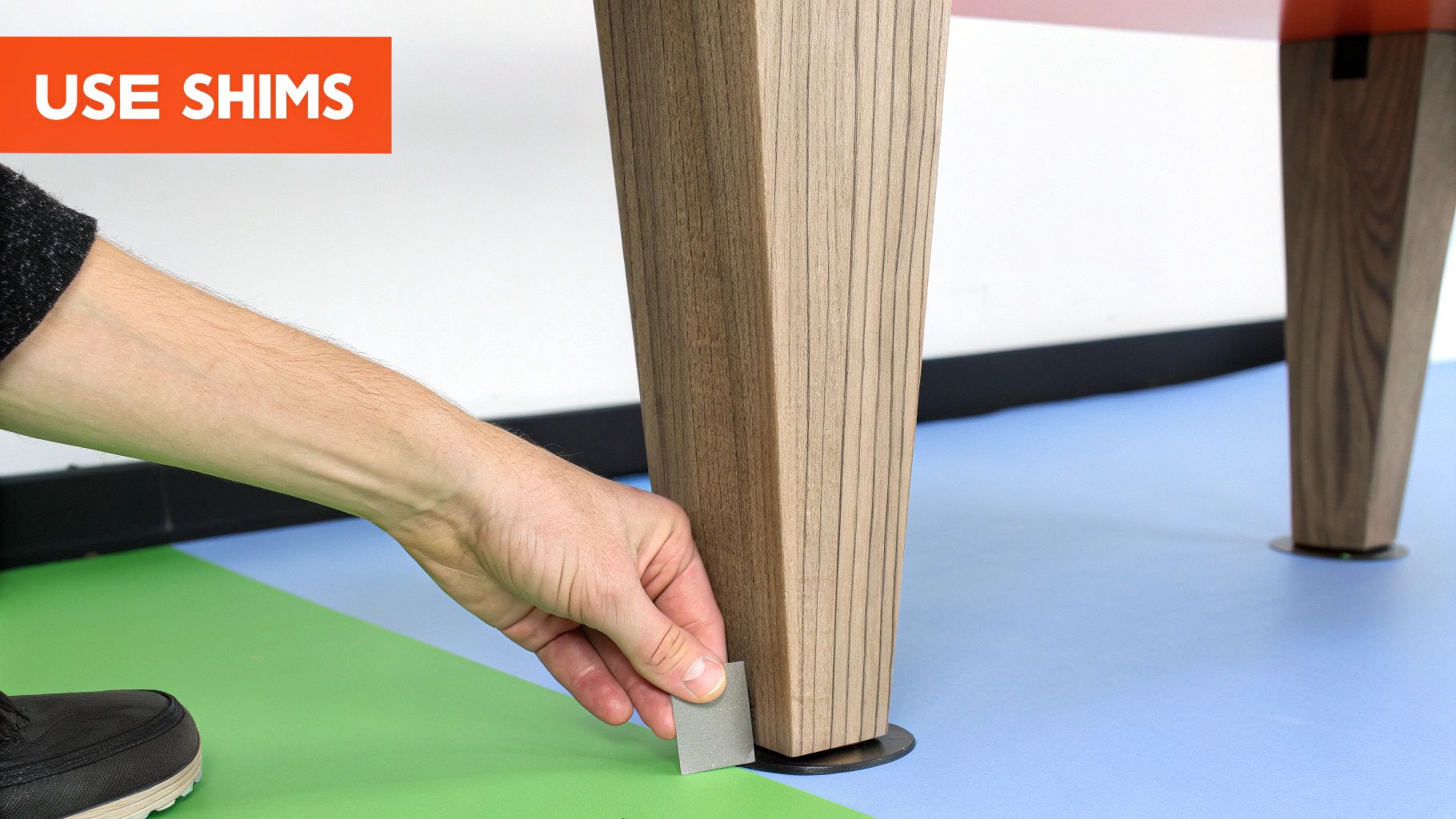
Sometimes the table itself is rock solid, but the floor has a mind of its own. When you're dealing with an uneven surface, you need a different game plan. This is where shims become your secret weapon for a quick fix that doesn't require any permanent changes to your furniture. But I’m not talking about that folded-up napkin or a stray coaster—we need to use real, purpose-built solutions.
Modern shims, which you can find in wood or hard plastic, are designed for exactly this kind of job. They’re tapered, so you can just slide one into the gap under the short leg until the table feels perfectly steady. The best part? You can easily trim any excess with a utility knife so it sits flush with the table leg. Done right, the fix is completely invisible.
For an even cleaner look that also protects your floors, you might want to consider adhesive pads. These come in a few useful varieties:
This whole approach is a lifesaver for renters who can't make permanent alterations or for anyone who likes to rearrange their furniture often. You can grab these at any hardware store for just a few bucks.
A common mistake I see is people stacking up a wobbly tower of flimsy items like coasters or cardboard. A single, solid shim or a proper adhesive pad offers much more reliable, long-term support. A stable base is everything.
If you’re dealing with a bigger problem, like loose legs or a cracked frame, you might need to explore different ways to stabilize your wobbly table. But for most quick fixes where the floor is the real culprit, these non-damaging solutions are incredibly effective. Just slide, stick, and enjoy your newly steady surface.
So, you've tightened the screws and fiddled with the leg levelers, but that pesky wobble just won't quit. When the basic fixes don't cut it, it’s time to roll up your sleeves and get into some more serious solutions. If you're dealing with a truly stubborn wobble, it's usually a sign of a deeper structural weakness. Let's look at how to tackle that for good.
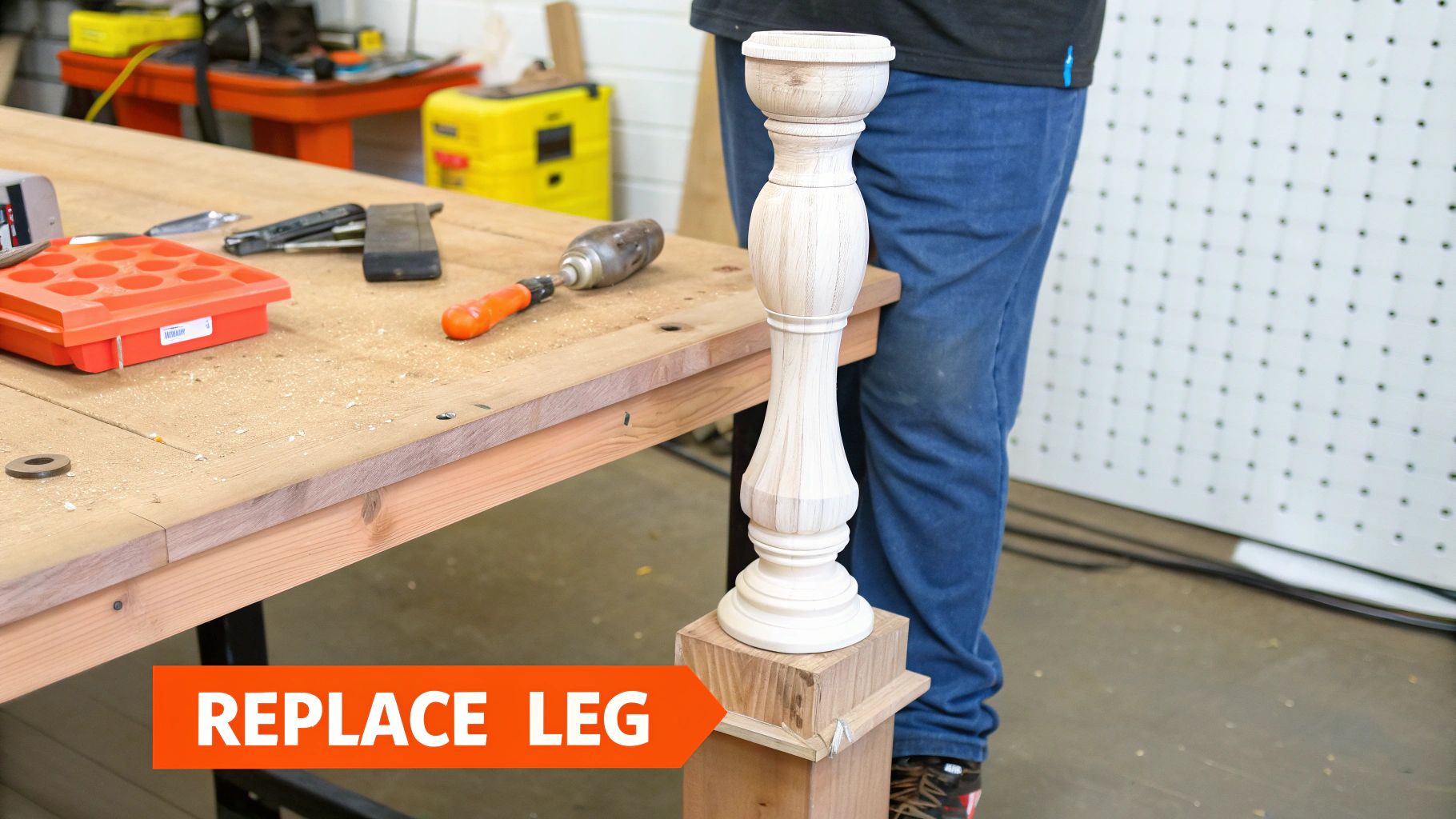
Most of the time, the real problem is at the joints—specifically, where the legs connect to the table's apron (that's the frame right under the tabletop). These points take all the stress, so giving them some serious reinforcement is the key to a permanently stable table.
One of the most effective ways I've found to beef up weak corners is by adding some simple metal hardware. You can find what you need at any hardware store, and a couple of options work wonders:
What you're really doing here is creating a brand-new, rigid connection that bypasses the old, failing one. This extra hardware gives the table a massive boost in structural integrity.
For wooden tables where the joints have completely given up the ghost, re-gluing is often your best bet. It's a bit more involved, sure. You'll need to carefully take the joint apart, scrape away every last bit of that old, failed glue, and then put it all back together with fresh, high-quality wood glue and clamps. While it might sound like a big job, doing this properly restores the table to its original, rock-solid strength.
If that level of woodworking feels a little out of your league, there's no shame in calling in the pros. Professional furniture assembly and repair services can get it done right and save you a major headache.
The quest for a perfectly stable surface is serious business. Just look at surgical tables—a market valued at an incredible USD 1.4 billion in 2023. They are engineered with advanced materials and precision mechanics to have absolutely zero wobble. While your dining table might not need that level of engineering, the core principle is identical: create a rigid, unmoving base. You can read more about these high-tech table findings to see how far the pros take it.
By either reinforcing the joints or going the extra mile to re-glue failed connections, you're not just patching the problem—you're fixing the root cause. This is how you ensure your table stays solid and dependable for years to come.
Even after walking through all the steps, you might still have a few questions. That’s perfectly normal. When you’re trying to get a job done right, it's common to hit a small snag or just want a bit more reassurance before you start. Let's tackle some of the most frequent challenges people run into.
One of the biggest concerns I hear is what to do with a valuable antique table. My advice is always the same: start with the least invasive fix possible. Check for loose hardware first, but do it gently. If you need to add a shim, go for soft, non-damaging materials like felt pads instead of hard plastic or wood that could easily scratch an old finish. Steer clear of any solution that requires drilling or permanent glue unless you're absolutely sure it's the right move.
Knowing your limits is just as important as knowing how to tighten a screw. Sometimes, a wobbly table is a symptom of a bigger problem that’s best left to an expert. You should seriously consider calling in a pro if:
A wobbly table isn't just a personal pet peeve; it's a massive issue in the furniture world. In fact, stability problems like wobbly legs were behind roughly 40% of furniture returns and repairs in the US between 2020 and 2022. It just goes to show how often people are looking for a solid fix. You can dig into the numbers in this comprehensive market report.
At the end of the day, if the repair feels beyond your skill set or calls for specialized tools you don't own, getting professional help is a smart investment. For more answers, you might find what you're looking for on our full FAQ page.
Feeling overwhelmed by that box of parts? Let Assembly Smart handle the headache for you. Our professional, in-home assembly service ensures your furniture is built right, sturdy, and ready to use, often by the next day. Get your free, transparent quote and reclaim your weekend at https://assemblysmart.com.