-
CALL US:
- (866) 952-3456

Picking the right mobility aid is one of the smartest things you can do to stay active, safe, and independent. These aren't just gadgets; they're practical tools, from a simple cane to a sophisticated scooter, designed to give you the stability and support to get around with real confidence.
Deciding you need a mobility aid can feel like a huge step, but it’s really about taking back control. This isn’t about giving in to limitations; it’s about giving yourself the freedom to live safely and on your own terms. Looking at it that way is the first, most important part of the journey.
Think of it like choosing the right tool for a job. A cane might be all that’s needed for a little extra balance on a walk through the park. A walker, on the other hand, could offer that steady, reliable support you need for getting things done around the house. The right aid changes everything, turning what felt like an obstacle into just another part of your day.
When you choose to use a mobility aid, you're making a positive choice that directly boosts your quality of life. These devices are simply there to bridge the gap between what you can do now and what you want to do. They help you save energy, seriously cut down on the risk of falling, and build up the confidence you need to get out and about.
Just think about the benefits:
By choosing the right support, you are not giving up your freedom—you are actively reclaiming it. A mobility aid is a partner that helps you continue doing the things you love, safely and securely.
The trick is to match the device to your specific situation. This guide will walk you through the different kinds of mobility aids for seniors, from basic canes to powerful scooters. We’ll look at how to figure out what you truly need, making sure your choice genuinely helps you live more independently. For a really comprehensive look at your options, this guide on the top mobility aids for elderly is a fantastic resource.
And remember, staying physically strong is a huge part of staying mobile, even when you have an assistive device. Adding some simple exercises to your daily routine can make an incredible difference. You can find some great ideas in our guide on home exercise equipment for seniors. When you combine the right equipment with regular activity, you're building a powerful strategy for long-term independence.
When you need a bit more stability than your own two feet can provide, canes, walkers, and rollators are the first line of support. Think of them as your personal balance partners, each designed for a different level of assistance. They're some of the most common mobility aids for seniors for a reason—they offer a simple, effective way to stay steady and confident on the move.
The market for these devices is growing fast, which shows just how essential they’ve become. The senior mobility aid market was valued at around $11.11 billion and is expected to hit $15.97 billion by 2029. This isn't just a business trend; it reflects a real shift toward people embracing tools that help them keep an active and independent lifestyle. For a deeper dive, you can explore the full research about these market insights.
This quick decision tree can help you visualize which path to start on, whether you're looking for a little balance, solid support, or something to help you travel longer distances.
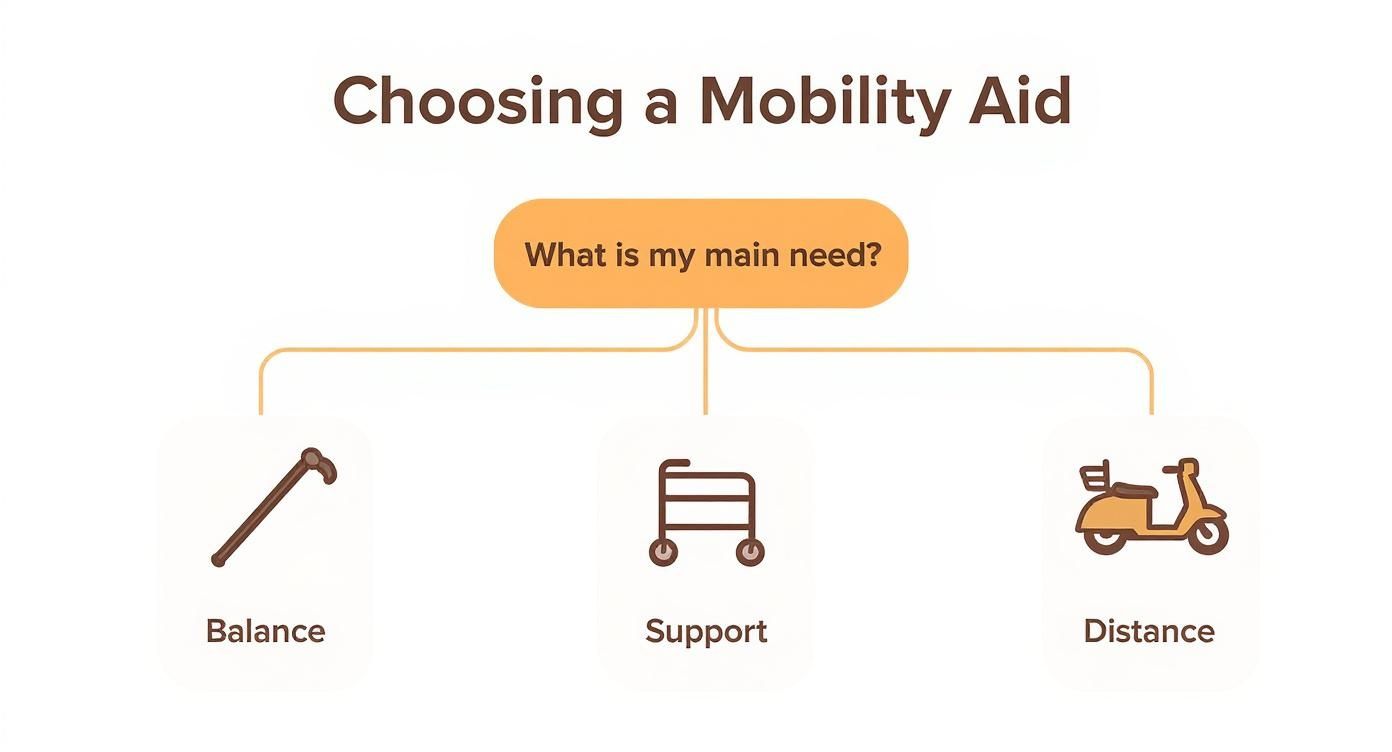
As you can see, the first choice often boils down to a simple question: do you need a little extra balance, or are you looking for more substantial, weight-bearing support? Your answer is the key to pointing you toward the right walking aid.
A cane is the most basic mobility aid out there, and it’s perfect for someone who just needs a touch of extra balance or wants to take a bit of pressure off a sore hip or knee. It essentially acts as a third point of contact with the ground, which instantly widens your base of support.
There are two main types you’ll run into:
When balance becomes a more serious concern, a standard walker offers maximum stability. Imagine it as a portable frame that you can lean on with every single step. Because you have to lift it and place it forward before you move, it naturally encourages a slower, more deliberate pace.
A standard walker provides a stable, predictable frame for movement. It’s an excellent choice for individuals recovering from surgery or those who have a high risk of falling and need to bear significant weight through their arms.
This design makes walkers incredibly secure for indoor use, especially in places you know well. The downside? The constant lifting can get tiring for some, and it makes them less practical for covering longer distances or trying to navigate uneven ground outside.
A rollator, often called a rolling walker, is a popular alternative that blends support with much greater freedom of movement. Unlike a standard walker, a rollator has wheels—usually four of them—so you push it instead of lifting it. This makes it a fantastic tool for staying active.
Most rollators come equipped with a few key features that really boost their usefulness:
To help you decide, here's a quick comparison to see which walking aid best fits your stability needs, strength, and how you plan to use it.
| Aid Type | Best For | Key Advantage | Main Consideration |
|---|---|---|---|
| Cane | Minor balance issues or taking slight weight off one leg. | Lightweight, simple, and easy to use in tight spaces. | Offers the least amount of support. |
| Walker | Significant balance problems or a high fall risk. | Maximum stability and weight-bearing support. | Must be lifted with each step, which can be tiring. |
| Rollator | Active users who need support over longer distances. | Wheels allow for a natural gait and a built-in seat is great for resting. | Requires good coordination to use hand brakes safely. |
Ultimately, choosing between these three comes down to an honest assessment of your own mobility and lifestyle.
Because of their features, rollators are ideal mobility aids for seniors who are still getting out and about but need reliable support over longer distances. They move smoothly over different surfaces and get rid of the fatigue that can come from lifting a standard walker. That said, they do require a bit more coordination to manage the brakes and steering, so they aren't the right fit for everyone.
When canes and rollators just aren't cutting it for the distances you want to go, wheelchairs and scooters are the next step up, opening up a whole new world of possibilities. These seated mobility aids for seniors are a game-changer for anyone needing more substantial support. They make it possible to get to family gatherings, wander through the mall, or just enjoy a day at the park without worrying about getting tired or taking a fall.
Simply put, they bridge the gap between feeling stuck at home and living an active, full life.
It's no surprise that the market for these devices is growing. More and more people are embracing tools like powered wheelchairs and advanced mobility scooters to hold onto their independence. In fact, the wheelchair market alone is expected to blow past $9.2 billion by 2034, with a steady growth of 7.3% each year. You can dig into the specifics by checking out these mobility aid market findings.

So, which one is for you? A wheelchair or a scooter? The right choice really comes down to your physical ability, where you'll be using it, and what you want to do. Each has its own set of pros and cons.
Manual wheelchairs are the straightforward, reliable option. You either push them yourself or have a caregiver push you. If you plan on being independent, you'll need some upper body strength, but many people love them for their simplicity.
You’ll generally find two types:
For anyone with limited upper body strength, or if you need to zip around tight spaces at home, a power wheelchair is a fantastic solution. They're run by a simple joystick, which is surprisingly easy to get the hang of and gives you incredible, precise control.
A power wheelchair’s biggest advantage is how nimble it is. With its tight turning radius, you can easily get through narrow hallways, doorways, and crowded rooms. This makes it the top choice for staying independent inside your home.
The responsive controls mean you can pull right up to a table or desk without any fuss, making daily life much smoother. While you can definitely use them outdoors, they really show their stuff in smaller spaces where agility is everything.
If your main goal is getting out and about to cover longer distances, a mobility scooter is probably your best bet. You steer them with handlebars, kind of like a bike, and they’re built to give you a more stable, comfortable ride over different types of ground.
There are a couple of main styles to look for:
True mobility doesn't just happen out on the street; it starts the moment you wake up in your own home. Creating a secure, accessible environment is the real foundation for independence. It's about turning your living space from a collection of potential obstacles into a genuine safe haven.
This is about more than just convenience—it’s about proactively designing your home to support your freedom and confidence.
A few smart modifications can dramatically slash the risk of falls and make daily routines feel effortless again. When you tackle key areas like stairs, doorways, and especially the bathroom, you build a support system that works hand-in-hand with your other mobility aids for seniors. The goal is to make every room a place of confidence, not a place of concern.
For anyone living in a multi-level home, a staircase can quickly feel like the biggest barrier to using your whole house. A stair lift is the most direct solution, giving you a safe and motorized way to get between floors without ever having to risk a fall. Think of it as a personal chair that glides smoothly up and down a rail fitted right to your existing staircase.
You’ll generally run into two main types:
Even a small change in height—like a single step at the front door or a raised threshold into the living room—can be a real challenge. Ramps are the perfect answer for creating seamless, easy-to-navigate pathways. They come in all shapes and sizes to fit different needs and spaces.
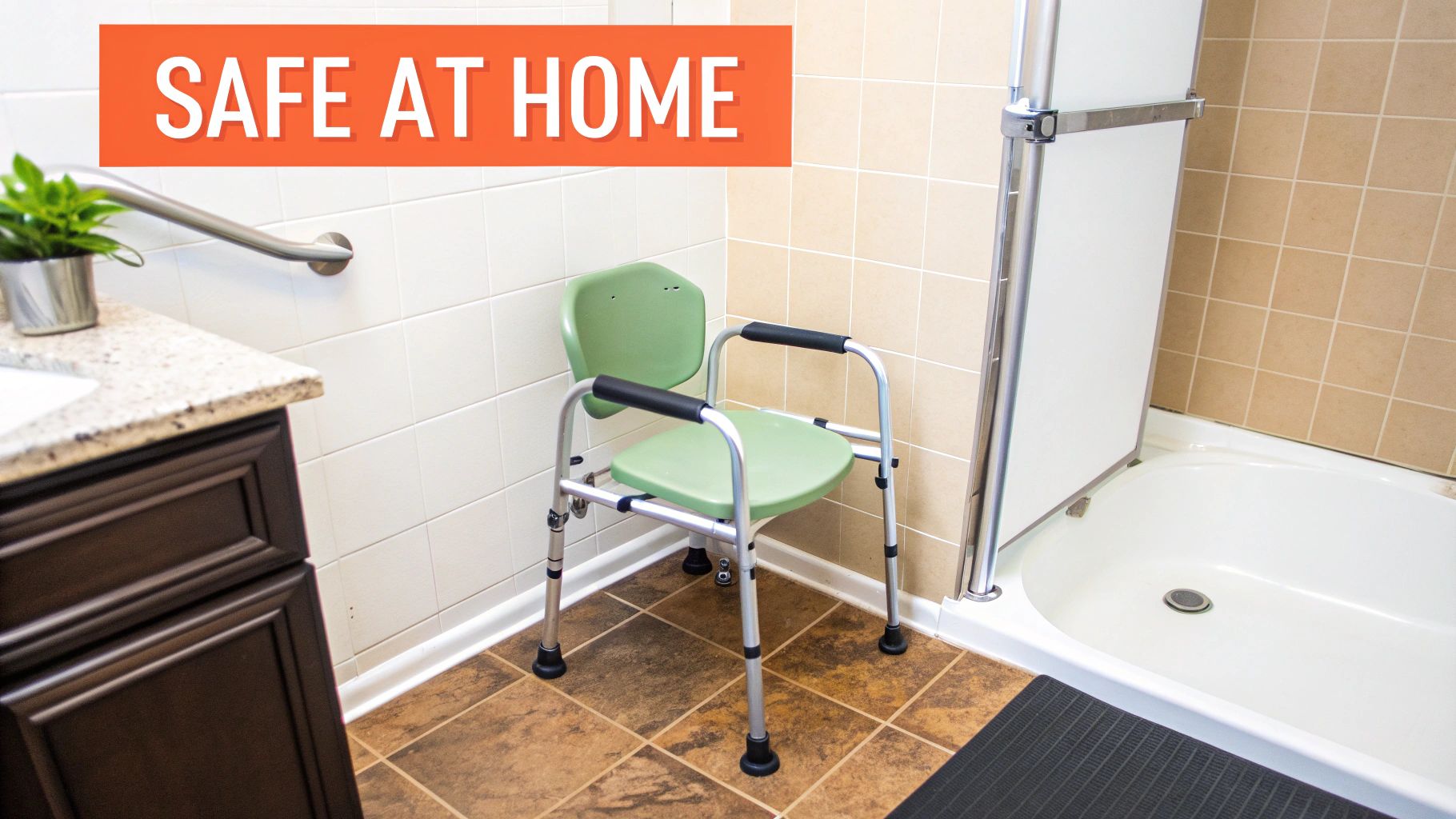
Statistically, the bathroom is the most dangerous room in the house for seniors. It's a perfect storm of hard surfaces and water, which creates a high risk for slips and falls. The good news is that a few key modifications can completely transform it into a secure space. This is one area where targeted home modifications for elderly make an immediate and powerful difference. You can find out more on our home modification page: https://assemblysmart.com/home-modifications-for-elderly/
Installing the right aids in the bathroom isn't just a nice idea; it's a critical safety measure. Start with these essentials:
Beyond choosing the right mobility aids, it’s also smart to explore essential strategies to help seniors live at home safely. When you combine personal aids with simple changes to your home environment, you create the most robust safety net possible and gain true peace of mind.
Picking out the right mobility aid is a great first step, but the job isn't done. Think of it like a new pair of shoes—if they don't fit just right, they can cause more problems than they solve. An improperly fitted walker or cane can completely throw off your posture, lead to new aches and pains, and, most importantly, increase your risk of a fall.
Making sure your chosen device is perfectly adjusted to your body is absolutely critical for both your safety and comfort. This isn't a step where you can just eyeball it or take a wild guess. Getting the fit right ensures the device works with you, not against you, giving you the stable support you actually need.
So, how do you guarantee a perfect fit? The best way is to see a professional, like a physical or occupational therapist. These experts are trained to assess your specific needs, looking at a lot more than just your height. They bring an expert eye to the process, making sure your mobility aid is truly customized for you.
A therapist will dig into several key factors:
This detailed assessment means you walk away with a personalized tool for your independence, not just a generic, off-the-shelf solution.
While a therapist's guidance is always the best bet, knowing the basics of measurement can help you be a more informed user. The principles are similar to when you learn how to measure furniture for a room; precision is everything if you want things to fit and function correctly.
For any walking aid, the main goal is to maintain a natural, upright posture.
An ill-fitting mobility aid can be a serious hazard. If a walker is too high, it can strain your shoulders; if it's too low, it will force you to hunch over, compromising your balance and stability.
Before you commit to anything, always try the equipment out. The best place to do this is a medical supply store where you can test-drive different models. Walk around the store with the cane or rollator. Sit in the wheelchair and see how it feels to maneuver.
This hands-on experience is priceless. It lets you feel the weight of the device, check how responsive the brakes are on a rollator, and make sure the grips are actually comfortable for your hands. This is the final step that confirms the device not only fits your measurements but also feels right for your day-to-day life.
Figuring out the financial side of getting a mobility aid can feel like a maze, but there are plenty of resources out there to help you handle the costs. The first step is just understanding your options so you can get the support you need without all the financial stress. Many seniors find that a mix of insurance, government programs, and other smart strategies makes these essential tools surprisingly affordable.
The real key is to look into every possible path, because what you’re eligible for can vary quite a bit. From big federal programs like Medicare to local non-profits, there’s usually a way to make it work. This way, you can focus on finding the best mobility aids for seniors, not just the one with the lowest price tag.
For most people, Medicare is the first place to look for funding. Specifically, it’s Medicare Part B that covers what they call Durable Medical Equipment (DME)—this includes things like walkers, rollators, and wheelchairs. To get coverage, your doctor has to decide that the device is a "medical necessity."
What does that mean? It means your doctor needs to write a prescription and provide documentation showing that you need the aid to safely handle daily activities inside your home. On top of that, you have to get the equipment from a supplier that is officially approved by Medicare.
After you’ve met your Part B deductible, Medicare typically covers 80% of the approved amount for your DME. You'll be on the hook for the remaining 20% coinsurance.
Beyond Medicare, several other programs can offer a big financial hand. It’s worth checking into each one, since they’re designed for different situations and can sometimes be used together to cover all the bases.
If insurance and government programs don't quite cover the full amount, don't give up. There are still plenty of practical ways to make a mobility aid more affordable and bridge any financial gaps.
A fantastic option is to reach out to non-profit organizations. Many local groups, like the Area Agency on Aging, have grant programs or financial help set up specifically for seniors.
And don’t forget these common-sense options:
Figuring out the right time to start using a mobility aid is something a lot of people wrestle with. Honestly, the clearest sign is when you find yourself held back by fear of falling, general unsteadiness, or just plain exhaustion. If you're starting to skip the daily walks or social events you used to love, that's your body telling you it's time to look into some support.
A big myth we hear all the time is that using a walker will make your muscles weaker. That's just not true. When a mobility aid is fitted correctly, it actually takes the strain off your body and helps prevent falls. This allows you to stay more active, not less, which is key to keeping your muscles strong.
When picking a rollator, pay close attention to the hand brakes—they need to be easy to squeeze and lock securely. You'll also want a sturdy frame and wheels that are a good match for the terrain you'll be on most, whether it's carpet, pavement, or grass. And yes, your home can almost always be adapted. Even small adjustments can make a world of difference, and our complete home safety checklist for the elderly is a great resource to walk you through it.
When your new mobility aids and safety gear arrive, getting them set up just right is the most important step for your safety and peace of mind. Assembly Smart provides professional, reliable assembly services to make sure everything is built perfectly from the get-go. Book your stress-free assembly today at https://assemblysmart.com.