-
CALL US:
- (866) 952-3456

Picking out the right outdoor play equipment for toddlers is about so much more than just keeping them busy. It's really the first step in creating a space that builds their coordination, sparks their imagination, and hopefully, starts a lifelong love for being active. This guide is all about giving you the confidence to choose equipment that’s exciting, safe, and a perfect match for your family.
Welcome! Let's talk about turning your backyard into a wonderland of development and fun. When you choose the right outdoor play equipment, you’re making a real investment in your child's physical and mental growth. You're transforming a simple patch of grass into a hub for adventure, exploration, and countless happy memories. This is where little muscles get stronger, where they start figuring out how to play with others, and where a genuine connection with the outdoors begins.
You can see just how important these spaces have become in the playground equipment market itself, which was valued at nearly $6.01 billion and is expected to climb to around $9.4 billion by 2031. This boom is all thanks to a growing focus on getting kids physically active.
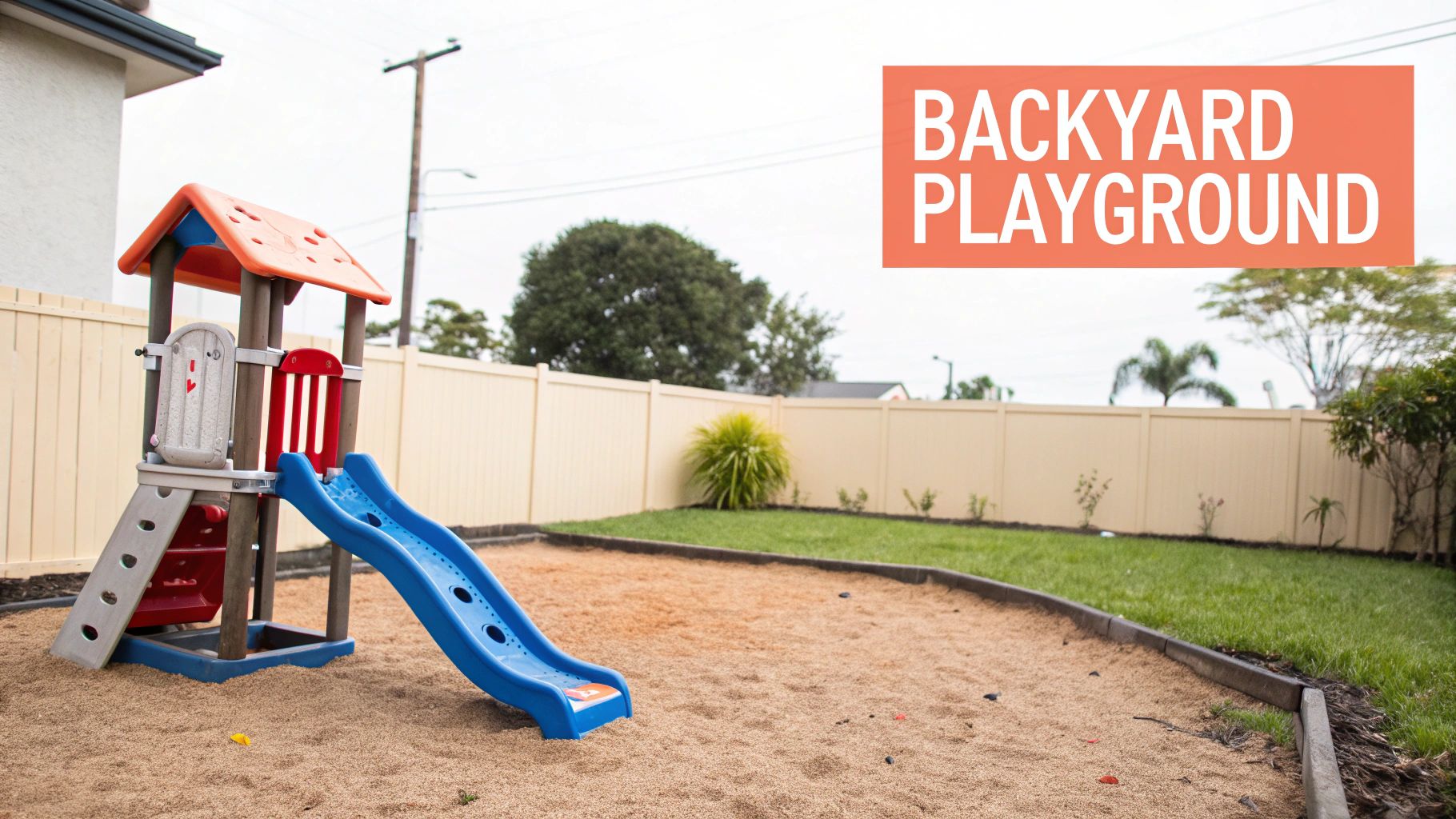
Before you even think about clicking "add to cart," take a moment to look at the bigger picture. A little planning now makes sure you're creating a space that’s not just fun for today, but also functional and safe for years to come.
A well-planned play area is more than a collection of toys; it's a thoughtfully designed environment that encourages independent play, creativity, and physical confidence.
At the end of the day, the goal is to create a safe, engaging, and lasting outdoor haven. If you're thinking about a more hands-on approach, our guide on crafting a DIY backyard play area has a ton of extra tips and inspiration to get you started.
When you're picking out outdoor play equipment for your toddler, you're doing more than just buying toys. Think of yourself as a developmental architect. You're actually selecting the tools that will help build your child's physical confidence, sensory awareness, and even their creative thinking.
A small slide, for instance, is a perfect first lesson in cause and effect. As they climb the steps and whoosh down, they're strengthening their legs and core while figuring out balance and coordination. It’s all about those crucial gross motor skills.
This growing understanding of developmental play is a big deal. The market for children's playground equipment is huge, estimated to be worth around $15 billion in 2025. It's expected to keep growing by about 6% each year through 2033 as more parents get on board.
Thinking about equipment in terms of what it does for your child helps you create a really balanced play environment. A great backyard setup will offer a mix of activities that challenge your toddler in different ways, supporting them from every angle.
Here are the three main types of play to keep in mind:
The goal isn't to find the biggest, most complicated playset. It's about giving your toddler a variety of simple, age-appropriate challenges that encourage them to climb, explore, and imagine at their own speed.
To help you visualize how different pieces of equipment support your child's growth, here’s a quick breakdown of their developmental benefits.
| Equipment Type | Primary Developmental Benefit | Best for Ages | Example Activities |
|---|---|---|---|
| Small Slides | Gross Motor Skills, Spatial Awareness | 18 months+ | Climbing steps, sliding down, learning balance |
| Swing Sets | Vestibular System, Core Strength | 12 months+ | Gentle swinging, pushing, developing rhythm |
| Sand & Water Tables | Sensory Exploration, Fine Motor Skills | 12 months+ | Scooping, pouring, measuring, tactile play |
| Climbing Domes | Gross Motor Skills, Problem-Solving | 24 months+ | Climbing, hanging, planning routes |
| Playhouses | Imaginative Play, Social Skills | 18 months+ | Role-playing, hosting "guests", storytelling |
As you can see, each piece offers something unique, contributing to a well-rounded play experience that touches on all the key areas of early childhood development.
The best outdoor areas offer a mix of all these things. And you don't need a massive, expensive playset to make it happen. Sometimes, a few smaller, well-chosen items create a much more engaging space for a toddler. You could pair a small climbing triangle with a water table to hit both physical and sensory play in one afternoon.
The most important thing is to stick with equipment designed specifically for this age group. For a deeper dive, you can check out our detailed guide to age-appropriate playground equipment. This ensures every piece is perfectly scaled for their safety and developmental needs, turning your backyard into their favorite place to learn and grow.
When you're looking at outdoor play equipment for your toddler, safety isn't just another feature on the list—it's everything. It’s the foundation that lets your little one explore, learn, and build confidence without you hovering over them every second. For toddlers who are still getting the hang of their own two feet, a safe play environment is non-negotiable.
This focus on safety isn't just a parent thing; it's a huge driver in the industry. The North American outdoor play structures market is valued at a whopping $552.5 million in 2024, which tells you that parents are demanding products that meet strict safety rules.
You’ve probably seen acronyms like CPSC and ASTM tossed around in product descriptions. Think of these as a seal of approval from the experts. They aren't just random letters; they represent rigorous testing and design standards created specifically to prevent common playground injuries.
If you want to get into the nitty-gritty of what these mean, our guide on playground equipment safety standards is a great place to start. It’ll give you the confidence to know exactly what you’re looking for.
This mind map below really brings home how different types of play help a toddler's development—all of which is only possible in a safe setup.
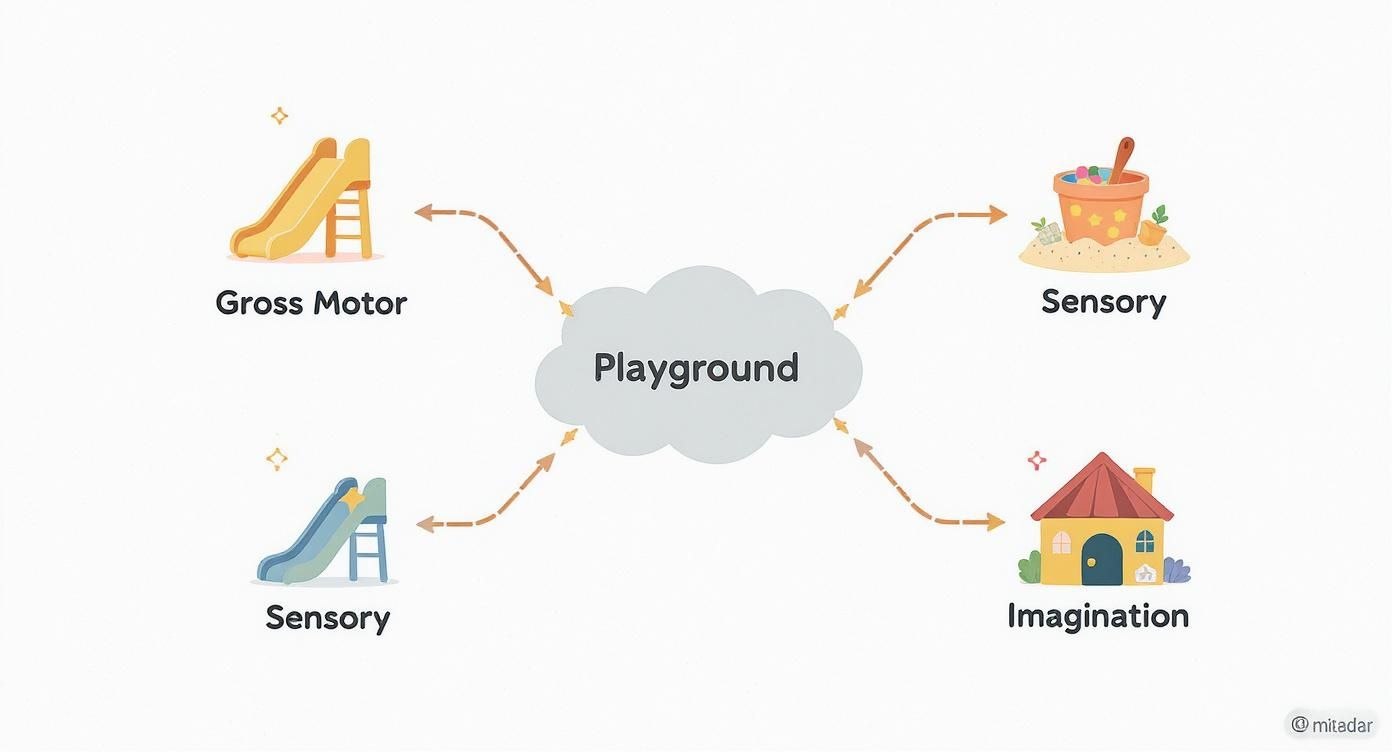
As you can see, a well-designed playground is a hub for building motor skills, engaging the senses, and sparking imagination. That’s why getting the safety foundation right is so critical.
It sounds strange, but what your toddler lands on is just as important as what they're climbing on. Hard surfaces like grass, dirt, concrete, or asphalt are completely out. They offer zero shock absorption and can turn a small tumble into a serious injury.
A safe play surface is your most effective insurance policy against bumps, bruises, and more serious fall-related injuries. It is the single most important safety decision you will make for your backyard playground.
The goal is to create a soft, cushioned landing zone around the entire play structure. This area, known as the "use zone," should extend at least six feet out in every direction from the equipment.
Here are the best materials for the job:
Whichever material you go with, make sure it’s installed to a depth of at least 9-12 inches to provide real fall protection. Getting this one step right will give you invaluable peace of mind, knowing your child has a soft place to land while they explore their new world.
Alright, let's talk about two of the biggest decisions you'll make when picking out outdoor play equipment for toddlers: what it's made of and where on earth you're going to put it.
Think of it like planning a kitchen remodel before you even look at appliances. You have to know what materials work for your family and exactly how much space you're working with. Getting this right from the start saves a lot of headaches later.
The material you choose really sets the tone for your play area, influencing everything from the look and feel to how much maintenance you'll be doing on weekends. For the toddler crowd, it usually boils down to two main contenders: plastic and wood.
As you think about materials, it's worth taking a moment to explore the benefits of wooden educational toys. Their durability and classic appeal can help you create a beautifully cohesive, nature-inspired play space both indoors and out.
Once you've landed on a material, it’s time to grab a tape measure. This isn't just about making sure the playset fits—it's about creating a safe bubble for your kids to run, jump, and inevitably, tumble in. This all-important safety buffer is what the pros call the "use zone."
The use zone is the clear, open space you need around every side of the play equipment. It’s there to prevent injuries from falls or from kids getting a little too wild on the swings. Seriously, getting this zone right is the single most important step for a safe setup.
Picture an invisible force field around the entire playset. This area has to be completely free of obstacles. We’re talking trees, fences, sheds, big rocks—anything a child could bump into.
A good rule of thumb is to leave at least six feet of clear space in every direction from the equipment's edge.
So, if a playset's footprint is 8 feet by 10 feet, you actually need a total area of at least 20 feet by 22 feet to account for that safety zone. And for swings, the rule is even more strict: the use zone needs to extend out twice the height of the swing hanger, both in front of and behind the swing's path.
Taking the time to measure carefully ensures your new outdoor play equipment for toddlers will not only look great but will also be a safe place for countless hours of fun. A little planning goes a long, long way.
The boxes have arrived, and your toddler is practically vibrating with excitement. Now comes the fun part: assembly. Putting together outdoor play equipment for toddlers can feel like a huge undertaking, but it doesn't have to be a headache. Just think of it like following a recipe—go step-by-step, and you'll end up with something great.
Before you even think about grabbing a screwdriver, take a full inventory. Lay out every single nut, bolt, and panel, checking it off against the parts list in the manual. This one simple step can save you the massive frustration of realizing a key piece is missing when you're halfway through the build.
Next up, get your foundation right. The ground where the equipment will live needs to be perfectly level. An uneven surface might not seem like a big deal at first, but over time it can throw the whole structure off balance and create a serious safety risk.
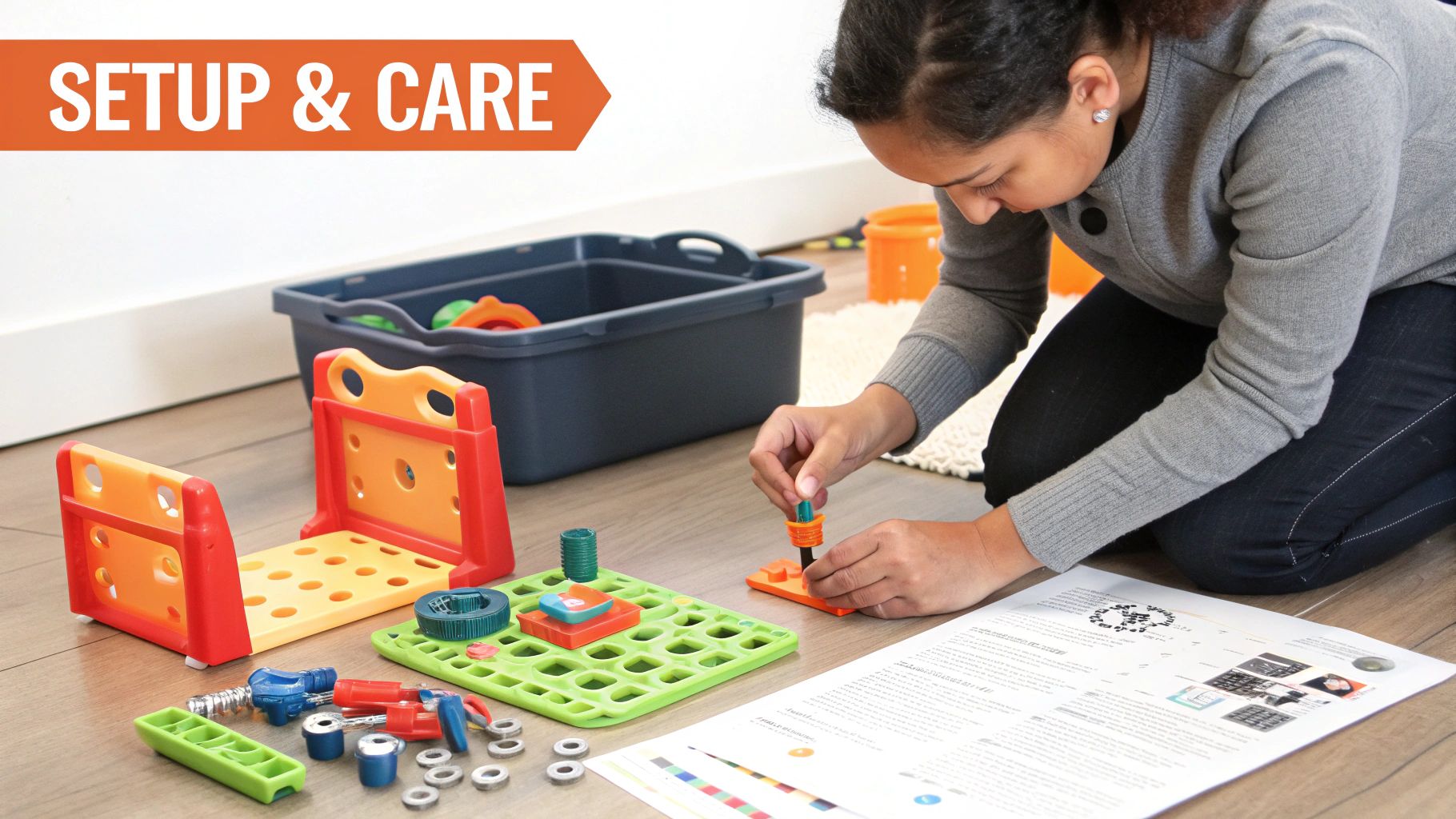
So, should you tackle this yourself or call in the pros? The answer really depends on how complex the set is and how much free time you have. A small plastic slide is usually a quick, one-person job you can knock out in an afternoon. A big wooden swing set with all the bells and whistles, though? That can easily turn into a challenging, multi-day project.
When you're dealing with more complex structures, bringing in a professional ensures every bolt is tightened to spec and all the safety guidelines are followed to the letter. Honestly, that peace of mind is often worth the investment, turning hours of potential stress into a guaranteed safe place for your kids to play.
If you're leaning toward getting some help, services that specialize in outdoor playset installation can be a lifesaver, getting the job done right without you having to sacrifice your entire weekend.
Once the last bolt is tightened, your job isn't quite over. A little long-term care is what keeps your toddler’s favorite backyard spot safe and fun, season after season. A simple maintenance check at the start of spring is the best way to catch small issues before they snowball into big problems.
Run through this quick checklist before the playing really begins:
A little bit of upkeep ensures your outdoor play equipment for toddlers stays an inviting and, most importantly, safe space for countless hours of fun.
Choosing the right outdoor play gear for your toddler brings up a ton of questions. It's totally normal. You want to know you’re making the best possible choice for your little one's safety, development, and, of course, their fun.
Think of this as a final sanity check before you pull the trigger. We've gathered the most common questions we hear from parents and laid out clear, straightforward answers. We'll cover everything from timing and space to materials and safety prep, so you can feel 100% confident you're creating an amazing backyard playground.
Most toddlers are ready to tackle basic equipment like small slides or ground-level playhouses right around 18 months, or whenever they've mastered walking. Always, always double-check the manufacturer's age rating (e.g., 18-36 months). This isn't just a suggestion; it’s your guarantee that the design meets specific safety standards for that stage of development.
So, how do you know they're ready? Look for a few key signs: they're walking steadily without too many tumbles, they're starting to show an interest in climbing on things (like your couch), and they can follow simple directions. A great way to start is with low-to-the-ground items and plenty of hands-on supervision as they get the hang of it.
This is the big one, and it's where a lot of people make mistakes. You need enough space for the playset's footprint plus a non-negotiable safety area called a "use zone."
The Consumer Product Safety Commission (CPSC) is very clear on this: you need a clear, obstacle-free zone of at least 6 feet in all directions around any stationary equipment. No exceptions.
And for swings? The rule is even stricter. That safety zone needs to extend out twice the height of the swing hanger, both in front of and behind the swings.
A simple rule of thumb: measure your yard first. Then, add 12 feet to the playset's length and width. If that new number fits in your space, you're good to go. This quick calculation keeps you from buying a set that’s too big to be used safely.
For the toddler crowd, each material has some serious pros and cons.
Plastic sets are usually a fantastic first choice. They're typically lower to the ground, have those nice rounded edges, come in bright, engaging colors, and are incredibly low-maintenance. They're practically built for the 1-3 year old age group.
Wooden sets are the long-term investment. They're more durable and can grow with your child for years, but they are also taller and demand more upkeep. You'll need to seal the wood annually to prevent splinters and rot. For toddlers, a high-quality, sturdy plastic set often hits that perfect sweet spot of being age-appropriate, safe, and practical.
A safe play zone starts from the ground up. Literally. First, make absolutely sure the area where you're putting the equipment is perfectly level. An uneven base can slowly wreck a playset's stability over time.
Next, you have to install a shock-absorbing surface. Never, ever place play equipment on hard surfaces like concrete, packed dirt, or even just grass. A fall on those surfaces is no joke. Instead, lay down a layer of rubber mulch, wood chips, or sand to a depth of 9-12 inches across the entire use zone.
Here are a few more quick tips to button things up:
Following these steps ensures your outdoor play equipment for toddlers is set up in the safest environment possible, giving you peace of mind while your little one burns off all that energy.
Feeling a little overwhelmed by the thought of wrestling with hundreds of parts and confusing instructions? The experts at Assembly Smart are here to help. We offer professional, reliable assembly services to make sure your toddler's new equipment is built correctly and safely. You can skip the stress and get straight to the fun. Book your hassle-free assembly today!