-
CALL US:
- (866) 952-3456

If you're a working parent, the idea of "time management" can feel like a sick joke. It's not about magically finding an extra hour in the day—that's a fantasy. It’s about building smarter systems that cut down on the mental drain and give you back some of your precious energy.
The real goal is to shift out of that constant reactive chaos and into a more proactive flow. It's how you finally get to focus on what actually matters without feeling like you're one forgotten permission slip away from a total meltdown.
Being pulled in a dozen directions at once isn't just a feeling; it's the reality for most working parents. We've all been there. A last-minute "my kid is sick" call from school completely torpedoes a critical work deadline. The sheer mental energy it takes just to plan meals, book appointments, and keep track of household supplies leaves you totally spent before your "real" day has even started.
This isn't a personal failure. It’s a systemic problem.
The numbers don't lie. Recent studies show that about 6 in 10 working moms and 52% of working dads struggle to balance their work and family lives. And it gets worse—the 2025 Bright Horizons Modern Families Index found that nearly a third of working parents feel intensely stressed, with a jaw-dropping 8 out of 10 saying it tanks their focus at work.
That feeling of being completely overwhelmed? It has a name: the "mental load." This is all the invisible, unpaid project management work that goes into running a household.
It’s things like:
Each one seems small, but together they create a constant buzz of decision-making that leads straight to burnout. This is why a guide to kids' bedroom organization is about so much more than just a tidy room; it’s about creating systems that lighten that daily cognitive weight.
The point isn't to become a productivity robot or just work harder. It’s about building a resilient framework that gives you some breathing room. That's what allows you to be truly present for the moments that count, both at your job and with your family.
Ultimately, getting a handle on your time is a critical act of self-preservation. It's about being strategic with your schedule and, just as importantly, knowing what to let go of.
The real secret to managing your time as a working parent isn't about magically finding more hours in the day. It’s about creating a simple, repeatable system—a kind of "operating system" for your family—that practically runs on autopilot. This is how you cut down on the constant decision-making that drains your mental energy.
Take a hard look at your current routines. If your mornings feel like a mad dash to get out the door and your evenings are a chaotic sprint to bedtime, you're burning through your patience just to cover the basics. By building intentional systems, you can turn that daily chaos into predictable calm.
This whole process is as much an emotional journey as it is a practical one. You go from feeling completely underwater to finding genuine relief once you have a plan in place.
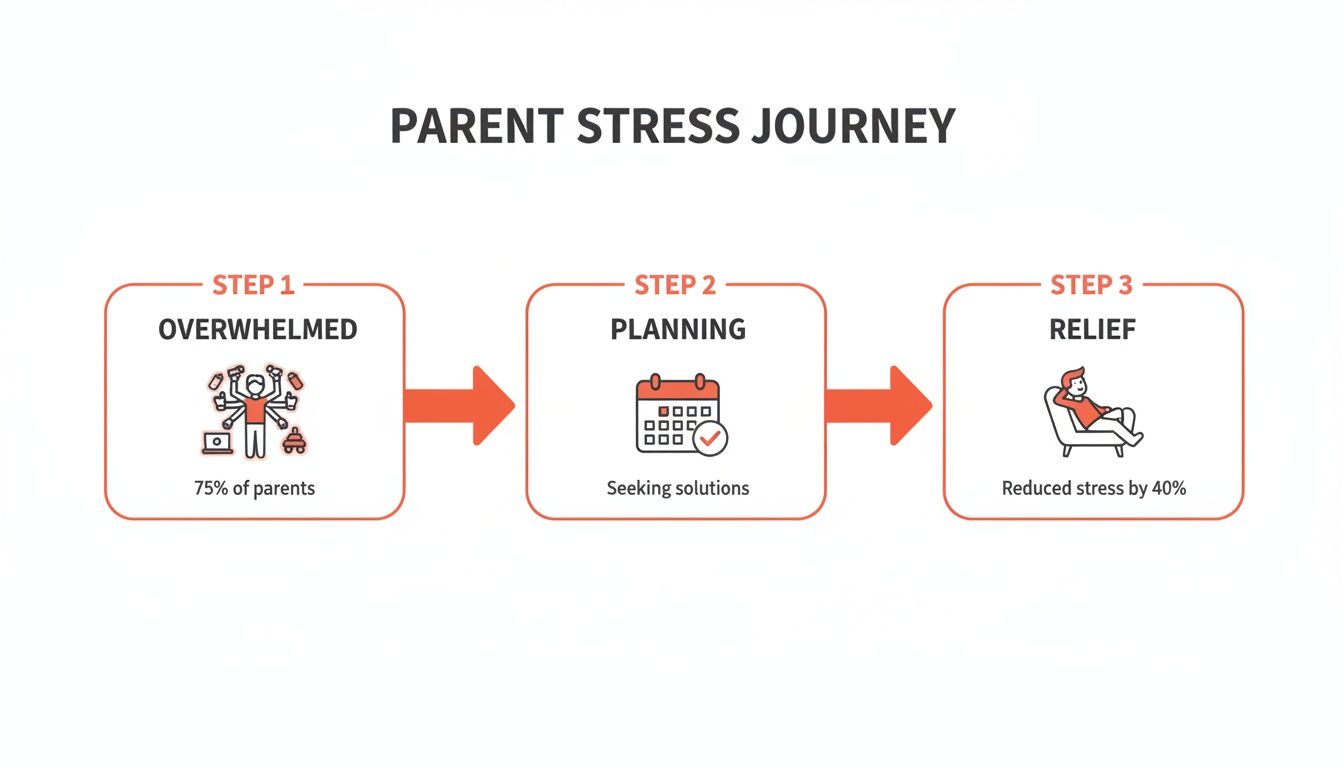
The takeaway here is powerful: structured routines aren't about being rigid. They're your most direct path to lowering stress and feeling like you're back in control.
Let's be honest, a smooth morning actually starts the night before. Kicking off the day in a frantic rush puts everyone on edge and can zap your patience before you've even had your first cup of coffee. The name of the game is to eliminate as many morning decisions as you possibly can.
Here are a few things that actually work:
Your morning routine is your first line of defense against the day's chaos. By prepping the night before, you're not just saving time—you're investing in a calmer, more focused start for the entire family.
Your evening routine is what sets the stage for a successful tomorrow. This isn't about piling more chores onto your already long list. It's about a quick "reset" that stops tomorrow's problems before they even start. A solid evening wind-down can make all the difference.
For a lot of families, this is also a key time to get the physical space in order, which has a huge impact on your mental clarity. A tidy environment can seriously lower your stress levels, especially when you’re juggling work and home life. If your home office is a source of that clutter, our guide on how to set up a home office can help you create a more productive space.
This might be one of the most powerful tools in your toolkit: the Weekly Family Huddle. It's just a short, 15-20 minute meeting, usually on a Sunday evening, to get everyone synced up for the week ahead.
During this quick chat, you can:
This simple huddle transforms planning from one person's burden into a real team effort. Everyone knows what's going on, and everyone shares the responsibility.
Once you've got a solid family operating system in place, you can finally move out of survival mode. It's time to start using some proven productivity methods that will actually create some breathing room in your day. These aren't just buzzwords for corporate executives; they are genuinely powerful tools for managing the beautiful, chaotic mess of family life.
The goal here is to stop reacting to whatever the day throws at you and start directing it with purpose.
This shift feels more critical than ever, especially with so many of us working in remote or hybrid setups. The lines between our professional lives and our home duties have become incredibly blurry. This isn't just a feeling, either—it's a measurable trend. One study pointed to a huge jump in the time mothers spent working and supervising their kids at the same time.
On top of that, Bright Horizons’ 2023 Modern Family Index found that a staggering 81% of parents working in a hybrid or remote role handle kid-related duties during their workday. Another 61% are also squeezing in household chores while on the clock. You can dig into more of these work-life integration stats from WSHU Public Radio.

All this data just confirms what we already know: effective time management for working parents has to acknowledge this new reality. Two of the absolute best methods to get a handle on it all are time blocking and task batching.
Think of time blocking as assigning a specific job to every single hour of your day. Instead of staring at a massive, vague to-do list, your calendar becomes a clear, visual map of what you're doing and when you're doing it. This is how you protect your focus from the constant stream of distractions and guarantee you make progress on what's most important—both for your job and your family.
For instance, a block might look like this:
This approach forces you to be realistic about what you can actually accomplish in a day. It builds boundaries around your focused work time and, just as crucially, carves out protected, non-negotiable time for family and even a little rest for yourself.
Task batching is time blocking’s best friend. The idea is simple: you group similar tasks together and knock them all out in one dedicated session. Every time you jump from one type of task to another—like writing an email, then making a call, then paying a bill—your brain loses steam. Batching is all about minimizing that "context switching" cost.
By grouping similar activities, you stay in the same mental gear, which means you get them done faster and with fewer mistakes. This is how you reclaim all those scattered five-minute gaps and turn them into a genuinely productive hour.
Here’s what this might look like in the real world:
Combining these two techniques creates a schedule that's powerful and proactive. You’re no longer just putting out fires all day. You're thoughtfully designing your life around what truly matters to you and your family.
Deciding between time blocking and task batching can feel like choosing between two great tools. The truth is, they work best together, but it helps to know when to lean on one over the other. This little comparison should help clear things up.
| Strategy | Best For | Parenting Example | Work Example |
|---|---|---|---|
| Time Blocking | High-priority, deep-focus tasks and protecting non-negotiable family time. | Scheduling "Device-Free Playtime" from 4-5 PM every day on your calendar. | Blocking 9-11 AM for "Project Alpha – No Meetings." |
| Task Batching | Small, repetitive, low-energy tasks that tend to interrupt your flow. | Paying all household bills and RSVPing to school events in one 30-minute block. | Answering all non-urgent emails and Slack messages at 11 AM and 4 PM. |
Ultimately, using time blocking to schedule your "task batches" is the ultimate power move. It gives you a clear structure for your day while making sure you execute all those little tasks as efficiently as possible.
One of the biggest hurdles for any working parent is the feeling that you have to do it all yourself. I know I've been there. But the goal isn’t to be a superhero who single-handedly juggles every single task. It's simply to make sure everything that needs to get done, gets done.
Let's reframe this. Thinking of delegation and outsourcing as a strategic investment in your family's well-being is a total game-changer. You aren’t failing when you ask for help; you're leading your household with smarts and efficiency. It’s about buying back your most precious, non-renewable resource: time. That’s time you can pour back into connecting with your kids, catching your breath, or crushing it at work.
Before you even think about opening your wallet, look at the team you already have right at home. Spreading the mental and physical load of running a household can turn a stressful solo act into a genuine team effort.
It all starts with your partner. That "Weekly Family Huddle" we talked about is the perfect time to divide and conquer. Get everything out on the table and assign tasks based on who has the bandwidth and energy that week. This kind of transparency is key to making sure one person isn't silently shouldering the entire burden.
And don't forget the kids! Delegating to them isn't just about lightening your load—it's crucial for their development. Giving children age-appropriate chores builds their competence, independence, and sense of being a real contributor to the family.
When most people think of outsourcing, they think of a weekly cleaning service or a regular babysitter. Those are fantastic, of course. But the real untapped potential is in outsourcing those high-effort, one-off projects that absolutely demolish a weekend and leave you completely drained.
I'm talking about that flat-pack dresser still sitting in the box. The new grill that needs to be built. Or that massive swing set that promises hours of assembly-induced frustration. These are the "time vampires" that can suck an entire Saturday dry.
By outsourcing these specific, often complex tasks, you are not just buying a service; you are buying back an entire day of family memories, relaxation, or focused work. The return on investment is massive.
This is where calling in the pros is a no-brainer. Instead of spending your day wrestling with confusing instructions and a bag full of mysterious hardware, you can lean on professionals. For instance, looking into home repair and handyman services for something like furniture assembly can turn a weekend of stress into a day of fun. You get the awesome new item without sacrificing your precious time.
For an even bigger life-hack, you could leverage an outsourced personal assistant to manage anything from scheduling doctor's appointments to researching your next family vacation.
This selective, strategic approach to outsourcing is a powerful tool in your time management for working parents toolkit. It's all about pinpointing your biggest time-drains and happily offloading them so you can put your energy where it truly counts.
Let's be honest: being a working parent feels like you're the project manager for a chaotic, unpredictable, and surprisingly sticky small business. When used the right way, technology can be your secret weapon. It can act as your second brain, offloading all the mental gymnastics of remembering appointments, to-do lists, and schedules so you can actually be present with your family.
The goal isn't to add another digital chore to your list, but to make technology work for you.
It's a real struggle. A 2025 KPMG survey found that 54% of working parents say their work schedules frequently clash with their parenting duties. When asked for a solution, 50% pointed to flexible schedules as the number one thing that would help. This just shows how critical it is to use tools that let you make the most of any flexibility you do have. You can see more from the KPMG working parents survey here.

If you do one thing, make it this: set up a shared digital calendar. This becomes the single source of truth for your entire family, putting an end to double bookings and those frantic, last-minute "oh-I-forgot" moments.
Apps like Cozi are built for this. You can color-code everyone's schedule and set up automated reminders for soccer practice, dentist appointments, and parent-teacher conferences.
Think about it. The school sends a permission slip for a field trip. You immediately add it to the calendar and set a reminder for the night before to pack a lunch. Just like that, it's out of your brain, freeing up that precious mental space for something else.
Your brain is for having ideas, not just holding them. This is where task management apps like Todoist or Trello come in. They can manage everything from the weekly grocery list to that backyard project you keep meaning to start.
Create a shared "Household" project with separate lists for groceries, weekend errands, and home maintenance.
This transforms those vague, floating worries into clear, actionable steps that can be assigned. Instead of one person carrying the mental load of remembering everything, the list becomes a shared responsibility that anyone in the family can check off.
This is a game-changer for keeping a productive work-from-home space, too. For more great ideas on setting up your workspace, check out our guide on home office must-haves.
How much time do you spend each week just thinking about what to make for dinner? It's a huge source of decision fatigue.
Apps like Mealime can generate a full weekly meal plan based on your family's food preferences, create the shopping list for you, and even send it to a grocery delivery service. A complicated, time-sucking chore gets knocked out in just a few taps.
If you really want to dive deep and get organized, this ultimate digital family command center guide is a fantastic resource for streamlining schedules and taming the chaos. By bringing in the right tools, you build a digital support system that makes managing the beautiful mess of family life feel so much more doable.
Even with the best game plan, life has a funny way of getting messy. When you’re a working parent trying to roll out new time management strategies, a few practical questions always seem to pop up.
Here are some straight answers to the most common hurdles you'll probably face while trying to get your schedule—and your sanity—back on track.
The secret? Start small. Impossibly small.
Whatever you do, don't try to overhaul your entire life in a single weekend. That’s just a fast-track to burnout, and you'll end up feeling like you failed before you even really started.
Instead, find the single biggest point of friction in your day. Is it the chaotic morning scramble to get out the door? The stressful "what's for dinner" moment every evening? Pick one—just one—and focus all your energy there.
For instance, you could commit to nothing more than a 15-minute prep routine each evening. This might look like:
Once that tiny routine feels automatic, you can build on it. Small, steady changes are so much more sustainable and way less intimidating than trying to do everything at once.
Let's be real: life with kids is basically a masterclass in unpredictability. The best way to handle a sick kid, a surprise school closure, or a last-minute project from your boss is to build breathing room right into your plan from the get-go.
When you're mapping out your week with time blocks, don't fill every single slot. I can't stress this enough. Intentionally leave a few empty blocks and label them "buffer time" or "flex time."
If the week goes smoothly, this buffer becomes bonus time. You can use it to get ahead, tackle a task you've been putting off, or just… relax. But when things inevitably go sideways, you have a built-in window to move things around without your entire week imploding.
It also helps to have a simple "sick day" plan ready to go. Think of it as a little emergency kit for your schedule. It could be a short checklist: who to email at work, who to call at school, a list of go-to easy meals, and a few pre-approved screen time options to get you through the day with a bit less stress. A little prep here saves you from having to make a ton of decisions when you're already frazzled.
This is an incredibly common problem, and it almost always comes down to one person carrying the entire mental load for the family schedule. When that happens, resentment starts to build, and things inevitably fall through the cracks.
The best fix I’ve found is to make planning a joint, non-negotiable weekly habit. That Weekly Family Huddle isn't just a cute idea; it's a vital communication tool. It’s a quick 20-minute meeting where you both pull up a shared digital calendar and openly divide and conquer the week ahead.
Try to frame the conversation around teamwork. Instead of pointing fingers, say something like, "How can we make sure we both get a break this weekend?" That simple shift turns scheduling from a source of conflict into a shared goal. It's a small change that reinforces the fact that you're in this together.
Feeling like your weekends are being eaten up by frustrating assembly projects? Let Assembly Smart handle the complicated setups so you can get your precious family time back. Get a free, transparent quote today and see just how easy it is to get professional help. Learn more at https://assemblysmart.com.