-
CALL US:
- (866) 952-3456

A breakfast table with a bench isn't just another dining trend; it's a smart, stylish answer for today's homes. This setup marries a space-saving design with a casual, communal vibe, making it the perfect centerpiece for just about any kitchen nook or dining space. It’s an open invitation to gather around, share a meal, and just connect in a way that feels natural and relaxed.
When you picture a classic dining room, you probably see a formal table surrounded by a set of perfectly matched, individual chairs. It’s an elegant look, for sure, but it can also feel a little stiff and eat up a lot of floor space. The breakfast table with a bench completely flips that script. Think of it as a "dining campfire" that naturally brings everyone closer together.
Instead of the subtle separation you get with individual chairs, a bench encourages people to cozy up next to each other. This simple shift creates a much more relaxed and communal atmosphere—perfect for everything from chaotic family breakfasts and after-school homework sessions to quiet chats over coffee. It just breaks down the formal barriers and makes the whole space feel more welcoming.
Beyond the social perks, the sheer practicality of a bench is a huge part of its appeal. If you're working with a compact kitchen or an open-plan living area, you know that every square inch of space is gold. A bench gives you a serious edge.
This multi-tasking approach isn’t just for the kitchen, either. The versatility of bench seating works wonders in other parts of the home. For example, you can find all sorts of creative ways to use a bench in the bedroom for extra seating and a touch of style. This move toward smarter, space-saving furniture is a big reason the global kitchen and dining furniture market is projected to hit USD 49.83 billion by 2033, fueled by the demand for multifunctional pieces in urban homes. You can dig into more insights on the kitchen furniture market over at businessresearchinsights.com.
It’s one thing to find a breakfast table and bench combo that you love the look of, but it’s a whole different ballgame making sure it actually fits. A set that’s too big will make the whole room feel cramped and awkward to move through. On the other hand, one that’s too small just looks lost and won’t serve its purpose.
Think of it like buying a new suit—it doesn’t matter how stylish it is if the tailoring is all wrong.
The very first thing you need to do is measure your space. But don't just measure the floor from wall to wall. You have to account for clearance, which is that all-important empty space around your furniture. This is the invisible buffer that lets people walk past, pull out the bench, and sit down without bumping into anything.
Here’s a guideline straight from interior design 101: leave at least 36 inches of space between the edge of your table and any wall or major piece of furniture. This gives everyone enough room to move around comfortably, even when someone is seated.
If you’re in a really tight spot, you might be able to squeak by with 30 inches, but 36 inches is the gold standard for a space that feels open and functional.
This infographic can help you visualize if a bench is the right move for your goals.
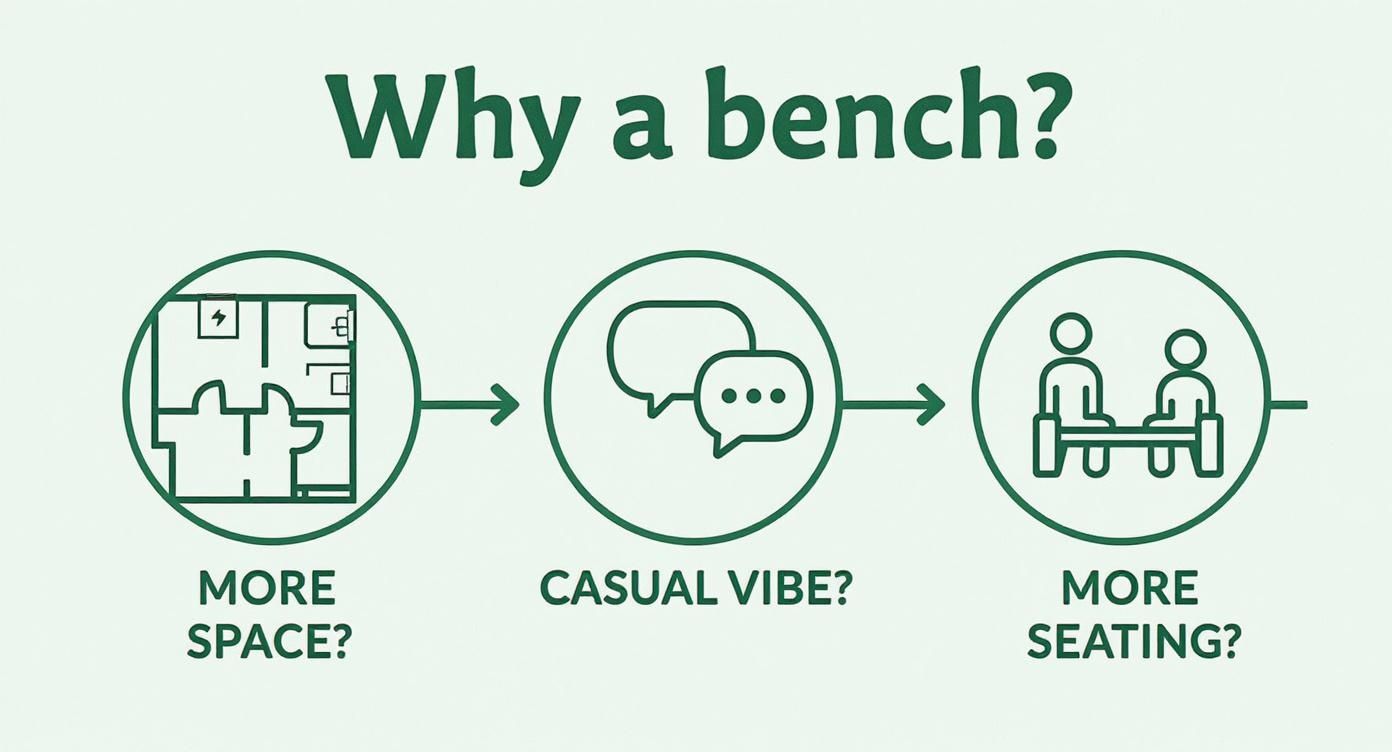
As you can see, benches are a fantastic solution for maximizing a small footprint, creating a more casual vibe, or simply squeezing in a few more friends and family members.
Okay, so you've measured your room and you understand the clearance rule. Now it's time to figure out your maximum table size. It's actually pretty simple.
Here’s the quick-and-dirty formula:
Let’s say your breakfast nook is 10 feet by 8 feet (120 inches by 96 inches). Your ideal table would be no bigger than 48 inches long by 24 inches wide. This simple math takes all the guesswork out of the equation.
For a more detailed walkthrough on getting your measurements just right, check out our guide on how to measure furniture before you pull the trigger on a purchase.
Here's a pro-tip: a bench usually needs less clearance behind it than chairs do, especially if it can be tucked completely under the table when you're not using it. This is one of the biggest space-saving perks of going with a breakfast table and bench set.
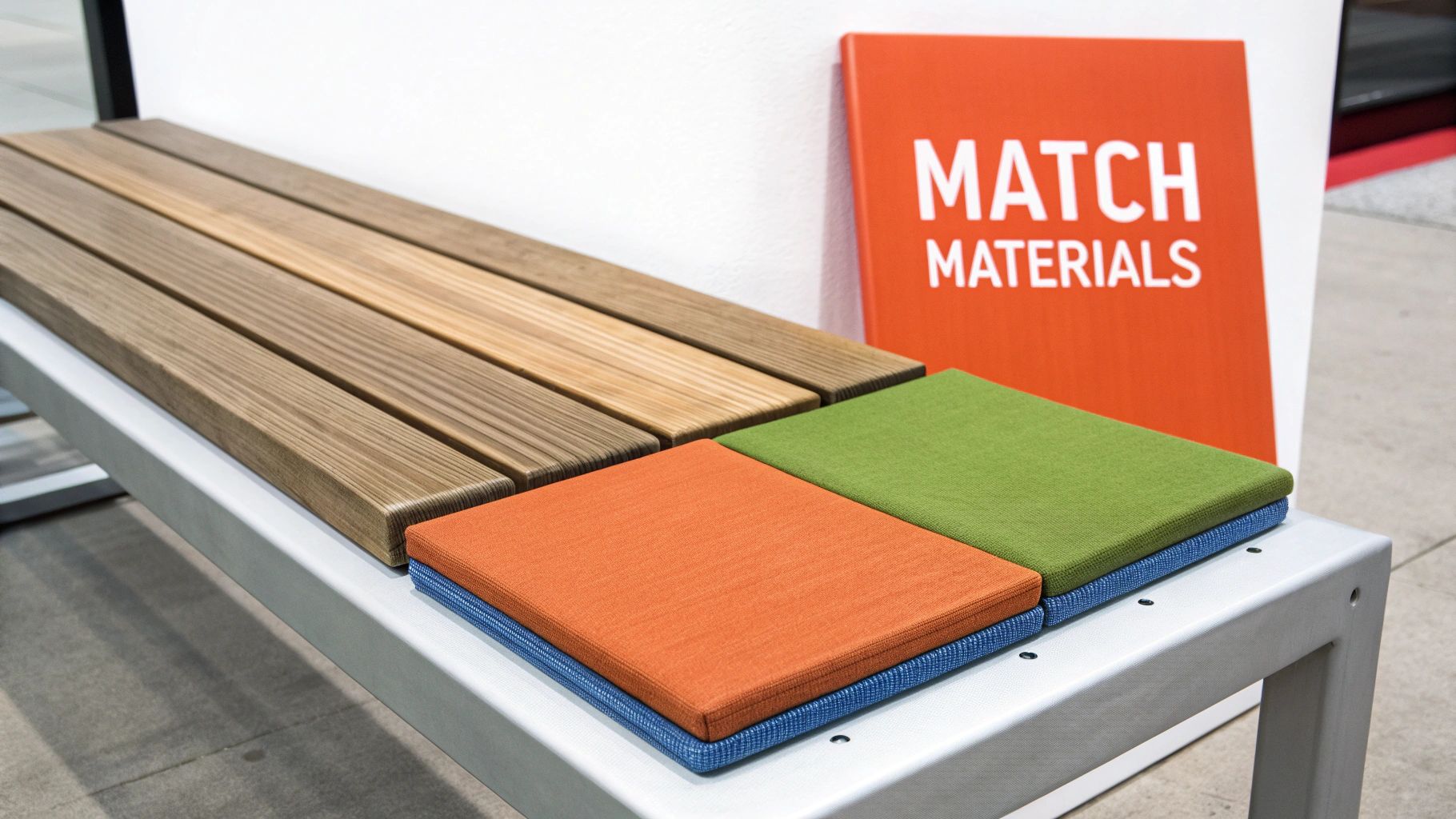
Choosing the right material for your breakfast table and bench set is a lot like picking out a new coat. It has to look good, sure, but it also has to stand up to daily life. The material doesn't just set the style; it determines how durable your set will be and what kind of vibe it brings to your kitchen. This is the spot where you'll build countless meals and memories, so it's worth getting it right.
Solid wood, for example, is the tried-and-true classic. You really can't go wrong with something like oak or pine. They bring a natural warmth and sturdiness into a room that few other materials can touch. Plus, the unique grain patterns in each piece mean your set is truly one-of-a-kind.
Then you have metal frames, which are often paired with wood or glass tops. These bring a completely different energy to the table—think sleek, modern, maybe a little industrial. They tend to be lightweight but deceptively strong, perfect for creating a minimalist look in a contemporary space.
Let's break down the most popular options out there. Each one has its own personality and practical considerations, from how much upkeep it needs to how long it'll last.
Here's a pro tip: Think about your daily routine. If you have young kids, you'll probably want a durable, easy-to-clean surface like a sealed wood or a tough laminate. If it's just you and a partner in a modern apartment, a stylish metal and glass combo could be a perfect fit.
Once you've got a material in mind, it's time to connect it to a design style. Your breakfast nook shouldn't feel like an afterthought; it should flow naturally with the rest of your home's decor.
Here are a few popular styles and the materials that really make them shine:
| Style | Key Characteristics | Best Materials |
|---|---|---|
| Farmhouse | Cozy, rustic, and inviting with a slightly worn look. | Distressed solid wood, chunky pine |
| Industrial | Edgy, urban, and raw with exposed elements. | Metal frames, reclaimed wood tops |
| Scandinavian | Minimalist, functional, and light with clean lines. | Light woods (like birch), white finishes |
| Mid-Century | Organic shapes, tapered legs, and functional design. | Walnut or teak wood, simple upholstery |
Ultimately, the best choice is one that hits the sweet spot between looks and practicality. A rustic farmhouse table might be gorgeous, but if its rough finish is a nightmare to wipe down after a messy breakfast, it might not be the right fit. By matching the material and style to your home's look and your family's needs, you'll land on a set that's both beautiful and truly built for real life.
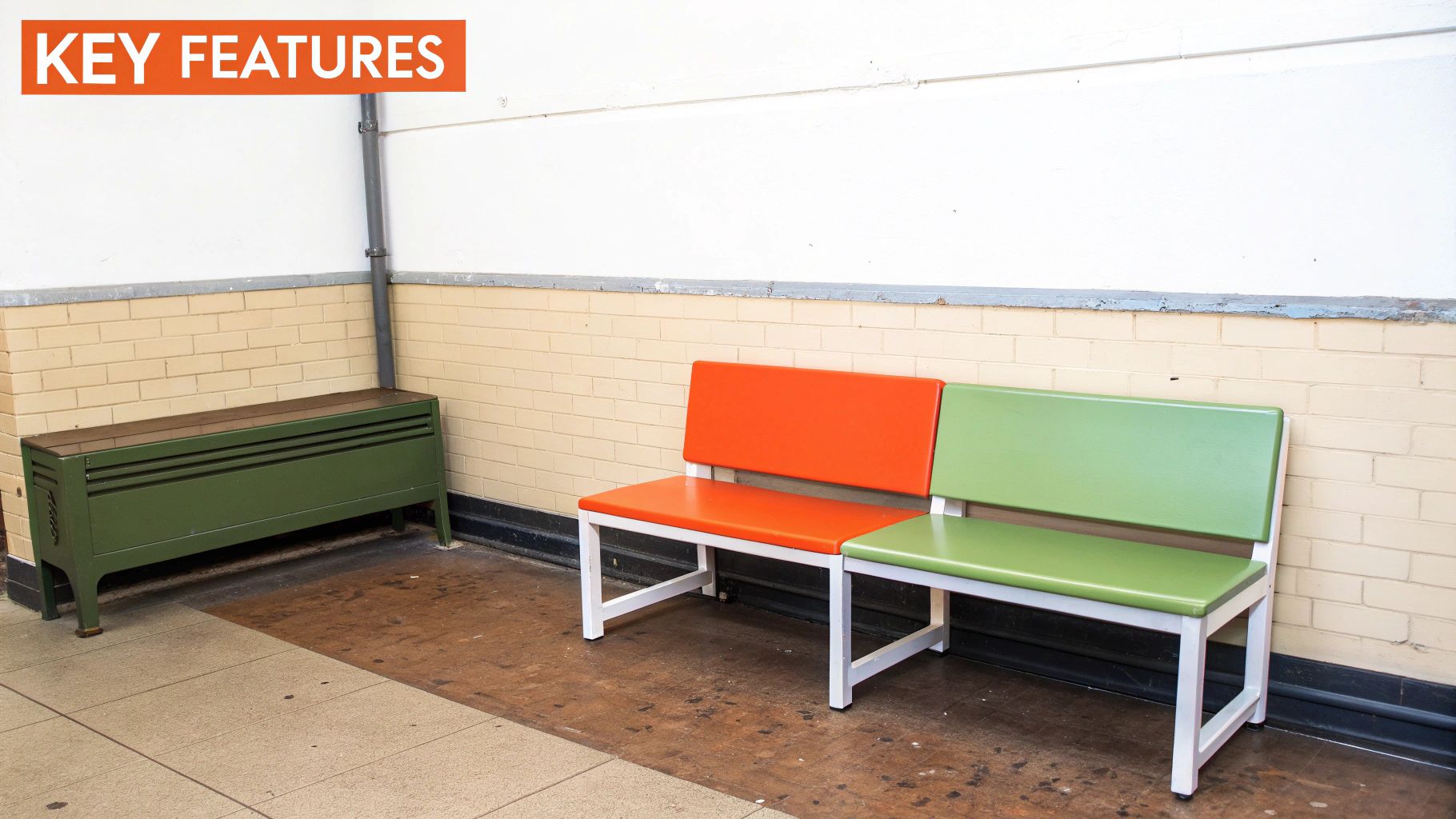
It’s easy to get swept up in the look of a new dining set. But once it's in your home, it’s the practical details that will make you either love it or regret it for years to come. Functionality is what separates a pretty piece of furniture from a long-term keeper.
Think of this as your final pre-purchase checklist. Let's dig into the essential, and often overlooked, features that make all the difference.
First up, let's talk about the bench. This isn't just a style choice; it's a decision about comfort and how you'll actually use the space. A backless bench is great for a clean, minimalist profile. It slides neatly under the table, which is a fantastic space-saver.
But if you’re dreaming of long, lazy Sunday breakfasts or family game nights, a bench with a back is the way to go. It provides that crucial support that encourages people to stick around, turning a simple bench into a cozy banquette seat.
Then there’s the secret weapon for small-space living: the storage bench. If every square inch in your home counts, these are an absolute game-changer. Lift-top seats or built-in drawers give you a hidden spot to stash everything from placemats and napkins to the kids' art supplies.
This kind of clever, multi-use furniture is exactly what people are looking for these days. It’s no surprise that the global dining table market, which was valued at USD 8.22 billion, is expected to soar to USD 13.71 billion by 2032. A big part of that growth comes from the demand for contemporary, functional pieces like a breakfast table with a storage bench. In fact, the U.S. market alone is projected to hit USD 2.34 billion by that same year. You can dive deeper into these dining table market trends over at fortunebusinessinsights.com.
Choosing a storage bench is like getting a bonus closet you didn't know you needed. It’s one of the smartest ways to conquer clutter without sacrificing seating or style.
Alright, now for the finer points that really impact day-to-day life. Paying attention to these small details now will save you a lot of headaches later.
By thinking through these practical features, you'll end up with a dining set that doesn't just look beautiful but is perfectly suited for the realities of your household.
So, the boxes have arrived. Your perfect breakfast table and bench set is finally here, waiting to be brought to life. Now for the fun part—the build. Don't let the thought of assembly intimidate you. It’s really just a grown-up puzzle, and the secret to a smooth, headache-free build is getting organized before you even start.
First things first: clear a workspace and lay everything out. Unpack all the pieces and get your hardware sorted into little piles—screws, bolts, washers, the works. Trust me, this little bit of prep saves a ton of frustration later. If you can, grab a friend to help. Having an extra set of hands to hold pieces steady can turn a tricky job into a fun team project.
Many of us are familiar with the picture-only instructions from brands like IKEA. If you find yourself scratching your head, this general guide on https://assemblysmart.com/how-to-assemble-ikea-furniture/ has some great tips that work for pretty much any flat-pack furniture.
With your new set standing proud, the real creative work begins. This is your chance to turn a simple piece of furniture into a cozy, personal corner of your home.
Styling your breakfast nook is all about layering in comfort and character to make the space feel like it’s truly yours. The best place to start? The bench.
Adding plush cushions or a custom-fit bench pad is the fastest way to elevate both comfort and style. It instantly makes the space more inviting for long conversations and leisurely meals.
From there, you can start building out the scene. A few throw pillows add a welcome pop of color and some nice back support. The goal is to create a spot that feels collected and thoughtfully curated, not just plopped down in a corner.
Once you've got the cozy foundation set, a few final accessories will tie the whole look together. It’s these small details that have the biggest impact, turning your nook into a charming and cohesive spot.
If you’re looking for more ideas, you can pull from broader styling principles. These inspiring coffee table styling ideas, for example, have great tips that can easily be adapted for a dining nook. By combining comfort with a few thoughtful accents, you’ll craft a breakfast nook you'll absolutely love for years to come.
That breakfast table and bench combo you love at home? It's not just for residential spaces anymore. Smart cafe, bistro, and restaurant owners are catching on, realizing this setup is a game-changer for their own establishments.
In the business world, every square foot of seating is prime real estate, and benches are the ultimate space maximizers. Think about it: individual chairs create fixed, single spots. A bench, on the other hand, offers a fluid, high-density seating solution that’s incredibly flexible.
On a slow Tuesday morning, a couple can spread out and get comfortable. But come the weekend brunch rush, that very same bench can easily seat a family of four or a group of friends—all without you having to move a single thing. It just naturally adapts to the flow of your day, which is a massive win for operations.
Beyond the sheer practicality, benches help cultivate a certain vibe. They have a way of creating a more communal, laid-back atmosphere, breaking down the formal barrier that individual chairs can sometimes create.
This cozy, almost home-like feeling makes a place more memorable. It encourages guests to stick around a little longer, which, as any owner knows, often means a bigger check at the end of their visit. For anyone diving deep into outfitting a commercial space, this comprehensive restaurant furniture guide is a great resource for looking into seating arrangements and durability.
The demand for this style in commercial settings is absolutely booming. The global market for restaurant bench seating was valued at USD 1.5 billion and is expected to hit USD 2.8 billion by 2033. This surge is being led by new spots that are choosing benches from day one to pack in more happy customers and create a more social dining experience.
In a cafe or bistro, a bench is so much more than just a place to sit; it's a strategic design choice. It sends a clear message of warmth and community, making customers feel like they're part of a lively, inviting scene rather than just another person at another table.
Alright, let's tackle those last-minute questions that pop up right before you hit "buy." Getting these details sorted out ensures your new breakfast table and bench won't just look great, but will actually work for your family's daily chaos. Here are a few of the most common things people ask.
Making a bench cozier is actually one of the easiest (and most fun) parts. The quickest win is to add a cushion that’s about 2-3 inches thick. You can usually find standard sizes that fit, or if you want that perfect, custom look, having one made is a great option.
If your bench is up against a wall, toss a few throw pillows on it. They give you great back support and are a fantastic way to splash a little color into the space. Don't forget the floor, either—an area rug under the whole setup adds a layer of softness and warmth, making the entire nook feel more inviting.
Absolutely! This is a really popular move right now. Mixing a new bench with your old table and chairs can give your dining space a fresh, eclectic vibe without having to replace everything. The trick is to make it look intentional.
To pull it all together, try to match at least one thing. It could be the wood tone, the style of the legs, or the color. The most important thing, though, is to double-check the height. You're aiming for 10-12 inches of space between the top of the bench and the bottom of the tabletop. That's the sweet spot for comfortable legroom.
For households with kids, benches are often a game-changer. Think about it: they make it super easy for little ones to slide in and out all on their own. Plus, you can almost always squeeze more kids onto a bench than you can fit in separate chairs.
If you have really young children, you might want to look for a bench that has a backrest. It just adds that extra layer of support and safety. It's also smart to pick a finish that can survive the inevitable spills and messes—sealed wood or a tough laminate will be your best friend.
When that new furniture shows up in boxes, the last thing you want to deal with is a frustrating assembly project. Why not let Assembly Smart handle the hard work? Our experienced pros provide quick, professional assembly for your new breakfast table and bench, making sure it’s built right and ready for your family. Book your stress-free appointment today.