-
CALL US:
- (866) 952-3456

Preventing falls at home isn't about bubble-wrapping your life. It's about being proactive and smart, starting with a good, hard look at your living space to spot and fix common hazards. Think of things like clutter, dim lighting, and those sneaky unsecured rugs. Making a few simple tweaks can drastically lower the risk of a fall and create a much safer environment for everyone.
Before you start shifting furniture or drilling holes for grab bars, the first real step is to see your home with fresh eyes. A home safety walkthrough is all about training yourself to spot the subtle, everyday hazards that we all tend to ignore until someone gets hurt. The idea isn't just to fix a few problems once, but to build an ongoing awareness of potential risks.
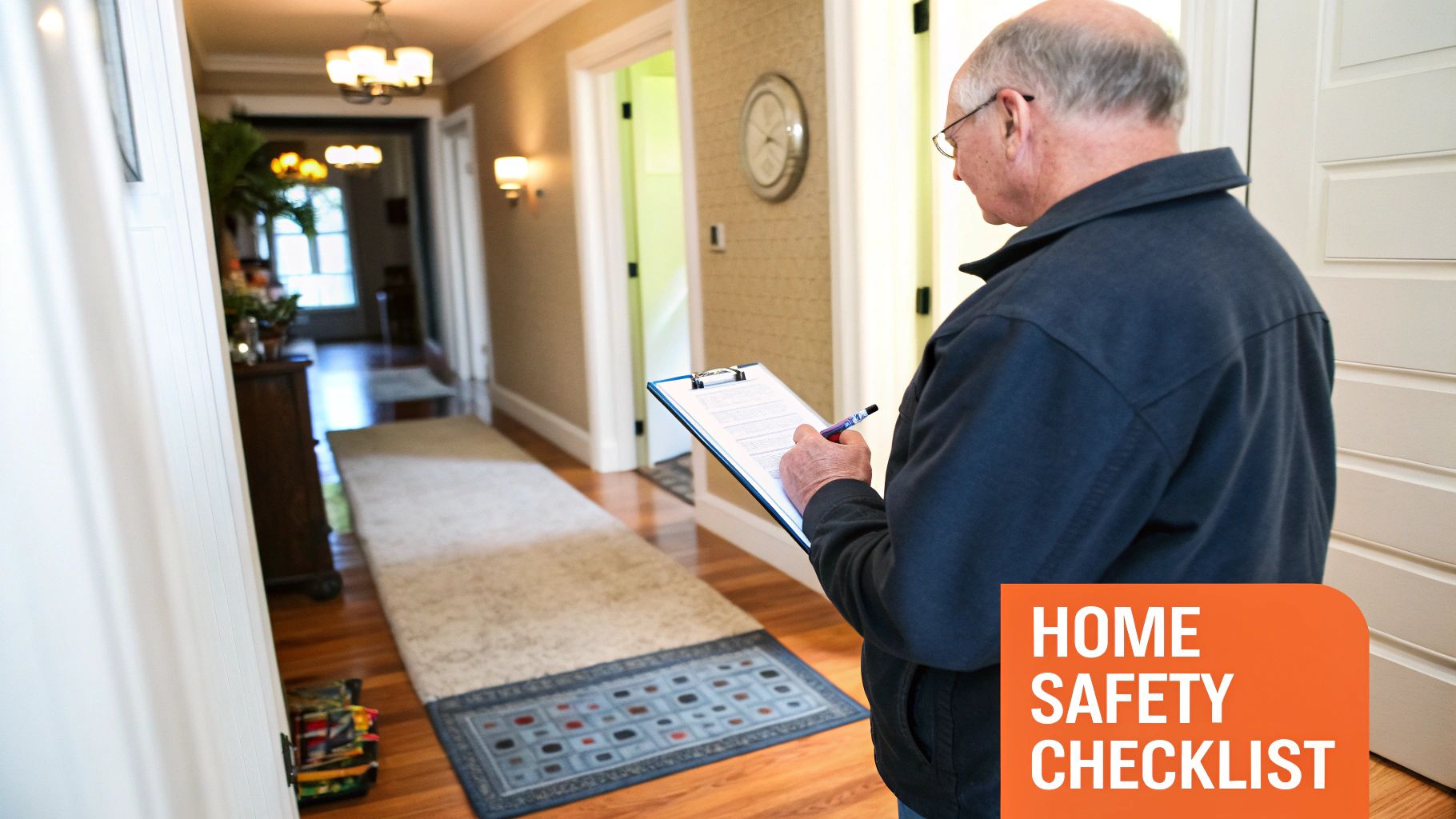
To kick things off, a thorough senior home safety assessment is a great way to pinpoint potential trouble spots. Put on your detective hat. Instead of just glancing around a room, you need to actively hunt for things that could cause someone to trip, slip, or stumble.
Here's the thing: most falls are preventable, and the power to reduce that risk is often in a series of small, consistent actions. Falls among older adults are a major public health concern, but targeted home modifications truly make a difference. In fact, research from Washington University School of Medicine found that a community program focused on simple fixes—installing grab bars, improving lighting, and adding handrails—cut in-home falls by nearly 40%. It just goes to show that you don't need a massive renovation to get powerful results.
A proactive approach means looking at your home not just for how it works today, but for how it can support you safely for years to come. It’s about getting ahead of the problem instead of just reacting to it.
Key Takeaway: The best fall prevention strategy is a mix of smart environmental changes and personal awareness. That first walkthrough is the foundation for everything else.
This simple process visualizes the three core stages of any good home safety plan: assessing the risks, securing your environment, and maintaining that safety over time.
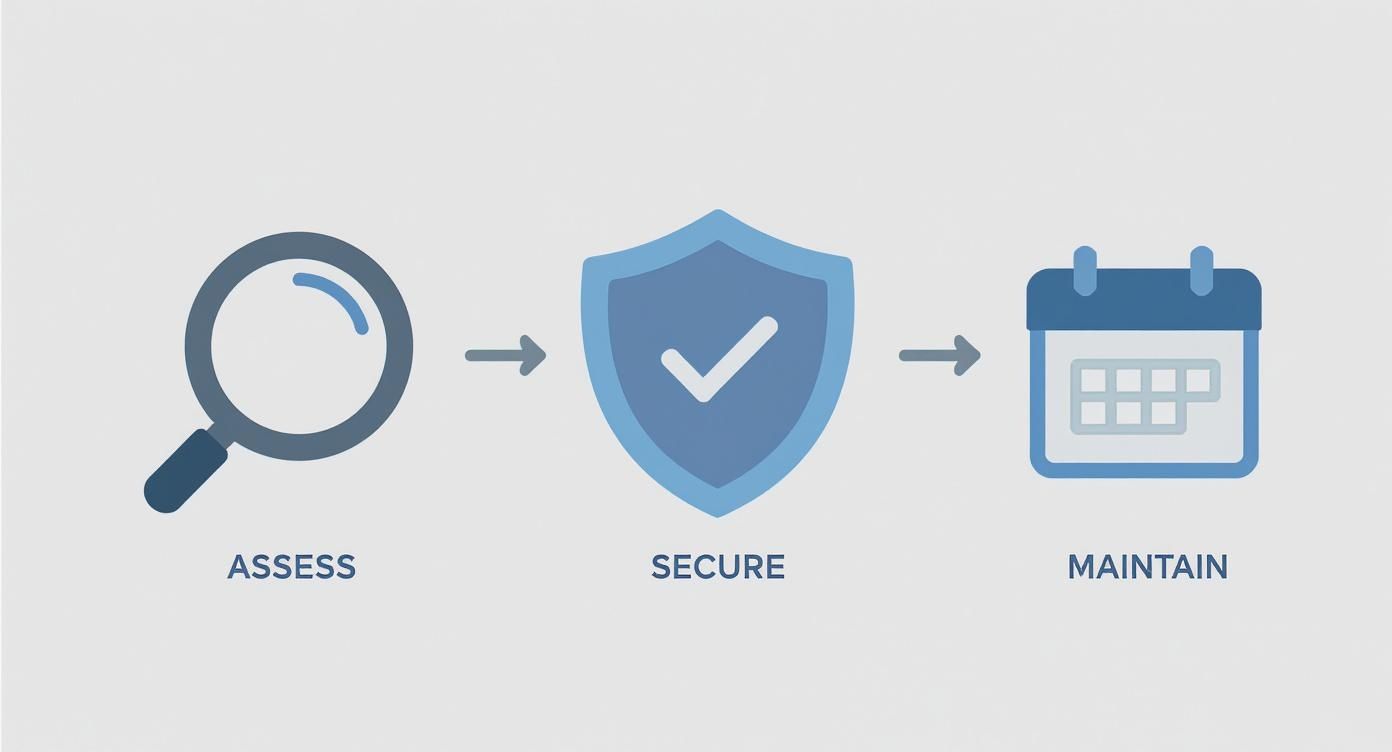
This really drives home the point that fall prevention isn’t a one-and-done task. It’s a continuous cycle of being observant and taking action.
As you walk through your home, pay close attention to the unique challenges in each area. Don't feel pressured to fix everything at once. Your only goal on this first pass is to observe and take notes. Grab a notepad or use your phone to jot down what you find.
To help get you started, I've put together a quick table outlining the most critical hazards.
| Hazard Area | What to Look For | Immediate Action |
|---|---|---|
| Floors & Walkways | Clutter (shoes, mail), loose rugs, frayed carpets, cords crossing paths. | Clear all walkways immediately. Tape down or remove throw rugs. |
| Lighting | Dimly lit hallways, dark stairwells, burned-out bulbs, hard-to-reach switches. | Replace bulbs with brighter LEDs. Add nightlights to hallways and bathrooms. |
| Furniture | Wobbly tables, unstable bookshelves, chairs that slide easily. | Tighten any loose legs or hardware. Plan to anchor top-heavy furniture. |
| Stairs | Loose handrails, worn-out steps, poor lighting at top and bottom. | Test handrails for sturdiness. Add non-slip treads if steps are slick. |
This initial look-around will give you a clear, actionable list of what to tackle first. To make this even easier, a structured guide can be a lifesaver. Check out our detailed home safety checklist to make sure you don't miss a thing. It breaks the whole process down room by room, making your first assessment both thorough and a lot less overwhelming.
When you start thinking about how to prevent falls at home, a couple of rooms should jump to the top of your list: the bathroom and the kitchen. These are the hubs of daily life, but they’re also where hard, slick surfaces are constantly meeting water, steam, and spills. That combination of frequent traffic and slippery conditions makes them high-risk zones that need some specific attention.
Now, this isn't about turning your home into a sterile, hospital-like environment. It’s about making smart, practical changes that feel natural. A few well-placed modifications can be the difference between a close call and a serious injury, giving you real stability and peace of mind right where you need it most.
And this isn't a small issue. Globally, falls are the second leading cause of unintentional injury deaths. It’s a sobering fact that adults over 60 face the highest risks. Taking proactive safety measures at home is one of the most powerful things you can do to bring those numbers down. The World Health Organization has some eye-opening research on falls if you want to dig deeper into the global impact.
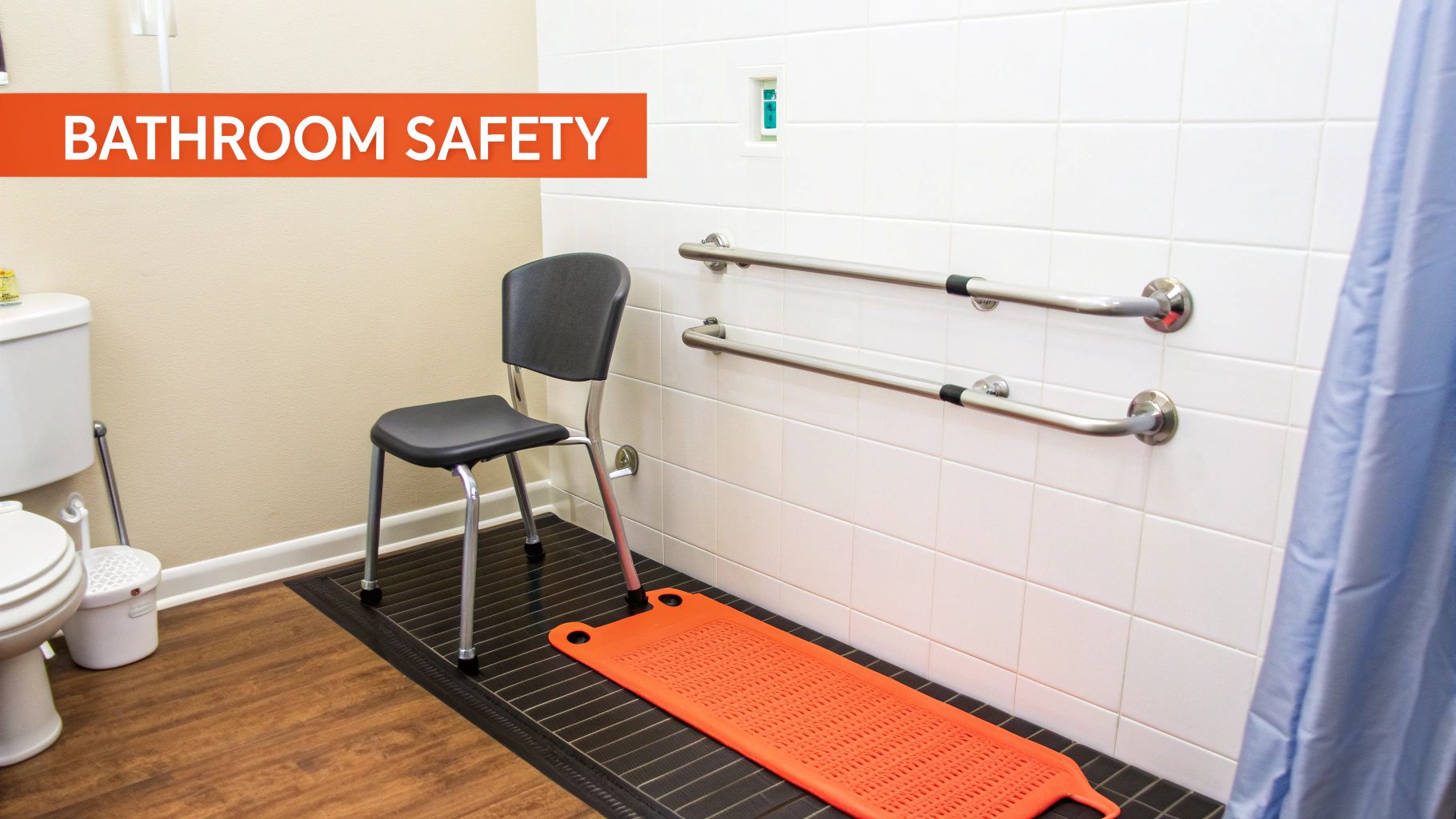
The bathroom is often where the risk is most concentrated. Between wet tiles, high tub ledges, and the constant motion of getting up and down, it's a perfect storm for a potential fall. And let's be clear: your towel rack is not a grab bar. It’s designed to hold a towel, not your body weight.
Installing professionally anchored grab bars is absolutely non-negotiable for real bathroom safety. They have to be screwed directly into wall studs to provide support you can count on. The most critical placements are:
Beyond the walls, the floor itself is a major hazard. A high-quality, non-slip mat with a solid suction-cup backing is a must-have inside the shower or tub. Just as important is a super-absorbent, non-skid bathmat for the floor outside to catch drips and prevent slips when you step out.
If you ever experience dizziness or just have a hard time standing for long, a shower chair or a transfer bench is a fantastic addition. It lets you sit comfortably while bathing, which saves energy and dramatically cuts down the risk of a fall.
The kitchen comes with its own unique set of challenges. We're talking grease splatters on the floor and the constant need to reach for things in high cabinets. The solution here is a mix of good habits and smarter organization. The single most important rule? Clean up spills immediately. A little water, oil, or a dropped piece of lettuce can turn a safe floor into an ice rink in seconds.
Keep the things you use most often within easy reach. Store heavy pots, everyday dishes, and common ingredients on lower shelves or right on the countertops—ideally, somewhere between your waist and shoulder height. This simple bit of reorganizing means you won't have to stretch, bend, or climb on a wobbly stool, which are all common ways people lose their balance.
Pro Tip: If you absolutely have to reach something on a high shelf, always grab a sturdy step stool that has a handrail. Never, ever use a dining chair, a box, or any other piece of furniture as a substitute.
Finally, take a hard look at your kitchen rugs. They might feel nice underfoot, but they can be a serious tripping hazard. If you use mats in front of the sink or stove, make sure they have a rubberized, non-skid backing. This keeps them from bunching up or sliding out from under you. These simple home modifications for the elderly are really just smart ideas for people of any age looking to create a safer living space.
Just moving through your home—from the living room to the bedroom or up the stairs—should be something you don't even have to think about. Unfortunately, these everyday pathways are often where hidden hazards lurk, waiting to cause a trip or a fall. By focusing on creating clear, well-lit routes, you can make a massive difference in the safety of the spaces you use the most.
This goes way beyond simple tidying up. It's about taking a hard look at your furniture layout, how you manage cords, and the condition of your stairs. Every room presents its own challenges, but the goal is always the same: making sure every step you take is a secure one.
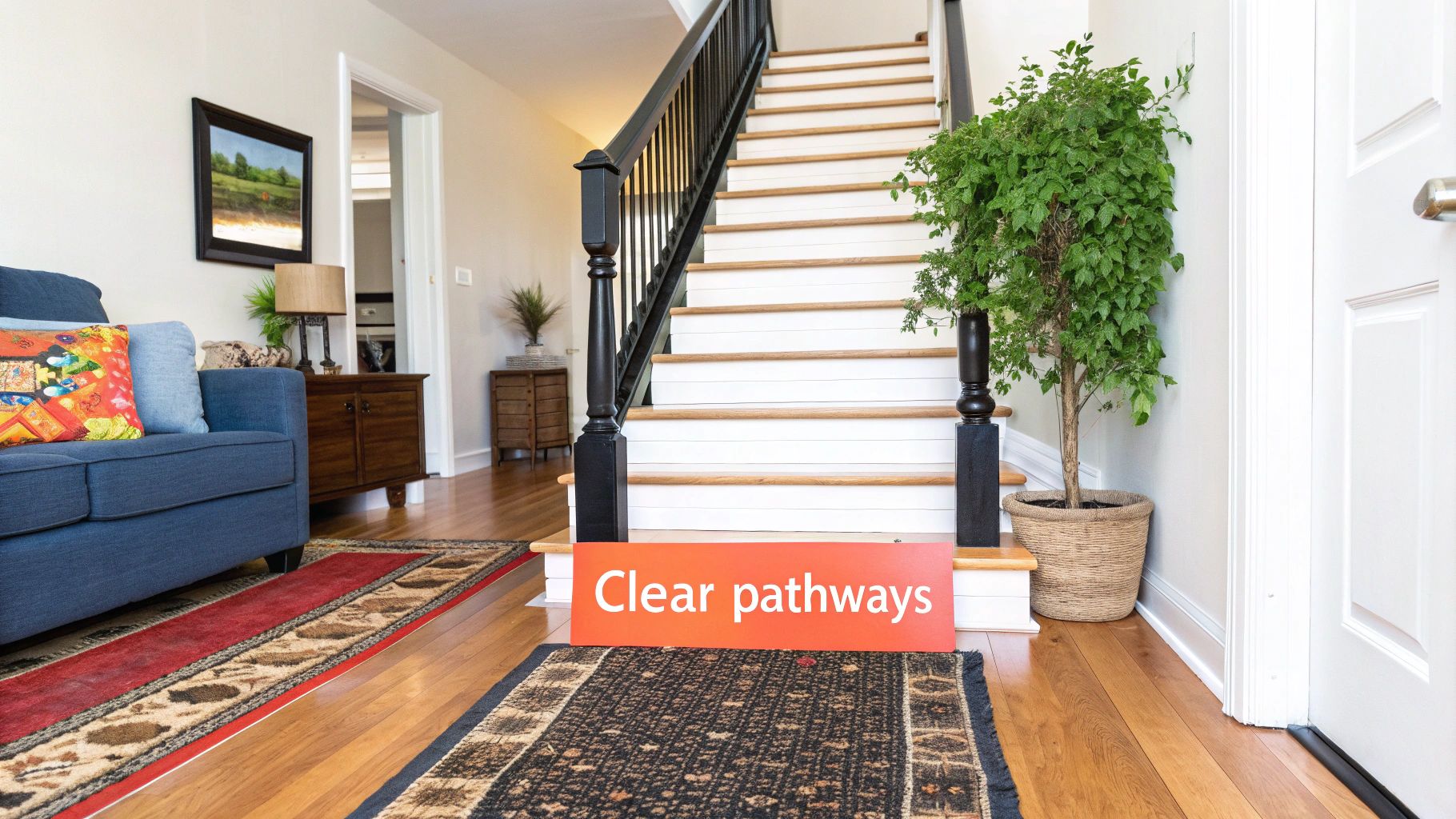
Think of your living room and hallways as the main arteries of your home. Keeping them clear is non-negotiable for preventing falls. The biggest culprits here are usually the things we've gotten used to ignoring, like loose rugs or electrical cords snaking across the floor.
Area rugs can pull a room together, but they're a notorious tripping hazard if they bunch up or slide. A hard-and-fast rule: never just toss a rug on the floor without securing it. Get a quality non-slip rug pad or use double-sided carpet tape to anchor every single edge to the floor.
Those cords for your lamps, TV, and chargers are another classic danger. Instead of letting them stretch across a walkway, take a few minutes to reroute them. You can run cords along the baseboards using clips to hold them in place, or grab some cord covers to create a smooth, low-profile ramp if they absolutely have to cross a path.
Furniture placement is also huge. You need wide, clear paths to move around, especially at night. A good rule of thumb is to aim for at least 36 inches of clear space in your main walkways. If your current layout feels tight, it's probably time to shuffle things around. If you're stuck, learning how to arrange living room furniture for both safety and style can be a game-changer.
The bedroom should be your sanctuary, but for many, it's a high-risk zone—especially after the lights go out. That trip from the bed to the bathroom in the dark is a prime time for falls. Your mission here is to make that journey as clear and bright as possible.
Start by getting everything off the floor between your bed and the door. That means no shoes, books, or baskets lying in wait to trip you up in low light. Then, light up the path. A few motion-activated or plug-in nightlights in the bedroom, hallway, and bathroom will give you just enough light to see where you're going without blinding you.
Even the height of your bed matters. You should be able to sit on the edge with your feet planted flat on the floor. If it’s too high or too low, you're off-balance from the second you get up. Also, make sure your bedside table is stable and the lamp is easy to reach without fumbling around in the dark.
A clear, well-lit path from your bed to the bathroom is one of the most effective fall prevention strategies for nighttime safety. This simple setup addresses the risks associated with disorientation and low visibility.
Stairs are an obvious risk, and they demand your full attention. A single misstep can lead to a serious injury, so making sure your staircase is in rock-solid condition is a top priority.
Here’s what you need to check for a safe staircase:
And it’s not just about clutter. Damaged walking surfaces anywhere in the home can be a problem. If you have loose floorboards, deep scratches, or gaps, looking into professional hardwood floor repair solutions is a smart move to keep your pathways safe and prevent trips before they happen.
Making your home physically safer with clear pathways and grab bars is a massive step forward. But the environment is only half of the equation.
The other half is you.
Strengthening your body and managing your personal health are proactive strategies that build resilience from the inside out. They turn you into a much tougher target for a potential fall. This isn't about hitting the gym for heavy-duty workouts, either. It’s about a smarter approach that combines gentle exercise, regular health check-ins, and being honest about how things like medication and vision impact your stability every single day.
Think of good balance as a skill, one that you can practice and improve over time. A stronger body, especially in your legs and core, gives you that stable base you need to catch yourself during a wobble or navigate an uneven sidewalk with confidence. The best part? You don't need a gym membership; many of the most effective exercises can be done right in your living room.
Consider adding a few of these simple activities to your daily routine:
Even small bursts of activity throughout the day add up. The goal here is consistency—consistently challenging your muscles and your body's ability to stay steady.
Two of the most overlooked factors in fall prevention are the medications you take and the quality of your vision. Both can dramatically mess with your balance and spatial awareness, sometimes without you even realizing it's happening.
Certain medications or combinations of drugs can have side effects like dizziness, drowsiness, or lightheadedness—all major red flags for a fall. That’s why a regular medication review with your doctor or pharmacist is an essential safety habit. Don't be shy about asking questions.
Bring a complete list of all your medications, including over-the-counter stuff and supplements, to your next appointment. Ask your doctor directly, "Could any of these be affecting my balance or making me dizzy?" This one conversation is a vital part of staying safe.
Your vision is just as critical. It’s directly linked to your stability. If you can't see clearly, you can't spot a stray object on the floor or accurately judge the height of a curb. An annual eye exam is non-negotiable. It keeps your prescription up-to-date and helps catch conditions like glaucoma or cataracts early, which can seriously impair your depth perception and peripheral vision.
Ultimately, knowing how to prevent falls at home means recognizing the scale of the issue and taking a multi-faceted approach. In the United States, falls are the leading cause of both fatal and nonfatal injuries for adults aged 65 and older. In fact, over one in four older adults reports a fall each year.
This is why national initiatives from organizations like the CDC focus so heavily on screening and managing these risks. You can get more details about fall prevention research to see just how critical these steps are.
This isn't meant to be alarming. It’s a reminder that taking control of your health—through exercise, medication management, and vision care—is every bit as important as securing rugs and installing nightlights. It's a powerful, ongoing process that combines a safe home with a strong, aware, and healthy body.
Making your home safer isn't a one-and-done project; it’s an ongoing commitment. And while plenty of fall prevention tasks are perfect for a weekend warrior, some modifications need a level of skill and precision that goes way beyond the average DIY job. Figuring out when to tackle a task yourself versus when to call in a pro is absolutely critical to making sure your safety upgrades are actually, well, safe.
https://www.youtube.com/embed/5a2PKP3uKKI
A poorly installed grab bar or an improperly wired light fixture can give you a false sense of security, which is often more dangerous than the original hazard itself. What you’re really after is genuine peace of mind—the kind that comes from knowing a critical safety feature was installed correctly by someone with the right tools and expertise. That’s how you ensure every modification provides the reliable support it was designed for.
Don't get me wrong, many fall prevention strategies are perfect for a Saturday afternoon project. Swapping out dim bulbs for brighter LEDs, putting non-slip treads on your stairs, or just clearing out clutter are all fantastic, high-impact tasks that don’t require a master's degree in engineering. These are the foundational steps that make an immediate difference.
But some jobs cross a very clear line into professional territory. A good rule of thumb I always use is to ask: "Could a mistake here lead to a structural failure or an electrical hazard?" If the answer is yes, it's time to put down the tools and pick up the phone.
The real value of hiring a professional isn't just their labor—it's their deep knowledge of building codes, material requirements, and proper anchoring techniques. They know how to do the job right so it holds up when you need it most.
Some home modifications are simply non-negotiable—you need to hire a licensed and insured professional. Trying to tackle these yourself can lead to serious injury, major property damage, or an installation that fails right when you're counting on it.
Here are a few jobs that absolutely need a pro:
Installing Grab Bars and Handrails: This is the big one. People underestimate the complexity all the time. A grab bar is only as strong as its anchor, and just screwing it into drywall is a recipe for disaster. The moment you put any real weight on it, it’ll rip right out of the wall. A professional will locate the wall studs for a rock-solid connection and use specialized hardware to ensure it meets weight-bearing safety standards.
Electrical Work for Better Lighting: Adding new light fixtures or moving a switch to a more convenient spot can be a game-changer for visibility. But any time you’re messing with your home's wiring, you're dealing with a serious fire and electrocution risk. Always, always hire a licensed electrician.
Major Structural Modifications: Thinking about widening a doorway for a walker, installing a ramp, or creating a zero-threshold shower? These projects involve altering your home’s structure. They require a deep understanding of construction, load-bearing walls, and waterproofing that only a qualified contractor possesses.
Deciding to hire a professional is the first step, but choosing the right one is just as important. You need someone who is not only skilled but also reliable and trustworthy. A bad hire can lead to shoddy work, added costs, and a ton of stress.
To make sure you're working with a true professional, it helps to have a system for vetting them. Having a checklist helps you ask the right questions about licensing, insurance, and references so you can compare contractors effectively. For a complete guide, our contractor hiring checklist walks you through everything you need to ask before making a final decision.
To make things even clearer, I've put together a quick comparison table. It should help you quickly decide which fall prevention tasks you can handle and when it's really time to call for backup.
| Task | Recommended DIY Level | When to Hire a Professional |
|---|---|---|
| Securing Rugs | Beginner: Anyone can do this with double-sided tape or a non-slip pad. | N/A |
| Installing Nightlights | Beginner: Simply plug them into existing outlets. | When new outlets need to be installed in specific locations. |
| Replacing Lightbulbs | Beginner: A simple task, just be sure to use a stable step stool. | If the fixture itself is faulty or needs to be replaced. |
| Grab Bar Installation | Professional Only: Requires finding studs and secure anchoring. | Always. An improperly installed bar is a serious safety risk. |
| Stairlift Installation | Professional Only: This is a complex mechanical and electrical job. | Always. This requires certified technicians for safe installation. |
Ultimately, investing in a professional for the big jobs isn't just about getting the work done—it's about ensuring your home is a truly safe and secure environment for years to come.
Once you start thinking about making a home safer, it’s only natural to have a few questions. Getting straight answers helps you put your energy where it’ll do the most good and move forward with some real confidence. We hear a lot of the same questions, so we’ve answered the most common ones right here.
This isn’t about guesswork. It’s about giving you practical, real-world solutions you can start using today, whether you're trying to figure out where to begin or how to talk to a loved one about making some changes.
The single most critical first step is to clear all trip hazards out of your walking paths. Seriously, before you buy a single gadget, do a full sweep and declutter every floor, hallway, and staircase. That means getting rid of throw rugs (or taping them down securely), tucking electrical cords along the walls, and finding a permanent home for the piles of shoes, books, and other clutter.
These everyday obstacles are the culprits behind so many unexpected tumbles. This one action costs absolutely nothing but instantly makes the home safer, giving you a clean slate for any other improvements.
No, and this is a hugely important distinction. You have to use ADA-compliant grab bars that are installed by a professional and anchored directly into the wall studs. Those suction-cup bars you see are a disaster waiting to happen—they're completely unreliable for holding any real weight and should be avoided at all costs.
For them to actually work, they need to be in the right spots:
A pro installation ensures the bar will be rock-solid when you need it most. It provides real stability, not just a false sense of security.
Key Insight: A properly installed grab bar is a piece of safety equipment. A towel rack or suction-cup bar is an accident waiting to happen. Always, always go for a secure, stud-mounted installation.
Absolutely. Working on your balance is a powerful, proactive way to cut down your fall risk. You don't need a fancy gym membership; simple, consistent exercises can make a world of difference in your stability and confidence. Things like Tai Chi are scientifically proven to be incredibly effective for improving both balance and strength.
You can also try a few simple moves at home. Just hold onto a sturdy chair for support and practice standing on one foot. Start with 10 seconds and see if you can work your way up. Another good one is walking heel-to-toe, like you're on a balance beam. It’s always a good idea to check with a doctor or physical therapist before you jump into a new exercise routine.
It's a common problem. When someone pushes back on home modifications, it's usually coming from a place of fear—fear of losing their independence or being seen as "old." The best way to handle it is with a lot of empathy. Frame the conversation around keeping them independent and comfortable in their own home for as long as possible.
Don't just show up and start making changes. Involve them in the conversation. Talk about these modifications as smart home upgrades that make life easier for everyone. You could start with smaller, less obvious things, like better lighting or some non-slip mats in the shower. Letting them have a say in choosing stylish grab bars or other fixtures can also give them a sense of control and make the whole idea a lot more appealing.
When it comes to the safe assembly and installation of furniture or equipment that makes your home safer and more accessible, trust the experts at Assembly Smart. Our professional, insured technicians ensure everything from grab bars to sturdy furniture is installed correctly, giving you total peace of mind. Get your free estimate today at https://assemblysmart.com.